Kraft Paper vs. Mylar: How to Choose the Right Material for Your Packaging
Anna_Yu
Kraft Paper vs. Mylar: How to Choose the Right Material for Your Packaging
Before diving into the technicalities of packaging materials, it’s worth pausing to consider the powerful role packaging plays in how consumers perceive products. In today’s competitive retail landscape, packaging is more than just protection—it is the voice of your brand, the first handshake with your customer, and the silent ambassador that speaks volumes before a single word is read. Choosing the right material—be it the natural warmth of kraft paper or the modern precision of Mylar—can mean the difference between an item that feels artisanal and one that feels high-tech. Each has its own advantages, from sustainability and texture to durability and barrier protection. This guide explores both kraft paper and Mylar in detail, providing a comprehensive analysis to help you make informed decisions that balance function, design, and environmental responsibility.
1. What Is Kraft Paper? What Is Mylar? And What Is the Difference Between the Two?
Understanding Kraft Paper
Kraft paper is a natural, wood-pulp-based paper known for its strength, durability, and eco-friendly properties. It is made through the Kraft process, where wood chips are treated with sodium sulfate to break down lignin and separate cellulose fibers. The resulting paper is coarse, brown (though it can be bleached white), and has a distinctive natural texture that evokes authenticity and sustainability.
- Composition: 100% virgin or recycled pulp
- Typical GSM (thickness): 60–150 g/m²
- Key Features: Recyclable, biodegradable, cost-effective
- Common Applications: Coffee bags, bakery products, organic food packaging, and retail shopping bags
Kraft paper’s charm lies in its simplicity. It conveys environmental consciousness and a “natural” brand image, making it popular in artisanal or eco-oriented industries.
Understanding Mylar
Mylar, on the other hand, is a biaxially-oriented polyethylene terephthalate (BoPET) film developed by DuPont in the 1950s. It is known for its superior tensile strength, excellent gas barrier properties, and high optical clarity. Mylar can be laminated with aluminum foil or other polymers to enhance protection against oxygen, moisture, and light.
- Composition: PET film, sometimes metallized or laminated
- Typical Thickness: 12–25 microns
- Key Features: Strong, flexible, puncture-resistant, heat-sealable
- Common Applications: Coffee, tea, nuts, jerky, electronics, and pharmaceuticals
Major Differences Between Kraft Paper and Mylar
| Feature | Kraft Paper | Mylar |
|---|---|---|
| Origin | Natural, cellulose-based | Synthetic, polyester-based |
| Barrier Protection | Low to moderate | Very high (especially when metallized) |
| Flexibility | Moderate | Excellent |
| Durability | Tear-resistant but moisture-sensitive | Puncture and heat-resistant |
| Printability | Excellent for matte finishes | Excellent for glossy or metallic effects |
| Recyclability | High (especially uncoated types) | Moderate, depending on lamination |
| Typical Look | Natural, rustic | Sleek, modern |
While kraft paper speaks of eco-conscious simplicity, Mylar embodies advanced protection and modern branding. The right choice depends on your product’s protection needs, shelf life, and design aesthetics.
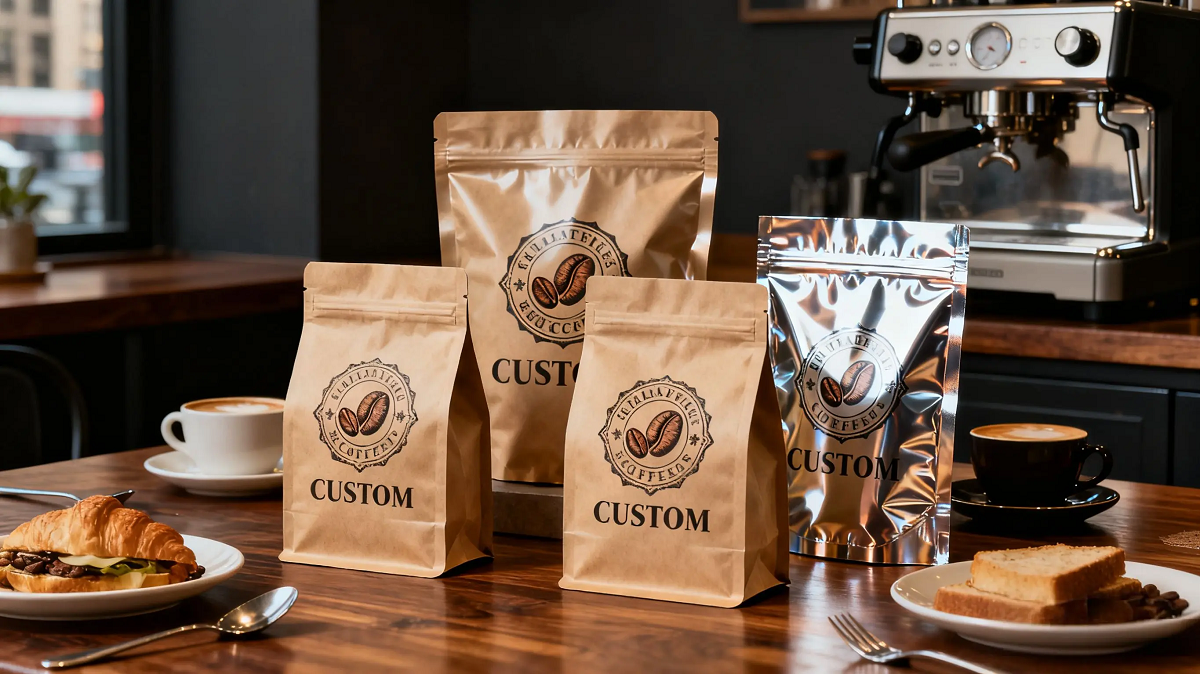
2. How Durable and Protective Are They?
Durability and protection are critical in packaging—especially for food, coffee, tea, and snacks that must withstand environmental stress, shipping, and handling. Let’s compare kraft paper and Mylar in these areas.
Kraft Paper Durability
Kraft paper is made for tensile strength, capable of holding weights up to several kilograms without tearing. This is why kraft is often used for shopping bags and mailers. However, it has limited resistance to punctures, grease, and moisture unless laminated or coated.
- Tensile Strength: 60–80 MPa
- Tear Resistance: High for dry conditions
- Weakness: Susceptible to water damage and oil absorption
To improve protection, kraft is often laminated with:
- PE (polyethylene) for moisture resistance
- PLA (polylactic acid) for compostable coatings
- Aluminum foil for barrier performance (used in coffee packaging)
Mylar Durability
Mylar’s strength lies in its tensile resilience, dimensional stability, and chemical resistance. It doesn’t deform easily under stress and resists punctures, tears, and temperature changes.
- Tensile Strength: 150–200 MPa
- Temperature Range: -70°C to +150°C
- Barrier Rating: Near zero gas and moisture permeability when metallized
This makes Mylar ideal for long-term storage and export packaging where climatic conditions vary. It maintains food integrity, aroma, and color over extended periods.
Side-by-Side Comparison
| Property | Kraft Paper | Mylar |
|---|---|---|
| Tensile Strength | Medium | Very High |
| Moisture Resistance | Low | Excellent |
| Oxygen Barrier | Low | Excellent |
| Light Protection | Poor | Excellent (if metallized) |
| Sealability | Moderate (requires coating) | Excellent |
| Shelf Life Extension | Up to 3–6 months | Up to 18–24 months |
Conclusion:
If your product demands long shelf life and protection against environmental stressors, Mylar is the stronger option. However, for short shelf-life items that benefit from a natural aesthetic, kraft paper performs beautifully—especially in local markets.
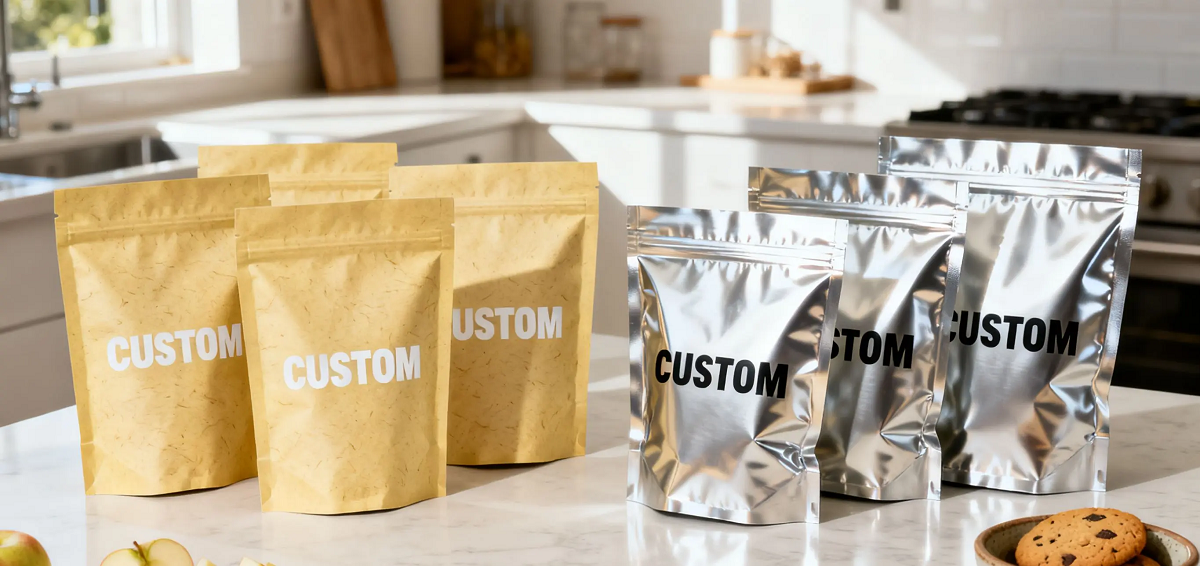
3. How Sensitive Are They to Humidity and Oxygen?
Kraft Paper’s Sensitivity
Kraft paper, by nature, is porous and readily absorbs moisture. This can cause:
- Softening or tearing
- Color changes
- Reduced shelf stability for contents
In humid regions or refrigerated environments, uncoated kraft can lose up to 40% of its tensile strength within days. For this reason, food manufacturers typically apply a PE or PLA lamination layer to seal moisture and oxygen.
Mylar’s Barrier Performance
Mylar stands out for its exceptionally low oxygen and moisture transmission rates (OTR/MVTR). For instance:
- OTR (Oxygen Transmission Rate): < 1 cc/m²/day
- MVTR (Moisture Vapor Transmission Rate): < 0.5 g/m²/day
This means that even after 12 months of storage, oxygen-sensitive foods like coffee or nuts remain fresh and aromatic.
Scientific Perspective
A study by Food Packaging Journal (2023) found that:
- Coffee beans in kraft paper bags showed 35% aroma loss after 3 months.
- Beans stored in Mylar foil bags showed less than 3% aroma loss in the same period.
That’s a tenfold improvement in preservation efficiency.
Comparative Summary
| Condition | Kraft Paper | Mylar |
|---|---|---|
| High Humidity | Absorbs moisture | Resistant |
| Oxygen Exposure | High permeability | Very low permeability |
| Shelf Life Impact | Short | Long |
| Recommended Use | Dry, fast-moving goods | Oxygen-sensitive, export, or long-term storage |
In short, Mylar is nearly immune to oxygen and humidity, while kraft paper requires additional treatment or lamination to achieve similar performance.
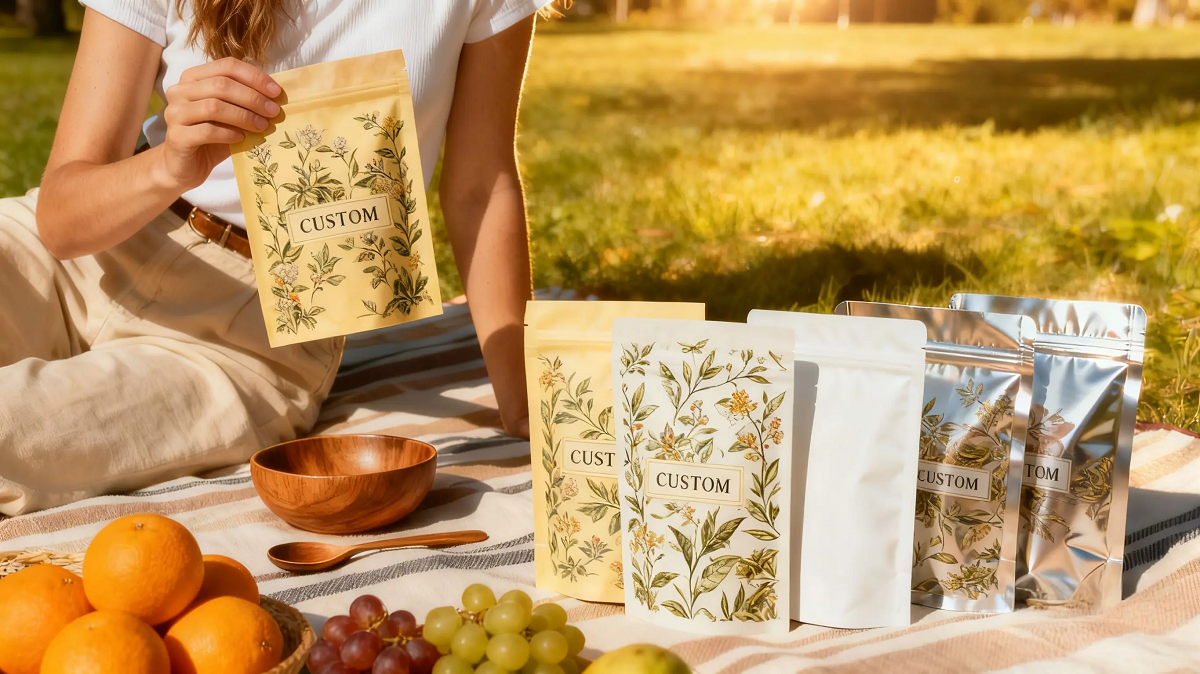
4. In Terms of Aesthetics, What Are the Unique Features of These Two?
Kraft Paper Aesthetic Appeal
Kraft paper projects a natural, organic, and handmade feel. It connects emotionally with eco-conscious consumers and works perfectly for brands emphasizing authenticity, sustainability, or artisanal quality.
- Texture: Rough, tactile, organic
- Color Options: Brown, bleached white, or dyed variants
- Brand Identity Fit: Rustic, natural, eco-friendly, minimalistic
This aesthetic aligns with modern consumer values—where simplicity, sustainability, and authenticity drive purchase intent. According to a Mintel 2024 survey, 62% of consumers prefer packaging that looks environmentally friendly, even if it costs slightly more.
Mylar Aesthetic Appeal
Mylar’s appearance is sleek, reflective, and modern. It allows for vivid color printing, metallic finishes, and transparent windows that give consumers a glimpse of the product inside. This flexibility enables high-end or futuristic brand designs.
- Texture: Smooth, glossy, or metallized
- Color Options: Unlimited (supports vivid digital and rotogravure printing)
- Brand Identity Fit: Modern, premium, professional
Emotional Impact Comparison
| Emotion | Kraft Paper | Mylar |
|---|---|---|
| Warmth | ★★★★★ | ★★☆☆☆ |
| Modernity | ★★☆☆☆ | ★★★★★ |
| Trustworthiness | ★★★★☆ | ★★★★☆ |
| Innovation | ★★☆☆☆ | ★★★★★ |
| Eco Appeal | ★★★★★ | ★★★☆☆ |
A combination—such as kraft laminated with Mylar—can provide both rustic authenticity and technical performance, offering brands the best of both worlds.
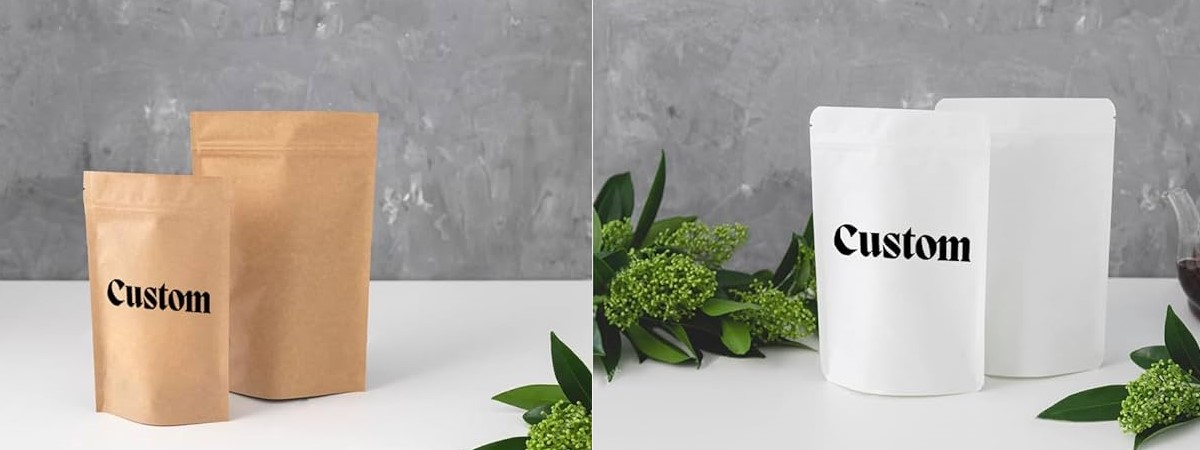
5. Based on the Information We Have, How Should We Choose the Materials for Our Packaging?
Choosing between kraft paper and Mylar depends on your product’s nature, target market, and sustainability goals. The right packaging should align not only with physical protection but also with brand storytelling and consumer expectations.
Step 1: Define Your Product Needs
Ask:
- Is it moisture or oxygen sensitive?
- What is the expected shelf life?
- Will it be sold online or in physical stores?
If you’re packaging snacks, coffee, or dried fruit, Mylar provides superior protection.
If your brand emphasizes eco-friendliness or handmade quality, kraft paper delivers authenticity.
Step 2: Evaluate Environmental Impact
- Kraft Paper: Fully recyclable, compostable, and renewable.
- Mylar: Requires complex recycling processes but can be reused or downcycled.
However, new mono-material Mylar films and kraft–PE hybrids are closing this sustainability gap rapidly.
Step 3: Consider Branding and Printing
Your packaging is your visual salesperson.
- Kraft supports minimalist, earthy design trends.
- Mylar supports vibrant, high-resolution printing with metallic or glossy finishes.
If you want the product to “pop” on shelves, Mylar’s visual impact is unmatched.
Step 4: Assess Cost and Production Feasibility
- Kraft: Generally cheaper and suitable for small batch production.
- Mylar: Higher cost but better for long-term returns and product safety.
Step 5: Hybrid Solutions
The market increasingly favors laminated combinations such as:
- Kraft + PE for moderate moisture protection
- Kraft + Mylar (PET/AL) for long shelf life and premium branding
These structures combine tactile appeal with barrier efficiency.
Step 6: Stay Ahead with Industry Trends
According to Packaging Europe (2025):
- 54% of new food brands launched use paper-based laminates
- 32% continue using metalized PET (Mylar) for export-grade goods
- Sustainable mono-material flexible packaging is projected to grow by 9.8% CAGR through 2030
Brands that combine eco credibility with advanced barrier design are expected to dominate future markets.
FAQ: Frequently Asked Questions
Q1: Is Mylar biodegradable?
No, traditional Mylar is not biodegradable, but recyclable and compostable alternatives using bio-PET are emerging.
Q2: Can kraft paper alone store oily or wet products?
No, it must be laminated with PE or PLA for oil resistance.
Q3: Which is better for coffee packaging?
Mylar or laminated kraft (kraft+Mylar) offers the oxygen protection coffee needs.
Q4: Which looks more premium in retail displays?
Mylar generally conveys a more professional and high-end aesthetic, especially with metallic finishes.
Q5: Can both be heat-sealed?
Kraft requires an inner PE or CPP coating; Mylar can be directly heat-sealed.
Q6: What’s the most sustainable option overall?
Kraft paper or recyclable mono-material PE laminates provide the lowest environmental footprint.
Q7: Are both FDA food-safe?
Yes, when manufactured using certified food-grade films and coatings.
Conclusion
In the end, Kraft paper and Mylar represent two ends of the same packaging spectrum—natural sustainability versus engineered performance.
Kraft paper delivers warmth, authenticity, and eco-appeal, while Mylar ensures protection, longevity, and modern sophistication. The decision isn’t merely about material; it’s about how you want your product and brand to feel in the customer’s hands.
For many businesses, a hybrid solution—like kraft laminated with Mylar—offers the best compromise between sustainability and protection.
As packaging innovation continues to evolve, the goal remains clear: to create solutions that protect the product, elevate the brand, and respect the planet.