Can Vacuum-packed Bags Be Heated in A Microwave Oven?
Anna_Yu
Can Vacuum-packed Bags Be Heated in A Microwave Oven?
Intro
In today’s fast-paced lifestyle, vacuum-packed food has become a staple in kitchens, restaurants, and food-processing industries. Vacuum sealing extends shelf life, preserves freshness, prevents oxidation, and makes storage more convenient. As consumers increasingly seek quicker and safer methods of heating pre-packed meals, a common question arises: Can vacuum-packed bags be heated directly in a microwave oven? At first glance, it may seem simple—just put the vacuum-sealed bag in and press start. However, depending on the material of the vacuum pouch, the food type, and the heating condition, microwaving vacuum-packed bags can be either completely safe or potentially dangerous.
Understanding the science behind vacuum packaging, the materials used, and how they interact with microwave energy is essential for ensuring safety and product quality. Some vacuum bags are specially designed with microwave-safe materials and structures that can withstand heat, steam pressure, and expansion. Others are not suitable at all and may melt, release harmful chemicals, or burst due to pressure build-up. Therefore, knowing which vacuum-bag materials can be microwaved and which cannot becomes crucial for both brands and consumers. Likewise, understanding the correct precautions prevents accidents such as melting, leaking, or uneven heating.
This comprehensive guide covers everything you need to know before microwaving vacuum-packed bags. We explore what vacuum bags are made of, which materials are microwave-safe, which ones must be avoided, and the safety measures to follow before heating. Whether you are a food manufacturer designing microwaveable vacuum packaging, an e-commerce seller offering ready-to-eat meals, or a household user looking for safe reheating methods, this guide will give you clarity and confidence in using vacuum-packed bags with a microwave.
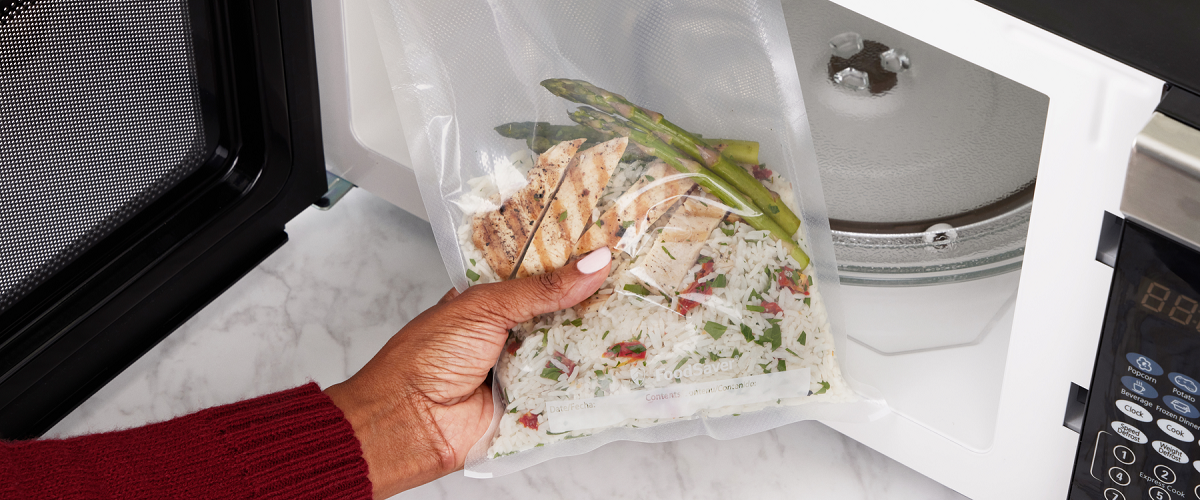
1. What is a vacuum-sealed bag?
A vacuum-sealed bag is a specialized packaging pouch from which air has been completely removed before sealing. This oxygen-free environment prevents microbial growth, slows oxidation, and significantly prolongs the shelf life of foods.
1.1 How vacuum sealing works
The vacuum process includes:
- Removing air from the bag
- Sealing the mouth through heat
- Reducing internal oxygen to less than 1%
- Minimizing moisture exchange
This provides several benefits such as reduced spoilage, color retention, and improved flavor preservation.
1.2 Common features of vacuum-sealed bags
Vacuum bags typically feature:
- Multi-layer materials
- High oxygen barrier
- High puncture resistance
- Strong sealing strength
- Heat resistance depending on application
1.3 Applications of vacuum packaging
- Cooked foods
- Meats and seafood
- Cheeses and dairy
- Fresh vegetables
- Grains and nuts
- Processed ready meals
- Sous-vide cooking products
1.4 Types of vacuum bags
- Embossed vacuum bags – Often used in home vacuum machines
- Smooth vacuum bags – Used in industrial settings
- Microwave-safe vacuum bags – Made from heat-resistant materials
- Sous-vide cooking bags – Designed for high-temperature water baths
1.5 Why material matters
A vacuum bag’s structure determines:
- Heat resistance
- Microwave safety
- Melting point
- Barrier level
- Food compatibility
Choosing the wrong material may lead to safety hazards during heating.
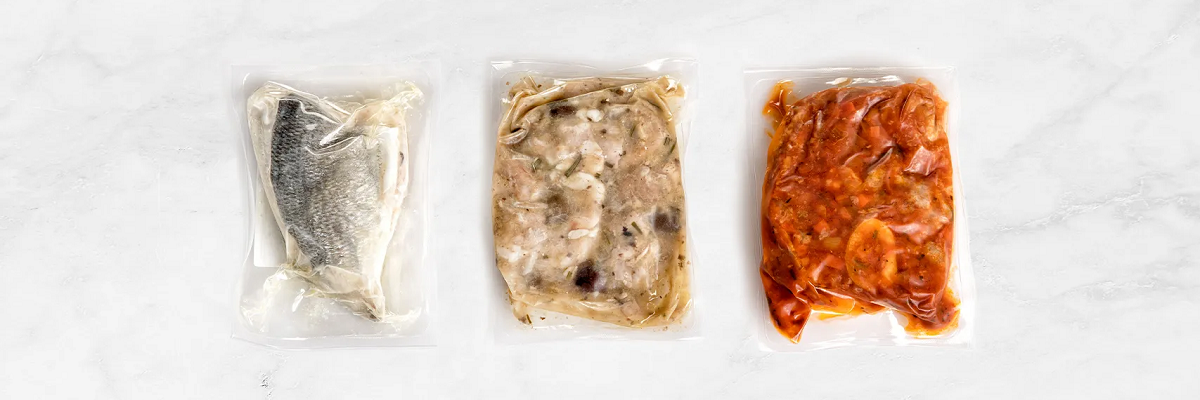
2. What are some materials used for vacuum bags that can be heated in a microwave oven?
Not all vacuum packaging materials are designed to withstand microwave heating. Only certain structures that can handle steam pressure and heat expansion are suitable.
2.1 Microwave-safe vacuum bag materials
The most common materials include:
2.1.1 PA/PE (Nylon/Polyethylene) Structure
- Widely used
- Good heat resistance
- Flexible and durable
- Safe for reheating when labeled microwave-safe
2.1.2 CPP (Cast Polypropylene)
- Higher heat resistance
- Suitable for microwave and hot-fill applications
- Strong and transparent
2.1.3 RCPP (Retort CPP)
- Common in retort pouches
- Withstands higher temperatures
- Suitable for commercial ready meals
2.1.4 PET/CPP composite
- PET adds strength and heat resistance
- CPP provides sealing performance
- Safe for microwave food reheating
2.1.5 Specialized microwave-venting vacuum bags
These include self-venting structures designed to release steam naturally during heating, reducing explosion risk.
2.1.6 BPA-free materials
Important for health considerations in high-heat environments.
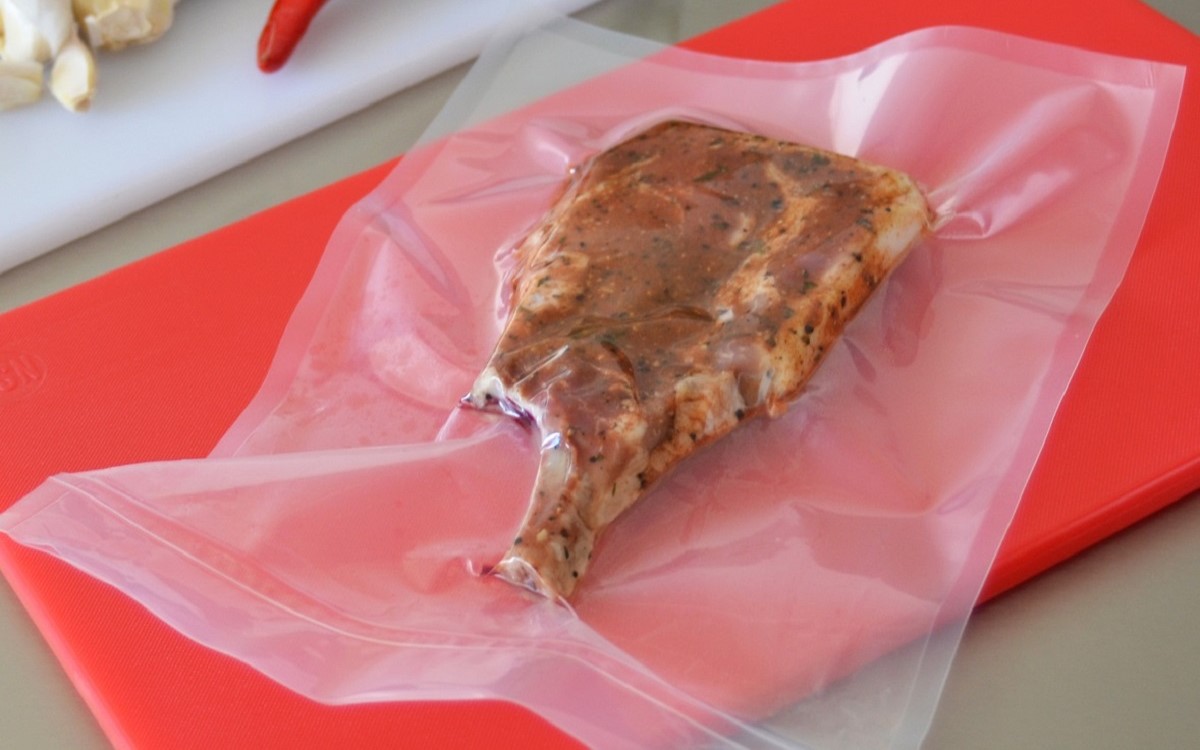
3. Similarly, which materials should be avoided for use in microwave-safe vacuum bags?
Certain materials may melt, deform, or release harmful chemicals when microwaved. Avoid using vacuum bags made from the following:
3.1 PVC (Polyvinyl Chloride)
- Releases toxic fumes
- Not food-safe for microwaving
3.2 PVDC-coated films
- Not recommended for direct high-heat environments
- May release unwanted compounds
3.3 Aluminum foil layers
Microwaves cannot pass through metal.
Such bags:
- Spark
- Damage the microwave
- May ignite
3.4 PET-only structures without heat-resistant layer
Standard PET easily deforms under high heat unless reinforced.
3.5 Low-grade PE
Some PE melts at low temperatures (90–110°C), making it unsafe for microwave use.
3.6 Old or recycled plastics
These plastic types may contain inconsistent additives that react unpredictably in microwaves.
3.7 Vacuum bags not labeled microwave-safe
Even if they look similar, the internal composition may differ greatly.
4. What precautions should be taken when heating vacuum-packed food in a microwave oven?
Microwaving vacuum-sealed food requires careful handling to avoid bag rupture, injury, or food contamination.
4.1 Always verify microwave-safety labels
Only use vacuum bags explicitly marked as:
- Microwave-safe
- Heat-resistant
- Suitable for reheating
4.2 Do not fully seal the bag during microwaving
Steam builds up quickly. You must:
- Cut a small opening
- Or use bags with self-venting technology
Otherwise, the pouch may explode.
4.3 Avoid overheating
Microwave heating may reach temperatures that exceed the material’s limit. Follow recommended heating times.
4.4 Do not microwave high-fat foods in untested materials
Fats heat more rapidly and may melt the pouch.
4.5 Ensure food is evenly spread
Thick or uneven food layers may cause:
- Uneven heating
- Hot spots
- Bag deformation
4.6 Use a microwave-safe plate underneath
Prevents spills and ensures stable heating.
4.7 Avoid metal clips or ties
Remove metal before microwaving.
4.8 Allow cooling time
Steam burns can occur if the bag is opened immediately after heating.
4.9 Do not reuse microwave-heated vacuum bags
Heat may degrade the material, making it unsafe for future use.
4.10 Follow manufacturer’s guidelines
Some bags are meant for warming only, not full-power cooking.
FAQ
Q1: Can I microwave a vacuum-sealed bag straight from the fridge?
Yes, but allow it to rest at room temperature for a few minutes to reduce condensation and avoid uneven heating.
Q2: Are sous-vide bags automatically microwave-safe?
Not always. Many are, but you must check the label.
Q3: Will a vacuum bag explode in the microwave?
Yes, if there is no venting space for steam pressure to escape.
Q4: Are Ziploc bags safe for microwaving vacuum-packed foods?
Ziploc bags are microwave-safe for short heating but are not designed for vacuum sealing.
Q5: What is the best material for microwavable vacuum bags?
PA/PE, CPP, and PET/CPP structures offer the best combination of safety, heat resistance, and durability.
Conclusion
Microwave heating of vacuum-packed bags is safe only when using the right materials and following proper procedures. Microwave-safe vacuum bags made from PA/PE, CPP, or PET/CPP offer heat resistance, strong sealing, and durability needed for safe reheating. Bags containing PVC, PVDC, or aluminum must be avoided, as they pose safety hazards. Venting, monitoring temperature, and using proper microwave settings are essential for safe and efficient heating. By understanding the materials and precautions, both consumers and food brands can enjoy the convenience of microwavable vacuum packaging without compromising safety.