Elevate Your Coffee Brand with Flexible Packaging
Anna_Yu
Elevate Your Coffee Brand with Flexible Packaging
Coffee is no longer just a beverage—it is a brand-driven, experience-oriented, and quality-sensitive consumer product. Whether you are selling whole beans, ground coffee, specialty single-origin coffee, or ready-to-brew blends, freshness, aroma, and visual identity all play a decisive role in how consumers perceive your brand. In an increasingly competitive global coffee market, packaging has become one of the most powerful tools to differentiate, communicate value, and build trust.
Among all packaging formats, flexible packaging has emerged as the preferred choice for modern coffee brands. Compared with rigid tins, glass jars, or paper boxes, flexible packaging offers superior barrier protection, enhanced convenience, lower logistics costs, and unmatched design flexibility. From resealable stand-up pouches to premium flat bottom bags with valve technology, flexible packaging enables coffee brands to protect product quality while elevating shelf presence.
However, not all flexible packaging solutions deliver the same results. Coffee is highly sensitive to oxygen, moisture, light, and aroma loss, and improper packaging can quickly destroy even the highest-quality beans. This guide explores how flexible packaging can help elevate your coffee brand by examining packaging value, bag types, material structures, functional features, and key design and performance considerations for long-term success.
1. How Can Flexible Packaging Help Elevate Your Coffee Brand?
Flexible packaging contributes directly to brand perception, product quality, and consumer experience.
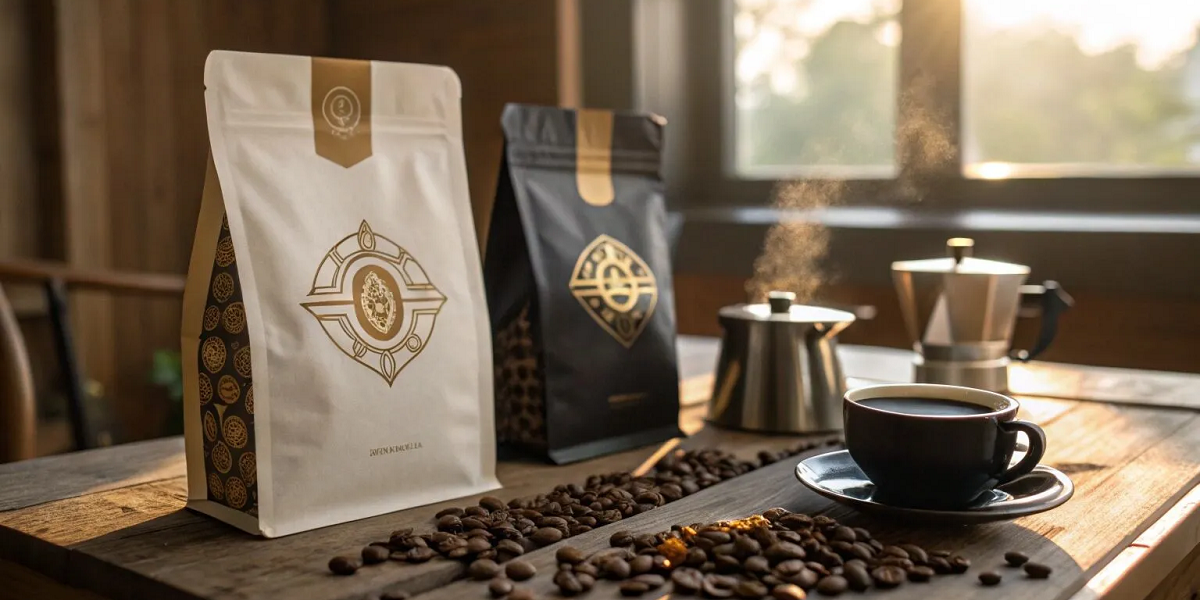
Enhancing Brand Image and Shelf Impact
High-quality flexible packaging allows for:
- Full-surface, high-resolution printing
- Matte, soft-touch, or metallic finishes
- Distinctive shapes and premium structures
These elements help coffee brands stand out in crowded retail environments and communicate premium positioning instantly.
Protecting Coffee Freshness and Flavor
Flexible packaging can be engineered with multi-layer barrier structures that protect coffee from oxygen, moisture, and light—preserving aroma and taste from roastery to cup.
Improving Consumer Convenience
Resealable closures, easy-open designs, and lightweight packaging improve usability, encouraging repeat purchases and brand loyalty.
Supporting E-Commerce and Export
Flexible packaging is lightweight, durable, and space-efficient, making it ideal for online sales and international distribution.
2. What Types of Flexible Packaging Are Best for Coffee Products?
The ideal coffee packaging format depends on product form, brand positioning, and sales channel.
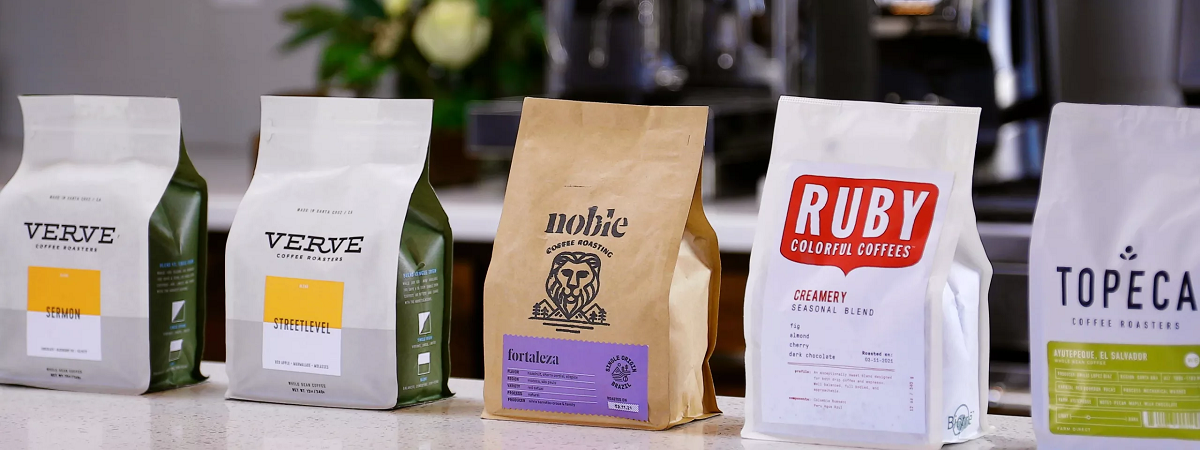
Stand-Up Pouches (Doypacks)
Stand-up pouches are the most widely used format for retail coffee packaging. They are suitable for:
- Whole bean coffee
- Ground coffee
- Single-origin or flavored blends
Their upright display improves shelf visibility, while compatibility with zippers and valves enhances functionality.
Flat Bottom Bags (Box Pouches)
Flat bottom bags are commonly used by premium and specialty coffee brands. Key advantages include:
- Excellent stability and premium appearance
- Five printable panels for storytelling and compliance
- Strong compatibility with degassing valves
This format is ideal for boutique and export-focused brands.
Side Gusset Bags
Side gusset bags are often used for:
- Traditional coffee brands
- Larger volume packaging
- Wholesale and foodservice applications
They offer high fill efficiency and a classic coffee packaging look.
Stick Packs and Sachets
Stick packs are suitable for:
- Single-serve instant coffee
- Coffee samples and promotions
- On-the-go consumption
They offer precise portion control and convenience.
3. How Do Coffee Packaging Materials Affect Freshness and Aroma Protection?
Material selection is critical to preserving coffee quality, especially for freshly roasted products.
Oxygen Barrier
Oxygen is the primary enemy of coffee freshness. It causes:
- Oxidation of coffee oils
- Loss of aroma compounds
- Stale flavor development
High oxygen barrier materials significantly extend shelf life.
Moisture Barrier
Moisture exposure leads to:
- Flavor degradation
- Mold risk
- Reduced brewing consistency
Effective moisture barriers are essential, especially in humid regions.
Light Protection
Light accelerates oxidation and flavor loss. Metallized or aluminum-based layers help shield coffee from UV exposure.
Degassing Compatibility
Freshly roasted coffee releases CO₂. Packaging materials must support one-way degassing valves without compromising barrier integrity.
4. What Packaging Features Do Premium Coffee Brands Need to Stand Out?
Functional and aesthetic features play a major role in brand elevation.
One-Way Degassing Valves
Valves allow CO₂ to escape while preventing oxygen ingress—essential for whole bean coffee.
Resealable Closures
Zippers help maintain freshness after opening and improve consumer convenience.
Premium Printing and Surface Finishes
Matte finishes, soft-touch coatings, spot UV, and embossing reinforce a high-end brand image.
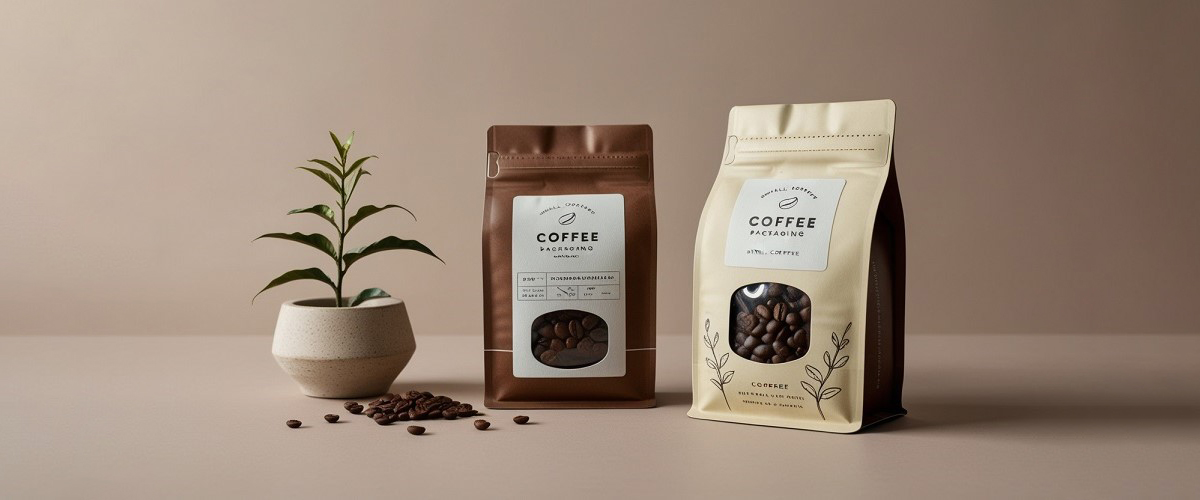
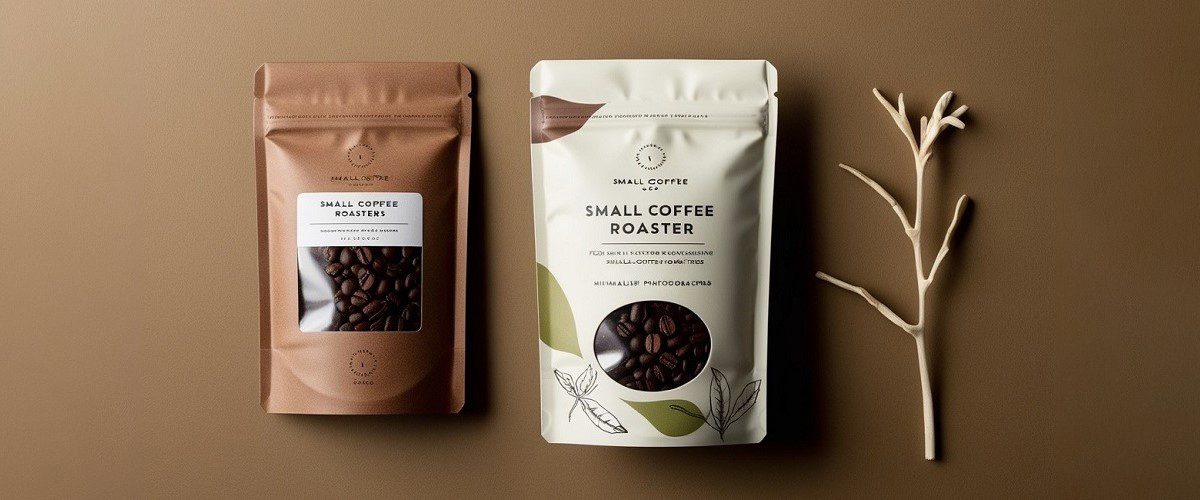
Transparent Windows (Controlled Use)
Small windows can showcase bean quality, but excessive transparency may reduce shelf life.
Regulatory and Information Space
Packaging must clearly display:
- Origin and roast profile
- Brewing recommendations
- Certifications and compliance markings
This is especially important for export markets.
5. Flexible Packaging for Coffee Brands: Key Design and Performance Factors
Successful coffee packaging balances performance, aesthetics, cost, and sustainability.
Shelf-Life Expectations
Retail coffee typically requires 12–18 months of shelf life. High-barrier laminates are essential to meet this without compromising flavor.
Distribution and Storage Conditions
Coffee sold online or internationally must withstand temperature changes, vibration, and long transit times.
Cost vs. Performance Strategy
Aluminum foil structures offer maximum protection, while metallized films provide a strong balance between cost and barrier performance.
Sustainability Trends
Recyclable mono-material solutions, reduced material thickness, and eco-friendly inks are increasingly important for brand perception.
Brand Storytelling
Flexible packaging offers space to communicate:
- Brand philosophy
- Sustainability commitments
- Origin stories
Turning the package into a marketing asset.
FAQ
What is the best flexible packaging for whole bean coffee?
Flat bottom bags or stand-up pouches with one-way degassing valves and high-barrier materials.
Do coffee products need aluminum foil packaging?
Not always. Metallized films can provide sufficient protection for many applications.
Are resealable zippers necessary for coffee packaging?
Yes. They significantly improve freshness retention and consumer convenience.
Is flexible packaging suitable for premium coffee brands?
Absolutely. Many premium and specialty brands rely on flexible packaging for both performance and design flexibility.
Conclusion
Flexible packaging plays a decisive role in elevating modern coffee brands. By combining high-barrier material structures, functional features such as valves and zippers, and premium design elements, coffee brands can protect freshness, enhance shelf appeal, and strengthen consumer trust. In a market where aroma, quality, and storytelling define value, flexible packaging is not just a container—it is an essential part of the coffee brand experience.