Guide to Flexible Packaging for Muscle-Building Supplements
Anna_Yu
Guide to Flexible Packaging for Muscle-Building Supplements
The global sports nutrition market continues to expand as athletes, fitness enthusiasts, bodybuilders, and everyday consumers look for convenient ways to support their training and nutrition goals. Products such as whey protein powder, plant-based protein blends, creatine monohydrate, pre-workout formulas, amino acid powders, mass gainers, and recovery supplements have become familiar parts of many fitness routines. As this category grows, brands face increasing pressure to deliver products that are convenient to use, maintain consistent quality, and stand out in a competitive marketplace. Flexible packaging for muscle-building supplements plays an important role in meeting these expectations.
Unlike many ready-to-drink products, powdered sports supplements must be protected from environmental conditions that can affect flowability, flavor, aroma, and overall product quality. Moisture can cause powders to clump, while oxygen may contribute to the oxidation of sensitive ingredients, especially in formulations containing fats or other oxidation-prone components. Poor seals, unsuitable materials, and inadequate handling can also compromise product integrity during storage and transportation.
At the same time, supplement packaging is more than a protective barrier. It communicates product identity, dosage information, nutritional details, brand positioning, and usage instructions. For sports nutrition brands, a well-designed pouch can create a premium shelf presence, simplify storage, improve the consumer experience, and support efficient distribution through gyms, specialty retailers, e-commerce platforms, and international markets.
However, there is no universal packaging solution for every muscle-building supplement. A large bag of whey protein requires different considerations from a small creatine pouch or a single-serving pre-workout sachet. Powder density, ingredient sensitivity, serving size, expected shelf life, filling equipment, and distribution conditions all influence the final packaging specification.
This guide explains how to choose flexible packaging for muscle-building supplements by examining bag formats, barrier performance, material structures, functional features, and cost considerations. It also explores how packaging can support branding, improve storage convenience, and meet the practical requirements of sports nutrition businesses. Whether you are launching a new supplement brand, expanding an existing product range, or sourcing customized packaging for international distribution, understanding these factors can help you make more informed packaging decisions.
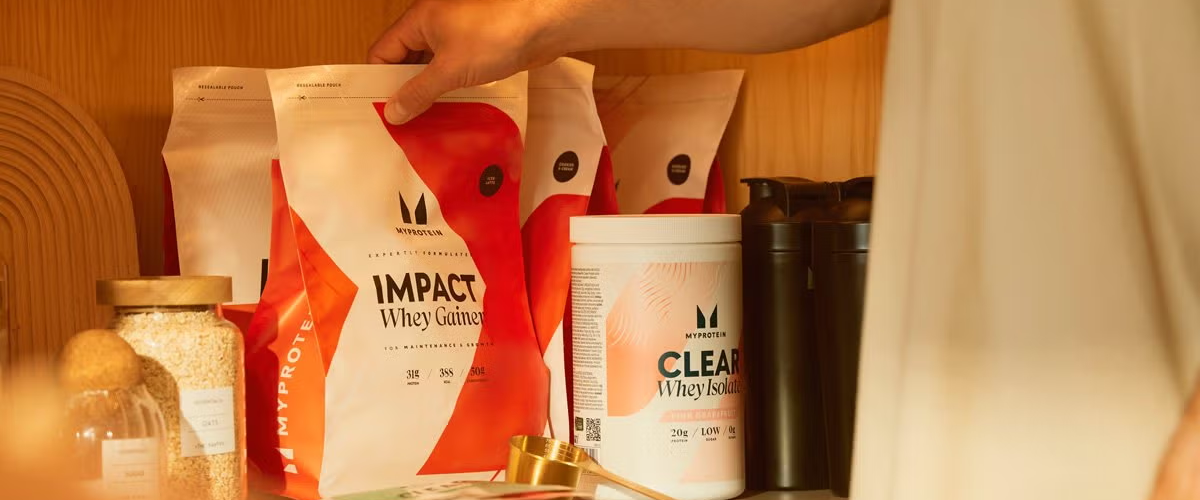
1. What Types of Flexible Packaging Are Best for Muscle-Building Supplements?
The most suitable flexible packaging format depends on the supplement's physical properties, serving size, consumption frequency, and sales channel. Protein powders are often sold in medium or large multi-serving bags, while creatine, pre-workout formulas, and amino acid supplements may be offered in smaller pouches or individual sachets.
A good packaging format should provide sufficient product protection, accommodate the required fill weight, work with the intended filling and sealing equipment, and offer a practical experience for consumers.
Stand-Up Pouches for Protein Powders and Everyday Sports Supplements
<AsyncImageGroup query={["custom printed stand up pouch whey protein powder packaging zipper","sports nutrition protein powder stand up pouch packaging gym supplement"]} aspectRatio="5:4" layout="bento" />
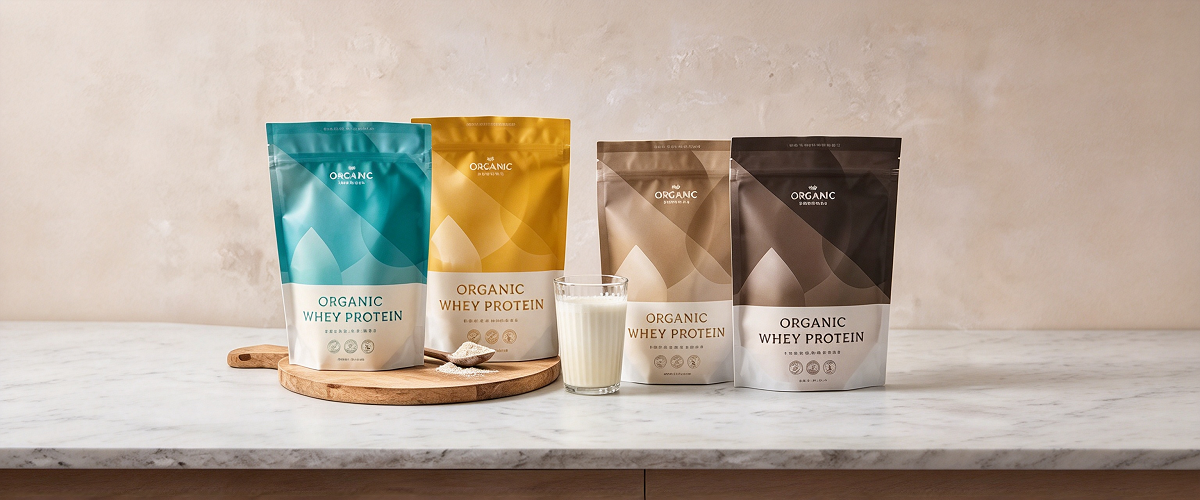
Stand-up pouches are a versatile option for muscle-building supplements because they combine a relatively large printable area with convenient storage and flexible sizing. Their bottom gusset allows the filled pouch to stand upright, making them suitable for retail shelves, gym counters, and home storage.
They can be used for products such as:
- Whey protein concentrate and whey protein isolate.
- Plant-based protein powders made from pea, soy, rice, or blended sources.
- Creatine monohydrate.
- BCAA and EAA powders.
- Pre-workout and post-workout formulations.
- Flavored recovery and hydration powders.
The front panel can display the brand logo, product name, flavor, serving information, and key product details. The back panel provides room for ingredient lists, nutrition information, preparation instructions, warnings, and other required labeling.
Resealable zippers are particularly useful for multi-serving supplements. Consumers can open the pouch, remove a scoop of powder, and close the package again without transferring the product to another container. This can reduce exposure to ambient humidity between uses, provided the zipper is correctly closed and the package is stored properly.
However, a zipper should not be treated as a replacement for a reliable primary heat seal. The initial seal protects the unopened product during distribution, while the zipper provides convenience after the package has been opened.
Stand-up pouches are especially useful for brands that want to combine practical storage with customized graphics. Options may include matte or gloss finishes, tear notches, rounded corners, transparent windows where appropriate, and different pouch dimensions.
Flat-Bottom Bags for Premium Protein and Mass Gainer Products
<AsyncImageGroup query={["custom flat bottom protein powder supplement pouch packaging","premium sports nutrition flat bottom pouch protein powder packaging"]} aspectRatio="5:4" layout="carousel" />
Flat-bottom bags, sometimes called box pouches, provide a structured shape and a stable base. They are often considered for premium protein powders, mass gainers, specialty formulations, and products positioned toward professional athletes or dedicated fitness consumers.
Their advantages include:
- A stable base that supports upright display.
- Broad front and back panels for branding and product information.
- Side panels that provide additional space for instructions or visual elements.
- A structured appearance that can support premium positioning.
- Compatibility with selected high-barrier laminate constructions and resealable closures.
A flat-bottom pouch can help a brand create a more substantial visual presence without using a rigid tub. This may be useful for products sold in specialty nutrition stores or through premium e-commerce channels.
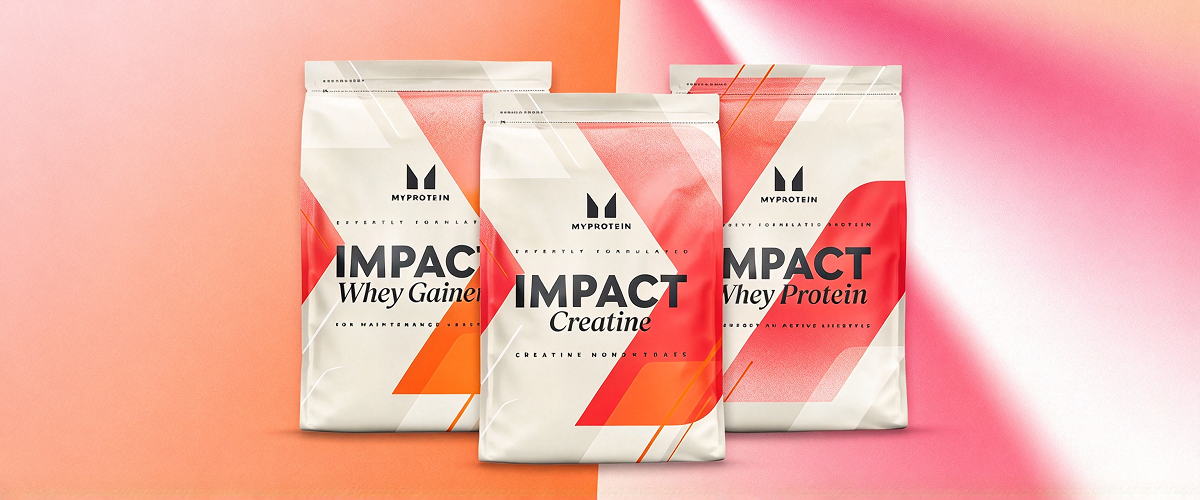
The format can also support a consistent product family. For example, a brand could use the same bag style for whey protein, plant-based protein, and mass gainer products, while changing the flavor colors and product-specific information.
The main considerations are cost, production complexity, required capacity, and filling-line compatibility. Flat-bottom bags may have different minimum order quantities and unit costs from simpler pouch formats. Brands should compare the total packaging cost against the intended product positioning and order volume.
Pillow Bags for Single-Serve and High-Volume Products
<AsyncImageGroup query={["single serve protein powder sachet pillow pack packaging","sports supplement powder sachet packaging individual serving"]} aspectRatio="5:4" layout="carousel" />
Pillow bags are commonly used in high-speed packaging operations and can be suitable for individual portions of protein powder, creatine, pre-workout products, and other powdered formulations.
They are particularly useful for:
- Single-serving protein powder samples.
- Trial packs for new flavors.
- Gym and fitness-event promotions.
- Travel-size portions.
- Individually packed servings in a multipack.
- Products distributed through subscription boxes or promotional kits.
Single-serving packaging offers several benefits. Each portion is separated from the remaining product, so consumers do not need to measure powder from a larger bag. Individual packs are also easy to distribute at fitness events, include in promotional bundles, or carry when traveling.
Pillow bags can be an economical option for high-volume production, but the material structure must still match the product's barrier requirements. The seal area is particularly important because fine powder can contaminate the sealing zone during filling.
A pillow bag is not inherently resealable. For a multi-use product, a stand-up pouch or another suitable resealable format may be more practical.
Three-Side-Seal Pouches for Samples and Compact Packs
Three-side-seal pouches are sealed along three edges, with the remaining side used for filling before final sealing. Their simple shape can be useful for small quantities of supplements and trial products.
Typical applications include:
- Protein powder samples.
- Creatine trial packs.
- Pre-workout samples.
- Small quantities of amino acid powders.
- Promotional sachets.
- Individually portioned supplements in larger kits.
These pouches can be customized with the brand logo, flavor name, product instructions, and a simplified version of the main packaging design.
Because the available print area is limited, the design should prioritize product identification and essential information. Small decorative graphics can support the brand, but the product name and required labeling should remain legible.
Three-side-seal pouches are often useful when a brand wants to introduce a new flavor without immediately committing to large retail packs. They can also be used as inner packs within a larger gift set or sample collection.
Stick Packs for Precise, Portable Supplement Portions
<AsyncImageGroup query={["protein powder stick pack individual sachet packaging","creatine monohydrate stick pack sports supplement packaging"]} aspectRatio="5:4" layout="carousel" />
Stick packs are narrow, elongated sachets designed for individual portions. They are especially useful when portability and simple portion control are central to the product concept.
Potential applications include:
- Single-serving creatine.
- Pre-workout powders.
- Amino acid blends.
- Electrolyte and hydration formulas.
- Portable protein or recovery mixes where the serving size suits the format.
The narrow shape can fit easily into a gym bag, backpack, desk drawer, or travel kit. It also creates an opportunity for brands to offer trial-size products or subscription bundles.
However, stick packs have limited capacity compared with larger pouches. They may not be the most practical choice for high-volume protein servings, particularly when the powder has a low bulk density and occupies substantial space.
The filling equipment must also be compatible with the powder's flow properties. Very fine powders may require appropriate dosing and dust-control arrangements to maintain accurate fills and clean seals.
Side-Gusseted Bags for Larger Supplement Volumes
Side-gusseted bags can be considered for larger quantities of protein powder, mass gainers, and selected sports nutrition products. The gussets expand to accommodate the contents while allowing the package to maintain a relatively compact shape.
These bags may be suitable for:
- Larger family or value packs.
- Bulk protein powder.
- Gym or fitness-club supply formats.
- Products sold through specialist nutrition distributors.
- Some foodservice or professional-use applications.
The format can provide good volume efficiency, but stability depends on the specific construction, fill weight, and base design. Brands should assess whether the bag will stand upright or whether it is intended to be stored on its side.
Large-volume bags also need to account for the weight of the contents. The material's mechanical strength, seal design, and resistance to handling damage become increasingly important as pack weight increases.
Compare the Main Flexible Packaging Formats
| Packaging Format | Best-Suited Applications | Main Advantages | Important Considerations |
|---|---|---|---|
| Stand-up pouch | Whey protein, plant protein, creatine, pre-workout | Resealability, retail visibility, flexible sizing | Zipper performance, barrier structure, filled-pouch stability |
| Flat-bottom bag | Premium protein, mass gainers, specialty supplements | Structured appearance, broad printable panels | Production cost, minimum order, filling compatibility |
| Pillow bag | Single-serve powder, samples, promotional packs | Efficient high-volume production | Seal contamination, limited resealability |
| Three-side-seal pouch | Samples, trial packs, small portions | Simple format, compact design | Limited capacity and print area |
| Stick pack | Portable creatine, pre-workout, amino acid powders | Convenient portion control, easy portability | Narrow dimensions, dosing accuracy, filling equipment |
| Side-gusseted bag | Bulk protein and larger packs | High capacity, efficient storage | Load resistance, seal strength, filled-bag stability |
The right format is not necessarily the most elaborate one. For many brands, a well-designed stand-up pouch with an appropriate laminate and zipper offers a strong balance between protection, cost, convenience, and appearance.
Select the Format According to Serving Size
Serving size has a direct impact on bag dimensions, material consumption, storage space, and usability. A small sample pack and a large mass gainer bag should not simply be treated as different sizes of the same design without further consideration.
Powder density varies considerably. Two supplements with the same net weight may occupy different volumes depending on particle size, formulation, aeration, and settling behavior.
Before selecting pouch dimensions, brands should confirm:
- The target net weight.
- The powder's approximate bulk density.
- The expected fill volume.
- The required headspace.
- The type of scoop or measuring accessory, if included.
- Whether the bag needs to stand upright.
- The available space for a zipper or other closure.
- The dimensions required by the filling equipment.
A packaging supplier can help develop initial dimensions, but the final specification should be confirmed with actual product samples and filling trials.
Consider How Consumers Will Use the Product
Packaging design should reflect the product's consumption pattern. A supplement used once a day over several weeks may benefit from a resealable pouch, while a product intended for occasional use or travel may work better in individual sachets.
For multi-serving protein powder, a wide opening can make it easier to insert a scoop. For single-serve pre-workout products, a tear notch and clear preparation instructions may be more important than a zipper.
Consumers may also need to store their supplements in humid kitchens, gym lockers, or travel bags. The package should be practical for these environments without implying that the product is protected under conditions beyond its validated storage requirements.
2. How Does Flexible Packaging Protect Muscle-Building Supplements from Moisture, Oxygen, and Contamination?
Powdered sports supplements can appear stable, but their quality may change when exposed to moisture, oxygen, unsuitable storage conditions, or contamination. Packaging helps manage these risks by controlling the environment around the product and maintaining the integrity of the sealed pack.
The level of protection required depends on the formulation. A simple creatine powder, a flavored whey protein blend, and a complex pre-workout formula may have different sensitivities. Some products are primarily vulnerable to moisture-related clumping, while others contain ingredients that can oxidize or lose quality under unfavorable conditions.
Moisture Protection Helps Prevent Clumping and Poor Flowability
Moisture is one of the most important considerations for powdered supplements. Many protein powders and sports nutrition blends are hygroscopic to some degree, meaning they can absorb water from their surroundings. The extent varies by formulation, ingredient composition, particle characteristics, and storage conditions.
When moisture enters the package, it can cause:
- Powder clumping.
- Changes in flowability.
- Hardening or caking.
- Changes in texture and dispersibility.
- Deterioration of some sensitive ingredients.
- A less consistent consumer experience.
For example, a protein powder that originally pours easily may develop lumps after prolonged exposure to humid air. A flavored pre-workout blend may also become difficult to measure accurately if the powder cakes around the scoop.
A suitable moisture barrier helps reduce water-vapor transmission through the packaging material. However, barrier performance depends on the complete laminate structure, thickness, seal integrity, and package design.
The seal is just as important as the film. Even a material with strong moisture resistance can provide inadequate protection if the top seal is weak or the package is damaged.
For moisture-sensitive powders, brands should evaluate both the material's water-vapor transmission properties and the performance of the finished bag. The actual test conditions should reflect the intended storage environment and shelf-life target.
Control Oxygen Exposure to Protect Sensitive Ingredients
Oxygen can contribute to oxidation in formulations containing fats, oils, flavor components, or other oxidation-sensitive ingredients. Depending on the product, oxidation may affect flavor, aroma, color, or the stability of certain components.
Whey protein powders with added fats, meal-replacement powders, and some complex nutritional blends may require particular attention to oxygen exposure. The exact risk depends on the formulation and processing conditions.
Flexible packaging can reduce oxygen exposure by using appropriate barrier materials and reliable seals. In some applications, manufacturers may also use nitrogen flushing or another suitable oxygen-management process.
The purpose is to reduce the amount of oxygen surrounding the product and limit additional oxygen entering through the packaging during storage.
However, not every supplement needs the same oxygen barrier. A brand should avoid automatically specifying the most expensive structure without considering the formulation, expected shelf life, packaging atmosphere, and actual product stability data.
A useful evaluation process includes:
- Identify ingredients that may be sensitive to oxidation.
- Review the expected shelf life and storage conditions.
- Determine whether oxygen transmission needs to be tightly controlled.
- Evaluate the proposed laminate and seal system.
- Conduct appropriate product stability testing.
This helps establish a practical balance between product protection and packaging cost.
Light Protection Can Help Preserve Sensitive Formulations
Some supplement ingredients may be sensitive to light, depending on their chemistry and formulation. Light exposure can also contribute to quality changes in certain flavors, colors, and fats.
Opaque, metallized, or foil-containing packaging can limit light exposure more effectively than a fully transparent package. The suitable option depends on the product's sensitivity and the required barrier performance.
For products that do not need visual inspection, an opaque printed pouch may provide both a broad design area and protection from light. For products where visibility is important, a transparent window should be assessed carefully.
The packaging specification should be based on the product's actual light sensitivity rather than the assumption that all sports supplements require the same level of protection.
Prevent External Contamination Through Sound Packaging Design
Powdered supplements must be protected from dust, dirt, foreign matter, and other sources of contamination throughout filling, transportation, and storage.
Flexible packaging contributes to this protection by providing a closed enclosure, but packaging alone does not guarantee product safety. Hygiene controls, clean filling equipment, suitable manufacturing practices, and appropriate handling remain essential.
Key packaging considerations include:
- Clean and suitable food-contact materials.
- Reliable primary seals.
- Protection from punctures and accidental opening.
- Appropriate packaging storage before filling.
- Control of powder contamination in the sealing area.
- Inspection of finished packages for defects.
- Suitable outer cartons and shipping arrangements.
The material structure, ink system, adhesives, and other packaging components must also be appropriate for the intended use and comply with applicable requirements in the destination market.
Maintain Seal Integrity Throughout Distribution
A package's protective performance depends on its weakest point. The main laminate may provide a strong barrier, but the product can still be exposed if the seal fails.
Seal failures may result from:
- Powder trapped in the sealing area.
- Incorrect sealing temperature or pressure.
- Insufficient dwell time.
- Incompatible sealing layers.
- Wrinkles or folds across the seal.
- Damage during handling.
- Poorly designed closures or conversion defects.
Powder products present a particular challenge because fine particles can settle near the opening during filling. A packaging line should be designed to minimize this risk, and sealing conditions should be validated for the selected structure.
Quality-control procedures may include visual inspection, seal-strength testing, leak testing, and other suitable tests based on the product and packaging design.
Understand the Difference Between Barrier Performance and Product Stability
A high-barrier pouch can reduce environmental exposure, but it cannot correct every formulation or processing problem.
For example, a powder may clump because its formulation absorbs moisture readily, because it was inadequately dried, or because the product was exposed to humid air during filling. Improving the outer laminate may help, but the root cause could require changes to manufacturing controls or handling procedures.
Similarly, packaging cannot guarantee the stability of an ingredient that degrades under the intended storage conditions.
A robust packaging strategy therefore combines:
- Appropriate product formulation.
- Controlled manufacturing and filling conditions.
- A suitable barrier structure.
- Reliable seals.
- Appropriate storage and transport.
- Product-specific stability validation.
This system-level approach is more dependable than relying on a packaging claim alone.
Consider Nitrogen Flushing Where Appropriate
Nitrogen flushing is sometimes used for powdered supplements to reduce oxygen in the package headspace. It may be relevant for products containing oxidation-sensitive ingredients or formulations with a specific oxygen-control requirement.
Potential benefits include reducing the initial oxygen level and supporting the intended shelf-life strategy. The effectiveness depends on the filling system, gas-flushing method, powder behavior, package design, and seal quality.
Nitrogen flushing is not necessary for every supplement. Its suitability should be determined through product-specific assessment and validated packaging trials.
If gas flushing is used, the package must be compatible with the process, and the filling operation must achieve consistent results. The selected film should also have suitable mechanical properties so that the finished package performs properly during transport and handling.
Choose the Correct Barrier Test Methods
Packaging suppliers may provide technical data such as oxygen transmission rate (OTR) and water vapor transmission rate (WVTR). These values help compare materials, but they should not be interpreted without considering the test conditions.
OTR indicates the rate at which oxygen passes through a material under specified conditions. WVTR measures water vapor transmission under specified conditions. Lower values generally indicate stronger barrier performance for the relevant gas or vapor, but comparisons are meaningful only when the test conditions and methods are comparable.
Brands should consider:
- Test temperature and relative humidity.
- Film thickness and construction.
- Whether values apply to a single film or a complete laminate.
- The effect of converting the film into a pouch.
- Seal integrity and potential leakage paths.
- Expected storage conditions.
- The product's validated shelf-life target.
Material data should be treated as one part of the assessment, alongside finished-package testing and product stability studies.
Protect the Product After the Consumer Opens the Bag
The packaging's job does not end when the initial seal is broken. Once opened, the powder is exposed to the environment each time the consumer removes a serving.
A resealable zipper can help limit repeated exposure, but it cannot restore the original unopened condition. Consumers should follow the product's storage instructions, close the zipper properly, and use a clean, dry scoop.
The package should make these actions straightforward. A zipper that is too close to the top edge, difficult to engage, or obstructed by powder can reduce its practical value.
A sufficiently wide opening, appropriate zipper placement, and a pouch that can remain stable during use may improve the consumer experience.
Account for Humidity and Temperature During Shipping
Supplements may travel through warehouses, distribution centers, ports, delivery vehicles, and retail environments before reaching consumers. These conditions can expose packaging to changing temperatures and humidity.
For international shipments, the packaging specification should consider the route, expected transit time, storage conditions, and the product's sensitivity.
High humidity can increase the moisture challenge, while temperature changes may affect product stability and the behavior of some packaging materials. Compression and abrasion can also damage seals or create pinholes in unsuitable structures.
The shipping carton, pallet configuration, protective packing, and handling procedures should be considered alongside the primary pouch. Packaging performance should be evaluated under conditions representative of the actual distribution system.
3. Which Packaging Materials Provide the Best Barrier Protection for Protein Powders and Sports Supplements?
Selecting a material structure for sports supplement packaging involves balancing barrier performance, print quality, mechanical strength, sealing reliability, cost, and sustainability considerations.
Most flexible supplement pouches use a single material or a combination of layers designed to perform different functions. An outer layer may provide printability and strength, while an inner layer provides heat sealing. Additional layers may be included to improve oxygen, moisture, or light protection.
The best structure depends on the product rather than the supplement category alone. A flavored whey protein, a high-fat nutritional blend, and a simple creatine powder may require different levels of protection.
PET-Based Laminates for Printed Supplement Pouches
PET, or polyethylene terephthalate, is commonly used as an outer layer in flexible packaging laminates. It provides useful mechanical strength and supports high-quality printing, making it suitable for brands that want detailed graphics and a polished retail appearance.
In a multilayer pouch, PET may be combined with a barrier layer and a heat-sealable inner layer. The complete structure determines the finished package's barrier performance and sealing properties.
PET-based laminates can be suitable for:
- Whey protein pouches.
- Plant-based protein products.
- Flavored supplement powders.
- Pre-workout blends.
- Creatine and amino acid products.
The material structure must still be matched to the product's moisture and oxygen sensitivity. PET alone should not be assumed to provide the barrier level required for every powdered supplement.
Metallized Films for Enhanced Barrier Performance
Metallized films contain a very thin deposited metal layer, often aluminum, that can improve barrier performance compared with some uncoated films. They are used in many snack and powdered-product applications because they can combine barrier improvement with a relatively lightweight structure.
Metallized laminates may be considered for:
- Standard protein powders.
- Flavored sports nutrition products.
- Creatine and amino acid blends.
- Pre-workout formulas.
- Products requiring protection from light and moisture.
The actual performance depends on the base film, metallization quality, laminate construction, flexing, and conversion process. Damage to the metallized layer or defects in the finished pouch may reduce the expected barrier.
Metallized films are not identical to aluminum foil. They should not be treated as interchangeable without reviewing technical specifications.
Aluminum Foil Laminates for High-Barrier Applications
Aluminum foil can provide a very strong barrier against moisture, oxygen, and light when incorporated into a properly designed laminate.
Foil-containing structures may be considered for products with demanding shelf-life requirements, sensitive ingredients, or distribution conditions that justify a higher level of protection.
Potential applications include:
- Selected premium protein formulations.
- Specialty nutritional powders.
- Products containing oxidation-sensitive ingredients.
- Formulations requiring strong light protection.
- Products intended for long distribution routes, where the validated specification calls for high barrier performance.
However, foil-containing packaging can have a higher material cost and may be more challenging to recycle through common flexible-plastic collection systems. Its suitability should be evaluated against actual product requirements rather than assumed to be the best option for every supplement.
PE and CPP as Heat-Sealable Inner Layers
Polyethylene (PE) and cast polypropylene (CPP) are used in many flexible packaging structures as sealant layers. They help form the package's heat seals and influence seal strength, flexibility, and processing performance.
The choice between sealant materials depends on the laminate construction, sealing equipment, required temperature range, and product conditions.
For powdered supplements, the inner layer should be suitable for the intended food-contact application and compatible with the filling and sealing process. The sealant must also perform reliably when small amounts of powder may be present near the sealing zone.
PE-based structures may also be considered for mono-material packaging strategies where the product's barrier and mechanical requirements can be met. However, mono-material construction does not automatically mean that a package is recyclable everywhere or suitable for every product.
Compare Common Material Structures
| Example Structure | Potential Benefits | Typical Considerations | Possible Applications |
|---|---|---|---|
| PET/PE | Good print presentation and a heat-sealable inner layer | Barrier level may be insufficient for some sensitive products without further design work | Selected powders with moderate barrier requirements |
| PET/VMPET/PE | Enhanced light and gas barrier compared with many basic structures | Metallization and conversion quality affect final performance | Protein powders and sports supplements requiring stronger barrier protection |
| PET/AL/PE | Strong barrier against oxygen, moisture, and light | Cost, laminate requirements, and end-of-life considerations | Selected sensitive or premium formulations |
| BOPP-based laminate | Lightweight structure and useful print presentation in suitable constructions | Sealability and barrier depend on the complete structure | Selected supplement sachets and dry powder packs |
| Mono-material PE-based structure | May support certain recycling pathways where suitable systems exist | Barrier, stiffness, printability, and seal performance must be validated | Products whose requirements can be met by a suitable mono-material design |
These structures are examples rather than universal prescriptions. Suppliers may offer different grades, thicknesses, and layer combinations, and the final specification should be based on performance requirements and testing.
Match Material Selection to the Supplement Type
Different formulations place different demands on packaging.
| Supplement Type | Main Packaging Considerations | Potential Packaging Approach |
|---|---|---|
| Whey protein powder | Moisture control, flavor retention, possible oxidation sensitivity depending on formulation | Resealable high-barrier stand-up pouch |
| Plant-based protein | Moisture control, odor management, flavor protection | Barrier laminate selected for the formulation |
| Mass gainer | Larger fill volume, pack weight, storage convenience, moisture protection | Larger stand-up or flat-bottom pouch |
| Creatine monohydrate | Moisture control, flowability, reliable closure | Suitable moisture-barrier pouch or individual sachet |
| Pre-workout powder | Moisture sensitivity, flavor stability, protection of specific ingredients | High-barrier pouch or stick pack depending on use |
| BCAA or EAA powder | Moisture control, flavor and aroma protection | Resealable pouch or individual sachets |
| Meal-replacement powder | Potentially more complex formulation, possible fats and sensitive ingredients | Structure selected through formulation and shelf-life assessment |
| Single-serve samples | Seal integrity, dosing, transport convenience | Three-side-seal pouch, pillow pack, or stick pack |
This table is intended to guide the initial discussion with a packaging supplier. It does not replace an evaluation of the actual formulation.
Evaluate Film Thickness and Mechanical Performance
Barrier performance is important, but it is not the only determinant of package quality. Film thickness and mechanical strength also influence how a bag performs during filling, transport, storage, and consumer use.
A thin material may reduce packaging weight and cost, but it must still resist the stresses associated with the product's weight and distribution environment. Larger protein bags may require stronger structures than small sample sachets.
Mechanical evaluation should consider:
- Resistance to puncture and tearing.
- Tensile strength and flexibility.
- Abrasion during handling.
- Performance at the seals and corners.
- Stability of the filled pouch.
- Compatibility with packing and shipping systems.
The objective is to avoid both under-specification and unnecessary material use. The correct structure should meet the actual requirements with a reasonable safety margin.
Consider Print Quality and Brand Presentation
Sports nutrition brands often use bold colors, product photography, performance-oriented graphics, and clear flavor differentiation. The outer packaging layer should support the desired artwork and finish.
A print-friendly outer layer can help reproduce detailed graphics, gradients, and small text. Matte or gloss finishes may also be used to distinguish product lines or create a particular brand impression.
However, design and barrier decisions should be coordinated. A visually attractive structure that does not provide the required protection is not a suitable choice, and a high-barrier laminate should still allow the required product information to remain readable.
Understand Food-Contact Compliance for All Packaging Components
Packaging suitability depends on the complete construction, not just the base film. Inks, adhesives, coatings, sealant layers, and any additional components must be appropriate for the intended application.
Brands selling across borders should verify the applicable food-contact requirements in their target markets. Supplier documentation should match the actual packaging construction and intended conditions of use.
This is especially important when changing material structures, suppliers, or printing systems. A design or material that was suitable for one product or market should not automatically be assumed to be suitable for another.
Assess Mono-Material Options Carefully
Some brands are exploring mono-material flexible packaging to support packaging simplification and potential recyclability. PE-based or PP-based structures may be considered when they can meet the required barrier, mechanical, and sealing performance.
For powdered supplements, the main question is whether the proposed structure can protect the product for the required shelf life. A structure that offers a simpler material composition may not be suitable if it allows excessive moisture or oxygen transmission.
Before selecting a mono-material solution, evaluate:
- Moisture and oxygen barrier requirements.
- Required shelf life and distribution conditions.
- Puncture resistance and sealing performance.
- Printing and finish requirements.
- Compatibility with existing filling equipment.
- Recycling collection and processing systems in the target market.
- Whether environmental claims can be supported by evidence.
Sustainability and product protection should be considered together rather than treated as competing decisions.
Test the Complete Pouch, Not Only the Film
A film's technical data is useful, but the finished pouch introduces additional variables. Seals, folds, zippers, gussets, and conversion processes can affect the final performance.
A complete evaluation may include:
- Oxygen and water-vapor transmission tests where relevant.
- Seal-strength testing.
- Leak testing.
- Puncture and handling tests.
- Compatibility with filling and sealing equipment.
- Product stability testing in the proposed packaging.
- Transportation simulation or distribution trials where appropriate.
The specific tests depend on the supplement, packaging design, and shelf-life requirements. For high-volume or export products, a documented validation process can help reduce the risk of quality problems after launch.

4. What Packaging Features Improve Supplement Freshness, Storage, and Consumer Convenience?
The material structure protects the product, while packaging features determine how easily consumers open, store, measure, and carry the supplement. A successful design should integrate both aspects without creating unnecessary cost or production complexity.
For sports nutrition products, useful features often include resealable zippers, tear notches, wide openings, portion packs, clear labels, and durable seals. The best combination depends on how the product will be used.
Resealable Zippers for Multi-Serving Protein Powders
Resealable zippers are among the most useful features for large protein pouches and other supplements consumed over multiple servings.
They allow consumers to open the package, remove the required amount of powder, and close it again. This can help limit exposure to humid air between uses and reduce the need to transfer the contents into another container.
A zipper should be selected according to the pouch size, material structure, expected number of openings, and consumer needs.
Key considerations include:
- Ease of opening and closing.
- Alignment and engagement of the zipper tracks.
- Resistance to accidental opening.
- Position relative to the top seal.
- Sufficient space for a clean sealing area.
- Compatibility with the filling line.
The zipper should be positioned so that consumers can use it without difficulty. If it is too close to the top edge, opening and reclosing may become awkward. If it is too close to the product fill level, powder may become trapped in the closure.
A zipper also does not replace the initial heat seal. The unopened package needs an appropriate seal to protect it through distribution.
Tear Notches for Controlled Opening
A tear notch provides a designated starting point for opening the pouch. It can improve convenience for consumers who do not want to use scissors or other tools.
Tear notches are particularly useful for sample packs, small pre-workout pouches, and larger bags that are intended to be opened once before being resealed.
The notch must be positioned correctly relative to the seal and zipper. If the tear path crosses the zipper or removes too much of the top panel, it may interfere with resealing.
The opening behavior should be checked using actual samples. Film thickness, laminate construction, notch depth, and pouch design can affect how easily the bag opens.
Wide Openings for Scooping and Pouring
Protein powder is often removed using a scoop, making opening width an important usability consideration.
A pouch with a sufficiently wide opening can help consumers access the powder without spilling it onto the surrounding surface. It may also make it easier to return the scoop to the package.
However, a wider opening can increase material use or influence the pouch's design. The right size depends on the bag capacity, scoop dimensions, product behavior, and closure type.
A practical design process should consider the full user interaction:
- The consumer opens the pouch.
- The opening remains accessible.
- The scoop can be inserted without excessive contact with the package edges.
- The powder can be removed with minimal spillage.
- The zipper can be closed properly after use.
These details can make a meaningful difference to everyday convenience.
Clear Labeling for Dosage and Preparation
Supplement consumers need to understand how to use the product correctly. The packaging should provide clear, readable instructions and distinguish product information from promotional messages.
Depending on the product and market, relevant information may include:
- Serving size.
- Number of servings per package.
- Directions for preparation.
- Recommended storage conditions.
- Ingredient information.
- Allergen declarations.
- Nutrition information where required.
- Applicable warnings and usage instructions.
- Lot code and date marking.
The exact requirements vary by product and jurisdiction. Brands should confirm the necessary content with the appropriate regulatory or compliance resources.
For products sold internationally, the available label space should be planned early. Adding several languages can significantly affect layout, font size, and the space available for promotional graphics.
Single-Serve Sachets for Portion Control
Single-serving sachets are useful when consumers want portability, convenience, and consistent premeasured portions.
They may be suitable for:
- Pre-workout powders used before training.
- Creatine servings.
- Protein samples.
- Amino acid blends.
- Trial packs for new flavors.
- Travel and subscription bundles.
Sachets can help consumers avoid carrying a large pouch or measuring powder away from home. They can also support sampling campaigns and promotional activities.
The main trade-off is that individual packs use more packaging per unit of product than a single large bag. Brands should compare the convenience benefits with packaging material consumption, filling costs, and the target market's preferences.
Stick Packs for Portable Supplement Routines
Stick packs offer similar portion-control benefits in a narrow, easy-to-carry format. Their shape is suitable for products intended to be mixed into water or another beverage, provided the serving volume is appropriate.
A stick pack should be easy to tear and pour. The package dimensions must also accommodate the product's fill volume without making the pack excessively wide or long.
For powdered products, accurate dosing and clean sealing are essential. A production trial should confirm that the selected powder can be filled consistently and that the seals remain reliable.
Measuring Scoops and Internal Accessories
Some multi-serving supplement products include a scoop. If a scoop is packed inside the pouch, the packaging design should allow enough room for the accessory without compromising closure or usability.
Brands should consider whether the scoop may become buried in the powder, whether it can be accessed easily, and whether the bag opening is wide enough to retrieve it.
The scoop itself should be suitable for the intended use and compatible with the product's formulation. If a scoop is included, the package artwork and product instructions should make its intended role clear.
Not every supplement needs a scoop inside the package. For single-serving products, sachets or stick packs may provide a simpler approach.
Anti-Static and Powder-Handling Considerations
Fine powders may behave differently during filling and use depending on their particle size, moisture content, and electrostatic properties. Static can cause powder to cling to packaging surfaces or equipment, making filling and dispensing less convenient.
The packaging supplier and supplement manufacturer should assess these issues during product trials. The solution may involve filling equipment, powder handling, environmental controls, or appropriate material choices rather than a single packaging feature.
If powder clings to the inside of the pouch or accumulates around the closure, consumers may find it harder to reseal the package cleanly. The design should therefore be tested with the actual formulation rather than evaluated using an unrelated powder.
Transparent Windows: When Are They Useful?
A transparent window can allow consumers to see the product, but it is not always necessary for supplement packaging.
For most powdered sports nutrition products, consumers may care more about the brand, flavor, serving size, ingredients, and product information than the visual appearance of the powder. A fully printed pouch may offer greater design flexibility and more consistent light protection.
A window may still be useful for certain products or brand concepts. If used, it should be sized and positioned carefully, and the complete structure should continue to meet the product's protection requirements.
The decision should be based on the value of product visibility rather than the assumption that transparency always increases sales.
Durable Seals for Heavy or Large Pouches
Large protein and mass gainer bags can be relatively heavy when filled. The seals and pouch structure must withstand the stresses associated with packing, lifting, transport, and consumer use.
Seal performance can be affected by the material construction, sealing conditions, contamination, and package design. Brands should confirm that the pouch is suitable for the intended fill weight and handling conditions.
For large bags, quality checks may include seal-strength testing, drop or handling trials, and inspection of the gussets and corners. The appropriate test plan depends on the package size, product weight, and distribution environment.
Convenient Storage at Home and in the Gym
Sports supplements are often stored in different environments, including kitchen cupboards, gym bags, office drawers, and travel luggage. Packaging should be easy to store and use while providing appropriate protection.
Features that may help include:
- A stable base for upright storage.
- A resealable closure.
- A compact shape that fits standard storage spaces.
- Durable material that resists everyday handling.
- Clear identification of the product and flavor.
- Storage instructions that are easy to locate.
A large pouch may offer good value per serving but be inconvenient to carry. Individual sachets may be more portable but use more packaging. Offering different formats can help a brand serve different usage occasions.
Design for E-Commerce Handling
Supplement pouches sold online may experience compression, abrasion, and repeated handling during fulfillment and shipping. The packaging should be selected as part of the complete shipping system.
A pouch that performs well on a retail shelf may still require additional protection when shipped individually. Brands should consider whether the filled bag will be placed inside a mailer, carton, or multipack and test the complete configuration where appropriate.
The package should resist damage without relying on excessive secondary packaging. The best solution depends on the product weight, bag structure, shipping method, and expected handling conditions.
5. Flexible Packaging for Muscle-Building Supplements: Key Factors for Product Protection, Shelf Life, Branding, and Cost Efficiency
Choosing supplement packaging is a commercial decision as well as a technical one. Brands must protect the product, provide a convenient user experience, communicate their positioning, and control the total cost of getting the product to market.
A well-planned packaging specification can reduce avoidable problems, improve consistency, and make it easier to expand a product range. The following factors should be considered before placing a custom packaging order.
Establish Shelf-Life Requirements Before Selecting Materials
Shelf life should be defined according to the actual formulation, manufacturing process, storage conditions, and target market. It should not be selected solely because a competitor uses a particular pouch structure.
A product that contains sensitive fats or flavors may have different requirements from a simple dry powder. Similarly, a product intended for a short promotional period may have different commercial needs from a supplement distributed internationally with a longer storage period.
To establish the appropriate specification, brands should consider:
- The formulation and ingredient sensitivity.
- Expected moisture and oxygen exposure.
- The intended storage temperature and humidity.
- The planned distribution route.
- The required shelf life.
- The packaging atmosphere, if gas flushing is used.
- The product's stability data.
- The performance of the finished pouch.
Packaging selection should be supported by appropriate stability testing. Material specifications alone cannot establish the shelf life of the finished product.
Balance Barrier Performance and Cost
A higher-barrier structure may improve protection, but it can also increase material cost or complicate certain sustainability goals. A simpler structure may reduce cost but fail to provide the required shelf-life performance.
The goal is to identify the lowest-complexity structure that reliably meets the product's validated requirements.
For example, a standard protein powder with moderate protection requirements may not need the same structure as a formulation containing oxidation-sensitive ingredients. Conversely, choosing a low-cost structure without adequate moisture protection could lead to clumping, customer complaints, and wasted product.
A useful comparison should include:
| Cost or Performance Factor | Why It Matters |
|---|---|
| Material cost | Affects the cost of each pouch |
| Barrier performance | Influences product protection and potential shelf-life outcomes |
| Bag format | Affects material usage, filling, storage, and presentation |
| Printing method | Influences setup cost, unit economics, and design flexibility |
| Order quantity | Determines how fixed costs are spread across units |
| Functional features | Zippers, valves, special finishes, and other options can add cost |
| Production efficiency | Affects filling speed, material waste, and line performance |
| Shipping and storage | Influences total landed cost and inventory management |
| Quality consistency | Helps reduce defects, rework, and complaints |
| End-of-life considerations | May affect material selection and environmental claims |
Comparing suppliers on the same specification is essential. A low quotation may reflect a different material thickness, simpler construction, fewer features, or different delivery terms.
Calculate Total Cost, Not Just the Unit Price
The cheapest bag is not always the most economical choice once production and distribution are considered.
Total packaging cost may include:
- Film or laminate cost.
- Printing and setup charges.
- Pouch conversion.
- Zippers or other features.
- Proofing and artwork preparation.
- Quality inspection.
- Freight and customs charges.
- Warehousing and inventory costs.
- Waste generated during filling.
- Costs associated with defective bags or product loss.
A slightly more expensive pouch may provide better filling-line performance, more consistent seals, or improved shipping efficiency. These benefits may offset the higher unit price, depending on the operation.
Brands should request comparable quotations that specify material structure, dimensions, thickness, features, printing method, quantity, packing configuration, and delivery terms.
Choose the Right Order Quantity and Minimum Order Strategy
Custom packaging often involves minimum order quantities. The appropriate quantity depends on forecast demand, number of SKUs, artwork complexity, production method, and the likelihood of future design changes.
For a new supplement brand, committing to a large order before confirming demand can create inventory risk. On the other hand, very small orders may result in a higher unit cost.
Brands can evaluate several options:
- Start with a smaller run for market testing.
- Use a consistent bag structure across several flavors.
- Standardize dimensions where practical.
- Limit the number of artwork variations in the first launch.
- Plan repeat orders around realistic sales forecasts.
- Consider digital printing where it suits the volume and quality requirements.
The best approach depends on the brand's cash flow, expected demand, and production needs. Minimum order quantity should be discussed before finalizing the design, not after the artwork has been completed.
Develop a Consistent Brand System Across Product Lines
Sports nutrition brands frequently offer several products, including whey protein, plant-based protein, creatine, pre-workout, recovery blends, and amino acid supplements. A consistent packaging system can help consumers navigate this range.
The brand can standardize:
- Logo placement.
- Typography.
- Information hierarchy.
- General pouch proportions.
- Color coding.
- Icon style.
- Product-name placement.
Individual products can then use distinct accent colors, illustrations, or graphic patterns.
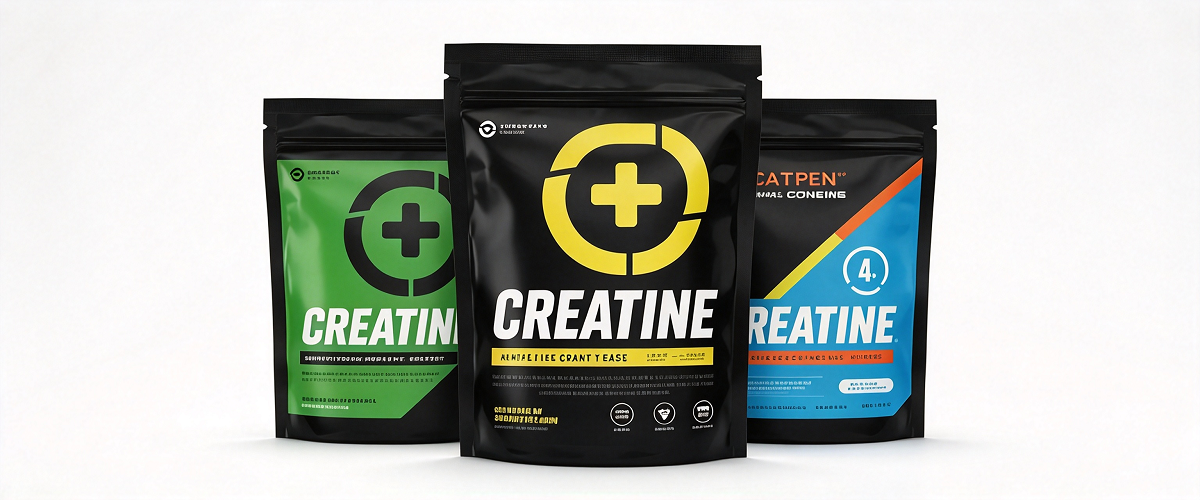
For example, a brand might use black as the core color across its sports nutrition range, with blue for whey protein, green for plant-based protein, red for pre-workout, and purple for creatine. The colors are only one part of the system; the consistent layout helps make the products recognizable as a family.
Clear product differentiation is important because many supplement names and flavors can look similar. The design should help consumers identify the correct product quickly without confusing the brand's visual identity.
Make Product Information Easy to Read
Sports supplement packaging often contains more information than a typical snack pouch. The design must accommodate product identity, ingredient lists, serving information, preparation instructions, and required labeling.
The front panel should prioritize the information that helps consumers identify the product. Detailed information can be organized on the back or side panels, depending on the bag format.
Avoid using decorative fonts for essential information. Small type, low contrast, and crowded layouts can reduce legibility and may create compliance problems.
Before printing, verify the accuracy of all label content, including:
- Product name and flavor.
- Net quantity.
- Ingredient list.
- Allergen declarations.
- Nutrition or supplement information as required.
- Serving size and directions.
- Required warnings and claims.
- Storage instructions.
- Manufacturer or responsible business details.
- Lot and date coding space.
Specific requirements vary across markets. Brands should confirm the final artwork against the applicable regulations before production.
Avoid Unsupported Health and Performance Claims
Muscle-building supplements are often marketed using performance-oriented language. Packaging can communicate product characteristics, but claims must be accurate, appropriately substantiated, and compliant with the rules in the destination market.
Brands should review wording related to muscle growth, strength, recovery, endurance, hormone effects, or other physiological outcomes before printing. The fact that a phrase is common in the sports nutrition industry does not automatically make it acceptable in every jurisdiction.
Packaging artwork should also avoid implying that a product guarantees a particular outcome. The final wording should align with the product formulation, available evidence, and applicable labeling requirements.
Consider Sustainability in the Context of Product Protection
Brands may want to reduce material use or select packaging designed for recycling. These goals should be evaluated alongside the product's barrier requirements, shelf life, and manufacturing conditions.
Possible approaches include:
- Reducing unnecessary material thickness where performance permits.
- Optimizing pouch dimensions to avoid excess packaging.
- Exploring suitable mono-material PE or PP structures.
- Reducing avoidable packaging components.
- Evaluating printing and finishing choices.
- Selecting packaging that can be handled efficiently during distribution.
However, a package should not be described as recyclable without considering the complete construction and the recycling systems available in the target market. A mono-material pouch may still require technical evaluation, and not every local collection system accepts flexible packaging.
For supplement products, protecting product quality is also an important part of resource efficiency. Packaging that fails prematurely may cause product waste, returns, or disposal. The preferred solution should balance material use, product protection, and credible end-of-life options.
Plan for International Shipping and Market Differences
Sports nutrition brands may sell through distributors, retailers, e-commerce platforms, and gyms across several countries. Packaging must accommodate the physical demands of distribution as well as market-specific labeling and compliance requirements.
Consider the following:
Transit time: Longer routes may increase the importance of robust seals, suitable barriers, and protective secondary packaging.
Climate: Humid conditions can increase the challenge of moisture control, while high temperatures may affect the product and its packaging environment.
Label languages: Multiple languages require additional layout space and careful text management.
Import requirements: Food-contact and labeling requirements vary by destination market.
Retail formats: Some markets may prefer large value packs, while others may favor smaller packs or single-serving formats.
E-commerce: Individual parcel shipping may require additional protection against compression or abrasion.
Planning these factors early can reduce the need for costly artwork or material changes after the initial packaging order.
Check Compatibility with the Filling Line
A packaging structure should be tested with the actual filling and sealing equipment. Differences in stiffness, sealant properties, pouch dimensions, and closure design can affect machine performance.
Important questions include:
- Can the pouch be opened and held consistently by the machine?
- Does the material seal within the available process window?
- Is the opening wide enough for the filling method?
- Can the line maintain accurate fill weights?
- Is powder likely to contaminate the seal area?
- Can the machine apply the zipper or other closure correctly?
- Does the finished pouch withstand downstream packing and handling?
Production trials can reveal problems before the main order is filled. They can also help identify opportunities to reduce waste or improve line speed.
Establish Quality Standards with the Supplier
A clear packaging specification makes it easier to compare quotations and maintain consistent quality across repeat orders.
The specification should define:
- Bag type and dimensions.
- Material structure and thickness.
- Printing method and color references.
- Finish requirements.
- Zipper, notch, window, or other features.
- Tolerances for dimensions.
- Seal and leakage requirements.
- Required documentation.
- Packaging and shipping configuration.
- Inspection criteria and defect acceptance rules.
Brands should agree on how samples are approved and how production lots will be inspected. For repeat orders, retaining an approved reference sample can help maintain consistency.
The supplier should also be informed about any changes in the product, fill weight, storage requirements, or intended market that could affect the packaging specification.
Build a Practical Packaging Development Workflow
A structured development process can reduce errors and help keep a supplement launch on schedule.
| Stage | Main Task | Expected Outcome |
|---|---|---|
| 1. Product assessment | Identify formulation, fill weight, shelf life, and storage needs | Defined protection requirements |
| 2. Format selection | Compare stand-up pouches, flat-bottom bags, sachets, and other options | Selected bag format |
| 3. Material specification | Establish barrier, sealant, and mechanical requirements | Agreed laminate specification |
| 4. Artwork development | Create brand graphics and organize product information | Print-ready design direction |
| 5. Technical review | Check dieline, seals, closures, and equipment compatibility | Approved technical artwork |
| 6. Proofing and sampling | Evaluate print quality and physical package performance | Approved sample |
| 7. Production trial | Test filling, sealing, and handling with the actual product | Confirmed production suitability |
| 8. Quality approval | Verify agreed requirements and documentation | Release for production |
| 9. Delivery planning | Coordinate shipping, receiving, and inventory | Packaging available for filling |
| 10. Performance review | Monitor product quality, customer feedback, and packaging defects | Improvements for future orders |
This workflow can be adapted to the size of the project. A small trial order may require fewer formal steps than a large international launch, but the essential checks should not be skipped.
Measure Packaging Performance After Launch
Packaging performance should be evaluated using both technical and commercial indicators.
Useful measures include:
- Packaging defect rate.
- Seal failure or leakage incidents.
- Filling-line waste.
- Product damage during shipping.
- Consumer complaints about opening or resealing.
- Product clumping or quality complaints.
- Inventory turnover.
- Cost per saleable unit.
- Repeat-order consistency.
These indicators help brands identify whether problems arise from material selection, packaging conversion, filling operations, distribution, or consumer use.
Feedback should inform future decisions. If consumers consistently struggle to reseal a pouch, the zipper design may need revision. If a product shows moisture-related quality changes, the brand should investigate the full storage and packaging system rather than simply switching materials without testing.
FAQ
What is the best flexible packaging for whey protein powder?
A resealable stand-up pouch made from a suitable barrier laminate is a common option for whey protein powder. The final structure should reflect the formulation, moisture and oxygen sensitivity, required shelf life, and storage conditions. Large-volume or premium products may also use flat-bottom or side-gusseted bags.
Is aluminum foil necessary for protein powder packaging?
Not always. Aluminum foil provides a strong barrier against moisture, oxygen, and light, but some protein powders can be adequately protected by suitable metallized or other barrier laminates. The choice should be based on product stability requirements and testing rather than a universal rule.
Why is moisture barrier performance important for sports supplements?
Moisture can cause some powders to clump, cake, or lose their intended flow properties. A suitable moisture barrier, reliable seals, and appropriate storage conditions help reduce these risks. The degree of protection needed depends on the formulation and expected shelf life.
Are resealable zippers necessary for supplement pouches?
Zippers are useful for multi-serving products because they allow consumers to open and close the pouch repeatedly. They are not essential for every product, especially single-serving sachets. A zipper should complement, not replace, the initial heat seal.
What is the difference between a stand-up pouch and a flat-bottom bag?
A stand-up pouch usually has a bottom gusset that helps it stand upright. A flat-bottom bag has a more structured base and often provides multiple broad panels for branding and information. Both can be suitable for sports supplements, depending on fill volume, positioning, production requirements, and cost.
Can flexible packaging be used for creatine monohydrate?
Yes. Creatine monohydrate is commonly packed in flexible pouches and individual sachets. The packaging should provide suitable moisture protection and reliable seals, with the final specification determined by the formulation, intended shelf life, and storage conditions.
Are stick packs suitable for pre-workout supplements?
Stick packs can be suitable for single-serving pre-workout powders when the serving volume fits the format. They offer portability and portion control. Brands should confirm that the powder can be filled accurately and that the package opens and pours conveniently.
How can brands reduce clumping in protein powder packaging?
Reducing clumping requires a combination of suitable formulation and manufacturing controls, effective moisture protection, reliable sealing, and appropriate storage. A resealable closure can help after opening, but it cannot correct a product that was exposed to excessive moisture before packaging or stored improperly.
What information should appear on sports supplement packaging?
Depending on the product and market, packaging may need to include the product name, net quantity, ingredients, allergen information, serving instructions, nutrition or supplement facts, warnings, storage instructions, manufacturer details, and lot or date codes. Brands should verify the applicable requirements before printing.
Can custom supplement pouches be produced in different sizes and flavors?
Yes. Flexible packaging can be customized for different fill weights, dimensions, flavors, and product lines. Brands should confirm the supplier's minimum order quantity, printing options, material availability, and whether different artwork versions can be produced efficiently.
Is mono-material packaging suitable for protein powder?
Potentially. Mono-material structures may support certain recycling pathways, but they must still provide the barrier, sealing, and mechanical performance required by the product. Their practical recyclability also depends on local collection and processing infrastructure.
How should brands compare flexible packaging suppliers?
Compare suppliers using the same specifications for bag dimensions, laminate structure, thickness, features, printing method, order quantity, quality standards, and delivery terms. Consider technical support, proofing, production consistency, and lead time as well as the unit price.
Conclusion
Flexible packaging is an important part of protecting muscle-building supplements, supporting everyday convenience, and communicating a sports nutrition brand's identity. The right solution depends on the product formulation, serving size, required shelf life, filling process, distribution environment, and target market.
Stand-up pouches provide a versatile option for many multi-serving powders, flat-bottom bags can support premium positioning, and sachets or stick packs offer portable, premeasured portions. Material selection should focus on the actual moisture, oxygen, light, and mechanical protection requirements rather than assuming that one laminate is best for every supplement.
Functional features such as resealable zippers, tear notches, wide openings, and clear labeling can improve the consumer experience, while reliable seals, appropriate food-contact materials, and production trials help maintain package quality. Cost, printing, order quantity, sustainability, and international compliance should be considered early in the development process.
For sports nutrition brands seeking to build a dependable product range, the best packaging strategy combines validated product protection, practical usability, distinctive branding, and efficient manufacturing. When these elements are planned together, flexible packaging can help deliver a more consistent product experience from the filling line to the consumer's gym bag or home storage shelf.