Guide to Flexible Packaging for Tortilla Chips
Anna_Yu
Guide to Flexible Packaging for Tortilla Chips
Tortilla chips have become a popular snack across supermarkets, convenience stores, restaurants, party gatherings, and online retail channels. Made primarily from corn and commonly seasoned with salt, chili, cheese, lime, or other flavorings, tortilla chips are valued for their distinctive crunch, bold flavors, and versatility. However, maintaining these qualities from production to consumption requires more than a good recipe. Flexible packaging for tortilla chips plays a critical role in preserving crispness, limiting oxidation, preventing breakage, and maintaining product quality throughout distribution.
Unlike many soft snacks, tortilla chips are particularly vulnerable to mechanical damage. Their rigid, brittle structure means that excessive pressure, vibration, or impact can turn whole chips into fragments. At the same time, moisture absorption can quickly reduce their characteristic crunch, while oxygen exposure can contribute to rancidity in products containing oils. Poor seals or unsuitable packaging materials may therefore result in quality deterioration, customer complaints, and increased product waste.
Flexible packaging offers snack manufacturers a practical way to address these challenges. From high-speed pillow bags used for mass-market tortilla chips to stand-up pouches designed for premium flavored varieties, different packaging formats can be customized to meet specific production, storage, and marketing requirements. Material structures can be selected to provide appropriate moisture and oxygen barriers, while nitrogen flushing can help reduce residual oxygen and create a protective gas cushion inside the bag.
Packaging also influences brand recognition and purchasing decisions. Bright graphics, transparent windows where suitable, resealable closures, and distinctive pouch formats can help tortilla chip brands stand out in crowded snack aisles. For exporters and e-commerce businesses, packaging must also withstand transportation, changing environmental conditions, and the demands of modern distribution networks.
However, no single packaging structure is ideal for every tortilla chip product. Plain salted chips, heavily seasoned varieties, organic corn chips, restaurant-sized packs, and premium multigrain products may have different requirements for barrier performance, pack size, filling speed, and shelf life.
This guide explores how to choose flexible packaging for tortilla chips by examining bag styles, moisture and oxygen protection, material selection, packaging features, and key commercial considerations. Whether you are a snack manufacturer, private-label brand, food exporter, or packaging buyer, understanding these factors can help you select a solution that protects product quality while supporting efficient production and stronger brand performance.
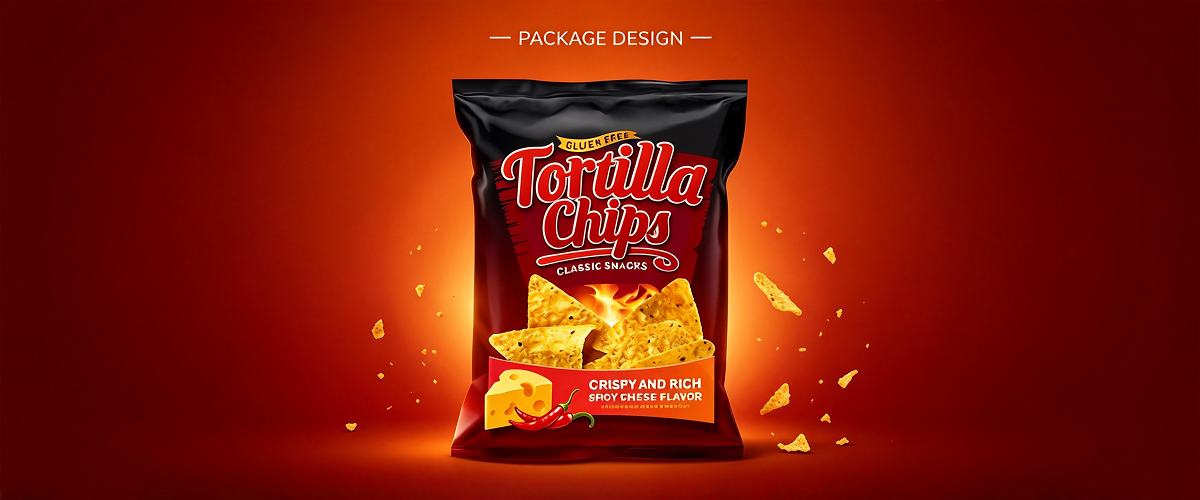
1. What Types of Flexible Packaging Are Best for Tortilla Chips?
The best packaging format for tortilla chips depends on several factors, including chip size, fragility, seasoning, bag weight, sales channel, and the production equipment used. A small single-serving bag for convenience stores has different requirements from a large family-size pack or a premium tortilla chip pouch intended for specialty retail.
The ideal package should provide adequate barrier protection, minimize chip damage, support efficient filling and sealing, and create enough printable space for product information and branding.
Pillow Bags for High-Volume Tortilla Chip Production
<AsyncImageGroup query={["tortilla chips printed pillow bag packaging supermarket snack","corn tortilla chips flexible flow wrap pillow pouch packaging"]} aspectRatio="5:4" layout="bento" />
Pillow bags are among the most common formats for mass-market tortilla chips. They are typically produced from a flexible film roll, formed around the product, and sealed along the back and ends. This format works well with automated vertical form-fill-seal (VFFS) equipment and is widely used for high-volume snack production.
Pillow bags are suitable for:
- Standard salted tortilla chips.
- Cheese-flavored and chili-flavored chips.
- Barbecue and other seasoned varieties.
- Single-serving convenience packs.
- Family-size retail bags.
- Promotional and multipack snack products.
One of the main advantages of pillow bags is production efficiency. Manufacturers can form, fill, and seal the packaging in a continuous process, making the format suitable for large production runs.
The relatively simple construction can also support competitive packaging costs. Brands can print bold graphics across the main panels, display flavor information prominently, and coordinate different colors across a product range.
However, pillow bags are not automatically suitable for every tortilla chip application. Their performance depends on the film structure, thickness, seal quality, bag dimensions, and filling process. The package must also provide enough internal volume for the chips and any protective gas atmosphere without being excessively large.
Because pillow bags are usually not resealable, they are most practical for products intended to be consumed shortly after opening. Larger bags that may remain open over multiple occasions could benefit from a different format or an additional closure solution.
Stand-Up Pouches for Premium and Specialty Tortilla Chips
<AsyncImageGroup query={["premium tortilla chips stand up pouch packaging resealable zipper","custom printed stand up pouch corn chips snack packaging"]} aspectRatio="5:4" layout="carousel" />
Stand-up pouches provide a broad printable surface and a bottom gusset that allows the filled package to stand upright. They are commonly considered for premium tortilla chips, organic corn chips, specialty flavors, and products positioned toward health-conscious or gourmet snack buyers.
Potential applications include:
- Organic or multigrain tortilla chips.
- Specialty corn chips with distinctive seasonings.
- Premium restaurant-style tortilla chips.
- Small-batch or artisanal snack brands.
- Tortilla chips sold through specialty retailers and e-commerce channels.
The upright shape can improve shelf visibility and create a more structured presentation than a conventional pillow bag. It also provides space for product photography, brand storytelling, ingredient information, and nutritional labeling.
Resealable zippers may be useful for larger pouches intended for repeated consumption. They can help consumers close the package after opening, reducing ongoing exposure to humid air. However, a zipper does not restore the original unopened condition, and consumers still need to close it properly and store the product as directed.
For tortilla chips, the pouch must also accommodate the product's fragility. A package that is too small can compress the chips, while an oversized package may allow excessive movement during transport. Bag dimensions should therefore be designed around chip geometry, fill weight, and the intended protective gas atmosphere.
Stand-up pouches may cost more per unit than simpler pillow bags, particularly when additional features are included. Their value depends on whether the premium presentation, resealability, and retail positioning justify the extra cost.
Flat-Bottom Bags for Premium Retail and Gift Packs
<AsyncImageGroup query={["flat bottom bag tortilla chips premium snack packaging","box pouch gourmet corn chips packaging custom printed"]} aspectRatio="5:4" layout="carousel" />
Flat-bottom bags, sometimes called box pouches, have a structured base and multiple printable panels. They can provide a distinctive appearance for premium tortilla chips, specialty snack collections, and selected gift-oriented products.
Their main advantages include:
- A stable base for upright display.
- Broad front and back panels.
- Additional printable space on the side panels.
- A structured appearance that can reinforce premium positioning.
- Opportunities for coordinated designs across multiple flavors.
A flat-bottom pouch can help a brand distinguish its products from conventional snack bags. It may be appropriate for tortilla chips marketed with artisan ingredients, distinctive corn varieties, specialty seasonings, or premium positioning.
The format can also support larger design systems. The front panel can focus on the brand and product identity, while the side panels carry additional information or brand storytelling.
However, a more structured pouch does not automatically provide better protection against chip breakage. Mechanical protection still depends on the amount of internal space, the protective gas atmosphere, the laminate, and the handling conditions. The filled bag should be tested to confirm that the format performs as intended.
Three-Side-Seal Bags for Small Portions and Samples
Three-side-seal pouches are sealed along three edges, with the remaining side used for filling before the final seal is applied. They can be useful for small portions of tortilla chips, trial packs, and promotional products.
Typical applications include:
- Small snack portions.
- Product samples.
- Single-serving specialty chips.
- Snack packs included in meal kits.
- Promotional products for events or foodservice.
- Individual packs within a larger multipack.
Their compact form makes them convenient for products intended to be consumed in one sitting. They also offer a simple printable area for brand identification and flavor information.
However, tortilla chips can be particularly sensitive to compression. The dimensions and fill weight of a three-side-seal pouch should be selected carefully so that the product is not squeezed during filling or handling.
If the package contains large triangular chips, the pouch may need enough width and depth to accommodate the product without placing excessive stress on the seals. A sample filling trial can help determine whether the format is suitable.
Quad-Seal Bags for Larger or Heavier Snack Packs
Quad-seal bags use four vertical seals and can provide a structured appearance with good capacity. They may be considered for larger snack formats, including some tortilla chip products sold through retail or foodservice channels.
Potential advantages include:
- A more defined package shape.
- Large printable panels.
- Suitability for selected higher-volume packs.
- Opportunities for a consistent product-family design.
The format should be selected according to the product's fill weight, chip size, bag stability, and packaging line. As with other formats, the design must provide sufficient space to protect the chips without unnecessarily increasing the amount of material used.
For large packs, the mechanical demands on the bag and seals may increase. The finished package should be assessed for seal integrity, handling damage, and stability during stacking and distribution.
Compare Common Tortilla Chip Packaging Formats
| Packaging Format | Typical Applications | Main Advantages | Important Considerations |
|---|---|---|---|
| Pillow bag | Mass-market chips, single servings, family packs | Efficient high-speed production, broad print area, cost efficiency | Usually not resealable; requires careful control of chip movement and seal quality |
| Stand-up pouch | Premium chips, specialty flavors, resealable packs | Upright display, strong branding potential, optional zipper | May have a higher unit cost; bag dimensions must protect fragile chips |
| Flat-bottom bag | Premium retail, specialty collections | Structured appearance, multiple printable panels | Higher conversion complexity; does not automatically prevent breakage |
| Three-side-seal pouch | Small portions, samples, trial packs | Compact format and simple design | Limited capacity; chip dimensions and seal stress require attention |
| Quad-seal bag | Larger packs and selected premium products | Defined shape and substantial print area | Must be matched to fill weight and distribution requirements |
The format should be chosen according to the product's physical properties and commercial goals rather than appearance alone. For many high-volume tortilla chip brands, pillow bags remain a practical choice. Stand-up and flat-bottom pouches can be useful when branding, resealability, or premium presentation is a stronger priority.
Choose Bag Dimensions Based on Chip Geometry
Tortilla chips are often thin, triangular, and brittle. Their shape creates specific packaging challenges that differ from those of many other snacks.
If a bag is too narrow, chips may become trapped against the side seals or experience excessive pressure during filling. If it is too large, the product may move around during transport and experience repeated impacts.
Bag design should consider:
- Average chip diameter and thickness.
- Shape variation within the batch.
- Fill weight and bulk volume.
- Expected settling during transportation.
- Headspace required for protective gas.
- Seal width and location.
- Filling speed and drop height.
- Secondary packaging and carton dimensions.
The goal is to provide sufficient room for the chips and protective atmosphere without creating unnecessary movement or excessive packaging volume.
Consider the Sales Channel Before Selecting the Format
The same tortilla chip product may require different packaging depending on where it is sold.
For convenience stores, small pillow bags may offer practical portion sizes and efficient production. For supermarkets, larger family packs may be more appropriate. Specialty retailers may favor premium stand-up pouches with detailed artwork, while foodservice customers may prioritize larger quantities and functional performance over elaborate finishes.
E-commerce creates additional requirements because packages may experience more handling and compression than products transported in a stable retail carton. Brands should consider the entire shipping configuration, not only the primary bag.
A format that performs well in one channel should be validated for another before being adopted without modification.
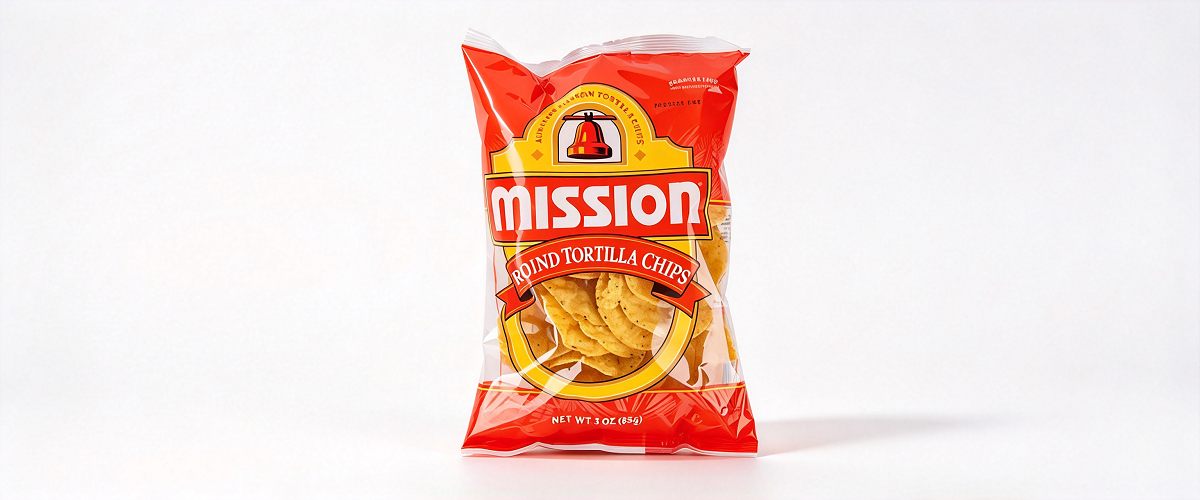
2. How Does Flexible Packaging Protect Tortilla Chips from Moisture, Oxygen, and Breakage?
Tortilla chips must retain three important characteristics throughout their shelf life: crispness, acceptable flavor, and an appealing proportion of whole chips. Flexible packaging helps preserve these characteristics by limiting environmental exposure and reducing mechanical damage.
However, moisture protection, oxygen control, and breakage prevention involve different mechanisms. The material structure helps manage moisture and oxygen transmission, while bag design, protective gas, filling operations, and distribution conditions influence physical damage.
Moisture Barrier Helps Preserve Crispness
Tortilla chips are low-moisture foods. Their characteristic crisp texture depends on maintaining a suitable moisture level, and exposure to humid air can cause them to lose crispness.
Moisture entering the package may lead to:
- Softer or less crunchy chips.
- Changes in texture during chewing.
- Reduced consumer satisfaction.
- Changes in the behavior of seasonings.
- Shorter acceptable shelf life.
The extent of moisture-related deterioration depends on the chip formulation, cooking process, initial moisture content, storage conditions, and packaging performance.
A suitable moisture barrier slows the movement of water vapor through the packaging material. However, the final result depends on more than the base film. Lamination quality, seal integrity, material thickness, and the design of the finished bag all contribute to performance.
For tortilla chips distributed in humid regions, moisture protection can be especially important. The package must be capable of limiting moisture ingress during warehouse storage, retail display, and transportation.
Brands should select the barrier level according to the product's required shelf life and expected environmental conditions. A structure suitable for a short local distribution cycle may not provide the same protection needed for a long export route.
Oxygen Barrier Helps Reduce Oxidation and Flavor Deterioration
Tortilla chips often contain oil absorbed during frying or added during processing. Depending on the type of oil and the product formulation, exposure to oxygen can contribute to oxidation, leading to stale or rancid flavors.
Oxygen can also affect some seasoning ingredients and flavor compounds. As a result, the packaging structure should be selected according to the product's sensitivity and intended shelf life.
A suitable oxygen barrier can help reduce oxygen transmission through the film. In some applications, nitrogen flushing is used to lower the oxygen concentration inside the package before sealing.
However, the effectiveness of oxygen control depends on several factors:
- The oxygen transmission rate of the packaging material.
- The amount of residual oxygen after filling.
- The integrity of the seals.
- The quality of the gas-flushing process.
- The type of oil and seasoning.
- The storage temperature and duration.
A high-barrier film cannot fully compensate for poor sealing or a filling process that leaves excessive oxygen inside the bag. Packaging materials and production settings should therefore be evaluated as a complete system.
Nitrogen Flushing Helps Control Oxygen and Cushion the Chips
Nitrogen flushing is widely used in many commercial snack applications. Before the bag is sealed, nitrogen is introduced to displace some of the air inside the package.
This process can serve two important purposes.
First, reducing the amount of oxygen inside the package can help limit oxidation when combined with a suitable barrier structure and sound seals. Second, the gas provides internal volume that can cushion the chips against some external impacts.
This protective atmosphere is sometimes described informally as a gas cushion. It can help reduce breakage, but it does not make the chips immune to damage.
If the bag is heavily compressed, dropped, or subjected to rough handling, chips can still break. The effectiveness of the protective gas depends on the volume and pressure of the gas, bag dimensions, chip fragility, and distribution conditions.
The gas-flushing process must also be controlled. Too little gas may reduce the intended protection, while excessive gas can affect package size, carton utilization, and handling. The appropriate settings should be established through production trials.
Protect Chips from Compression During Filling
Many tortilla chip breakage problems begin before the package leaves the factory. The filling process may expose chips to drops, impacts, vibration, or compression if the equipment is not properly configured.
Potential sources of damage include:
- Excessive drop height from the weighing system.
- High-speed product transfer.
- Narrow filling funnels.
- Sharp transitions in the product path.
- Overfilling the bag.
- Inappropriate vibration settings.
- Pressure applied during bag handling.
The packaging format should be compatible with the filling system, but the production process itself also needs attention.
A good approach is to conduct filling trials with the actual chips and packaging materials. Measure the proportion of broken chips before and after filling, and examine whether specific machine settings or bag dimensions contribute to damage.
Small improvements in the product path can sometimes be as important as changes to the packaging structure.
Use Sufficient Headspace Without Creating Excessive Movement
Headspace is the space between the product and the top of the package. For tortilla chips, this space can accommodate protective gas and help prevent the chips from being compressed by the seals.
However, too much headspace can allow excessive product movement, especially when the bag is repeatedly handled or transported over long distances. Too little space can compress the chips and interfere with sealing.
The ideal headspace depends on:
- Chip size and shape.
- Product fill weight.
- Bag dimensions.
- Protective gas requirements.
- Seal position.
- Shipping configuration.
The objective is to provide enough room for the intended protective atmosphere while keeping the product suitably positioned within the package.
Choose Packaging Materials That Resist Puncture and Flex Damage
Tortilla chips themselves are brittle, but the package must also resist the stresses created by their edges, corners, and movement inside the bag.
A suitable structure should have enough mechanical strength to withstand normal handling. The exact requirement depends on the laminate, bag thickness, fill weight, and distribution environment.
Important properties may include:
- Puncture resistance.
- Tear resistance.
- Flex durability.
- Seal strength.
- Resistance to abrasion.
- Performance at folds and corners.
A material with excellent oxygen and moisture barrier properties may still be unsuitable if it is too fragile for the intended handling conditions. Conversely, a mechanically strong structure may not provide sufficient barrier performance for the required shelf life.
Both types of performance should be evaluated together.
Seal Integrity Prevents Moisture and Oxygen Entry
The seal is a critical part of the packaging system. A small channel, wrinkle, or contaminated sealing area can allow air and moisture to enter the package, even if the laminate itself has strong barrier properties.
Common causes of poor sealing include:
- Seasoning powder or oil in the seal area.
- Incorrect sealing temperature.
- Insufficient pressure or dwell time.
- Wrinkles across the seal.
- Inconsistent film feeding.
- Incompatible sealant layers.
- Damage after sealing.
For tortilla chips, powder from seasoning may collect near the package opening during filling. The sealing process must be designed to minimize contamination and produce consistent seals.
Quality-control methods may include visual inspection, seal-strength testing, and suitable leak testing. The appropriate method depends on the package design and the manufacturer's quality requirements.
Protect the Product During Transportation and Storage
After sealing, tortilla chips may pass through cartons, pallets, warehouses, trucks, containers, and retail distribution systems. Each stage creates potential risks from compression, vibration, impact, temperature variation, and humidity.
The primary package should be evaluated as part of the complete distribution system.
For example, a bag that performs adequately in a stable retail carton may experience more damage when shipped individually through an e-commerce network. In this situation, the outer carton or shipping package may need additional protection.
Useful distribution checks include:
- Carton compression assessment.
- Vibration or transport simulation where appropriate.
- Drop testing of the packed case.
- Inspection of bag damage after transit.
- Evaluation of chip breakage rates.
- Review of the final product's moisture and sensory quality.
These tests help identify whether problems originate in the primary bag, the secondary packaging, or the handling process.
Understand the Difference Between Barrier Performance and Breakage Prevention
Moisture and oxygen protection are primarily controlled by material structure, package integrity, and the atmosphere inside the bag. Breakage prevention depends more heavily on physical design and handling.
A high-barrier laminate does not automatically prevent chips from breaking. Similarly, a bag that provides excellent cushioning may not protect the chips from moisture or oxidation if its barrier performance is inadequate.
A complete packaging strategy therefore combines:
- Suitable moisture and oxygen barriers.
- A well-designed bag format.
- Controlled filling and sealing.
- Appropriate nitrogen flushing where required.
- Adequate mechanical protection.
- Suitable cartons and transport handling.
- Product quality checks throughout the distribution process.
This combined approach is more effective than trying to solve every problem by increasing film thickness.
Use Testing to Verify Protection
Packaging performance should be validated using the actual tortilla chip product. A material's technical data is useful, but it does not independently prove that the complete package will maintain product quality for the intended shelf life.
Depending on the product and distribution plan, testing may include:
- Water-vapor transmission evaluation.
- Oxygen transmission evaluation.
- Seal-strength and leak testing.
- Puncture and flex testing.
- Filling-line trials.
- Breakage assessment.
- Sensory evaluation.
- Shelf-life testing under relevant conditions.
- Distribution simulation.
Testing should be designed around the product's risks and commercial requirements. The aim is to confirm that the packaging protects crispness, flavor, and physical integrity under realistic storage and distribution conditions.
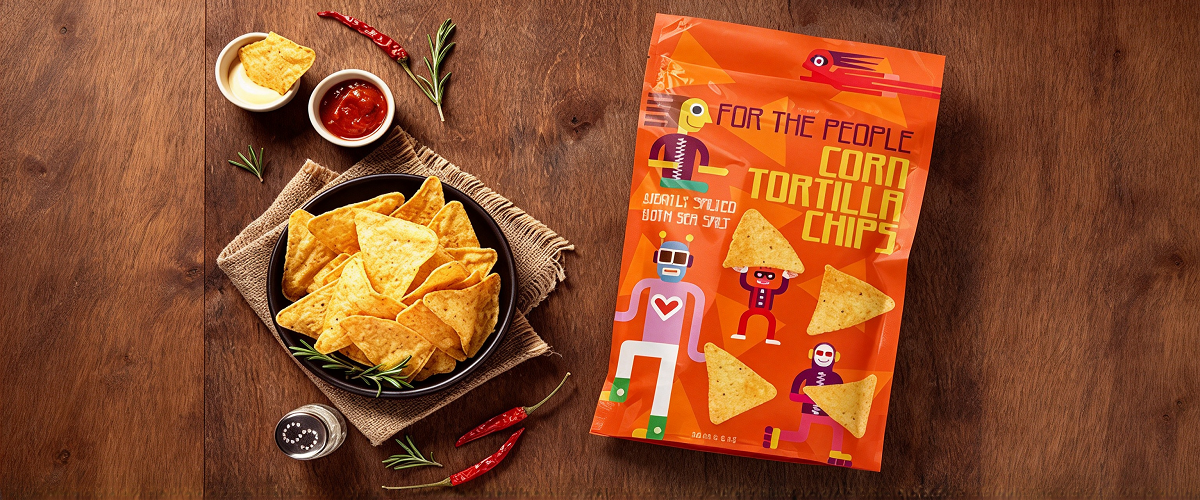
3. Which Packaging Materials Provide the Best Barrier Protection for Tortilla Chips?
Material selection is one of the most important decisions in tortilla chip packaging. The chosen structure must protect the product from moisture and oxygen while providing sufficient mechanical strength, reliable sealing, print quality, and cost efficiency.
Flexible packaging often uses multilayer structures in which different layers perform different functions. An outer layer may support printing and mechanical strength, a barrier layer may limit gas or moisture transmission, and an inner layer may provide heat sealing.
The right structure depends on the tortilla chip formulation, oil content, seasoning, expected shelf life, storage environment, and distribution route.
PET-Based Laminates for Printed Snack Packaging
PET, or polyethylene terephthalate, is commonly used as an outer layer in flexible packaging laminates. It provides useful strength and supports high-quality printing, making it suitable for tortilla chip bags with detailed graphics and strong color requirements.
In many applications, PET is combined with another layer to improve barrier performance and with a sealant layer to form the package.
PET-based laminates may be considered for:
- Standard tortilla chips.
- Salted corn chips.
- Cheese-flavored chips.
- Chili and barbecue varieties.
- Premium printed snack bags.
The complete laminate determines the finished package's performance. PET alone should not be assumed to provide the level of moisture and oxygen protection required for every tortilla chip product.
BOPP Films for Lightweight Snack Packaging
BOPP, or biaxially oriented polypropylene, is widely used in flexible snack packaging because it can provide a lightweight structure, useful stiffness, and a suitable surface for printing or lamination.
BOPP-based structures may be considered for selected tortilla chip applications, especially where production efficiency and material cost are important.
Potential benefits include:
- Lightweight packaging.
- Good print presentation in suitable constructions.
- Compatibility with high-speed packaging operations.
- Useful mechanical properties for many snack formats.
However, BOPP films vary by grade and construction. Barrier performance, sealability, and mechanical behavior depend on the exact film and the complete packaging structure.
For products requiring strong moisture and oxygen protection, BOPP may be combined with other materials rather than used as the only functional layer.
Metallized Films for Enhanced Moisture and Oxygen Barriers
Metallized films contain a thin deposited metal layer, commonly aluminum, which can improve barrier performance compared with many uncoated films.
They are often considered for snack products that need better protection from moisture, oxygen, and light without necessarily using a conventional aluminum foil layer.
For tortilla chips, metallized laminates may be appropriate when the product requires:
- Moisture protection to preserve crispness.
- Oxygen control to limit oxidation.
- Reduced light exposure.
- A balance between barrier performance and material cost.
- Compatibility with printed retail packaging.
The final performance depends on the base film, metallization quality, laminate construction, and the handling stresses experienced by the finished pouch. Flexing or damage to the metallized layer may reduce barrier performance.
Metallized film is not the same as aluminum foil. The two should not be treated as interchangeable without reviewing the relevant technical data.
Aluminum Foil Laminates for Demanding Barrier Requirements
Aluminum foil can provide a very strong barrier against moisture, oxygen, and light when used in a suitable laminate.
For tortilla chips, foil-containing structures may be considered when the shelf-life target, product sensitivity, or distribution conditions justify the additional protection.
Potential applications include:
- Selected premium snack products.
- Products requiring demanding moisture and oxygen control.
- Certain export-oriented snack lines.
- Specialty formulations with a longer planned storage period.
However, foil is not automatically the best choice for every tortilla chip bag. It may increase material cost and can complicate some recycling pathways. The decision should be based on actual product requirements, validated performance, and the commercial priorities of the brand.
For many mainstream snack products, a suitable metallized laminate may provide an appropriate balance between protection and cost. The correct choice should be confirmed through technical evaluation and shelf-life testing.
PE and CPP as Heat-Sealable Inner Layers
Polyethylene (PE) and cast polypropylene (CPP) are used as sealant layers in many flexible packaging structures. They help create the heat seals that keep the product enclosed.
For tortilla chips, the inner layer should form consistent seals under the conditions used on the filling line. It must also be compatible with the rest of the laminate and suitable for the intended food-contact application.
Important considerations include:
- Seal strength.
- Sealing temperature range.
- Resistance to contamination from seasoning or oil.
- Compatibility with the packaging equipment.
- Mechanical behavior during handling.
- Suitability for the product's storage conditions.
A strong seal is essential because moisture or oxygen entering through a defective seal can undermine the performance of the entire laminate.
Compare Common Material Structures for Tortilla Chips
| Example Structure | Potential Benefits | Key Considerations | Possible Applications |
|---|---|---|---|
| BOPP-based laminate | Lightweight construction and useful print presentation | Barrier and seal performance depend on the complete structure | Selected high-volume snack bags |
| PET/PE | Print quality, strength, and heat-sealable inner layer | May require additional barrier capability for demanding shelf-life targets | Selected products with moderate barrier requirements |
| PET/VMPET/PE | Enhanced moisture, oxygen, and light protection in a suitable construction | Metallization and conversion quality affect the final performance | Many flavored and premium tortilla chip products |
| BOPP/VMPET/CPP | Can combine printability, metallized barrier, and sealing performance | Must be matched to the packaging line and product specification | Selected high-speed snack packaging applications |
| PET/AL/PE | Strong barrier against oxygen, moisture, and light | Higher material cost and end-of-life considerations | Selected products requiring demanding barrier performance |
| Mono-material PE or PP structure | May support recycling in suitable collection systems | Barrier, stiffness, sealing, and local recyclability require verification | Brands pursuing material simplification where technically feasible |
These structures are examples, not universal specifications. Actual performance depends on material grades, thickness, adhesives, printing, lamination, conversion quality, and the finished bag.
Select the Material According to the Chip Formulation
Different tortilla chip products may require different packaging performance.
| Tortilla Chip Type | Main Packaging Priorities | Material Selection Considerations |
|---|---|---|
| Plain salted chips | Crispness, moisture control, protection against breakage | Suitable moisture barrier and reliable seals |
| Cheese-flavored chips | Moisture protection, flavor retention, oxygen control where needed | Barrier suited to the seasoning and oil content |
| Chili or spicy chips | Moisture control, aroma retention, seasoning compatibility | Material and seal design suited to the formulation |
| High-oil tortilla chips | Oxidation control, flavor preservation, moisture protection | Consider stronger oxygen barrier where justified |
| Organic or specialty corn chips | Product protection and brand presentation | Structure should match shelf-life needs rather than marketing claims alone |
| Large family packs | Barrier performance, seal strength, handling resistance | Structure validated for higher fill weight and distribution |
| Export tortilla chips | Long transit, humidity variation, compression, shelf-life requirements | Barrier and mechanical properties matched to route and storage conditions |
This comparison helps establish the initial specification, but the final material should be selected based on product testing and the intended storage environment.
Understand Oxygen Transmission Rate and Water Vapor Transmission Rate
Packaging suppliers may provide oxygen transmission rate (OTR) and water vapor transmission rate (WVTR) data.
OTR indicates how quickly oxygen passes through a material under specified test conditions. WVTR indicates the rate at which water vapor passes through the material under specified conditions.
For tortilla chips, both properties may be important. Moisture ingress can reduce crispness, while oxygen exposure can contribute to oxidation of oils and flavor components.
When comparing materials, brands should confirm:
- The test method used.
- Test temperature and humidity.
- Film thickness and construction.
- Whether the figures apply to a single film or a complete laminate.
- Whether the finished bag has been tested.
- How the seals affect overall package performance.
A lower transmission rate generally indicates a stronger barrier for the relevant substance under comparable conditions. However, test values should not be compared directly if the conditions or methods differ.
Consider Flex Cracking and Mechanical Stress
A material may perform well in a laboratory test but experience different stresses when converted into a pouch and transported through the supply chain.
Folding, flexing, abrasion, and pressure can affect some barrier layers. For example, damage to a metallized layer may reduce its protective performance, while punctures or weak seals can create direct pathways for air and moisture.
Tortilla chip packaging should therefore be evaluated for both barrier and mechanical performance.
Useful checks may include:
- Flex durability.
- Puncture resistance.
- Seal strength.
- Abrasion resistance.
- Finished-pouch leak testing.
- Transportation simulation.
The appropriate tests depend on the packaging construction, bag size, product weight, and distribution route.
Evaluate Mono-Material Structures with Realistic Expectations
Some brands are exploring mono-material PE or PP packaging to simplify material composition and potentially support recycling. These options may be suitable for tortilla chips when they meet the necessary barrier, mechanical, and sealing requirements.
However, mono-material packaging is not automatically recyclable in every market. Practical recyclability depends on the complete construction, including inks, adhesives, coatings, closures, and any other components, as well as the collection and processing infrastructure available locally.
For tortilla chips, the critical question is whether the structure can maintain crispness and product quality for the required shelf life. If the barrier performance is insufficient, the environmental benefits of using less complex material may be offset by increased product loss.
Brands should evaluate packaging performance, local recycling options, and the evidence supporting any environmental claims before selecting the final structure.
Confirm Food-Contact Compliance
Flexible packaging intended for tortilla chips must comply with applicable food-contact requirements in the target market.
Compliance considerations may include the base films, adhesives, printing inks, sealant layers, and any additional components. Supplier documentation should correspond to the actual construction and intended use.
Brands selling internationally should review the relevant market requirements before production. A material that is suitable for one product or jurisdiction should not automatically be assumed suitable for another.
Validate the Finished Package Before Mass Production
The final pouch should be tested as a complete system rather than assessed solely from a film specification.
A suitable validation plan may include:
- Barrier testing.
- Seal-strength and leak testing.
- Puncture and flex testing.
- Filling-line trials.
- Nitrogen-flushing evaluation where applicable.
- Product shelf-life studies.
- Transportation or distribution simulation.
- Sensory checks for crispness, flavor, and aroma.
The results help confirm whether the selected structure provides the required protection without unnecessary cost or material use.
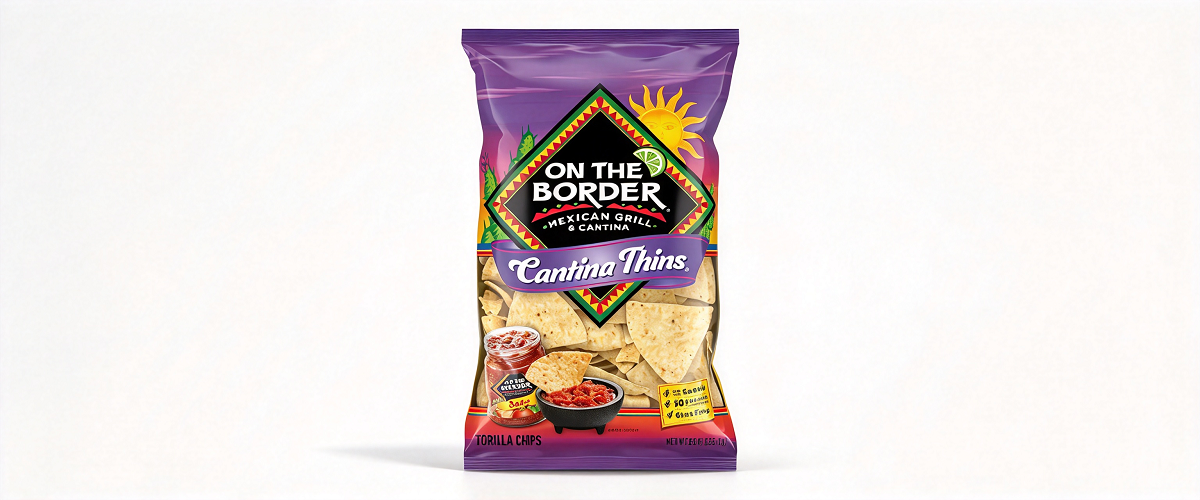
4. What Packaging Features Help Maintain Tortilla Chip Crispness and Extend Shelf Life?
Packaging features can improve tortilla chip protection and make the product more convenient to use. However, their value depends on how they interact with the material structure, filling equipment, and intended storage conditions.
For most tortilla chip products, the most important considerations are reliable seals, appropriate protective gas, suitable bag dimensions, effective opening design, and packaging that withstands handling.
Nitrogen Flushing for Freshness and Cushioning
Nitrogen flushing is a widely used technique for packaging brittle snacks. It replaces some of the air in the bag with nitrogen before the package is sealed.
The process can help reduce residual oxygen and create internal gas volume that cushions the chips. When combined with suitable barrier materials and reliable seals, it can help support product quality during storage.
The main benefits may include:
- Reduced oxygen exposure.
- Better control of oxidation risk.
- A protective gas cushion around the chips.
- Support for the intended shelf-life target.
- Improved resistance to some forms of mechanical damage.
However, nitrogen flushing must be matched to the product and packaging line. Gas flow, filling speed, bag volume, residual oxygen, and seal quality all influence the outcome.
The correct gas volume should be established through trials. Excessive package volume may increase carton size and shipping costs, while insufficient gas may reduce the intended protection.
Reliable Heat Seals to Keep Moisture Out
Heat seals are essential for maintaining the protective atmosphere and limiting moisture ingress. A bag with an excellent barrier laminate may still fail if the seals are weak or contaminated.
For tortilla chips, seal performance can be affected by seasoning dust, oil, wrinkles, and inconsistent sealing conditions.
A reliable sealing system should account for:
- Appropriate sealing temperature.
- Adequate pressure and dwell time.
- Sealant compatibility.
- Clean sealing surfaces.
- Consistent film feeding.
- Seal inspection and testing.
The seal area should be designed to minimize contamination during filling. Quality checks should be established to detect leaks or weak seals before the product enters distribution.
Appropriate Bag Volume to Reduce Compression
The size of the package directly affects how the chips are positioned inside the bag. A bag that is too small may compress the product, while a bag that is too large may allow excessive movement.
For tortilla chips, the package should provide sufficient volume for the fill weight and protective gas while maintaining a practical shape for storage and shipping.
The correct size depends on:
- Chip dimensions.
- Fill weight.
- Product bulk density.
- Protective gas requirements.
- Filling method.
- Carton dimensions.
- Expected distribution handling.
Brands should test the filled package rather than rely solely on nominal bag dimensions. The chips' behavior during filling and transport can reveal whether the package needs more space, less headspace, or a different format.
Resealable Zippers for Multi-Serving Bags
A zipper can improve convenience for family-size tortilla chip bags and premium products intended for repeated consumption.
After opening, consumers can close the pouch to help limit exposure to humid air. This can help maintain crispness for longer than leaving the bag open, although it does not recreate the original sealed environment.
A zipper is most useful when:
- The product is consumed over several occasions.
- The pouch is large enough for multiple servings.
- Consumers need convenient home storage.
- The closure can be operated easily.
- The package can be designed without compromising the main seal.
For small bags intended to be consumed in one sitting, a zipper may add cost without delivering much practical benefit.
Easy-Open Tear Notches
Tear notches provide a designated starting point for opening a bag. They can improve convenience, especially for single-serving packs and packages that do not use zippers.
The notch should be positioned so that consumers can open the bag without damaging the main body or creating an opening that is too small for the product.
The design should also consider whether the consumer is likely to pour the chips directly from the bag or reach inside to remove them.
Opening performance should be tested with the actual laminate because different structures have different tear characteristics.
Transparent Windows for Product Visibility
A transparent window can allow consumers to see the chips before purchasing. This may be useful for premium tortilla chips, specialty corn varieties, or products where appearance is a selling point.
However, a window can reduce the available printed area and may affect light protection. It also needs to be incorporated without compromising the package's barrier performance.
For many mainstream tortilla chip products, a fully printed bag may offer better control over branding and light exposure. A window should therefore be used when product visibility provides a clear benefit.
Rounded Corners and Appropriate Bag Construction
Sharp corners, folds, and seal transitions can experience stress during filling and handling. The appropriate pouch design should minimize avoidable weak points and provide sufficient durability for the intended use.
Rounded corners may be considered for certain pouch formats, although they do not automatically prevent breakage or leakage. The entire construction must be evaluated, including material strength, seals, and package dimensions.
For high-volume snack packaging, bag design should be coordinated with the converter and filling-line supplier to confirm that the selected features are practical to manufacture.
Anti-Slip and Surface Finish Considerations
Surface finish can affect how bags move through packaging equipment, stack in cartons, and appear on retail shelves.
A finish that provides the desired appearance should also be suitable for the intended production and distribution process. If the outer surface is too slippery or too tacky for the equipment or packing arrangement, it may affect handling.
Brands should discuss surface finish with the packaging supplier when selecting matte, gloss, or specialty effects. Production trials can help confirm whether the chosen finish performs reliably at the required speed.
Secondary Packaging for Distribution Protection
The primary bag is only one part of the protection system. Secondary cartons help organize and protect tortilla chip bags during storage and transportation.
For fragile chips, the carton design should limit excessive movement and withstand the compression expected during stacking. The quantity of bags per carton, carton dimensions, and pallet configuration can all affect the risk of breakage.
Useful considerations include:
- Carton strength.
- Fit between bags and carton.
- Space for the bags' protective gas volume.
- Pallet stacking pattern.
- Protection against moisture during transit.
- Resistance to vibration and impact.
A robust distribution plan should evaluate the primary package and the outer carton together.
Shelf-Life Testing for Crispness and Flavor
A package's intended shelf life should be supported by product testing. The goal is to confirm that the chips retain acceptable crispness, flavor, aroma, and appearance throughout the planned storage period.
Testing may evaluate:
- Texture and crispness.
- Moisture changes.
- Residual oxygen where relevant.
- Oil oxidation or related quality indicators.
- Seal integrity.
- Sensory quality.
- Package appearance.
- Performance under expected storage conditions.
Accelerated studies can provide useful information, but they should be interpreted appropriately and supported by a suitable validation strategy. Actual shelf life depends on the product formulation, processing conditions, packaging, and storage environment.
Consumer Storage Instructions
Even a well-designed package cannot protect the product indefinitely after opening. Clear storage instructions can help consumers maintain quality.
Depending on the product, useful guidance may include closing the bag after use, storing it in a cool and dry place, and avoiding prolonged exposure to humid air.
The wording should be practical and consistent with the product's validated storage requirements. It should not imply that a zipper guarantees freshness regardless of how the package is handled.
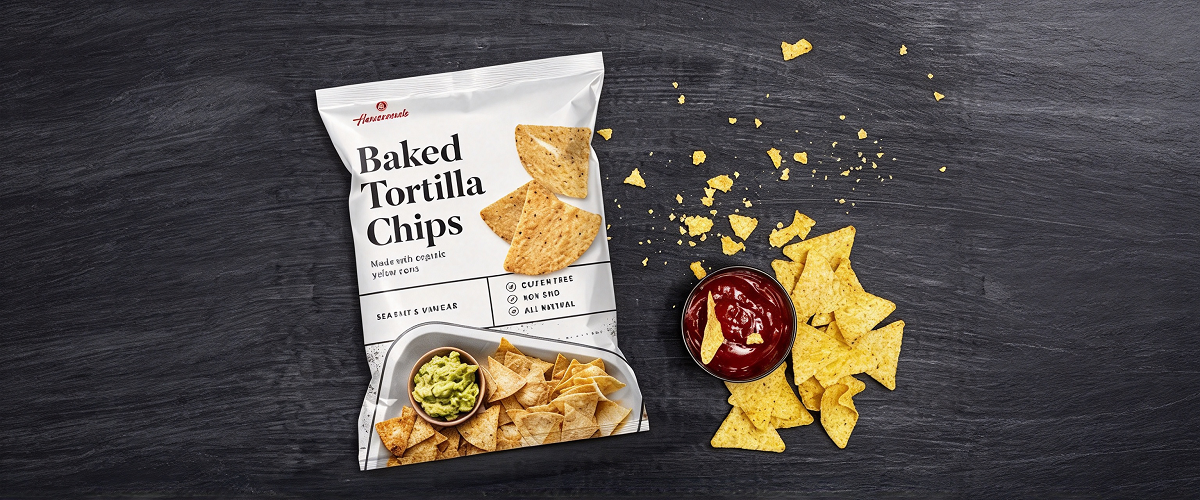
5. Flexible Packaging for Tortilla Chips: Key Factors for Freshness, Product Protection, Branding, and Distribution
Choosing packaging for tortilla chips requires a coordinated approach to product protection, manufacturing efficiency, brand presentation, and distribution. The best solution is one that maintains the product's sensory quality while meeting the commercial needs of the business.
Define the Product's Shelf-Life Requirements
Shelf-life targets should be established according to the tortilla chip formulation, production process, storage conditions, and intended market.
Plain salted chips may have different quality risks from heavily seasoned varieties. Products containing different oils or added ingredients may also require different levels of oxygen control.
Before selecting a material, brands should define:
- The target shelf life.
- The product's initial moisture content.
- The type and quantity of oil.
- The seasoning composition.
- The expected storage temperature and humidity.
- The planned distribution route.
- The intended packaging atmosphere.
- The required quality criteria at the end of shelf life.
This information helps determine the appropriate barrier level and test plan. It also prevents brands from specifying a more expensive structure than necessary or selecting a material that cannot protect the product adequately.
Balance Barrier Performance with Packaging Cost
Higher-barrier laminates may provide stronger protection, but they can also increase material cost. The correct choice depends on the product's needs and the commercial consequences of quality deterioration.
A cost comparison should consider more than the price per bag.
| Cost Factor | Why It Matters |
|---|---|
| Film and laminate cost | Affects the base cost of each package |
| Material thickness | Influences material use, weight, and mechanical performance |
| Printing method | Affects setup charges, print quality, and unit economics |
| Bag format | Influences material consumption and conversion cost |
| Nitrogen flushing | May affect equipment requirements and production settings |
| Filling efficiency | Influences line speed, waste, and labor |
| Product breakage | Can increase complaints, returns, and product loss |
| Shelf-life performance | Affects the risk of quality deterioration before sale |
| Carton and shipping cost | Depends on bag dimensions, gas volume, and packing configuration |
| Inventory management | Influences storage cost and obsolete packaging risk |
The lowest-cost material is not always the most economical choice. A bag that reduces product damage or performs more consistently on the filling line may offer better overall value.
Select a Printing Method That Matches the Order Quantity
Tortilla chip packaging often uses bold colors, product photography, flavor-specific graphics, and prominent branding. The printing method should support the desired design while remaining suitable for the order quantity and production schedule.
| Printing Method | Potential Advantages | Key Considerations | Typical Use |
|---|---|---|---|
| Flexographic printing | Suitable for many repeat packaging jobs and efficient production at appropriate volumes | Setup and artwork preparation need to be considered | Repeat snack packaging and larger seasonal orders |
| Rotogravure printing | Can support high-volume production and detailed graphics | Cylinder preparation may add upfront cost | Large-scale snack brands and high-volume runs |
| Digital printing | Can support shorter runs and multiple artwork versions | Cost, substrate options, and finish availability vary | New flavors, product testing, and smaller production runs |
There is no universal quantity threshold at which one process is always the best choice. Brands should compare quotations based on identical specifications, including material structure, dimensions, quantity per design, finish, and delivery terms.
For a product range with several flavors, also confirm whether each artwork version has separate setup costs or minimum order requirements.
Create Clear Branding Across Multiple Flavors
Tortilla chips often come in several varieties, including salted, cheese, chili, barbecue, lime, and specialty seasonings. A coordinated packaging system can help consumers identify the brand while distinguishing the flavors.
A useful design system may standardize:
- Logo placement.
- Product-name hierarchy.
- Main typography.
- Package proportions.
- Core brand colors.
- Nutritional and ingredient information layout.
Flavor-specific colors and illustrations can then distinguish the variants.
For example, a brand could use a consistent logo and layout across the range while using different accent colors for salted, cheese, chili, and lime flavors. This creates a recognizable family without making every package look identical.
The design should also make the product type clear. Decorative graphics should not obscure the flavor or make it difficult to distinguish tortilla chips from other corn-based snacks.
Make Packaging Work in Retail and E-Commerce
Packaging must remain effective across different shopping environments.
In supermarkets, the package needs to stand out on shelves and communicate product identity quickly. In convenience stores, small bags may compete with many other impulse purchases. In e-commerce, the package may first appear as a small product image on a phone screen.
A design should therefore be evaluated at several scales:
- Full-size artwork review.
- Physical sample review.
- Retail-distance visibility.
- Small digital thumbnail review.
For e-commerce, brands should also consider the shipping configuration. A bag that looks attractive in a product photo may still need additional protection inside a parcel or carton to prevent crushing.
The primary packaging and shipping materials should be planned together so that product protection does not depend entirely on the snack bag.
Optimize Bag Dimensions and Carton Utilization
Bag dimensions affect product protection, material consumption, storage efficiency, and transportation costs.
An oversized bag may use more film and require larger cartons. An undersized bag may compress the chips or leave insufficient room for the protective gas atmosphere.
The correct dimensions should be developed using actual chip samples and fill weights. Brands should also consider how the filled bags fit into cartons and how those cartons stack on pallets.
Optimization may include:
- Selecting a suitable bag width and height.
- Allowing sufficient internal volume.
- Avoiding unnecessary headspace.
- Maintaining enough space for sealing.
- Matching carton dimensions to the filled package.
- Reviewing pallet patterns and shipping efficiency.
The goal is not simply to minimize package size. It is to achieve an appropriate balance between chip protection, barrier performance, material use, and logistics.
Plan for International Distribution
Exported tortilla chips may experience long transit times, changing humidity, temperature variation, and repeated handling. Packaging should be designed for the actual distribution route rather than a generic assumption about transportation.
Brands should review:
- Expected transit duration.
- Storage and warehouse conditions.
- Container or truck loading arrangements.
- Secondary carton strength.
- Pallet stability.
- Moisture exposure.
- Product shelf-life requirements.
- Destination-market labeling and food-contact requirements.
For long routes, packaging validation should include representative distribution conditions wherever practical. This can help identify whether the material, seal, carton, or pallet configuration needs improvement.
Consider Sustainability Without Compromising Crispness
Sustainability is increasingly important in snack packaging, but material changes must be evaluated against the product's protection requirements.
Potential strategies include reducing unnecessary material, optimizing package dimensions, and exploring suitable mono-material structures where performance and local recycling systems allow.
Brands should avoid assuming that every recyclable-design claim applies in every market. The practical recyclability of a pouch depends on the complete construction and the collection and processing infrastructure available locally.
For tortilla chips, product protection is also part of resource efficiency. Packaging that fails to maintain crispness or allows excessive breakage can lead to product waste. The best design should balance material use, package performance, and credible end-of-life options.
Confirm Regulatory and Labeling Requirements
Tortilla chip packaging may need to display product identity, ingredients, allergen information, nutrition facts, net quantity, manufacturer details, lot codes, date marking, and storage instructions, depending on the destination market.
Designers should reserve enough space for the required information before finalizing the artwork. Dark backgrounds, decorative fonts, and busy graphics should not make essential information difficult to read.
For international distribution, labels may need several languages or market-specific details. These requirements should be confirmed before printing because late changes can cause delays and additional costs.
The packaging supplier can support the technical artwork process, but the brand remains responsible for ensuring that the final product labeling meets the applicable requirements.
Build a Practical Quality-Control Plan
A quality-control plan helps confirm that the packaging meets the agreed specification before it is used for a large production run.
| Inspection Area | What to Verify |
|---|---|
| Material structure | Correct laminate, thickness, and agreed specifications |
| Printing | Color consistency, registration, legibility, and artwork accuracy |
| Dimensions | Bag width, height, gusset, and tolerances |
| Seals | Strength, consistency, and leakage performance |
| Barrier performance | Suitability for moisture and oxygen protection |
| Nitrogen flushing | Residual oxygen or other agreed process checks where applicable |
| Mechanical performance | Puncture, flex, and handling resistance |
| Product quality | Crispness, flavor, aroma, and breakage rate |
| Packaging compatibility | Performance on the intended filling and sealing line |
| Delivery condition | Bags and cartons arrive without damage |
Acceptance criteria should be agreed with the supplier before production. For repeat orders, retaining an approved reference sample can help maintain consistency.
Choose Suppliers Based on Technical Capability and Reliability
A flexible packaging supplier should be able to discuss more than print design and price. The supplier needs to understand the product's protection requirements and help identify a suitable structure, format, and production process.
When comparing suppliers, consider:
- Experience with snack and food packaging.
- Ability to recommend suitable barrier structures.
- Available bag formats and customization options.
- Printing methods and finishing capabilities.
- Minimum order quantities.
- Technical documentation and food-contact suitability.
- Quality-control procedures.
- Sampling and proofing support.
- Production lead times.
- Shipping arrangements and communication.
A lower quotation may reflect a different material structure, thickness, finish, or quality specification. Requesting comparable quotations makes it easier to assess actual value.
Use a Structured Packaging Development Workflow
A clear development process reduces errors and helps align the packaging with the product's production schedule.
| Stage | Main Activities | Expected Outcome |
|---|---|---|
| Product assessment | Confirm formulation, fill weight, chip size, and shelf-life needs | Defined packaging requirements |
| Format selection | Compare pillow bags, stand-up pouches, flat-bottom bags, and other options | Selected bag format |
| Material specification | Define barrier, sealant, mechanical, and thickness requirements | Agreed laminate specification |
| Artwork development | Create the design, flavor system, and required labeling | Initial artwork |
| Technical review | Check dimensions, seal areas, gas-flushing compatibility, and filling-line requirements | Approved technical file |
| Proofing and sampling | Review print quality and physical packaging samples | Approved reference sample |
| Production trial | Evaluate filling, sealing, gas flushing, and chip breakage | Confirmed production suitability |
| Quality approval | Verify the agreed specifications and documentation | Release for production |
| Logistics planning | Confirm cartons, pallets, shipping, and receiving arrangements | Packaging delivered for filling |
| Post-launch review | Monitor breakage, crispness, complaints, and packaging defects | Improvements for future orders |
The workflow can be adapted to the size of the project, but the key principle remains the same: packaging should be validated before a large production commitment.
FAQ
What is the best flexible packaging for tortilla chips?
Pillow bags are a common choice for high-volume tortilla chip production because they work well with automated packaging equipment. Stand-up pouches and flat-bottom bags may be more suitable for premium products or resealable packs. The final choice depends on chip size, fill weight, barrier requirements, cost, and sales channel.
Why do tortilla chip bags often contain nitrogen?
Nitrogen flushing helps reduce the amount of oxygen inside the package and creates a gas cushion that can help protect brittle chips from some impacts. Its effectiveness depends on the gas-flushing process, package design, barrier performance, and seal quality. It does not eliminate all breakage.
What material is best for keeping tortilla chips crispy?
The best material is one that provides sufficient moisture protection for the product's required shelf life. Depending on the formulation and storage conditions, this may involve a suitable metallized laminate, foil-containing structure, or another validated barrier construction. The complete pouch and its seals should be evaluated.
Do tortilla chip bags need an oxygen barrier?
Oxygen protection can be important because tortilla chips may contain oils that are vulnerable to oxidation. The required barrier level depends on the oil type, formulation, shelf-life target, storage conditions, and whether nitrogen flushing is used.
Can stand-up pouches be used for tortilla chips?
Yes. Stand-up pouches can be used for premium tortilla chips, specialty flavors, and products intended for resealable packaging. The bag dimensions, material structure, and filling process should be designed to protect the chips from moisture and physical damage.
Are resealable zippers useful for tortilla chip packaging?
Zippers can be useful for large or multi-serving bags because they allow consumers to close the package after opening. They help limit ongoing exposure to humid air but do not restore the original sealed condition. For single-serving bags, a zipper may not be necessary.
How can manufacturers reduce tortilla chip breakage during packaging?
Breakage can be reduced by controlling drop height, minimizing abrupt product transfers, avoiding excessive compression, selecting appropriate bag dimensions, using protective gas where suitable, and improving carton and pallet protection. The actual product should be tested throughout filling and distribution.
Is aluminum foil necessary for tortilla chip packaging?
Not always. Aluminum foil provides a strong barrier, but suitable metallized laminates may provide adequate protection for many tortilla chip products. The decision should be based on the required shelf life, product sensitivity, distribution conditions, and verified performance.
How can brands choose the right pouch size for tortilla chips?
Bag dimensions should be developed using actual chip dimensions, fill weight, bulk volume, protective gas requirements, and the filling equipment. The finished package should be tested to ensure that the chips are not compressed and do not move excessively during transport.
Can tortilla chip packaging use recyclable materials?
Some packaging designs may support recycling in suitable collection and processing systems. Practical recyclability depends on the complete material construction and local infrastructure. Any environmental claims should be supported by appropriate evidence and should not compromise product protection.
What should be tested before launching new tortilla chip packaging?
Testing may include barrier performance, seal strength, leak resistance, filling-line compatibility, nitrogen-flushing performance, chip breakage, sensory quality, and shelf life. Distribution testing may also be appropriate when the product will travel long distances or be shipped through e-commerce channels.
Conclusion
Flexible packaging for tortilla chips must do more than display a brand's logo. It needs to preserve crispness, limit oxygen and moisture exposure, protect fragile chips from breakage, and perform consistently through filling, storage, transportation, and retail handling.
Pillow bags remain a practical option for many high-volume snack products, while stand-up and flat-bottom pouches can support premium positioning and added convenience. Material selection should reflect the actual product formulation and shelf-life requirements, with appropriate attention to moisture barrier, oxygen control, mechanical strength, and seal integrity.
Features such as nitrogen flushing, resealable zippers, easy-open notches, and carefully selected bag dimensions can improve performance when they are matched to the product and production process. At the same time, artwork, printing, carton design, labeling, sustainability, and distribution planning all influence the final result.
For tortilla chip manufacturers and snack brands, the most effective approach is to evaluate packaging as a complete system rather than choosing a film or bag style in isolation. By combining suitable materials, reliable seals, controlled filling, appropriate protective gas, and validated distribution performance, businesses can develop flexible packaging that helps deliver fresh, crisp, visually appealing tortilla chips to consumers.