Guidelines for Flexible Packaging of Goodnight Tea
Anna_Yu
Guidelines for Flexible Packaging of Goodnight Tea
Goodnight tea is more than a conventional tea product. It is typically positioned around relaxation, evening routines, calming rituals, and a pleasant sensory experience, which means packaging needs to protect both the physical quality of the tea and the expectations created by the brand. Whether the product contains chamomile, lavender, lemon balm, valerian, peppermint, rooibos, floral ingredients, or a proprietary botanical blend, the packaging must preserve the product's aroma, flavor, appearance, and overall freshness from production to the final cup.
Unlike many dry food products, tea is particularly sensitive to moisture, oxygen, light, and external odors. Dried herbs and flowers can also be fragile, while aromatic ingredients may lose volatile compounds when exposed to unsuitable packaging conditions. Moisture can soften plant material, encourage quality deterioration, and affect brewing performance. Oxygen and light can gradually degrade sensitive compounds and pigments, while poor aroma protection can reduce the characteristic fragrance that consumers associate with a premium nighttime tea.
Flexible packaging provides a practical solution because it combines barrier protection, lightweight construction, efficient transportation, customizable shapes, and strong visual branding opportunities. Stand-up pouches, flat-bottom bags, three-side seal sachets, tea sachets, and other flexible formats can be tailored to different tea formats and consumption habits.
However, there is no universal package that works equally well for every goodnight tea. A loose-leaf botanical blend, individually wrapped tea bag, premium gift tea, and single-serve sachet may require very different packaging approaches. The right choice depends on the formulation, ingredient sensitivity, serving format, target shelf life, distribution environment, filling equipment, and desired consumer experience.
For brands developing or upgrading goodnight tea packaging, the objective should be to create a package that performs across the entire product journey: protecting the tea during storage, surviving transportation, preserving aroma and quality, communicating the evening positioning, and remaining convenient for consumers to use.
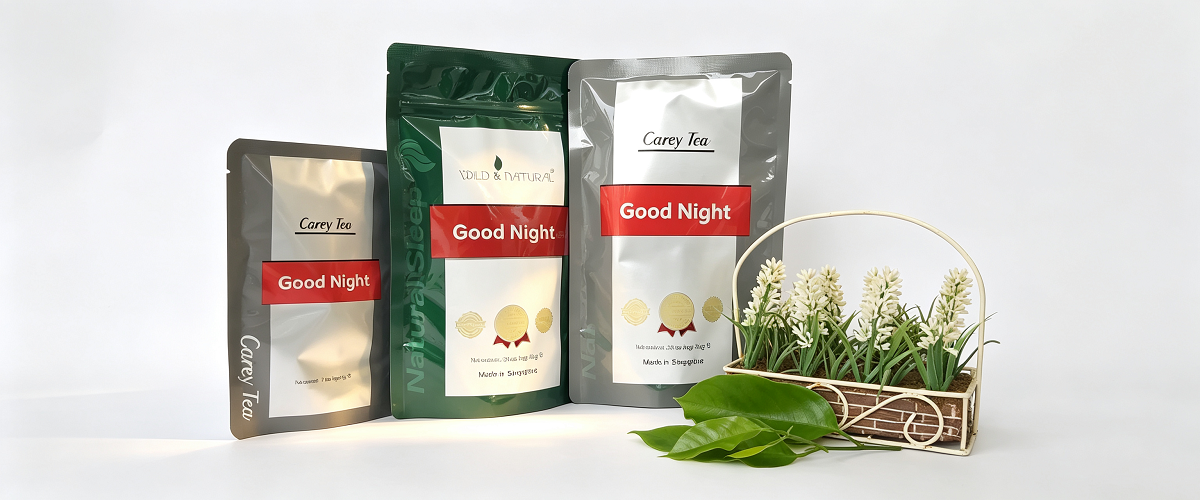
1. What Types of Flexible Packaging Are Best for Goodnight Tea?
The most suitable flexible packaging for goodnight tea depends on whether the product is sold as loose-leaf tea, tea bags, single-serve portions, premium gift packs, or larger refill formats.
Because goodnight tea often combines delicate herbs and aromatic botanicals, packaging selection should consider not only moisture and oxygen protection but also how the package handles the product physically.
Stand-Up Pouches for Loose Goodnight Tea
Stand-up pouches are a versatile choice for loose goodnight tea and herbal blends.
They can be used for:
- Chamomile blends
- Lavender tea
- Lemon balm blends
- Rooibos-based evening teas
- Botanical relaxation blends
- Herbal tea mixtures
- Premium loose-leaf tea
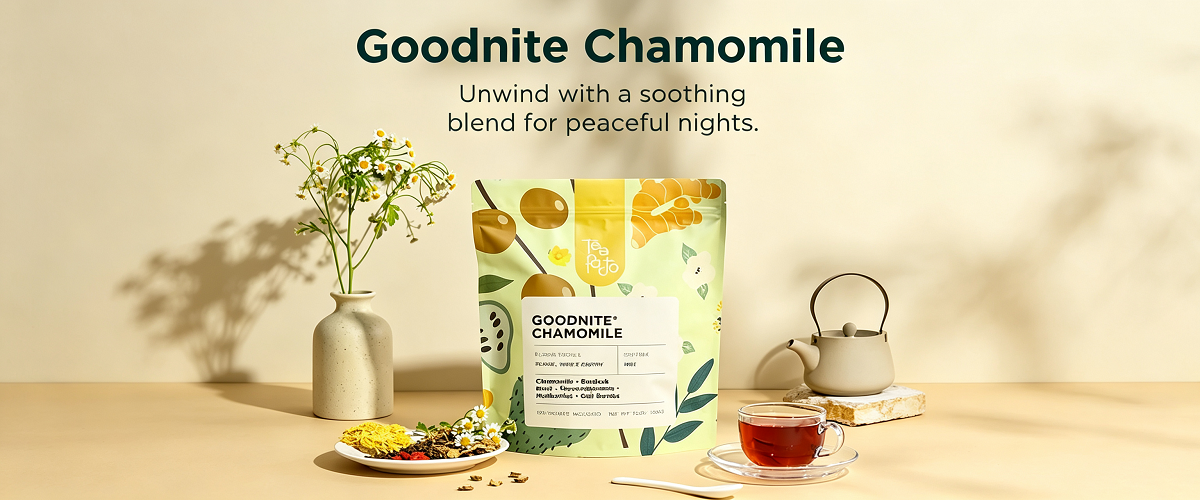
The upright structure creates a strong retail presentation while providing a relatively large printable area for branding and product information.
For multi-serving tea products, a resealable zipper can also make the package more practical for repeated opening.
The main advantage is flexibility. A brand can produce different pouch sizes for sample, standard retail, and family-size products while maintaining the same overall visual identity.
Flat-Bottom Bags for Premium Goodnight Tea
Flat-bottom bags are well suited to brands positioning goodnight tea as a premium evening ritual rather than simply another herbal beverage.
They provide:
- Strong shelf stability
- A structured premium appearance
- Large printable surfaces
- Multiple panels for branding and regulatory information
- Good compatibility with resealable closures
The format can work particularly well for specialty tea companies, wellness-oriented brands, boutique tea collections, and gift-oriented products.
A structured package also provides more room for storytelling. The front can emphasize the blend and evening positioning, while side and back panels can communicate ingredients, preparation instructions, sourcing information, and brand philosophy.
Three-Side Seal Bags for Tea Portions and Sachets
Three-side seal packaging is useful for smaller portions and individually packed products.
Applications include:
- Single-serving herbal tea
- Tea samples
- Trial packs
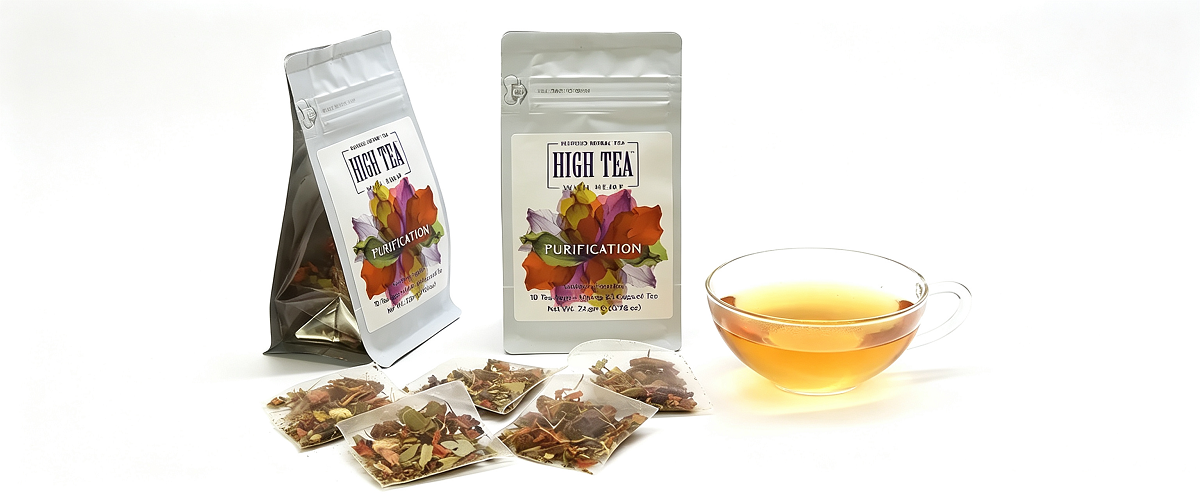
- Individually wrapped tea bags
- Promotional packs
- Hotel and hospitality tea portions
The relatively simple construction can support efficient production while allowing the package dimensions to be customized around the tea portion.
For individually wrapped tea bags, the packaging should provide adequate barrier protection because each small package needs to preserve the tea until the consumer opens it.
Sachets for Single-Serve Goodnight Tea
Single-serve sachets are particularly relevant to goodnight tea because the product is often consumed as part of a specific evening routine.
Sachets can be convenient for:
- Travel
- Hotels
- Office-to-home routines
- Subscription boxes
- Trial products
- Wellness programs
- On-the-go consumers
A sachet can provide a clearly defined serving size and reduce the need for consumers to measure loose tea.
For premium products, the sachet itself can become part of the brand experience through high-quality printing and carefully designed opening features.
Stick Packs for Functional Evening Tea Blends
Stick packs may be appropriate when goodnight tea is sold as a powdered or instant beverage blend rather than traditional dried leaves or herbs.
They can support:
- Single-serve preparation
- Travel convenience
- Precise portioning
- Functional beverage concepts
- Instant herbal drink products
However, stick packs should not automatically be treated as a substitute for conventional tea packaging. Their suitability depends on the physical form of the product.
Quad-Seal and Gusseted Bags for Larger Formats
For larger-volume goodnight tea products, gusseted or quad-seal bags can provide additional capacity and structural stability.
They may be suitable for:
- Refill packs
- Large loose-herbal tea formats
- Foodservice applications
- Wholesale products
- Family-size packages
The larger format should be designed carefully because a package that remains open for a long period may face greater exposure to humidity and oxygen after the first opening.
Choosing the Format Based on Consumption
A useful way to select the package is to start with consumer behavior.
| Tea Format | Recommended Packaging | Typical Use |
|---|---|---|
| Loose herbal tea | Stand-up pouch | Everyday retail |
| Premium loose tea | Flat-bottom bag | Specialty and premium products |
| Individual tea bags | Three-side seal sachet | Retail and hospitality |
| Single-serving blend | Sachet | Travel and convenience |
| Instant evening drink | Stick pack | On-the-go consumption |
| Large refill pack | Gusseted or quad-seal bag | Household or wholesale |
Resealable Packaging for Multi-Serving Tea
For loose goodnight tea, resealability is especially valuable.
Once a consumer opens the package, the product may be exposed repeatedly to the surrounding environment. A zipper can reduce exposure between uses.
However, resealability should be viewed as a secondary protection mechanism rather than a replacement for the primary barrier structure.
The package should still have:
- Appropriate oxygen protection
- Appropriate moisture protection
- Reliable heat seals
- Good aroma retention
- Sufficient mechanical strength
Packaging for Tea Bags Requires a Different Approach
A common mistake is assuming that packaging requirements for loose tea and tea bags are identical.
They are not.
A tea bag may already provide an inner filter structure, but that does not eliminate the need for an appropriate outer package.
The outer flexible sachet may need to protect the tea from:
- Moisture
- Oxygen
- Light
- External odors
- Physical damage
This is especially important for blends containing flowers or highly aromatic herbs.
Packaging Format Should Match Brand Positioning
The packaging format also communicates product positioning.
A minimalist stand-up pouch may suggest a modern wellness brand, while a structured flat-bottom bag can create a premium specialty-tea appearance.
For goodnight tea, visual positioning can be particularly important because consumers may associate the product with:
- Relaxation
- Calmness
- Evening routines
- Natural ingredients
- Wellness
- Comfort
- Premium self-care
The packaging should communicate these ideas without making unsupported health or medical claims.
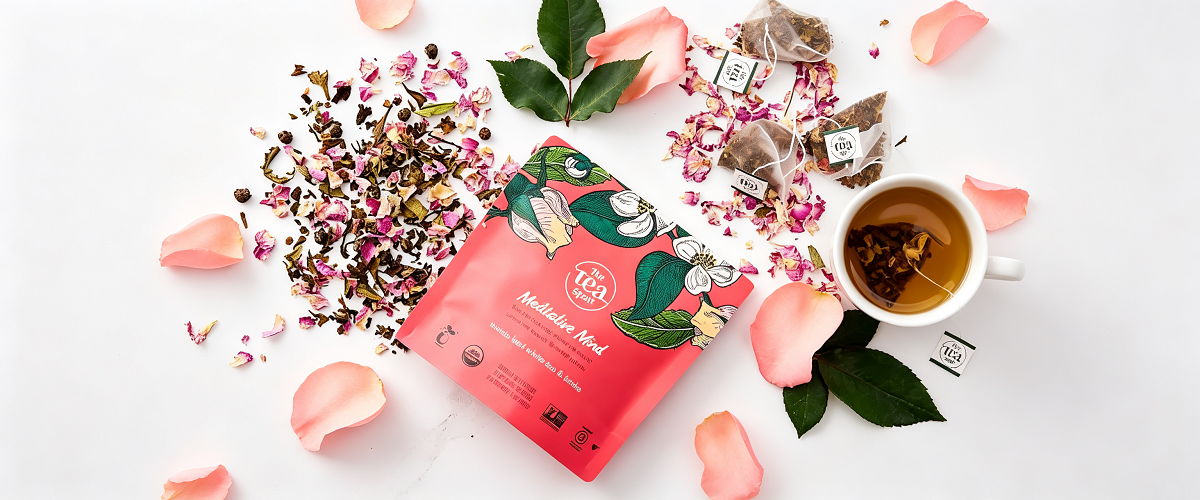
2. How Does Flexible Packaging Protect Goodnight Tea from Moisture, Oxygen, and Light?
The primary function of flexible packaging is to maintain the tea's quality between manufacturing and consumption.
For goodnight tea, this generally means controlling moisture, oxygen, light, aroma transfer, and contamination.
Moisture Protection Is Critical
Dried herbs and tea ingredients can absorb moisture from the environment.
This can lead to:
- Loss of crispness in dried botanical material
- Clumping in smaller particles
- Changes in texture
- Reduced product stability
- Deterioration of aroma
- Potential quality and microbiological concerns under unsuitable conditions
For tea blends containing flowers, leaves, and finely cut herbs, moisture exposure can be particularly noticeable.
A package with an effective moisture barrier helps isolate the product from external humidity.
Humid Climates Require Additional Attention
Goodnight tea may be sold internationally, which means the package could encounter very different humidity conditions.
A product manufactured in a dry climate might later be stored in a humid region.
The supply chain could involve:
Production → warehouse → container shipment → port → importer → distribution center → retail → consumer
Each stage introduces opportunities for environmental exposure.
Packaging specifications should therefore consider the actual destination climate, not only factory conditions.
Oxygen Can Affect Tea Quality
Oxygen can gradually contribute to quality deterioration in dried tea and botanical products.
Potential effects include:
- Aroma loss
- Oxidation of sensitive compounds
- Flavor changes
- Color deterioration
- Reduced sensory freshness
The exact sensitivity depends on the ingredients.
A blend containing delicate floral components and aromatic herbs may require stronger protection than a relatively stable dried botanical product.
Light Protection Helps Preserve Appearance and Quality
Light can accelerate deterioration in certain dried plant ingredients and may affect natural pigments and aroma compounds.
This can be especially relevant when a product contains colorful botanicals such as:
- Chamomile flowers
- Rose petals
- Hibiscus
- Lavender
- Other visually distinctive dried herbs
An opaque or metallized package can provide significantly stronger light protection than a large transparent window.
Should Goodnight Tea Have a Transparent Window?
A transparent window can allow consumers to see the tea inside.
This can be useful when the visual appearance of the dried ingredients is an important selling point.
However, a window creates a trade-off.
It can:
- Increase visual product appeal
- Help consumers see ingredient quality
- Reduce the amount of opaque barrier coverage
- Increase potential light exposure
For light-sensitive blends, a small controlled window may be preferable to a large transparent area, or the brand may choose a fully opaque package and communicate ingredient quality through high-quality photography and design.
Aroma Retention Is Especially Important for Goodnight Tea
Aroma is one of the most important sensory characteristics of an evening herbal tea.
Consumers may associate the product with familiar botanical notes such as:
- Floral
- Minty
- Herbal
- Sweet
- Citrus
- Spicy
If volatile aroma compounds escape through the packaging, the tea may appear less fresh when opened.
At the same time, packaging should limit the migration of external odors into the product.
Tea should ideally be protected from nearby products with strong odors during storage and transportation.
Seal Integrity Is the Final Barrier
Even an excellent barrier film can fail if the finished bag has weak seals.
Seal defects can allow moisture and oxygen to enter.
Potential causes include:
- Tea particles in the sealing area
- Incorrect sealing temperature
- Inadequate pressure
- Insufficient dwell time
- Incompatible sealing layers
- Poorly controlled packaging equipment
For this reason, manufacturers should test the finished package, not just the raw film.
Packaging Protection Works as a System
For goodnight tea, product protection is the result of several factors working together:
Barrier structure + seal integrity + filling process + storage conditions + transportation controls + consumer handling
A strong film cannot compensate for careless filling or poor storage.
Likewise, excellent filling conditions cannot compensate for a package with inadequate moisture or aroma protection.
Important Packaging Performance Tests
Tea brands can consider testing the finished package using methods such as:
| Test | Purpose |
|---|---|
| Water vapor transmission testing | Evaluate moisture barrier |
| Oxygen transmission testing | Evaluate oxygen barrier |
| Seal strength testing | Verify seal durability |
| Leak testing | Identify package integrity problems |
| Drop testing | Evaluate transportation durability |
| Aging studies | Assess long-term performance |
| Sensory testing | Monitor aroma and flavor retention |
For export products, testing under representative temperature and humidity conditions can provide additional confidence.
Packaging Should Also Protect Against Physical Damage
Some botanical ingredients are fragile.
Whole flowers and larger leaf pieces can break during transportation if the package is poorly designed or excessively compressed.
The package should therefore provide sufficient:
- Puncture resistance
- Tear resistance
- Seal strength
- Flex-crack resistance
- Structural stability
This is especially relevant for premium products where consumers expect to see recognizable botanical ingredients.
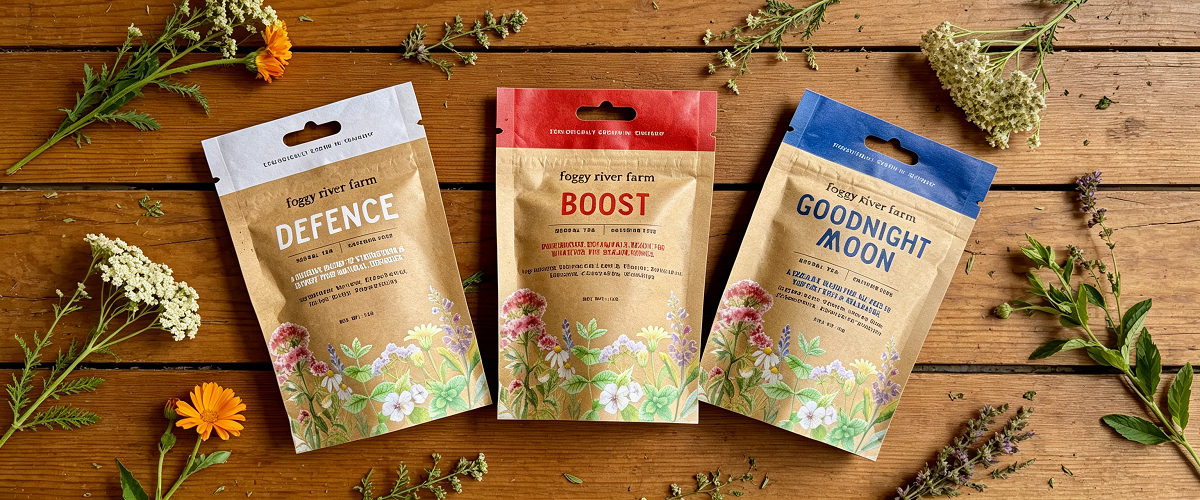
3. Which Packaging Materials Provide the Best Barrier Protection for Goodnight Tea?
The right material structure should be selected according to the tea formulation, ingredient sensitivity, shelf-life target, package format, and distribution environment.
There is no universal “best” laminate for every goodnight tea.
Instead, the goal is to match the barrier structure to the actual product.
PET-Based Laminates
PET is commonly used as an outer layer because it provides good mechanical strength and supports high-quality printing.
For goodnight tea, it may be combined with an internal barrier layer and a heat-sealing layer.
A structure such as:
PET / VMPET / PE
can provide strong overall protection against moisture, oxygen, and light.
This type of structure may be suitable for:
- Herbal tea blends
- Aromatic goodnight tea
- Premium retail tea
- Loose-leaf products
- Products requiring strong barrier performance
Aluminum Foil Laminates
For particularly sensitive tea products, an aluminum foil layer can provide very high barrier performance.
A representative structure is:
PET / AL / PE
This type of construction provides strong protection against:
- Moisture
- Oxygen
- Light
- Aroma migration
It can be considered when the product has a demanding shelf-life target or contains delicate aromatic ingredients.
However, maximum barrier performance is not automatically necessary for every tea.
The final selection should balance product requirements, cost, package design, and sustainability objectives.
Metallized Film Structures
Metallized films can provide a useful balance between barrier performance and cost.
For many retail herbal tea products, structures such as:
PET / VMPET / PE
may provide an appropriate level of protection without using an aluminum foil layer.
Metallized structures can also create an attractive visual effect when used intentionally as part of the package design.
Paper-Based Exterior Layers
Paper can be incorporated into flexible packaging when a brand wants a more natural or craft-oriented visual appearance.
For example, a structure may combine a paper outer layer with an internal barrier and sealing layer.
However, paper alone should not be assumed to provide sufficient protection for moisture-sensitive tea.
The barrier function still needs to come from the complete structure.
This distinction is important for brands that want a natural-looking package without sacrificing shelf-life performance.
PE and Other Sealing Layers
The inner layer must provide reliable heat sealing and appropriate food-contact performance.
For goodnight tea, the sealing layer should be selected according to:
- Filling equipment
- Seal temperature
- Tea particle size
- Required seal strength
- Package format
- Storage environment
A strong sealing layer is particularly important because loose tea particles can become trapped in the seal area.
Mono-Material Flexible Packaging
Some tea brands are exploring mono-material structures as part of broader sustainability strategies.
Depending on the application, PE-based or PP-based mono-material packaging may be engineered for:
- Moisture protection
- Heat sealing
- Mechanical performance
- Printing
- Potential recyclability
However, actual recyclability depends on the complete structure and local recycling infrastructure.
Brands should therefore verify the final package against the requirements of the target market rather than assuming that “mono-material” automatically means recyclable everywhere.
Material Structure Comparison
| Structure | Barrier Performance | Suitable Application | Main Consideration |
|---|---|---|---|
| PET/PE | Moderate | Less sensitive tea products | Lower barrier and potentially lower cost |
| PET/VMPET/PE | High | Aromatic herbal tea | Strong balance of barrier and cost |
| PET/AL/PE | Very high | Highly sensitive or long-shelf-life products | Strongest barrier with greater material complexity |
| Paper-based laminate | Application-dependent | Natural/premium visual positioning | Barrier comes from the complete laminate |
| Mono-material PE/PP | Application-dependent | Sustainability-focused applications | Requires performance and recyclability validation |
Material Selection Should Start with the Ingredients
Goodnight tea can contain very different ingredients.
For example, a blend based mainly on relatively stable dried leaves may behave differently from one containing highly aromatic flowers and essential-oil-rich botanicals.
The packaging specification should therefore consider:
- Ingredient composition
- Moisture sensitivity
- Aroma sensitivity
- Particle size
- Whole flowers versus finely cut material
- Natural pigments
- Target shelf life
- Destination climate
This approach is more reliable than selecting the same structure for every SKU.
Avoid Selecting Material Based Only on Thickness
A thicker package is not necessarily a better barrier package.
The effectiveness of the package depends on the specific barrier layers and complete construction, not simply total thickness.
Tea brands should consider technical parameters such as:
- Oxygen transmission rate
- Water vapor transmission rate
- Seal strength
- Puncture resistance
- Flex-crack resistance
- Overall thickness
- Print performance
A Practical Barrier Selection Process
A useful approach is:
- Analyze the tea formulation.
- Identify moisture and aroma sensitivity.
- Establish the target shelf life.
- Review climate and transportation conditions.
- Select the package format.
- Define required barrier performance.
- Choose the laminate structure.
- Test the finished package.
- Conduct shelf-life validation.
- Finalize the commercial specification.
This prevents brands from either under-protecting the product or paying for unnecessary barrier performance.
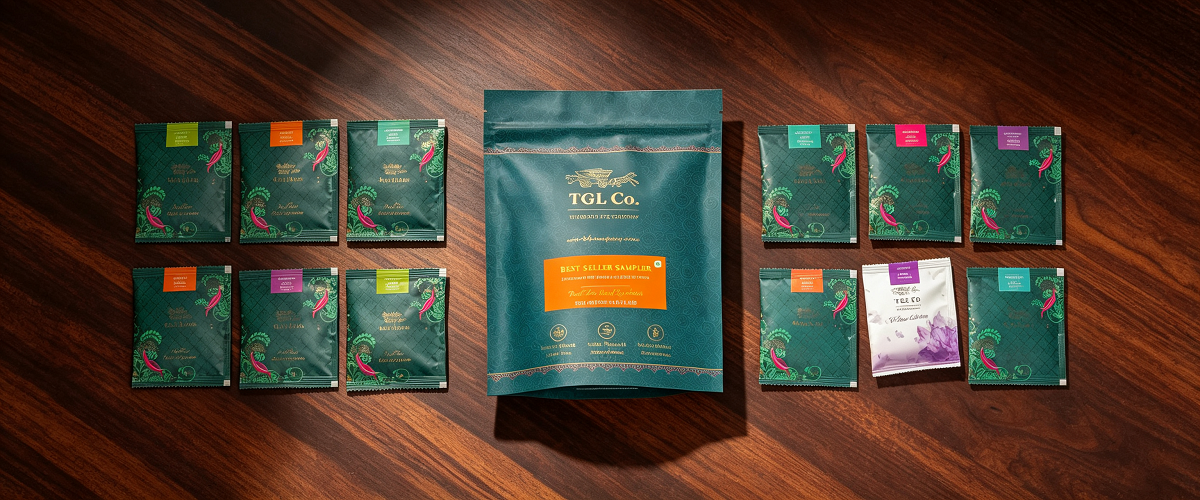
4. What Packaging Features Improve the Freshness, Aroma, and Convenience of Goodnight Tea?
Goodnight tea is often consumed as part of a relaxing daily ritual. Packaging should therefore feel easy, clean, calm, and intuitive to use.
The right functional features can improve both product protection and consumer experience.
Resealable Zippers
For multi-serving loose tea, a zipper is one of the most useful packaging features.
It allows consumers to:
- Open the package repeatedly
- Reseal it after use
- Reduce exposure to humidity
- Store the tea more conveniently
The zipper should provide consistent closure without creating unnecessary difficulty for the consumer.
However, the zipper should supplement the package's primary barrier and seal rather than replace them.
Easy-Open Tear Notches
A tear notch makes the initial opening simpler.
This can be particularly useful for:
- Individual tea sachets
- Trial packs
- Small retail pouches
- Consumers preparing tea at night when convenience matters
The tear should be controlled so that the package opens cleanly without damaging the product or interfering with the resealable closure.
Wide Openings for Loose Tea
Loose tea needs sufficient access space for scooping or pouring.
A narrow opening can make it difficult to remove the desired amount without spilling.
A wider opening can improve:
- Scoop access
- Pouring
- Visibility
- Product retrieval
- Resealing
For larger tea pouches, the relationship between opening width and bag stiffness should be evaluated during package development.
Flat-Bottom Construction
A flat-bottom bag can make a premium goodnight tea package easier to store.
It can stand on:
- Kitchen counters
- Pantry shelves
- Retail shelves
- Tea stations
It also gives the package a more structured appearance, which can support premium branding.
Controlled Transparent Windows
A window can showcase dried flowers and herbs.
This can be particularly attractive for blends containing visually recognizable ingredients such as chamomile or lavender.
However, the window should be used strategically.
A small window may provide sufficient visual reassurance without exposing the entire product to light.
Aroma-Focused Packaging
For aromatic herbal tea, packaging should support strong aroma retention.
The package design should avoid unnecessary openings or poorly controlled seams that could allow volatile compounds to escape.
For premium products, brands may also consider secondary packaging where appropriate to provide additional protection during distribution.
Individual Wrapping for Premium Tea Bags
Individually wrapped tea bags can provide a higher level of protection and a more premium experience.
Benefits can include:
- Better moisture protection
- Better aroma protection
- Improved portion control
- Cleaner presentation
- Better portability
This format can be especially useful for premium hospitality, gift sets, and specialty tea collections.
Hanging Holes for Retail Display
Smaller goodnight tea pouches can include hanging holes when products are displayed on hooks.
This can help brands use different retail merchandising systems without changing the core pouch structure.
QR Codes for Brand Storytelling
Goodnight tea is often associated with a lifestyle or evening ritual.
A QR code can connect the physical package with digital content such as:
- Brewing guides
- Ingredient information
- Product stories
- Sourcing information
- Preparation suggestions
- Brand content
- Subscription programs
This can create additional engagement without overcrowding the package with text.
Clear Brewing Instructions
Consumers should be able to understand how to prepare the tea quickly.
Packaging can communicate:
- Recommended water temperature
- Steeping time
- Serving size
- Suggested preparation method
The exact instructions should be based on the formulation and product testing rather than generic assumptions.
Flavor and Blend Identification
If a brand offers several nighttime blends, the packaging should make differentiation easy.
For example, products might include:
- Chamomile blend
- Lavender blend
- Mint and herbal blend
- Floral evening blend
- Caffeine-free botanical blend
Consistent design architecture combined with controlled color variation can make the product family easier to recognize.
Functional Feature Comparison
| Feature | Best Application | Primary Benefit |
|---|---|---|
| Resealable zipper | Multi-serving loose tea | Freshness and convenience |
| Tear notch | Most flexible packs | Easy opening |
| Wide opening | Large loose-tea bags | Easier scooping |
| Flat bottom | Premium products | Stability and presentation |
| Small window | Selected botanical blends | Product visibility |
| Individual wrapping | Premium tea bags | Added protection |
| Hanging hole | Small retail pouches | Flexible merchandising |
| QR code | Brand-focused products | Digital engagement |
Packaging Should Support the Evening Consumption Experience
The consumer experience of goodnight tea is different from that of an energy drink or sports beverage.
The packaging can communicate a calmer visual language through:
- Soft typography
- Simple layouts
- Botanical imagery
- Restrained color palettes
- Clear ingredient presentation
- Premium tactile finishes
However, design should remain functional.
The consumer should still be able to identify the product, ingredients, net weight, preparation instructions, and other required information quickly.
5. Goodnight Tea Flexible Packaging: Key Factors for Shelf Life, Branding, and Consumer Appeal
The best goodnight tea packaging combines technical protection with a clear brand experience.
A successful package must perform from production through consumption while communicating why the product belongs in the consumer's evening routine.
Shelf-Life Requirements
The required shelf life should be established before the packaging structure is finalized.
Brands should consider:
- Product formulation
- Moisture sensitivity
- Aroma retention
- Light sensitivity
- Distribution time
- Warehouse conditions
- Destination climate
The package should then be tested with the actual product.
Shelf life should not be assumed based solely on the packaging material specification.
Storage Conditions
Goodnight tea should be protected from unsuitable environmental conditions throughout distribution and storage.
The package should be designed with consideration for:
- Humidity
- Temperature
- Direct light
- Warehouse storage
- Container transportation
- Retail display
High humidity deserves particular attention because dried botanical products can readily interact with environmental moisture.
Transportation and Export
For international goodnight tea brands, the packaging must withstand long supply chains.
Potential stresses include:
- Compression
- Vibration
- Abrasion
- Temperature fluctuations
- Humidity changes
- Container storage
- Repeated handling
Puncture resistance and seal integrity are particularly important when flexible pouches are shipped in cartons.
E-Commerce Packaging
Goodnight tea is well suited to online sales, but e-commerce creates additional handling requirements.
Packages can experience:
- Automated sorting
- Drops
- Compression
- Repeated handling
- Long-distance delivery
The pouch should therefore be designed to maintain seal integrity and appearance after transportation.
A package that arrives wrinkled, leaking, or poorly sealed can damage consumer confidence even when the tea itself remains usable.
Branding Opportunities
Flexible packaging offers a large printable surface, allowing brands to communicate more than the product name.
The front panel can establish the primary visual message:
Brand + Goodnight Tea + Blend Name + Key Product Characteristics
The back and side panels can communicate:
- Ingredient information
- Brewing instructions
- Storage instructions
- Origin information
- Brand story
- Required regulatory information
Building a Premium Goodnight Tea Identity
Goodnight tea often competes within the broader wellness and specialty beverage market.
Packaging can help create differentiation through:
- Matte surfaces
- Soft-touch finishes
- Minimalist typography
- Botanical illustrations
- Foil effects
- Embossed details
- Carefully controlled color systems
The design should match the actual product positioning rather than relying on decorative elements alone.
Avoiding Unsupported Wellness Claims
Because goodnight tea is often associated with relaxation and sleep routines, brands should be careful with product claims.
Packaging should distinguish between:
descriptive product positioning and regulated health claims.
For example, a brand can communicate an evening ritual or calming sensory experience, while specific claims about treating insomnia, anxiety, or medical conditions may be subject to regulations in the target market.
This is especially important for products sold internationally because labeling requirements can vary between jurisdictions.
Packaging for Different Goodnight Tea Markets
| Market Position | Recommended Format | Design Direction | Key Functional Priority |
|---|---|---|---|
| Everyday herbal tea | Stand-up pouch | Clean and approachable | Resealability |
| Premium botanical tea | Flat-bottom bag | Minimalist and refined | Aroma and light protection |
| Tea bag product | Individual sachets | Convenient and elegant | Individual barrier |
| Gift tea | Structured premium pouch | Decorative and story-driven | Presentation |
| Travel tea | Sachets | Compact and portable | Easy opening |
| Refill product | Larger gusseted pouch | Simple and practical | Capacity and resealability |
Packaging Size and Consumer Convenience
Package size should reflect consumption frequency.
A package that is too large may remain open for an extended period, increasing the importance of resealing and storage.
A package that is too small may increase packaging consumption and create unnecessary inconvenience.
Brands should therefore consider:
- Number of servings
- Typical consumption frequency
- Household size
- Retail price
- Shipping requirements
- Storage space
Packaging and Sustainability
Sustainability is becoming increasingly important for tea brands.
Potential approaches include:
- Lightweighting
- Reduced material usage
- Recyclable mono-material structures where technically suitable
- Efficient package dimensions
- Reduced secondary packaging
- Responsible material selection
However, sustainability decisions should not compromise the basic purpose of the package.
For dried tea, reducing moisture and oxygen protection too aggressively can shorten shelf life and increase product waste.
The correct approach is to optimize the complete packaging system, rather than focusing only on material reduction.
Cost Optimization
Packaging cost should be evaluated beyond the price per bag.
A practical calculation should consider:
Packaging cost + printing + conversion + filling efficiency + transportation + storage + product loss + consumer usability
A slightly higher-performance package may be economically justified if it reduces product deterioration, complaints, returns, or damaged shipments.
Filling and Production Compatibility
Before ordering large quantities of custom goodnight tea bags, brands should test the package on the intended production line.
Important considerations include:
- Bag dimensions
- Filling speed
- Tea particle size
- Dust generation
- Opening behavior
- Seal area
- Sealing temperature
- Zipper alignment
- Bag stiffness
- Automatic inspection requirements
Botanical tea can contain lightweight particles that move easily during filling, so seal-area cleanliness should be carefully controlled.
Recommended Packaging Development Workflow
A structured development process can reduce packaging problems.
Step 1: Analyze the tea blend
Identify the ingredients, particle size, aroma sensitivity, moisture sensitivity, and physical characteristics.
Step 2: Define the consumption format
Determine whether the product will be loose tea, tea bags, sachets, or another format.
Step 3: Establish shelf-life requirements
Define the required commercial shelf life and expected storage conditions.
Step 4: Define barrier requirements
Set moisture, oxygen, light, and aroma protection requirements.
Step 5: Select the bag format
Choose a stand-up pouch, flat-bottom bag, three-side seal sachet, gusseted bag, or other appropriate format.
Step 6: Select functional features
Evaluate zippers, tear notches, windows, handles, hanging holes, individual wrapping, and other features.
Step 7: Test production compatibility
Run trials using the actual filling and sealing equipment.
Step 8: Test the finished package
Evaluate barrier performance, seal strength, leakage, mechanical durability, and appearance.
Step 9: Validate shelf life
Use the actual tea blend in the final package for appropriate shelf-life testing.
Step 10: Finalize specifications
Document the laminate, dimensions, printing, tolerances, features, testing requirements, and quality standards.
The Right Packaging Should Balance Five Priorities
For goodnight tea, packaging decisions can be simplified into five major priorities:
- Product protection — keep moisture, oxygen, light, and external odors under control.
- Aroma preservation — retain the sensory characteristics of the botanical blend.
- Consumer convenience — make opening, brewing, storing, and resealing easy.
- Brand communication — create a visual identity that fits the evening-tea positioning.
- Commercial efficiency — ensure the package can be produced, transported, stored, and sold efficiently.
A successful package is therefore not necessarily the package with the highest barrier or the most decorative design. It is the package that provides the right balance between technical performance, consumer experience, brand identity, and total cost.
Frequently Asked Questions
What is the best flexible packaging for goodnight tea?
For multi-serving loose goodnight tea, high-barrier stand-up pouches or flat-bottom bags with resealable closures are practical options. For individually packed tea bags, high-barrier three-side seal sachets or individual wrappers may be more appropriate.
Does goodnight tea need high-barrier packaging?
It often benefits from strong moisture and aroma protection, particularly when the blend contains delicate flowers or aromatic botanicals. The required barrier level should be determined by the formulation, target shelf life, and storage conditions.
Should goodnight tea packaging be opaque?
Not always. An opaque package provides stronger protection from light, while a small controlled window can help consumers see the ingredients. The choice depends on the sensitivity of the blend and the brand's visual strategy.
Is aluminum foil necessary for goodnight tea?
No. Aluminum foil can provide very high barrier performance, but metallized structures may be sufficient for many applications. The final choice should be based on the tea's sensitivity, shelf-life target, transportation conditions, and overall packaging strategy.
Should loose goodnight tea have a zipper?
For multi-serving products, a zipper is generally useful because it allows consumers to reseal the package after opening. It should complement a suitable barrier structure rather than replace the primary package seal.
Can paper-look packaging protect herbal tea?
Yes, if the paper is part of a properly engineered laminate that provides the necessary moisture, oxygen, light, and sealing performance. Paper appearance alone does not determine barrier performance.
Is flexible packaging suitable for premium goodnight tea?
Yes. Flexible packaging can support premium positioning through flat-bottom structures, high-quality printing, matte or soft-touch finishes, metallic effects, controlled windows, and carefully designed botanical graphics.
How can packaging help preserve the aroma of herbal tea?
A suitable high-barrier structure, reliable seals, controlled filling conditions, and appropriate storage can help reduce aroma loss. The finished package should be tested with the actual tea blend because aroma retention depends on the formulation and packaging system.
What packaging is suitable for individually wrapped goodnight tea bags?
Small high-barrier sachets or wrappers are commonly suitable because they provide individual protection and portion control. The structure should be selected according to the tea's moisture and aroma sensitivity.
How should goodnight tea packaging be tested before mass production?
Brands should test the finished package for moisture and oxygen barrier performance, seal strength, leakage, mechanical durability, aroma retention, and shelf-life stability. Production trials should also confirm compatibility with the intended filling and sealing equipment.
Conclusion
Flexible packaging plays an important role in protecting the quality and positioning of goodnight tea. Because these products often contain delicate herbs, flowers, and aromatic botanicals, the packaging must control moisture, oxygen, light, aroma loss, contamination, and physical damage throughout the supply chain.
Stand-up pouches and flat-bottom bags are practical choices for many loose-tea products, while three-side seal sachets and individual wrappers are better suited to single-serving and individually packed tea formats. High-barrier metallized structures or aluminum-based laminates can be considered when stronger protection is required, while mono-material solutions may be explored when sustainability is a key objective and the required barrier performance can still be achieved.
Functional features also make a significant difference. Zippers, tear notches, wide openings, controlled windows, individual wrapping, stable bases, and QR codes can improve the relationship between packaging and consumer experience.
Most importantly, packaging should be developed around the actual tea blend rather than selected from a generic material list. Ingredient composition, aroma sensitivity, moisture behavior, shelf-life target, climate, transportation conditions, filling equipment, and consumer usage should all be considered together.
For goodnight tea brands, the ideal flexible package is one that keeps the botanical blend protected, preserves its aroma and sensory quality, communicates the right evening identity, and makes the daily tea ritual simple and enjoyable.