How Do You Choose Packaging Bags for Chia Seeds?
Anna_Yu
How Do You Choose Packaging Bags for Chia Seeds?
Chia seeds have become a popular ingredient in health foods, bakery products, beverages, breakfast products, snacks, and nutritional formulations. Their small size and relatively high oil content make packaging an important part of maintaining product quality during storage and transportation. Although chia seeds are naturally shelf-stable, exposure to moisture, oxygen, light, and external contaminants can gradually affect their freshness, texture, aroma, and overall quality.
For chia seed brands, choosing the right packaging bag requires more than selecting an attractive pouch. The packaging structure needs to provide an appropriate balance of moisture resistance, oxygen protection, mechanical strength, sealing performance, convenience, branding, and cost efficiency. Different product sizes and sales channels may also require different packaging formats.
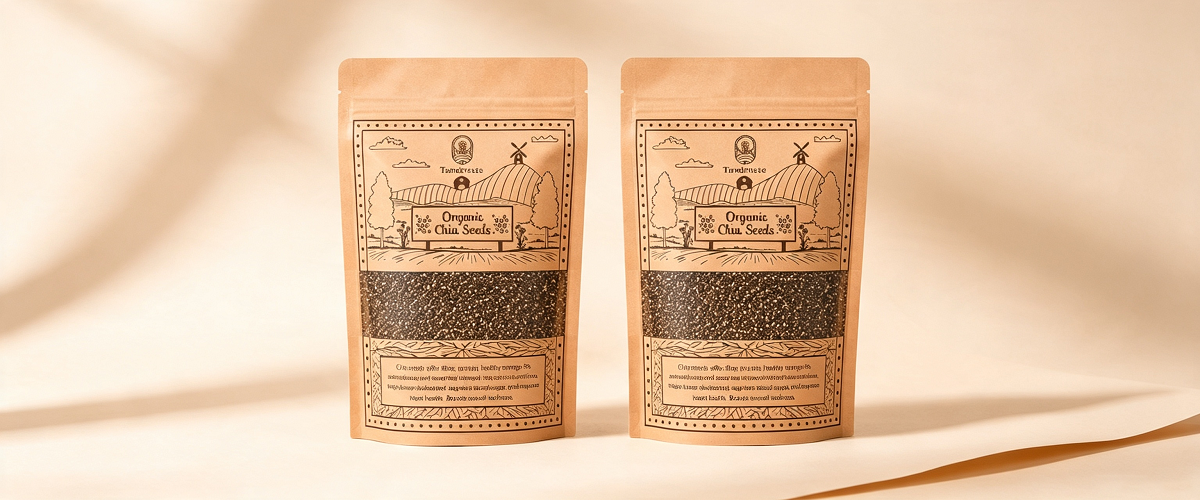
Flexible packaging has become a practical option for chia seeds because it can be produced in a wide range of sizes and structures. Stand-up pouches, flat pouches, gusseted bags, zipper bags, and high-barrier laminated bags can all be customized according to product requirements. These formats can also reduce packaging weight and provide large printable surfaces for brand communication.
The ideal chia seed packaging solution should therefore be developed around the product, not simply the appearance of the bag. Factors such as expected shelf life, distribution conditions, package size, filling equipment, consumer usage, and target market should all be considered before selecting the final material structure.
1. What Types of Packaging Bags Are Best for Chia Seeds?
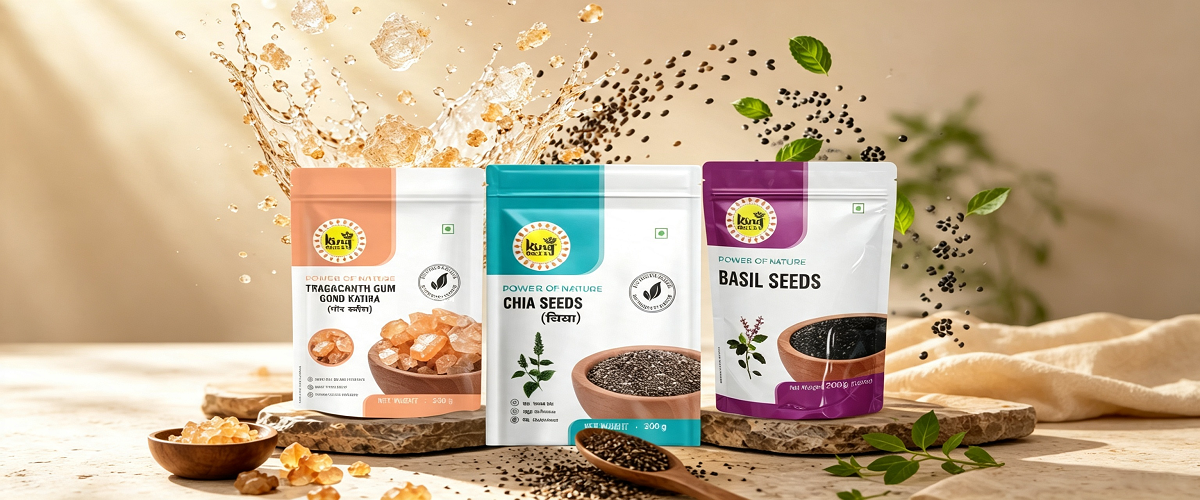
The best packaging bag for chia seeds depends on the intended quantity, sales channel, shelf-life target, and consumer usage pattern. Small retail packages may prioritize convenience and shelf appeal, while larger packages may require stronger structures and better handling performance.
Stand-Up Pouches
Stand-up pouches are one of the most versatile options for chia seed packaging.
They are suitable for:
- Retail chia seeds
- Organic chia seeds
- Premium chia seed products
- Health food products
- Small and medium package sizes
- E-commerce products
The bottom gusset allows the pouch to stand upright, creating good visibility on retail shelves.
A stand-up pouch can also incorporate:
- Resealable zipper
- Tear notch
- Rounded corners
- High-barrier laminate
- Custom printing
- Optional transparent window
These features allow brands to combine product protection with consumer convenience.
Flat Pouches
Flat pouches are useful for smaller portions and lightweight chia seed products.
They can be used for:
- Trial packs
- Single-use portions
- Small retail packages
- Sample products
- Ingredient sachets
Their compact design can reduce storage space and make them convenient for shipping and distribution.
Flat-Bottom Bags
Flat-bottom bags provide a stable structure and a relatively large printable area.
They can be suitable for premium chia seed brands that want a more structured appearance while retaining the lightweight advantages of flexible packaging.
The flat bottom also helps the package remain upright during retail display.
Side-Gusset Bags
For larger quantities of chia seeds, side-gusset bags can provide additional capacity.
They are suitable for:
- Family-size packs
- Bulk chia seeds
- Foodservice packaging
- Ingredient suppliers
- Large retail packages
The gusseted structure can improve package stability and make more efficient use of the available volume.
Resealable Zipper Bags
Chia seeds are often consumed gradually rather than all at once. A resealable zipper can therefore be an important convenience feature.
After opening, consumers can close the package again to help reduce unnecessary exposure to:
- Humidity
- Oxygen
- Dust
- External odors
The zipper does not replace the primary barrier structure, but it can improve the package's usability after opening.
Packaging Format Comparison
| Packaging Format | Suitable Applications | Main Advantages |
|---|---|---|
| Stand-Up Pouch | Retail and premium chia seeds | Shelf visibility and customization |
| Flat Pouch | Samples and small portions | Compact and lightweight |
| Flat-Bottom Bag | Premium and medium-size products | Stability and strong shelf presence |
| Side-Gusset Bag | Bulk and large packs | High capacity and durability |
| Zipper Pouch | Multi-use retail packs | Resealability and convenience |
| Individual Sachet | Single-use applications | Portion control and portability |
The final format should be selected according to the product quantity, filling process, storage conditions, and intended consumer experience.
2. How Do Packaging Bags Protect Chia Seeds from Moisture, Oxygen, and Contamination?
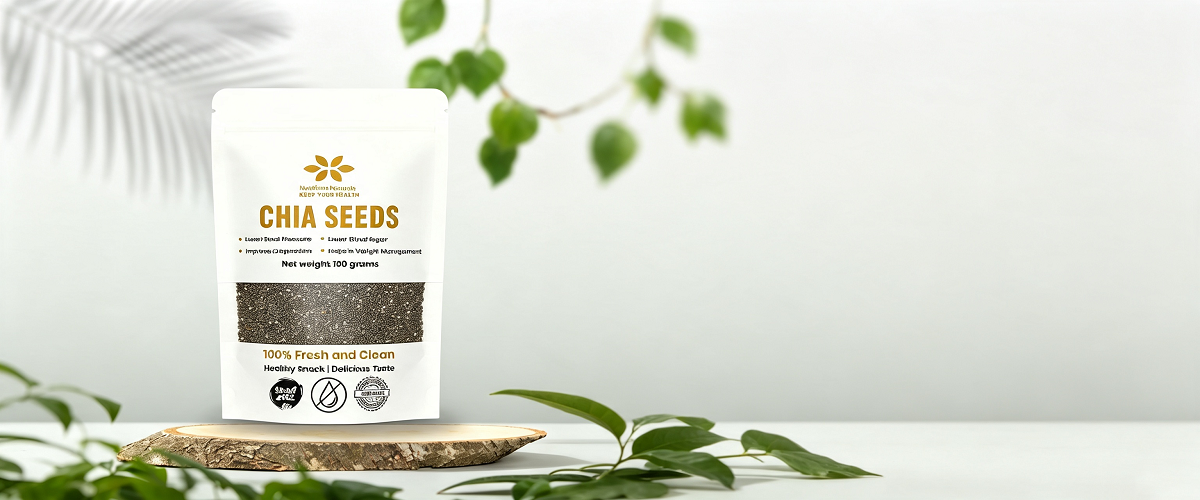
Chia seeds contain natural oils, which means their quality can be affected by environmental exposure over time. Packaging helps create a controlled barrier between the seeds and the surrounding environment.
Moisture Protection
Moisture is one of the most important factors to consider when packaging chia seeds.
Excess humidity can contribute to:
- Changes in texture
- Reduced product flowability
- Clumping
- Quality deterioration
- Potential microbial concerns under unsuitable conditions
A suitable moisture barrier helps minimize water vapor transmission through the packaging.
This is particularly important when chia seeds are distributed in humid climates or exposed to temperature fluctuations during transportation.
Oxygen Protection
Chia seeds contain oils that can undergo oxidation when exposed to oxygen over time.
Oxidation can affect:
- Freshness
- Flavor
- Aroma
- Nutritional quality
- Overall product stability
For products requiring extended shelf life, an appropriate oxygen-barrier packaging structure can help reduce oxygen transmission.
High-barrier structures may incorporate:
- Metallized PET
- Aluminum foil
- High-barrier polymer layers
- Other engineered barrier films
The required oxygen barrier should be determined through product and shelf-life testing rather than automatically selecting the highest barrier available.
Light Protection
Light exposure can contribute to degradation of sensitive food components.
For chia seed products with extended shelf-life requirements, opaque or light-blocking packaging can provide additional protection.
Possible solutions include:
- Aluminum foil laminates
- Metallized films
- Opaque polymer films
- Printed multilayer structures
A transparent window may be attractive from a marketing perspective, but its size and position should be evaluated against the product's light sensitivity.
Contamination Protection
Packaging also serves as a physical barrier against external contamination.
A properly sealed package can help protect chia seeds from:
- Dust
- Dirt
- Foreign particles
- Humidity
- Handling-related contamination
The package seal is therefore an important part of the overall protection system.
Odor Protection
Chia seeds can also be exposed to strong external odors during storage and transportation.
A suitable barrier structure can help reduce aroma migration between the product and its surrounding environment.
This can be especially important when chia seeds are stored alongside strongly scented food products or non-food products.
Environmental Protection Overview
| Environmental Factor | Potential Effect on Chia Seeds | Packaging Solution |
|---|---|---|
| Moisture | Texture and quality changes | Moisture barrier |
| Oxygen | Oxidation and freshness loss | Oxygen barrier |
| Light | Degradation of sensitive components | Opaque or light-barrier layer |
| External Odors | Aroma contamination | Odor-resistant structure |
| Dust and Contaminants | Product contamination | Reliable sealed package |
| Physical Handling | Puncture or package failure | Strong outer structure |
3. Which Flexible Packaging Materials Provide the Best Barrier Protection for Chia Seeds?
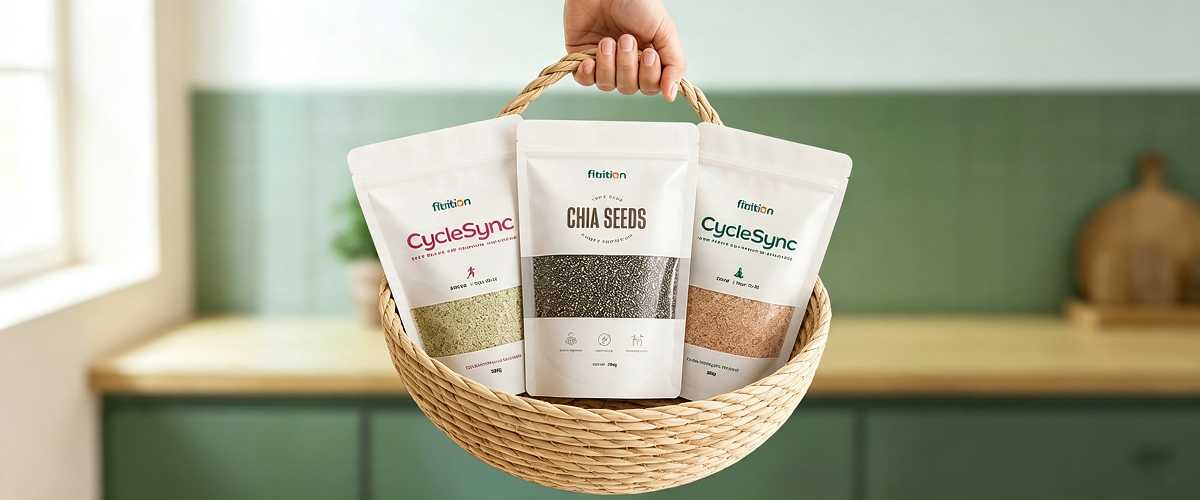
Flexible packaging for chia seeds often uses multilayer structures because no single material necessarily provides every required property.
Different layers can provide different functions, including printing, strength, barrier protection, and heat sealing.
PET
PET is commonly used as an outer layer in flexible packaging.
It provides:
- Good mechanical strength
- Excellent printability
- Dimensional stability
- Good surface appearance
- Resistance to handling
PET is particularly useful for brands that require high-quality graphics and detailed product information.
However, PET alone may not provide sufficient barrier protection for every chia seed application.
PE
PE is commonly used as the inner sealing layer.
Its advantages include:
- Good heat sealing
- Flexibility
- Moisture resistance
- Good toughness
- Suitable contact properties when appropriately specified
PE can be combined with other films to create a more complete packaging structure.
Metallized PET
Metallized PET can provide a strong barrier against:
- Oxygen
- Moisture
- Light
It can also create a metallic visual effect that supports premium packaging designs.
For chia seeds requiring stronger protection without necessarily using a conventional aluminum foil structure, metallized film can be considered.
Aluminum Foil
Aluminum foil provides a very high barrier against:
- Oxygen
- Moisture
- Light
- External odors
A foil laminate may be suitable for chia seed products with demanding shelf-life requirements or challenging distribution environments.
However, brands should also consider cost, material complexity, package flexibility, and sustainability objectives.
High-Barrier Polymer Films
High-barrier polymer structures can offer strong protection while supporting certain recyclable or mono-material packaging strategies.
These materials may be considered when brands want to balance:
- Barrier performance
- Lightweight construction
- Material simplification
- Sustainability goals
The exact performance depends on the specific film structure and manufacturing technology.
Kraft Paper Laminates
Kraft paper can provide a natural and premium visual appearance.
It can be useful for:
- Organic product branding
- Natural food positioning
- Eco-conscious designs
- Specialty chia seed products
However, kraft paper alone generally does not provide the moisture and oxygen barrier required for long-term chia seed storage.
A paper-based outer layer may therefore be combined with suitable polymer or barrier layers.
Material Comparison
| Material | Moisture Barrier | Oxygen Barrier | Light Protection | Typical Function |
|---|---|---|---|---|
| PET | Good | Moderate | Limited | Outer printable layer |
| PE | Good | Limited to Moderate | Low | Sealing layer |
| Metallized PET | Excellent | Excellent | Excellent | Barrier layer |
| Aluminum Foil | Excellent | Excellent | Excellent | High-barrier layer |
| High-Barrier Polymer | Good to Excellent | Good to Excellent | Structure dependent | Advanced barrier |
| Kraft Paper | Limited alone | Limited alone | Moderate | Appearance and branding |
The most suitable structure should be selected based on the actual product formulation, target shelf life, filling process, and distribution environment.
4. What Packaging Features Should You Consider for Chia Seed Products?
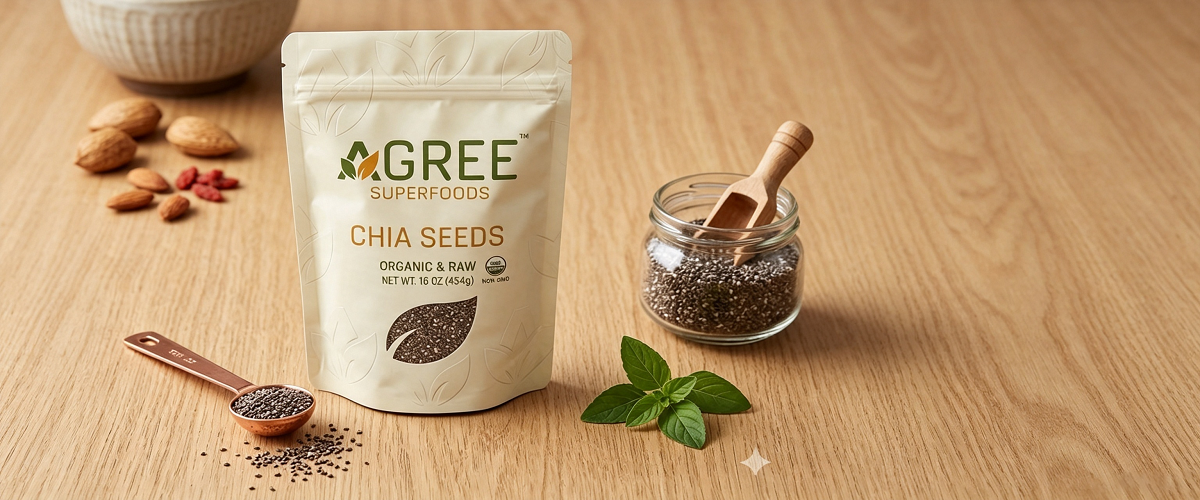
Material selection is only one part of packaging design. Functional features can significantly influence the usability, protection, and marketability of chia seed packaging.
Resealable Zippers
A zipper allows consumers to reseal the package after opening.
This is particularly useful for chia seeds because a package may be used over several meals or recipes rather than consumed immediately.
Resealability can help consumers store the product more conveniently between uses.
Tear Notches
A tear notch provides an easy opening point.
It can make small and medium-sized chia seed packages easier to open without scissors.
The tear path should be designed to provide predictable and controlled opening.
Strong Heat Seals
The heat-sealed area is one of the most important parts of the package.
A reliable seal helps prevent:
- Moisture ingress
- Product leakage
- Contamination
- Premature package failure
Seal strength should be tested under realistic production, transportation, and storage conditions.
Stand-Up Structure
A stand-up pouch can improve:
- Retail presentation
- Shelf organization
- Storage convenience
- Package visibility
This structure is particularly useful for consumer-facing chia seed brands.
Transparent Windows
A transparent window can allow consumers to see the chia seeds inside the package.
This may help communicate:
- Product appearance
- Seed quality
- Natural positioning
- Product authenticity
However, the window reduces the amount of light-blocking material, so it should be used only when compatible with the required shelf-life protection.
Custom Printing
Flexible packaging provides a large surface for brand communication.
Design elements can include:
- Brand logo
- Product name
- Nutritional information
- Preparation suggestions
- Serving information
- Certifications
- Origin information
- Usage ideas
A well-designed package can help chia seed products stand out in crowded health food categories.
Premium Finishing
Premium brands may use finishing techniques such as:
- Matte lamination
- Gloss lamination
- Metallic effects
- Spot effects
- Soft-touch finishes
- Textured visual effects
These techniques can create a stronger premium appearance without changing the basic package structure.
Package Size
Different package sizes can serve different consumer groups.
Possible formats include:
- Trial-size packs
- Small retail packs
- Standard household packs
- Large family-size packs
- Bulk packs
Offering several sizes can help brands reach different purchasing occasions.
Functional Feature Comparison
| Feature | Main Benefit | Suitable Application |
|---|---|---|
| Zipper | Resealing | Multi-use retail packs |
| Tear Notch | Easy opening | Small and medium pouches |
| High-Integrity Seal | Product protection | All package formats |
| Stand-Up Bottom | Shelf stability | Retail pouches |
| Window | Product visibility | Selected specialty products |
| Custom Printing | Brand recognition | Retail and premium products |
| Matte/Gloss Finish | Visual differentiation | Premium packaging |
| Multiple Sizes | Market flexibility | Retail and bulk products |
5. Chia Seed Packaging Bags: Key Factors for Freshness, Shelf Life, Branding, and Distribution
Choosing packaging for chia seeds requires a balance between technical performance and commercial requirements.
A successful package should protect the product while remaining convenient, attractive, durable, and economically viable.
Freshness Protection
Because chia seeds contain natural oils, protection from oxygen can be an important part of shelf-life management.
At the same time, moisture protection helps maintain product condition during storage.
Brands should therefore evaluate:
- Oxygen transmission
- Water vapor transmission
- Light exposure
- Seal integrity
- Package headspace
- Storage temperature
- Expected shelf life
The appropriate combination should be confirmed through actual shelf-life testing.
Shelf-Life Requirements
The longer the expected shelf life, the more carefully the packaging structure should be evaluated.
A product intended for short local distribution may have different requirements from one shipped internationally and stored for extended periods.
Factors to consider include:
- Warehouse conditions
- Climate
- Transportation duration
- Temperature fluctuations
- Humidity
- Retail storage
- E-commerce fulfillment
Branding and Shelf Appeal
Chia seeds are often positioned within health, wellness, natural food, and nutrition categories.
Packaging can reinforce these positioning strategies through:
- Natural color palettes
- Clean typography
- Ingredient imagery
- Nutritional communication
- Organic-inspired graphics
- Minimalist design
At the same time, brands should ensure that visual claims are accurate and comply with applicable market regulations.
Sustainability
Sustainability can also influence material selection.
Brands may explore:
- Lightweight flexible structures
- Reduced material usage
- Recyclable packaging
- Mono-material structures
- Paper-based outer layers
- Efficient package dimensions
However, sustainability should not compromise the barrier performance required to protect the chia seeds.
Distribution and Transportation
Flexible packaging can provide logistical advantages because it is lightweight and can use space efficiently.
Potential benefits include:
- Lower packaging weight
- Efficient carton utilization
- Reduced warehouse volume
- Easier palletization
- Flexible package sizing
At the same time, packaging must have sufficient puncture and seal strength to survive transportation.
Export Considerations
For chia seeds shipped internationally, packaging may face:
- High humidity
- Long transportation periods
- Temperature fluctuations
- Compression
- Repeated handling
- Different warehouse environments
High-barrier structures and strong seals can help reduce packaging-related risks.
Export packaging should also be evaluated against the food-contact, labeling, and packaging regulations of the destination market.
Chia Seed Packaging Selection Checklist
| Factor | Key Question |
|---|---|
| Product Type | Whole chia seeds or another formulation? |
| Oil Content | How sensitive is the product to oxidation? |
| Moisture | How important is humidity protection? |
| Shelf Life | How long must the product remain stable? |
| Package Size | Retail, family, or bulk quantity? |
| Barrier | What oxygen and moisture barrier is required? |
| Light | Does the product require light protection? |
| Opening | Is an easy-open feature needed? |
| Resealing | Will consumers use the package multiple times? |
| Durability | Can the package withstand transportation? |
| Branding | How much printable surface is required? |
| Sustainability | What material goals apply to the target market? |
| Cost | Does the package fit the product's target economics? |
6. FAQ
What Is the Best Packaging Bag for Chia Seeds?
High-barrier stand-up pouches, zipper pouches, flat-bottom bags, and side-gusset bags can all be suitable for chia seeds. The best choice depends on package size, shelf-life requirements, distribution conditions, and consumer usage.
Do Chia Seeds Need High-Barrier Packaging?
Chia seeds contain natural oils and can benefit from protection against oxygen, moisture, and light. The exact barrier requirement depends on the product, desired shelf life, storage conditions, and packaging format.
What Material Is Best for Chia Seed Packaging?
There is no universal best material. PET/PE, PET/metallized film/PE, PET/aluminum foil/PE, and high-barrier polymer structures may all be considered depending on the required barrier performance and sustainability objectives.
Is Aluminum Foil Suitable for Chia Seed Packaging?
Yes. Aluminum foil provides excellent oxygen, moisture, light, and odor protection and can be used in high-barrier laminated structures for chia seeds requiring strong protection.
Are Resealable Bags Good for Chia Seeds?
Yes. Resealable zipper bags are convenient when consumers use the chia seeds over multiple occasions. The zipper helps close the package after opening and improves storage convenience.
Can Chia Seed Packaging Have a Transparent Window?
Yes, but the window should be evaluated carefully. Transparent areas allow consumers to see the product but provide less light protection than opaque barrier structures.
Can Kraft Paper Be Used for Chia Seed Bags?
Kraft paper can be used as part of a laminated packaging structure to create a natural appearance. However, kraft paper alone generally does not provide sufficient moisture and oxygen protection for long-term chia seed storage.
Can Chia Seed Packaging Be Customized?
Yes. Flexible chia seed bags can be customized in terms of size, material structure, printing, zipper, tear notch, finish, package shape, and other functional features.
7. Conclusion
Choosing the right packaging bags for chia seeds requires careful consideration of both product protection and commercial requirements. Because chia seeds contain natural oils and can be affected by moisture, oxygen, light, and external contamination, packaging should provide an appropriate barrier while maintaining reliable seal performance throughout storage and distribution.
Flexible packaging offers a wide range of solutions, including stand-up pouches, flat pouches, flat-bottom bags, side-gusset bags, and resealable zipper pouches. These formats can be customized for different package sizes, sales channels, and consumer usage patterns.
Material selection is equally important. PET, PE, metallized PET, aluminum foil, high-barrier polymer films, and paper-based structures can be combined in different laminate configurations to balance mechanical strength, barrier performance, printability, sealability, and appearance.
Functional features such as resealable zippers, easy-open tear notches, strong heat seals, transparent windows, premium finishes, and customized printing can further improve consumer convenience and brand recognition.
Ultimately, the best chia seed packaging is not simply the bag with the strongest barrier or the most attractive design. It is the solution that provides the right combination of freshness protection, shelf-life performance, durability, convenience, branding, sustainability, and cost efficiency for the specific product and target market.