How Do You Create Personalized Flexible Packaging for Flower Tea?
Anna_Yu
How Do You Create Personalized Flexible Packaging for Flower Tea?
Flower tea is valued not only for its delicate aroma and visual beauty but also for the overall sensory experience it creates for consumers. Products such as rose tea, chrysanthemum tea, jasmine flower tea, osmanthus tea, hibiscus tea, and blended botanical teas are often positioned as premium or wellness-oriented products. Because their appeal depends heavily on appearance, fragrance, freshness, and perceived quality, packaging plays a particularly important role in protecting the product while communicating its unique identity.
Unlike many conventional dry foods, flower tea can be especially sensitive to moisture, oxygen, light, external odors, and physical damage. Excessive moisture can soften dried flowers, encourage quality deterioration, and affect storage stability. Oxygen and light may gradually reduce aroma and color quality, while poor packaging can allow delicate petals to break during transportation. At the same time, flower tea packaging needs to showcase the natural beauty and premium positioning of the product without sacrificing barrier performance.
Flexible packaging provides an effective solution because it can combine high-barrier materials, lightweight construction, customizable shapes, premium printing, resealable closures, and efficient transportation. Stand-up pouches, flat bottom bags, three-side seal bags, and other flexible formats can be customized according to product quantity, sales channel, and brand positioning.
Personalization goes beyond simply printing a logo on a pouch. Brands can customize the material structure, bag dimensions, opening method, zipper, window, finish, artwork, and even structural shape to create packaging that matches the character of the flower tea.
This guide explains how to create personalized flexible packaging for flower tea, covering packaging formats, barrier protection, material selection, premium finishes, custom design features, branding, shelf appeal, and practical considerations for storage and distribution.
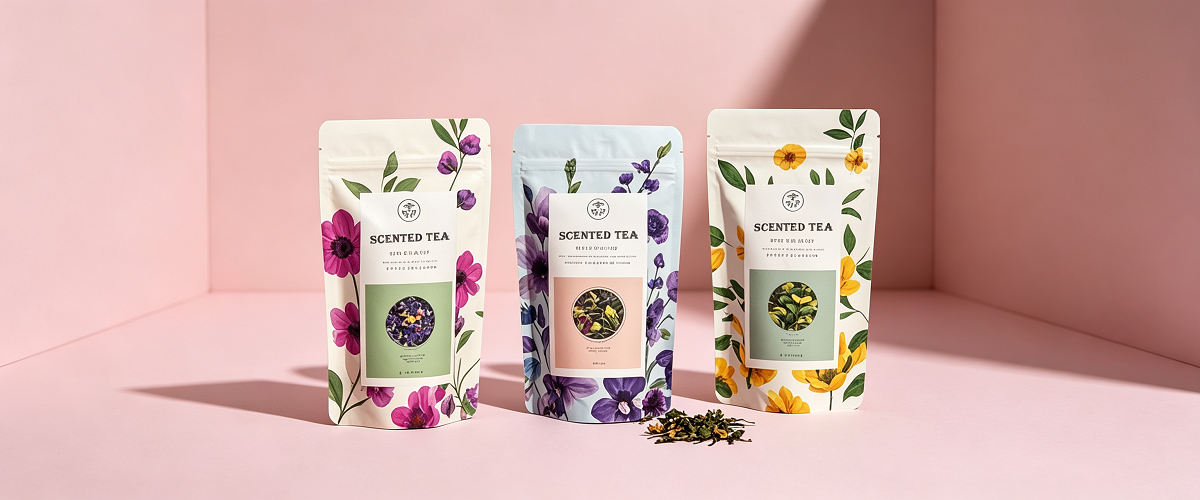
1. What Types of Flexible Packaging Are Best for Personalized Flower Tea Products?
The best flexible packaging format depends on the type of flower tea, package size, consumption frequency, retail environment, and desired brand positioning.
Flower tea is often sold in relatively small quantities, making presentation and consumer convenience particularly important.
Stand-Up Pouches
Stand-up pouches are one of the most versatile options for personalized flower tea packaging.
They can be used for:
- Rose tea
- Chrysanthemum tea
- Jasmine flowers
- Hibiscus tea
- Osmanthus tea
- Mixed flower tea
- Botanical tea blends
The bottom gusset allows the pouch to stand upright, improving shelf visibility and providing a stable package for storage.
A zipper can also be added to allow consumers to repeatedly open and close the package.
Flat Bottom Bags
Flat bottom bags are particularly suitable for premium flower tea brands.
They provide:
- Excellent shelf stability
- Large printable surfaces
- Premium visual appearance
- Efficient internal volume
- Multiple panels for product information
The structured shape can help create a sophisticated appearance suitable for specialty tea shops, gift products, and premium e-commerce brands.
Three-Side Seal Bags
Three-side seal bags are suitable for smaller flower tea products and trial packages.
They can be used for:
- Sample packs
- Single-use portions
- Small retail quantities
- Gift sets
- Promotional products
Their relatively simple construction can also help control packaging costs.
Pillow Bags
Pillow bags can be considered for high-volume or cost-sensitive flower tea products.
They are particularly suitable when:
- High-speed filling is required
- Advanced structural features are unnecessary
- The product is sold in smaller portions
- Packaging efficiency is a priority
Individual Sachets
For flower tea intended for convenient brewing, individual sachets can provide portion control.
They are suitable for:
- Hotel tea service
- Office tea
- Travel products
- Gift boxes
- Single-serve flower tea
Individual packaging can also help protect each portion from repeated exposure to humidity after the outer package has been opened.
Packaging Format Comparison
| Packaging Format | Suitable Application | Main Advantage |
|---|---|---|
| Stand-Up Pouch | Retail flower tea | Convenience and shelf appeal |
| Flat Bottom Bag | Premium flower tea | Stability and premium appearance |
| Three-Side Seal Bag | Small packs and samples | Cost efficiency |
| Pillow Bag | High-volume products | Efficient production |
| Individual Sachet | Single-serve tea | Portion control and convenience |
The ideal format should balance the product's physical characteristics with the brand's positioning, consumer expectations, and distribution requirements.
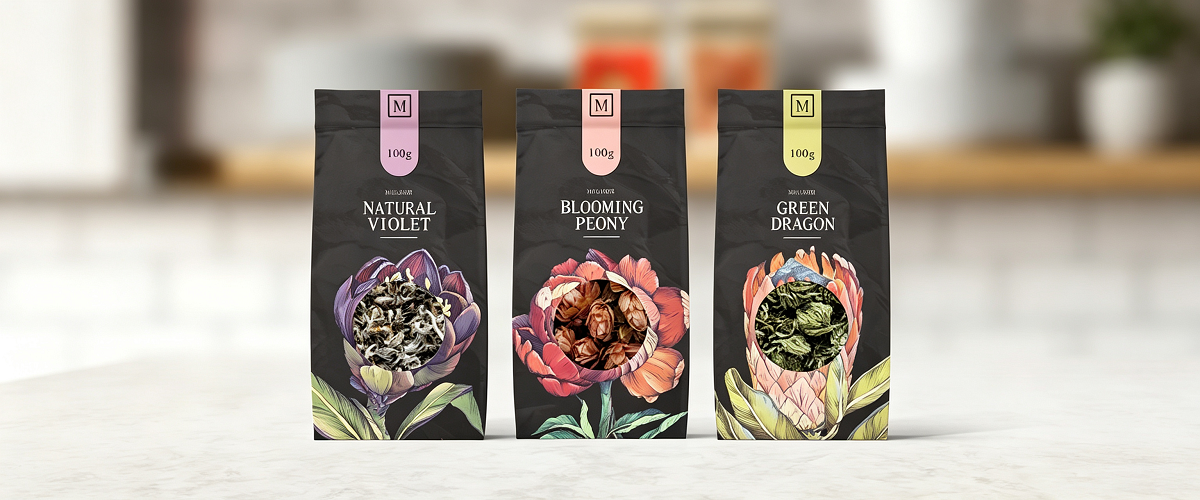
2. How Can Custom Packaging Protect Flower Tea from Moisture, Oxygen, and Light?
Personalized packaging should not focus on appearance alone. The primary purpose of the package remains protecting the flower tea from environmental factors that can reduce product quality.
Moisture Protection
Moisture is one of the most important concerns for dried flower tea.
When dried flowers absorb excessive moisture, they may experience:
- Loss of crispness
- Texture changes
- Clumping
- Aroma deterioration
- Reduced storage stability
- Increased risk of quality problems
A suitable moisture-barrier structure helps reduce water vapor transmission through the package.
This becomes especially important in humid environments or during international transportation.
Oxygen Protection
Oxygen can gradually affect the quality of dried botanical products.
Potential effects include:
- Aroma degradation
- Oxidation of sensitive components
- Color changes
- Reduced sensory quality
An appropriate oxygen barrier can help slow these changes and preserve the product's sensory characteristics.
Light Protection
Many flower teas are valued for their natural colors.
For example, brightly colored petals can contribute significantly to the visual appeal of the product.
Excessive light exposure may contribute to:
- Color fading
- Aroma degradation
- Reduced visual quality
Metallized or aluminum-based structures can provide strong light protection.
Aroma Retention
Flower tea often has a delicate fragrance, which means packaging should help minimize aroma loss.
A high-quality barrier structure can help prevent:
- Fragrance escaping from the package
- External odors entering the package
- Interaction between the product and the surrounding environment
This is particularly important when different aromatic products are stored or transported together.
Physical Protection
Dried flowers can be fragile.
Packaging should therefore provide sufficient protection against:
- Compression
- Abrasion
- Puncture
- Transportation vibration
- Repeated handling
A properly designed pouch can help reduce product damage while maintaining a lightweight package.
Barrier Protection Comparison
| Risk | Packaging Solution |
|---|---|
| Moisture | High moisture-barrier layer |
| Oxygen | Oxygen-barrier layer |
| Light | Metallized or opaque structure |
| Aroma Loss | High-barrier laminate |
| External Odors | Strong barrier structure |
| Physical Damage | Durable outer and sealing layers |
The packaging structure should be selected according to the flower tea's sensitivity, target shelf life, and expected storage environment.
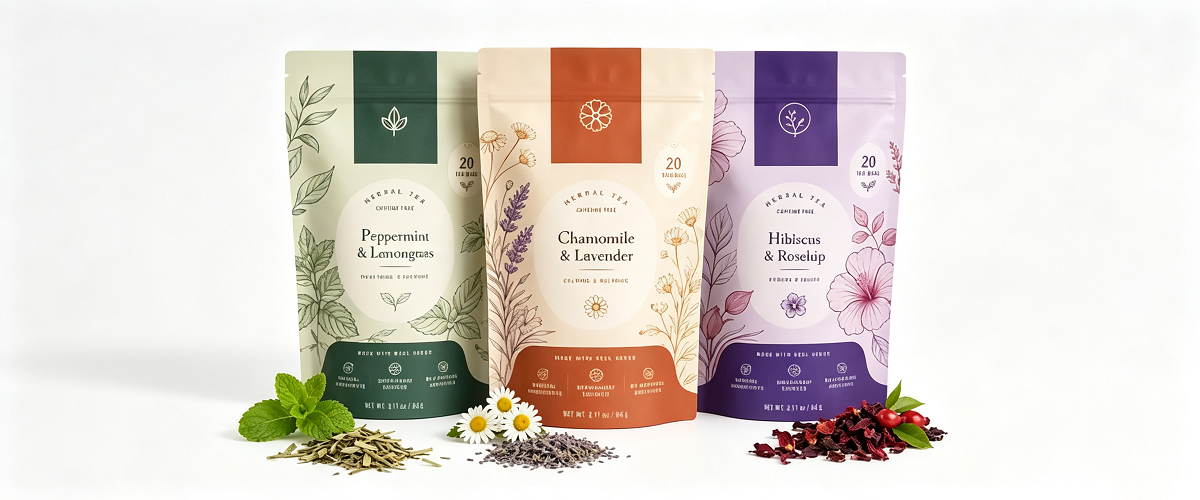
3. Which Materials and Finishes Are Suitable for Premium Flower Tea Packaging?
Material selection affects both packaging performance and visual appearance.
A personalized flower tea package may combine several layers, with each layer performing a specific function.
PET
PET is commonly used as an outer layer.
It provides:
- Good mechanical strength
- Excellent printability
- Dimensional stability
- Surface durability
- High-quality appearance
PET is often laminated with other materials to achieve the required barrier and sealing performance.
BOPP
BOPP can provide:
- Good stiffness
- Attractive appearance
- Moisture resistance
- Printability
- Cost efficiency
It can be used for certain flower tea applications where moderate barrier performance is sufficient.
PE and LLDPE
PE and LLDPE are commonly used as inner sealing layers.
They provide:
- Heat-sealing performance
- Flexibility
- Toughness
- Moisture resistance
- Good processability
The sealing layer is particularly important because a strong barrier structure is ineffective if the final package has weak or defective seals.
VMPET
Metallized PET can provide enhanced protection against:
- Oxygen
- Moisture
- Light
It can also create a distinctive metallic appearance when incorporated appropriately into the packaging design.
Aluminum Foil
Aluminum foil provides very high barrier performance.
It can offer strong protection against:
- Oxygen
- Moisture
- Light
- External odors
For premium flower tea products requiring strong protection over long storage periods, foil-based structures may be considered.
Common Material Structures
| Material Structure | Main Benefit | Potential Application |
|---|---|---|
| BOPP/PE | Cost efficiency and moisture resistance | Standard flower tea |
| PET/PE | Strength and printability | Retail flower tea |
| PET/VMPET/PE | Enhanced barrier | Premium flower tea |
| PET/AL/PE | Very high barrier | Premium and export products |
| Recyclable Mono-Material Structure | Recycling potential | Sustainability-focused brands |
The final structure should be selected according to the product's actual barrier requirements rather than simply choosing the most complex laminate.
Matte Finishes
Matte finishes can create a soft and sophisticated visual appearance.
They are particularly suitable for flower tea brands using:
- Natural color palettes
- Minimalist designs
- Botanical illustrations
- Wellness-oriented branding
Gloss Finishes
Gloss finishes can make colors appear brighter and more vivid.
They can be effective when the packaging design emphasizes:
- Bright floral graphics
- Vibrant colors
- Modern branding
- Strong visual contrast
Metallic Effects
Metallic elements can communicate premium positioning.
They may be used selectively for:
- Logos
- Borders
- Floral patterns
- Decorative details
Soft-Touch Effects
Soft-touch finishes can create a more tactile packaging experience and may be appropriate for premium gift-oriented flower tea products.
The finish should always be evaluated alongside the material structure, printing method, and intended product positioning.
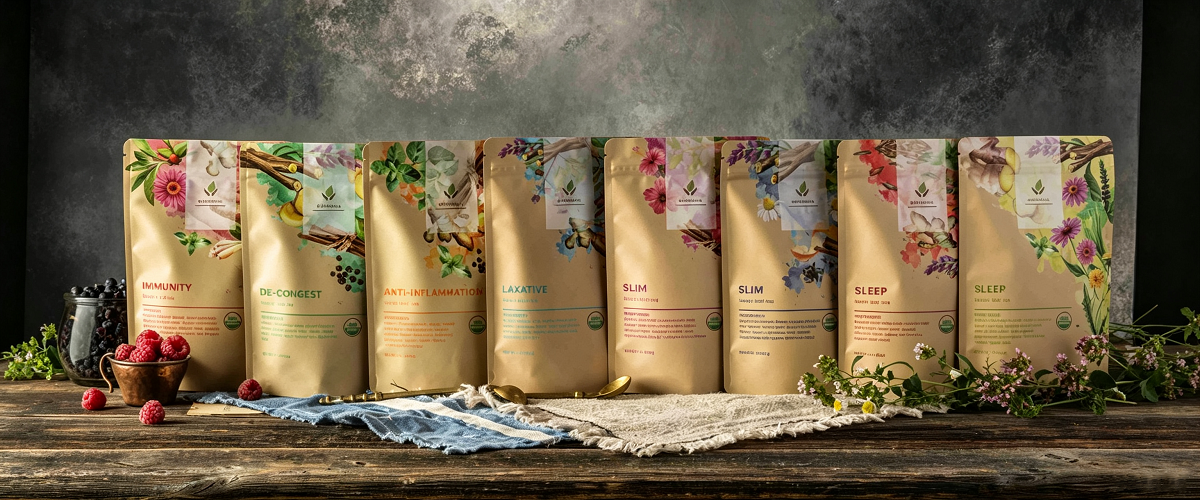
4. What Custom Design Features Can Make Flower Tea Packaging More Attractive?
Personalization allows brands to turn flower tea packaging into a visual and functional representation of the product.
Custom Colors
Color is particularly important for flower tea because consumers often associate colors with specific flowers and flavor expectations.
For example:
- Soft pink can suggest rose
- Yellow or gold can suggest chrysanthemum
- Purple can suggest lavender or hibiscus blends
- Green can communicate botanical or natural positioning
The exact color strategy should match the actual product and brand identity.
Botanical Graphics
Flower illustrations can immediately communicate the product category.
Brands can use:
- Botanical drawings
- Realistic flower photography
- Minimalist line art
- Hand-painted illustrations
- Abstract floral patterns
The design should maintain a balance between visual attractiveness and readability.
Transparent Windows
A small transparent window can allow consumers to see the actual flowers inside the package.
This can be particularly valuable when the visual quality of the dried flowers is an important selling point.
However, large transparent areas may reduce light protection.
A controlled window can therefore provide a balance between product visibility and barrier performance.
Custom Shapes
Flexible packaging can be customized in different dimensions and structural configurations.
Brands can develop packaging with:
- Different widths
- Different heights
- Different gusset sizes
- Special silhouettes
- Custom spout or opening positions where applicable
The design should remain practical for filling, sealing, stacking, and transportation.
Resealable Zippers
A zipper is useful for multi-use flower tea products.
It allows consumers to:
- Open the package easily
- Take out a portion
- Reseal the remaining product
- Reduce exposure to humidity
For products consumed gradually, resealability can significantly improve convenience.
Tear Notches
Tear notches provide an easy opening mechanism.
They can be particularly useful for smaller packages where scissors are inconvenient.
Premium Printing
High-quality printing can be used to communicate:
- Flower variety
- Origin
- Brewing instructions
- Product benefits
- Flavor profile
- Brand story
- Certifications
The large printable surface of flexible packaging makes it possible to combine functional information with strong visual storytelling.
Design Feature Comparison
| Feature | Main Benefit |
|---|---|
| Custom Colors | Strong product recognition |
| Floral Graphics | Communicates product identity |
| Transparent Window | Shows product appearance |
| Zipper | Resealability |
| Tear Notch | Easy opening |
| Custom Shape | Differentiation |
| Matte Finish | Premium and natural appearance |
| Gloss Finish | Bright and vibrant appearance |
| Metallic Effects | Premium visual appeal |
The strongest packaging designs combine visual differentiation with practical functionality.
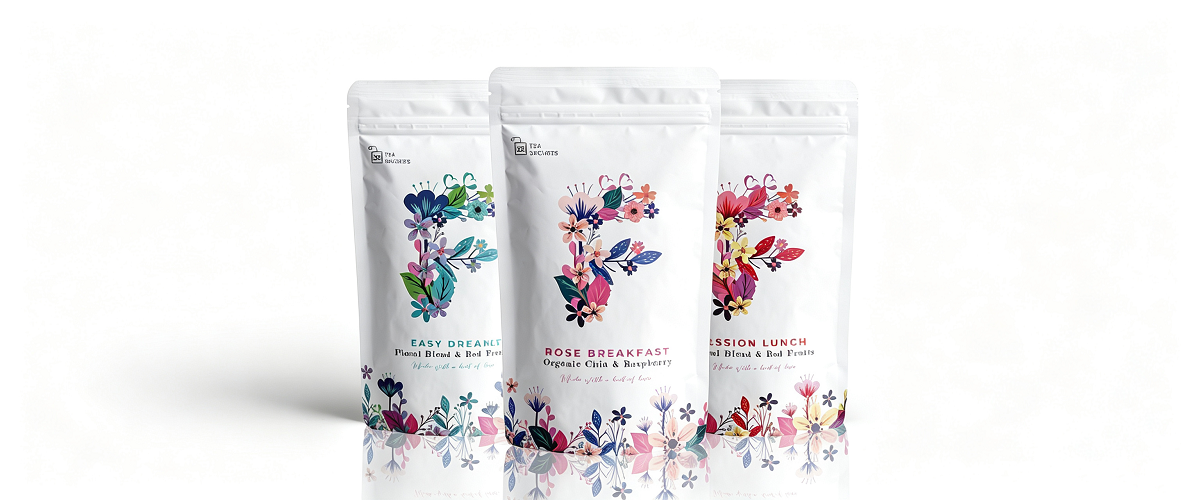
5. Personalized Flower Tea Packaging: Key Factors for Freshness, Branding, and Market Appeal
Creating personalized flower tea packaging requires more than choosing attractive artwork. The package must support the product's entire commercial life cycle.
Product Characteristics
The packaging decision should begin with the actual flower tea.
Consider:
- Flower variety
- Drying method
- Moisture level
- Aroma intensity
- Fragility
- Particle or petal size
- Expected shelf life
Different botanical products may have different packaging requirements.
Package Size
Package size should correspond to the intended consumption pattern.
Common approaches include:
- Small trial packs
- Individual portions
- Standard retail packs
- Premium gift packs
- Larger refill packs
A suitable size can reduce unnecessary material use while improving consumer convenience.
Shelf-Life Requirements
The required shelf life affects the choice of barrier structure.
Longer shelf-life products may require stronger protection against:
- Moisture
- Oxygen
- Light
- Aroma loss
Shelf-life testing should be conducted using the actual product and final package structure.
Retail Presentation
Flower tea is often purchased partly for its visual and emotional appeal.
Packaging should therefore create a strong first impression through:
- Clear product identification
- Attractive floral imagery
- Premium typography
- Appropriate color selection
- Consistent brand identity
The package should communicate what makes the flower tea special within a few seconds of visual exposure.
E-Commerce Considerations
For online sales, packaging must withstand shipping and handling while remaining visually attractive.
E-commerce packaging should consider:
- Puncture resistance
- Seal strength
- Compression
- Vibration
- Dimensional efficiency
- Product photography appeal
A well-designed flexible pouch can also be easier and more economical to ship than some rigid alternatives.
Export Distribution
International flower tea shipments may experience:
- Long transit times
- Humidity fluctuations
- Temperature changes
- Compression
- Vibration
- Repeated handling
The packaging structure and secondary packaging should be tested accordingly.
Sustainability
Brands increasingly want personalized packaging with lower environmental impact.
Potential approaches include:
- Recyclable mono-material structures
- Reduced film thickness
- Lightweight packaging
- Optimized package dimensions
- Reduced secondary packaging
- Responsible printing systems
However, sustainability should not compromise the barrier performance required to protect the flower tea.
Cost Optimization
Packaging customization should also consider total cost.
Factors include:
- Material structure
- Film thickness
- Bag dimensions
- Printing method
- Number of colors
- Finishing processes
- Zipper
- Window
- Production quantity
- Secondary packaging
- Transportation
A visually impressive package that is unnecessarily complex may not provide the best commercial result.
Personalized Flower Tea Packaging Checklist
| Factor | Key Question |
|---|---|
| Product | What type of flower tea is being packaged? |
| Moisture | What moisture barrier is required? |
| Oxygen | Is enhanced oxygen protection necessary? |
| Light | Does the product require opaque packaging? |
| Aroma | How sensitive is the flower tea to fragrance loss? |
| Size | What fill weight is required? |
| Closure | Is a zipper necessary? |
| Window | Should consumers see the flowers? |
| Design | What visual identity matches the brand? |
| Finish | Matte, gloss, metallic, or soft-touch? |
| Distribution | Retail, e-commerce, or export? |
| Sustainability | Can a recyclable structure meet performance requirements? |
| Cost | Does the final package fit the target budget? |
6. FAQ
What Is the Best Flexible Packaging for Flower Tea?
Stand-up pouches and flat bottom bags are among the most versatile options for flower tea. Smaller products can also use three-side seal bags or individual sachets depending on the intended application.
Does Flower Tea Need High-Barrier Packaging?
Many flower tea products benefit from moisture, oxygen, light, and aroma protection. The required barrier level depends on the product, moisture content, expected shelf life, and storage environment.
Which Material Is Best for Premium Flower Tea Packaging?
PET/VMPET/PE and PET/AL/PE are examples of high-barrier structures that can be considered for premium flower tea. Recyclable mono-material structures may also be considered when they can meet the required performance.
Should Flower Tea Packaging Have a Transparent Window?
A small transparent window can showcase the natural appearance of dried flowers. However, excessive transparency may increase light exposure, so the window should be carefully designed according to the product's sensitivity.
Are Zippers Useful for Flower Tea Packaging?
Yes. Zippers are particularly useful for multi-use packages because they allow consumers to reseal the pouch after taking out the desired amount of tea.
Can Flower Tea Packaging Be Fully Customized?
Yes. Brands can customize pouch size, material structure, printing, colors, finishes, zipper options, windows, structural features, and other elements according to their product and market requirements.
Is Flexible Packaging Suitable for Premium Flower Tea?
Absolutely. High-quality flexible packaging can combine high-barrier protection with sophisticated printing, premium finishes, customized structures, and convenient closures, making it suitable for premium flower tea products.
Is Flexible Flower Tea Packaging Suitable for Export?
Yes. Flexible packaging can be designed for international distribution, but the final package should be tested for moisture, mechanical strength, seal integrity, storage conditions, and the expected transportation environment.
How Can Packaging Make Flower Tea Look More Premium?
Premium flower tea packaging can combine a carefully selected color palette, botanical graphics, minimalist typography, high-quality printing, matte or soft-touch finishes, metallic details, and a well-structured pouch format. The design should reinforce the natural and delicate character of the product.
7. Conclusion
Creating personalized flexible packaging for flower tea requires a careful balance between product protection, visual identity, consumer convenience, sustainability, and cost.
Stand-up pouches, flat bottom bags, three-side seal bags, pillow bags, and individual sachets can all serve different flower tea applications. The best format depends on the product quantity, consumption pattern, retail environment, and brand positioning.
Material selection is equally important. PET, BOPP, PE, LLDPE, VMPET, aluminum foil, and recyclable mono-material structures can provide different combinations of strength, moisture protection, oxygen barrier, light protection, printability, and sealing performance.
Because dried flowers can be sensitive to moisture, oxygen, light, and aroma loss, packaging should be designed around the actual product rather than relying on appearance alone. High-barrier structures can help maintain sensory quality, while controlled transparent windows can allow consumers to see the product without unnecessarily exposing the entire package to light.
Personalization provides significant opportunities for differentiation. Custom colors, botanical graphics, premium finishes, resealable zippers, tear notches, transparent windows, customized dimensions, and high-quality printing can transform a simple pouch into a recognizable brand asset.
For premium flower tea, packaging should also communicate the product story. Origin, flower variety, brewing method, flavor profile, sourcing information, and brand philosophy can all be integrated into the design.
For e-commerce and export markets, mechanical durability and transportation performance become increasingly important. The finished pouch should be able to withstand handling, compression, vibration, humidity, and extended transportation while maintaining seal integrity.
Ultimately, the best personalized flower tea packaging is not simply the most decorative option. It is the package that combines appropriate barrier performance, reliable construction, attractive design, consumer convenience, efficient distribution, and sustainable thinking.
When these factors are developed together, flexible packaging can do more than protect flower tea—it can preserve its aroma and appearance, communicate its premium character, and create a stronger connection between the product and the consumer.