How to Choose Flexible Packaging Bags for Fresh Corn
Anna_Yu
How to Choose Flexible Packaging Bags for Fresh Corn
Fresh corn is a highly perishable agricultural product that requires careful handling and packaging to maintain its natural sweetness, moisture, texture, color, and overall quality. Unlike dried corn or processed corn products, fresh corn continues to respire after harvest. This biological activity can lead to rapid quality changes when temperature, humidity, gas exchange, and handling conditions are not properly controlled.
Packaging therefore plays a critical role in the post-harvest supply chain. The right flexible packaging bag can help reduce moisture loss, protect corn from physical damage, limit contamination, and support appropriate refrigerated storage. At the same time, packaging that is too restrictive or poorly designed may encourage condensation, accelerate deterioration, or create unfavorable internal conditions.
Flexible packaging has become an important option for fresh produce because it offers lightweight construction, flexible sizing, efficient transportation, customizable printing, and the ability to engineer moisture and gas-management properties. Depending on the product and distribution model, fresh corn can be packaged in polyethylene-based bags, perforated produce bags, vacuum-compatible structures, flow-wrap formats, or larger flexible packs for foodservice applications.
However, fresh corn packaging requires a different approach from shelf-stable food packaging. Maximum barrier performance is not always the objective. Fresh corn is a living product, and packaging must account for respiration and the balance between oxygen, carbon dioxide, moisture, and temperature. Packaging selection should therefore be based on the actual variety, harvest condition, cooling process, storage temperature, package size, distribution duration, and intended market.
This guide explains how to choose flexible packaging bags for fresh corn, including suitable bag formats, moisture and gas management, material selection, anti-condensation considerations, functional features, refrigerated storage, transportation, branding, and overall packaging performance.
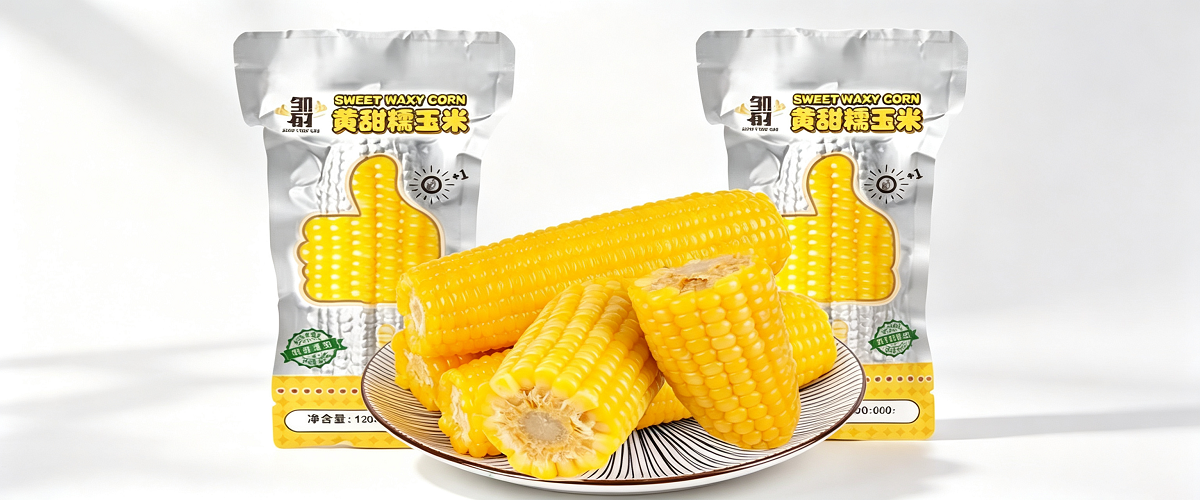
1. What Types of Flexible Packaging Bags Are Best for Fresh Corn?
The most suitable flexible packaging format for fresh corn depends on whether the corn is sold as whole ears, trimmed ears, peeled corn, or prepared retail portions.
Package size, refrigeration conditions, distribution distance, and consumer usage also influence the final design.
Polyethylene Produce Bags
PE-based bags are widely suitable for fresh produce applications because polyethylene can provide flexibility, toughness, and good moisture resistance.
They can be used for:
- Whole fresh corn ears
- Retail corn packs
- Refrigerated produce
- Foodservice packages
- Short-distance distribution
The structure can be customized according to the required thickness, strength, transparency, and ventilation.
Perforated Fresh Produce Bags
Perforated bags can be useful when ventilation and gas exchange are important.
Small controlled perforations can help manage:
- Moisture accumulation
- Condensation
- Internal humidity
- Gas exchange
The number and size of perforations should be selected according to the corn's respiration characteristics, package size, storage temperature, and distribution environment.
Too much ventilation can increase moisture loss, while insufficient ventilation can increase condensation or create unfavorable internal conditions.
Stand-Up Pouches
Stand-up pouches can be considered for certain prepared or processed fresh corn products rather than loose whole ears.
They may be suitable for:
- Trimmed corn portions
- Prepared fresh corn
- Specialty retail packs
- Premium produce products
Their upright structure provides good shelf presentation and a large printable surface.
Vacuum-Compatible Flexible Bags
For certain prepared fresh corn applications, vacuum-compatible packaging may be considered.
However, vacuum packaging should not automatically be applied to all fresh corn products.
Whole fresh produce continues to respire, so packaging conditions must be carefully evaluated before reducing internal oxygen significantly.
For products that have undergone suitable processing or preparation, vacuum or modified-atmosphere systems may provide different packaging opportunities.
Flow-Wrap Packaging
Flow-wrap structures can provide an efficient option for individually or collectively packaged corn portions.
They can offer:
- High production efficiency
- Consistent package dimensions
- Good product visibility
- Flexible film selection
- Efficient material use
Perforation or microperforation can be incorporated when appropriate.
Bulk Flexible Bags
Large flexible bags can be used for foodservice or wholesale applications.
They may be suitable for:
- Restaurants
- Catering
- Food processors
- Commercial kitchens
- Wholesale produce distribution
Larger bags require particular attention to puncture resistance, seal strength, handling, and ventilation.
Packaging Format Comparison
| Packaging Type | Suitable Application | Main Advantage |
|---|---|---|
| PE Produce Bag | Whole fresh corn | Flexibility and moisture management |
| Perforated Bag | Refrigerated fresh corn | Gas exchange and condensation control |
| Stand-Up Pouch | Prepared or specialty corn | Shelf presentation |
| Flow-Wrap | Retail portions | Production efficiency |
| Vacuum-Compatible Bag | Selected prepared products | Reduced air exposure |
| Bulk Flexible Bag | Foodservice and wholesale | Capacity and handling efficiency |
The best format should be determined by the corn's physiological condition and distribution requirements rather than by appearance alone.
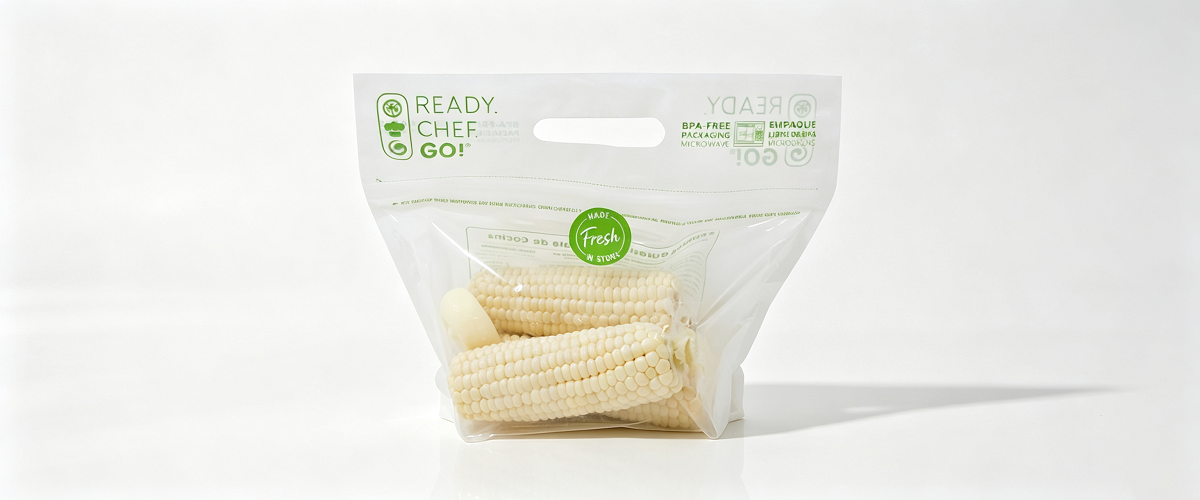
2. How Can Flexible Packaging Help Preserve Fresh Corn Quality and Moisture?
Fresh corn naturally loses quality after harvest. Packaging can help slow deterioration, but it must work together with rapid cooling and appropriate refrigerated storage.
Moisture Retention
Fresh corn contains substantial moisture, and excessive moisture loss can negatively affect:
- Kernel appearance
- Texture
- Freshness perception
- Weight
- Overall eating quality
A suitable flexible film can reduce uncontrolled moisture loss and help maintain product quality.
However, the goal is not necessarily to create a completely moisture-tight environment.
Fresh corn can release moisture through respiration and surface evaporation. If this moisture condenses inside the package, the resulting droplets can create another quality problem.
Condensation Control
Condensation is one of the most important considerations for refrigerated fresh corn packaging.
When warm produce is placed into a colder environment, moisture can condense on the inner package surface.
Excessive condensation can contribute to:
- Surface wetness
- Microbial growth
- Visual quality deterioration
- Package fogging
- Reduced consumer confidence
Packaging design should therefore consider both moisture retention and moisture management.
Potential solutions include:
- Appropriate film permeability
- Controlled perforation
- Anti-fog film technology
- Proper pre-cooling
- Temperature control
- Correct package loading
Respiration and Gas Exchange
Fresh corn continues to respire after harvest.
Respiration consumes oxygen and produces carbon dioxide and water vapor.
If the package restricts gas exchange too strongly, internal gas composition may change significantly.
This means packaging for fresh corn should not automatically use the same high-barrier structure designed for roasted coffee or shelf-stable foods.
Instead, the package should provide an appropriate balance between:
- Oxygen availability
- Carbon dioxide removal
- Moisture retention
- Product respiration
- Storage temperature
Contamination Protection
Flexible packaging can help reduce exposure to:
- Dust
- Soil
- Handling contamination
- External contaminants
- Unwanted physical contact
A secure package can improve hygiene throughout transportation and retail handling.
Physical Protection
Corn ears can experience mechanical damage during handling.
Packaging can reduce:
- Abrasion
- Impact
- Compression
- Scratching
- Kernel damage
The appropriate film thickness and bag construction should reflect the weight and geometry of the product.
Light and Appearance
Fresh corn is visually associated with freshness.
Clear or semi-transparent packaging allows consumers to inspect:
- Kernel color
- Ear condition
- Uniformity
- Freshness
- Physical damage
However, transparency provides less protection from light than opaque structures.
For short refrigerated distribution cycles, visibility may be more important than maximum light protection.
Quality Protection Comparison
| Quality Risk | Packaging Consideration |
|---|---|
| Moisture Loss | Appropriate moisture barrier |
| Condensation | Ventilation and anti-fog solutions |
| Respiration | Controlled gas exchange |
| Contamination | Secure packaging |
| Physical Damage | Durable film |
| Light Exposure | Transparent or opaque structure based on need |
| Handling | Appropriate seal and film strength |
Fresh corn packaging should therefore be designed as part of a complete cold-chain system.
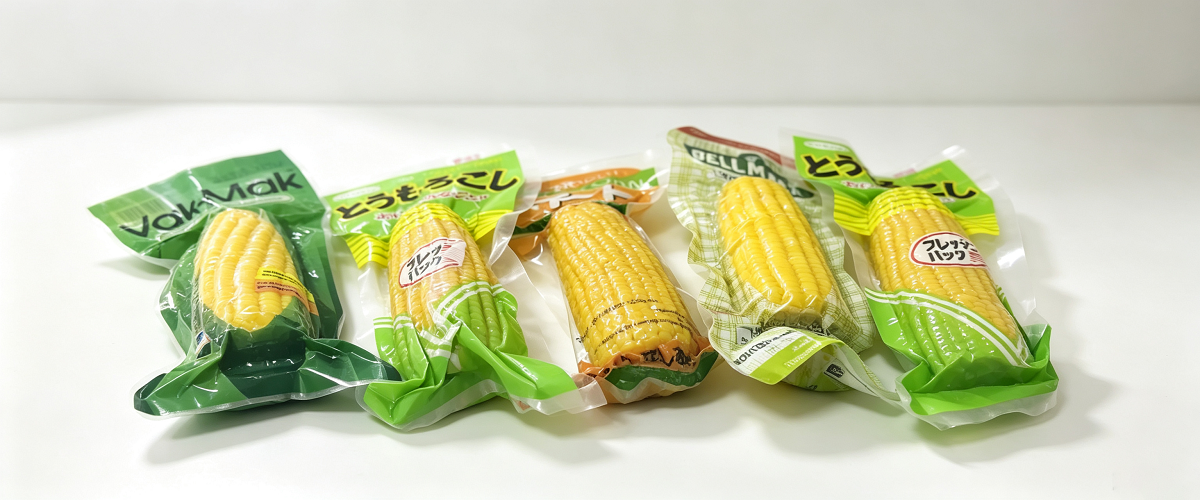
3. Which Packaging Materials Are Suitable for Fresh Corn and Refrigerated Storage?
Material selection should reflect the specific requirements of fresh produce rather than simply maximizing barrier performance.
PE and LLDPE
Polyethylene and linear low-density polyethylene are widely used for flexible fresh-produce packaging.
They can provide:
- Flexibility
- Toughness
- Moisture resistance
- Good heat-sealing performance
- Low-temperature flexibility
LLDPE can also provide useful puncture and impact resistance.
These properties make PE-based films practical for refrigerated fresh corn applications.
CPP
Cast polypropylene can provide:
- Good clarity
- Heat-sealing performance
- Moisture resistance
- Good mechanical properties
Its suitability depends on the specific refrigerated application and film structure.
BOPP
BOPP can provide:
- Good stiffness
- Transparency
- Printability
- Moisture resistance
It can be considered for certain fresh corn packaging structures where its mechanical and processing characteristics are appropriate.
PET
PET provides strong mechanical properties and good printability.
It can be used as an outer layer in multilayer packaging where additional structural strength or printing performance is needed.
However, the final structure must still provide the appropriate flexibility and gas-management properties for fresh produce.
Anti-Fog Films
Anti-fog films can be particularly valuable for refrigerated fresh produce.
They are designed to reduce the formation of large visible water droplets on the inner surface of the package.
This can improve:
- Product visibility
- Package appearance
- Consumer perception
- Retail presentation
Anti-fog performance should be evaluated under actual refrigeration conditions.
Perforated Films
Perforated films can provide controlled gas and moisture exchange.
They may be appropriate when:
- The corn has significant respiration
- Condensation is a concern
- Refrigerated distribution is used
- Moisture retention still needs to be maintained
The perforation pattern should be tested rather than selected solely based on general assumptions.
Typical Material Options
| Material | Main Properties | Potential Application |
|---|---|---|
| PE | Flexible and moisture resistant | Fresh corn bags |
| LLDPE | Toughness and puncture resistance | Retail and bulk packs |
| CPP | Sealing and moisture resistance | Selected produce packs |
| BOPP | Clarity and stiffness | Retail applications |
| PET | Strength and printability | Multilayer structures |
| Anti-Fog Film | Better visibility under condensation conditions | Refrigerated retail |
| Perforated Film | Controlled gas exchange | Fresh produce packaging |
Material Selection Should Follow Product Testing
Fresh produce packaging is highly dependent on real-world conditions.
Testing should consider:
- Corn variety
- Harvest maturity
- Product temperature
- Storage temperature
- Relative humidity
- Package size
- Film permeability
- Perforation
- Distribution duration
A material that works well for one fresh corn application may not perform identically in another.
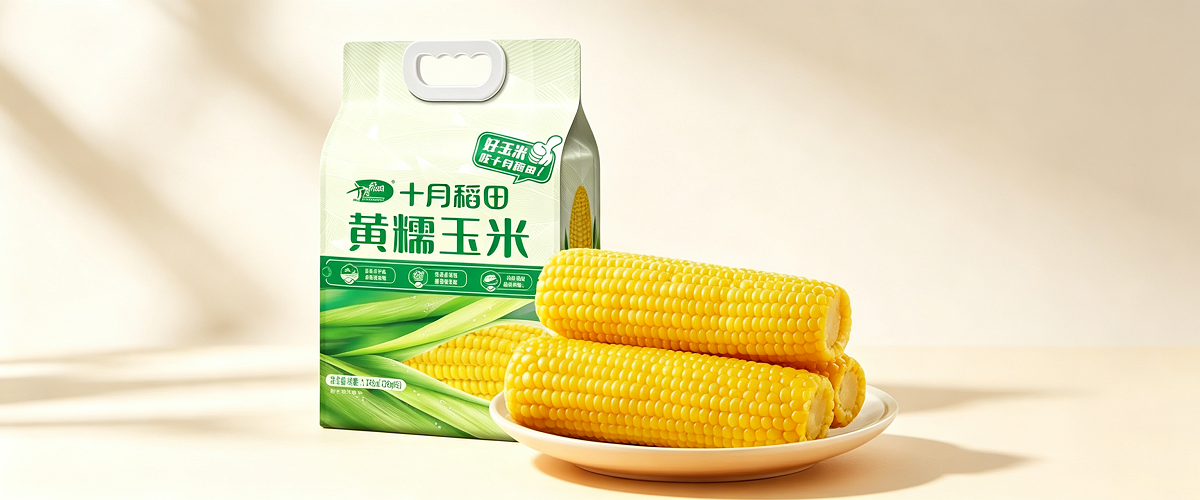
4. What Packaging Features Help Prevent Condensation, Spoilage, and Physical Damage?
Packaging features can significantly improve fresh corn handling, especially during refrigerated distribution.
Anti-Fog Technology
Anti-fog films are useful when package visibility is important.
Instead of allowing moisture to form large droplets on the inner film surface, anti-fog treatment can promote a more uniform moisture layer.
This can keep the corn easier to inspect.
Controlled Perforation
Perforations can help regulate the package environment.
They can support:
- Gas exchange
- Moisture release
- Condensation reduction
However, excessive perforation can accelerate moisture loss and reduce product weight.
The optimal perforation design should therefore be determined through product-specific testing.
Strong Heat Seals
Strong seals help keep the package intact during:
- Refrigeration
- Handling
- Transportation
- Retail display
Seal performance should remain reliable under the intended temperature conditions.
Tear Notches
For consumer packs, tear notches can make opening easier.
They are particularly useful when the package is designed for direct household use.
Resealable Closures
For multi-use fresh corn packages, a zipper can provide convenient resealing.
However, resealable packaging should be evaluated carefully for fresh produce because every opening introduces additional exposure to air and potential contamination.
For some products, a single-use package may be more appropriate.
Handles
Large fresh corn packages may benefit from carrying handles.
Handles can improve:
- Consumer convenience
- Foodservice handling
- Retail transportation
- Storage movement
The handle must be strong enough to support the filled package without creating excessive stress on the bag.
Transparent Packaging
Clear packaging allows consumers to inspect the product before purchasing.
For fresh corn, this can communicate:
- Kernel color
- Freshness
- Product size
- Uniformity
- Overall appearance
This can be a valuable marketing feature for retail products.
Rounded or Protective Package Design
The package dimensions should account for the physical shape of corn ears.
Sharp edges, excessive compression, or inappropriate filling ratios can increase mechanical damage.
Packaging should allow sufficient space without creating unnecessary movement inside the package.
Feature Comparison
| Feature | Main Benefit |
|---|---|
| Anti-Fog Film | Better visibility under refrigeration |
| Perforation | Gas and moisture management |
| Strong Seals | Package integrity |
| Tear Notch | Easy opening |
| Zipper | Resealing |
| Handle | Easier carrying |
| Transparent Film | Product visibility |
| Durable Film | Physical protection |
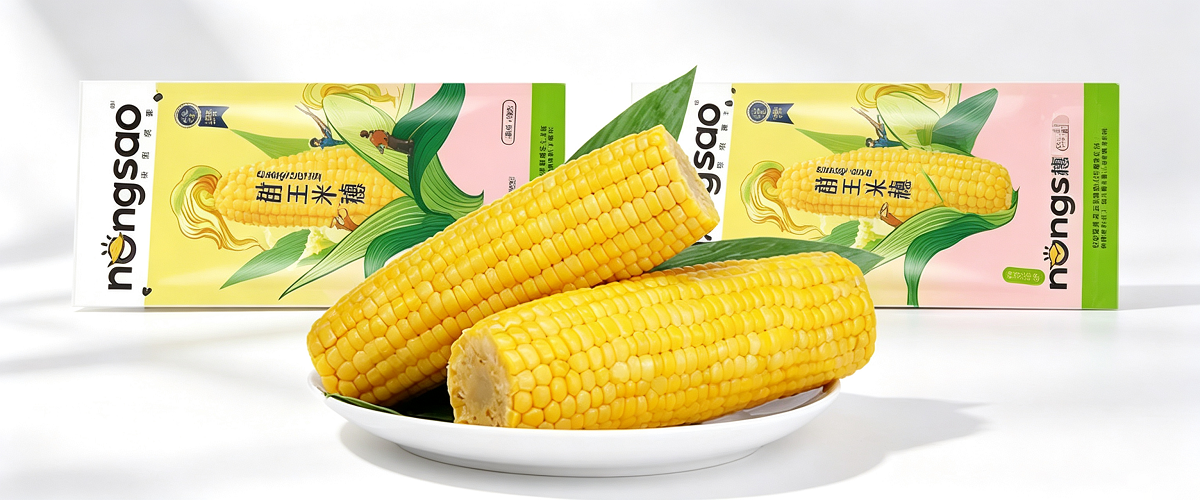
5. Flexible Packaging for Fresh Corn: Key Factors for Freshness, Shelf Life, Branding, and Distribution
Fresh corn packaging should be developed as part of the complete post-harvest and cold-chain strategy.
Pre-Cooling Comes First
Packaging cannot compensate for poor temperature management.
Fresh corn should be cooled appropriately before extended refrigerated distribution.
Rapid and effective cooling can help slow physiological deterioration and improve the effectiveness of the packaging system.
Packaging should therefore be selected together with:
- Harvest practices
- Cooling methods
- Refrigerated storage
- Transportation temperature
- Retail conditions
Shelf-Life Expectations
Fresh corn generally has a much shorter commercial life than shelf-stable dry corn products.
The required shelf life should therefore be based on the actual distribution model.
Consider:
- Time from harvest to packaging
- Time from packaging to distribution center
- Retail display period
- E-commerce or direct delivery time
- Consumer storage period
Packaging trials should evaluate actual product quality over the intended storage period.
Refrigerated Storage
Fresh corn packaging should be compatible with the intended cold-chain temperature.
The package should maintain:
- Seal integrity
- Film flexibility
- Adequate strength
- Appropriate moisture behavior
- Suitable gas exchange
Temperature fluctuations should also be considered because repeated changes can increase condensation.
Transportation
Fresh corn may experience:
- Vibration
- Compression
- Impact
- Temperature fluctuations
- High humidity
- Repeated handling
The packaging should therefore be mechanically tested under realistic distribution conditions.
Retail Branding
Flexible packaging provides useful opportunities for branding fresh corn.
Packaging can communicate:
- Corn variety
- Country or region of origin
- Farm information
- Harvest information
- Product preparation instructions
- Storage instructions
- Quality attributes
High-quality printing can turn the package into a recognizable retail marketing asset.
Transparency and Branding
Fresh produce often benefits from visibility.
A transparent package can allow consumers to judge product quality before purchasing.
For this reason, a fully opaque high-barrier structure may not always be the best commercial solution.
The design should balance:
freshness protection + visibility + branding + shelf appeal.
Sustainability
Fresh produce packaging increasingly faces pressure to reduce material use.
Potential approaches include:
- Lightweight films
- Reduced film thickness
- Recyclable mono-material PE structures
- Optimized package dimensions
- Reduced secondary packaging
However, sustainability should not compromise the package's ability to maintain product quality during refrigerated distribution.
Retail vs. Foodservice Packaging
| Factor | Retail Fresh Corn | Foodservice/Bulk |
|---|---|---|
| Package Size | Small to medium | Medium to large |
| Transparency | Often important | Application dependent |
| Branding | Very important | Moderate |
| Convenience | High priority | Handling focused |
| Mechanical Strength | Moderate to high | High |
| Perforation | Application dependent | Application dependent |
| Handle | Optional | Often useful |
| Cost Efficiency | Important | Very important |
| Cold Chain | Essential | Essential |
Fresh Corn Packaging Checklist
| Factor | Key Question |
|---|---|
| Product Form | Whole ears, trimmed ears, or prepared corn? |
| Temperature | What refrigeration temperature will be used? |
| Respiration | What level of gas exchange is required? |
| Moisture | How much moisture retention is needed? |
| Condensation | Is anti-fog or perforation required? |
| Film | Is the material flexible and strong enough? |
| Seals | Can the seals withstand refrigeration and handling? |
| Package Size | What quantity will each bag contain? |
| Visibility | Should consumers see the corn? |
| Branding | What product information should be displayed? |
| Distribution | Retail, foodservice, or export? |
| Sustainability | Can material use be reduced without reducing performance? |
| Testing | Has the finished package been tested with the actual product? |
6. FAQ
What Is the Best Flexible Packaging for Fresh Corn?
PE-based produce bags, perforated flexible bags, flow-wrap packaging, and other produce-compatible formats can be suitable for fresh corn. The best option depends on product form, refrigeration conditions, package size, and distribution duration.
Does Fresh Corn Need a Moisture Barrier?
Yes, but moisture management needs to be balanced carefully. Excessive moisture loss can reduce freshness, while trapped moisture and condensation can contribute to quality problems. The correct film permeability and package design are therefore important.
Should Fresh Corn Packaging Have Perforations?
Perforations can be useful when gas exchange and condensation control are needed. However, perforation size and density should be optimized through testing because excessive ventilation can increase moisture loss.
Is Anti-Fog Film Useful for Fresh Corn Packaging?
Yes. Anti-fog film can improve product visibility under refrigerated conditions by reducing the formation of large water droplets on the inside of the package.
Can Fresh Corn Be Vacuum Packaged?
Vacuum packaging may be suitable for certain prepared or processed fresh corn applications, but it should not automatically be used for all whole fresh corn. Fresh corn continues to respire, so gas-management requirements must be evaluated carefully.
What Material Is Commonly Used for Fresh Corn Bags?
PE and LLDPE are common choices because they provide flexibility, toughness, moisture resistance, and useful low-temperature performance. Other materials can be incorporated depending on the application's barrier, printing, and mechanical requirements.
Should Fresh Corn Packaging Be Transparent?
Transparent packaging can be beneficial because consumers can inspect the corn's color, size, and overall condition. However, the final design should balance product visibility with protection and shelf-life requirements.
Is Flexible Packaging Suitable for Refrigerated Fresh Corn?
Yes. Flexible packaging can be designed for refrigerated fresh corn when the film, seals, ventilation, and package structure are appropriate for the cold-chain environment.
Can Fresh Corn Packaging Be Customized for Export?
Yes, but export packaging requires careful evaluation of transportation duration, refrigeration conditions, mechanical stress, humidity, condensation, and regulatory requirements in the destination market.
How Can Flexible Packaging Help Extend Fresh Corn Shelf Life?
Flexible packaging can help by reducing uncontrolled moisture loss, limiting contamination, providing appropriate gas exchange, reducing physical damage, and supporting cold-chain handling. Packaging works best when combined with proper harvesting, pre-cooling, refrigerated storage, and transportation.
7. Conclusion
Choosing flexible packaging bags for fresh corn requires a fundamentally different approach from packaging shelf-stable agricultural products. Because fresh corn remains biologically active after harvest, the package must balance moisture retention, respiration, gas exchange, condensation control, physical protection, refrigeration performance, and consumer visibility.
PE and LLDPE-based films are practical options for many fresh corn applications because they offer flexibility, toughness, moisture resistance, and suitable sealing performance. Perforated films can provide controlled gas exchange, while anti-fog films can improve visibility under refrigerated conditions. Other structures involving BOPP, CPP, PET, or specialized films may be appropriate depending on the specific product and distribution requirements.
Packaging format should also match the application. Produce bags can work well for whole ears, while flow-wrap structures may support efficient retail packaging. Larger flexible bags can serve foodservice and wholesale applications, while selected prepared corn products may use more specialized packaging systems.
One of the most important considerations is condensation management. A package that retains moisture too aggressively may create excessive internal condensation, while excessive ventilation can accelerate moisture loss. The correct balance depends on the corn variety, product temperature, package dimensions, film properties, perforation pattern, and refrigeration conditions.
Functional features such as anti-fog treatment, controlled perforation, strong seals, transparent films, tear notches, handles, and resealable closures can further improve package performance and consumer convenience.
For retail brands, flexible packaging also provides valuable opportunities for branding. Product origin, variety, farm information, quality attributes, storage instructions, and preparation recommendations can all be incorporated into the package design.
For refrigerated transportation and export, the finished package should be tested under realistic cold-chain conditions. Mechanical stress, vibration, compression, temperature fluctuations, humidity, condensation, and transportation duration can all influence final performance.
Ultimately, the best flexible packaging for fresh corn is not necessarily the package with the highest barrier or the most sophisticated structure. It is the solution that creates the right balance between freshness, moisture management, gas exchange, physical protection, cold-chain performance, branding, sustainability, and cost efficiency.
When packaging design is developed together with proper harvesting, cooling, storage, and transportation practices, flexible packaging can help fresh corn maintain its quality from the field to the retail shelf and ultimately provide consumers with a fresher and more appealing product.