How to Choose Flexible Packaging for Cookies
Anna_Yu
How to Choose Flexible Packaging for Cookies
Cookies are one of the most widely consumed baked snack products in the global food market, ranging from traditional butter cookies and sandwich biscuits to chocolate chip cookies, filled cookies, oat cookies, crackers, and premium handmade varieties. Although cookies may appear relatively stable compared with fresh bakery products, their quality can deteriorate quickly when exposed to moisture, oxygen, light, mechanical stress, and unsuitable storage conditions. A package that fails to provide sufficient protection can result in soft or stale texture, loss of crispness, broken pieces, rancid flavors, and reduced consumer satisfaction.
For cookie manufacturers, packaging therefore plays a much larger role than simply containing the product. It is an important part of the product preservation system, helping maintain the desired texture, aroma, appearance, and overall eating experience from production through transportation, retail display, and final consumption. At the same time, cookie packaging has become an increasingly important branding tool. In crowded supermarket aisles, convenience stores, specialty food shops, and e-commerce channels, packaging design can strongly influence whether consumers notice, trust, and ultimately purchase a product.
Flexible packaging has become a popular solution for cookies because it combines barrier protection, lightweight construction, packaging efficiency, design flexibility, and consumer convenience. Depending on the cookie type and required shelf life, manufacturers can select structures that provide strong moisture resistance, oxygen protection, light shielding, puncture resistance, and reliable heat sealing. Formats such as stand-up pouches, pillow bags, three-side seal bags, flat-bottom bags, and flow-wrap packaging can also be customized for different product sizes, filling systems, and retail strategies.
However, selecting the right flexible packaging for cookies requires more than choosing an attractive bag design. The ideal structure depends on the cookie's moisture content, fat level, texture, filling, distribution environment, packaging equipment, shelf-life target, and sales channel. A delicate butter cookie may require stronger mechanical protection, while a high-fat chocolate cookie may need greater oxygen and aroma protection. Products distributed internationally may also require higher barrier performance than cookies intended for short-distance retail distribution.
This guide explains how to choose flexible packaging for cookies by examining bag formats, moisture and breakage protection, material structures, packaging features, shelf-life requirements, branding opportunities, logistics, sustainability, and cost considerations. By understanding these factors, cookie brands can develop packaging that protects product quality while creating a stronger and more competitive market presence.
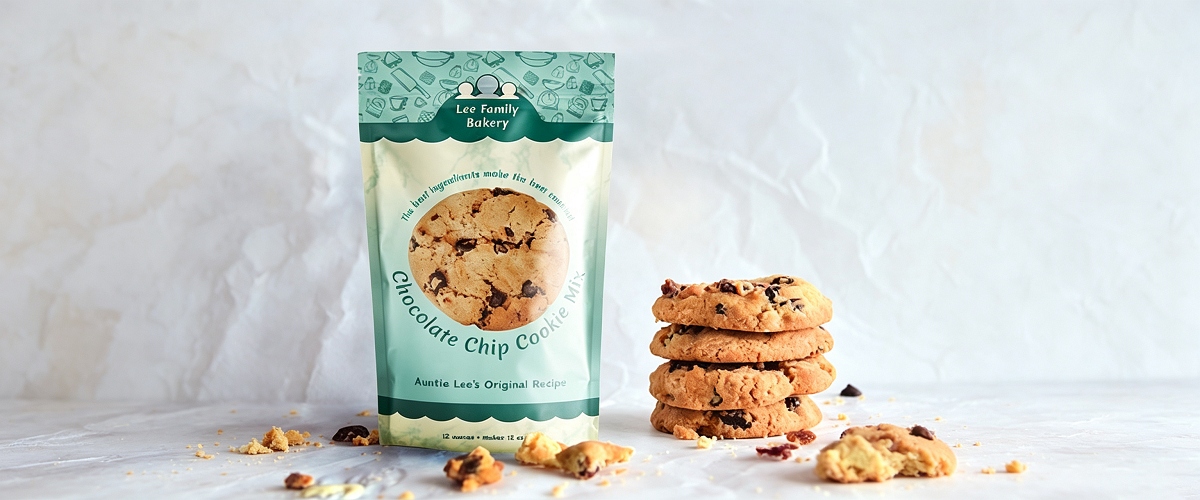
1. What Types of Flexible Packaging Are Best for Cookies?
The best flexible packaging format for cookies depends on cookie type, product quantity, fragility, filling method, consumption frequency, and sales channel. Different bag designs offer different combinations of protection, convenience, display performance, and production efficiency.
Stand-Up Pouches
Stand-up pouches are an increasingly popular option for premium and specialty cookie products. Their upright structure provides excellent shelf visibility and allows brands to use a large printable surface for product information and visual storytelling.
Stand-up pouches are particularly suitable for:
- Premium cookies
- Handmade or artisan cookies
- Chocolate chip cookies
- Filled cookies
- Organic or specialty cookies
- Mixed cookie assortments
- Medium-sized retail packs
A resealable zipper can be incorporated when the package is designed for multiple consumption occasions. This is especially useful when consumers are unlikely to finish the entire package in one sitting.
The upright format also creates a more substantial shelf presence than a simple flat pouch. For premium brands, this can support a stronger perceived value.
Pillow Bags and Flow-Wrap Packaging
Pillow bags and flow-wrap structures are widely used for high-volume cookie production because they are compatible with fast automated packaging lines.
They are commonly used for:
- Mass-market cookies
- Individual cookie portions
- Small snack packs
- Sandwich biscuits
- Promotional packs
- Convenience-store products
Flow-wrap packaging can provide efficient material usage while maintaining a sealed environment around the cookies. It is particularly attractive for manufacturers that prioritize high production speed and cost efficiency.
For individually wrapped cookies, the structure can also help reduce direct contact between products and minimize contamination after opening the outer package.
Three-Side Seal Bags
Three-side seal bags provide a simple and versatile packaging solution. They can be produced in different sizes and material structures and can accommodate a variety of cookie products.
They are suitable for:
- Small cookie packs
- Samples
- Specialty products
- Foodservice packs
- Private-label cookies
- Promotional packaging
Three-side seal bags can also be customized with tear notches, hang holes, and different sealing configurations.
Flat-Bottom Bags
Flat-bottom bags, sometimes called box pouches, are particularly suitable for premium cookie brands.
Their advantages include:
- Strong shelf stability
- Large printable surfaces
- Premium visual appearance
- Efficient use of package volume
- Compatibility with resealable closures
- Suitability for larger retail packs
For brands positioned in the premium or specialty food segment, flat-bottom packaging can provide a distinctive alternative to conventional cookie bags.
Quad-Seal Bags
Quad-seal packaging uses additional side seals to create a more structured bag shape. This can be useful when cookies are sold in larger quantities or when the package needs additional stability.
Quad-seal bags are often considered for:
- Family-size cookie packs
- Premium products
- Larger-volume packaging
- Export products
- Specialty retail products
The additional structure can also provide more surface area for branding and product information.
Individual Sachets and Single-Serve Packs
Single-serve flexible packaging is suitable for cookies sold in:
- Hotels
- Airlines
- Cafés
- Restaurants
- Schools
- Offices
- Vending channels
- Promotional programs
Individual packs can help control portion sizes and protect cookies from environmental exposure after packaging.
Choosing the Right Format
The following table provides a practical comparison:
| Packaging Format | Best Application | Main Advantage | Typical Consideration |
|---|---|---|---|
| Stand-up pouch | Premium and specialty cookies | Shelf presence and resealability | Higher packaging cost |
| Pillow bag | Mass-market cookies | High-speed production | Usually less resealable |
| Flow wrap | Individual or multipack cookies | Efficient automated packaging | Equipment compatibility |
| 3-side seal bag | Small and medium packs | Flexible customization | Limited structural stability |
| Flat-bottom bag | Premium cookies | Strong shelf appearance | More complex construction |
| Quad-seal bag | Large or premium packs | Stability and capacity | Higher material usage |
| Single-serve sachet | Foodservice and portion packs | Convenience and hygiene | Higher packaging per unit |
There is no universally "best" cookie bag. The correct solution is the one that provides the necessary barrier protection, mechanical strength, sealing performance, production compatibility, and consumer functionality at an economically viable cost.
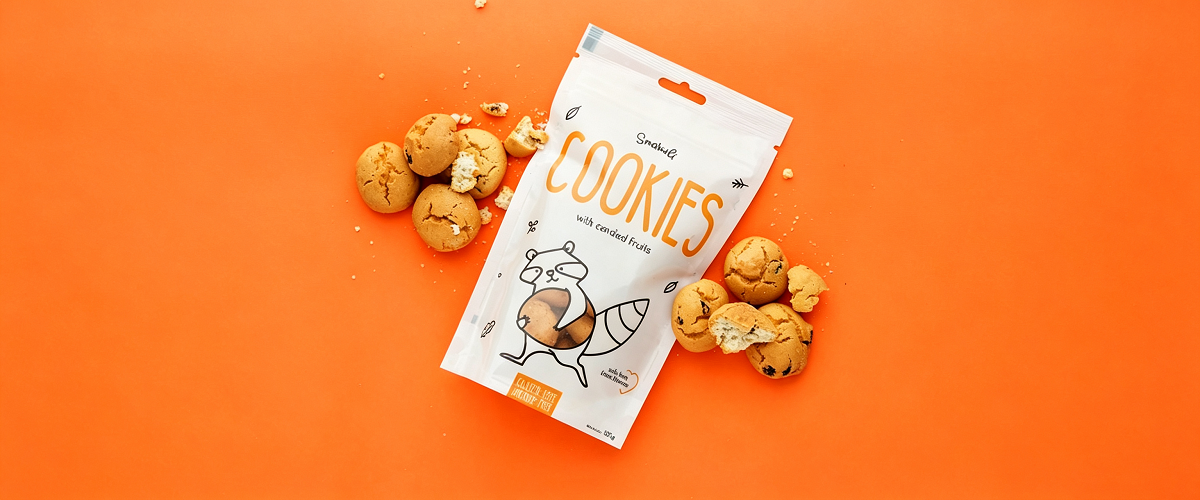
2. How Does Flexible Packaging Protect Cookies from Moisture and Breakage?
For most cookies, moisture protection is one of the most important packaging requirements. Many cookies are intentionally baked to achieve a low-moisture, crisp, or crunchy texture. When moisture enters the package, the cookie can absorb water vapor from the surrounding environment and gradually lose its characteristic texture.
At the same time, cookies can be mechanically fragile. Transportation, stacking, vibration, and handling can cause cracks or breakage if the package does not provide sufficient protection.
Moisture Barrier Protection
Cookies can be highly sensitive to water vapor transmission.
Moisture migration may cause:
- Loss of crispness
- Softening
- Sogginess
- Texture changes
- Reduced consumer acceptance
- Potential quality deterioration
This makes water vapor barrier performance a critical factor when selecting a flexible packaging structure.
A high-barrier laminate can significantly reduce the movement of moisture through the packaging material. Depending on the product and target shelf life, manufacturers may use combinations involving PET, BOPP, metallized films, aluminum foil, PE, or other functional layers.
Why Humidity Matters
Environmental humidity becomes especially important during transportation and storage.
Cookies shipped to tropical or humid regions may experience substantially different conditions from cookies sold in dry climates. Even if the package performs adequately under controlled warehouse conditions, repeated exposure to high humidity can create additional moisture-related challenges.
For international cookie brands, packaging should therefore be evaluated against the expected:
- Relative humidity
- Temperature range
- Transportation duration
- Warehouse conditions
- Retail storage conditions
Oxygen Protection
Although moisture is often the primary concern for crispy cookies, oxygen can also influence product quality.
Oxygen exposure can accelerate the oxidation of fats and oils, particularly in cookies containing:
- Butter
- Vegetable oils
- Nuts
- Seeds
- Chocolate
- Cream fillings
Oxidation can gradually create stale or rancid flavors.
A packaging structure with appropriate oxygen barrier properties can help slow these reactions and preserve the product's sensory quality.
Mechanical Protection Against Breakage
Cookies are often fragile because of their thin structure and low moisture content.
Breakage can occur during:
- Filling
- Sealing
- Carton packing
- Palletizing
- Transportation
- Warehouse handling
- Retail stocking
- Consumer handling
Flexible packaging cannot completely eliminate mechanical damage, but the packaging system can be designed to reduce the risk.
Important considerations include:
- Film strength
- Puncture resistance
- Tear resistance
- Package dimensions
- Headspace
- Product arrangement
- Sealing strength
- Secondary packaging
Headspace and Product Movement
Too much empty space inside a package can allow cookies to move excessively during transportation. Repeated movement can increase the chance of cracks and broken pieces.
However, excessive compression can also damage delicate cookies.
The packaging design therefore needs to balance product protection and internal movement.
For fragile cookies, manufacturers may combine flexible primary packaging with:
- Trays
- Cartons
- Dividers
- Secondary bags
- Protective inserts
This layered approach can provide better mechanical protection than relying solely on the flexible film.
Nitrogen Flushing and Cushioning
For some cookie products, modified atmosphere packaging may be considered.
Nitrogen flushing can reduce oxygen inside the package and, depending on the packaging format and product, may also provide a cushioning effect that helps reduce direct mechanical contact.
This approach is especially relevant for:
- Delicate cookies
- High-value cookies
- Large cookie pieces
- Premium snack products
However, gas flushing needs to be evaluated together with package design and filling equipment. It should not be treated as a universal solution for every cookie product.
Seal Integrity
A high-quality film is not enough if the package seal is unreliable.
Weak or inconsistent seals can allow:
- Moisture ingress
- Oxygen ingress
- Aroma loss
- Product contamination
- Premature loss of texture
Important sealing parameters include:
- Seal strength
- Seal width
- Seal temperature
- Dwell time
- Pressure
- Film compatibility
- Contamination around the sealing area
For cookie manufacturers, seal integrity testing should be part of the packaging validation process.
Barrier and Mechanical Protection Work Together
Cookie packaging should therefore be viewed as a complete protection system:
Barrier film + reliable seal + appropriate package geometry + suitable secondary packaging + controlled distribution
A high-barrier material alone cannot compensate for poor sealing or rough transportation conditions.
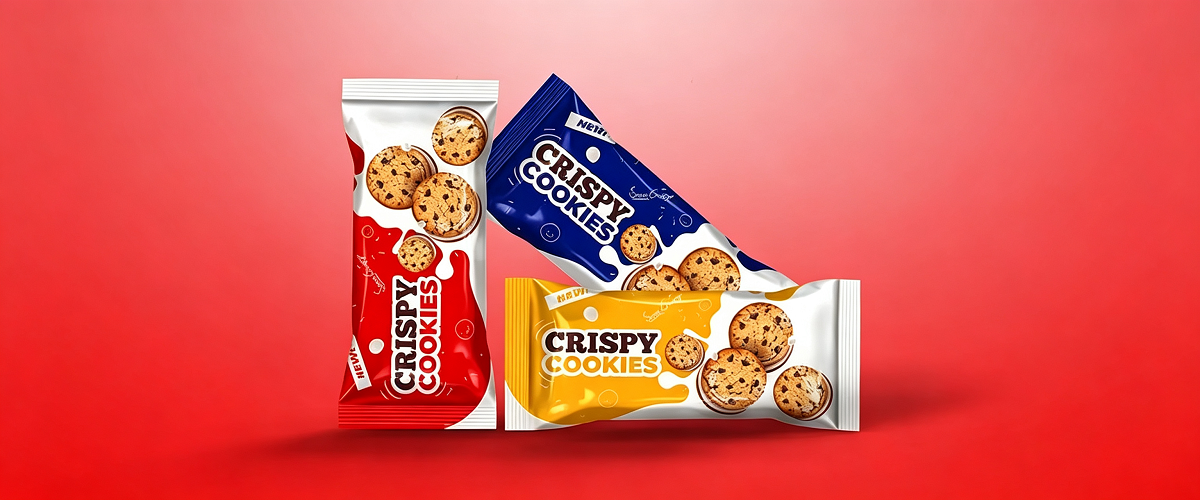
3. Which Packaging Materials Provide the Best Barrier Protection for Cookies?
Material selection determines how effectively flexible packaging protects cookies from moisture, oxygen, light, aroma loss, and mechanical damage.
There is no single material structure suitable for every cookie application. Instead, manufacturers should select a laminate according to the product's characteristics and target performance.
PET
Polyester, commonly known as PET, is frequently used as an outer layer in flexible packaging.
Its advantages include:
- Good mechanical strength
- Excellent printability
- Dimensional stability
- Good heat resistance
- Attractive surface appearance
PET is often combined with other functional layers because it does not necessarily provide sufficient barrier performance by itself for demanding cookie applications.
BOPP
Biaxially oriented polypropylene, or BOPP, is widely used in snack and bakery packaging.
It provides:
- Good stiffness
- Good clarity when required
- Attractive printing performance
- Cost efficiency
- Useful moisture barrier characteristics
BOPP can be especially useful for cookies where moisture protection and cost control are important.
PE and LLDPE
Polyethylene materials are commonly used as sealing layers.
Their main functions include:
- Heat sealing
- Flexibility
- Food-contact compatibility
- Seal strength
- Resistance to certain forms of mechanical stress
PE is often combined with PET, BOPP, or barrier layers to create a complete laminate.
CPP
Cast polypropylene, or CPP, can be used as an inner sealing layer in certain packaging structures.
It provides:
- Good heat sealing
- Flexibility
- Good temperature performance
- Suitable mechanical characteristics
The exact suitability depends on the cookie product, filling system, and required package performance.
VMPET
Metallized PET provides enhanced barrier performance while maintaining a relatively lightweight structure.
It can provide strong protection against:
- Oxygen
- Moisture
- Light
VMPET is therefore frequently considered for cookies that require stronger barrier performance than conventional clear films can provide.
Aluminum Foil
Aluminum foil provides one of the highest levels of barrier protection available in flexible packaging.
It can provide excellent resistance to:
- Oxygen transmission
- Water vapor transmission
- Light
- Aroma transmission
For cookies with long shelf-life targets, high fat content, premium positioning, or demanding export conditions, aluminum foil laminates may be considered.
However, aluminum foil structures can increase material cost and may have sustainability and recycling considerations depending on the final laminate and local infrastructure.
Typical Cookie Packaging Structures
Different cookie applications may use different structures.
| Cookie Application | Example Structure | Main Purpose |
|---|---|---|
| Standard cookies | BOPP/PE | Moisture protection and cost efficiency |
| Premium cookies | PET/VMPET/PE | Strong barrier and premium appearance |
| High-fat cookies | PET/VMPET/PE | Oxygen and moisture protection |
| Long-shelf-life cookies | PET/AL/PE | Maximum barrier protection |
| Individual cookies | BOPP/CPP | Efficient wrapping and sealing |
| Export cookies | PET/AL/PE or high-barrier laminate | Protection during extended distribution |
| Specialty cookies | PET/VMPET/PE | Balanced protection and branding |
These structures are examples rather than universal specifications. Actual material selection should be validated against the product's water activity, fat content, packaging process, storage environment, target shelf life, and regulatory requirements.
Clear vs. Opaque Packaging
Clear packaging can allow consumers to see the cookies before purchase. This can be beneficial when product appearance is an important selling point.
However, transparent packaging provides less protection from light than opaque or metallized structures.
Opaque packaging may therefore be more appropriate when:
- The product contains sensitive fats
- Light exposure can accelerate quality deterioration
- Long shelf life is required
- Premium barrier protection is prioritized
A controlled transparent window can provide a compromise between product visibility and protection.
Mono-Material Structures
Sustainability considerations are driving interest in recyclable mono-material flexible packaging.
For cookies, manufacturers may investigate PE-based or PP-based structures depending on the desired package format and local recycling systems.
However, recyclability should not be assumed simply because a package contains one polymer family. Actual recyclability depends on:
- Final material structure
- Thickness
- Printing and coatings
- Closures
- Local collection systems
- Recycling infrastructure
- Applicable regulations
For this reason, cookie brands should evaluate sustainability claims based on the complete packaging system, not just one material layer.
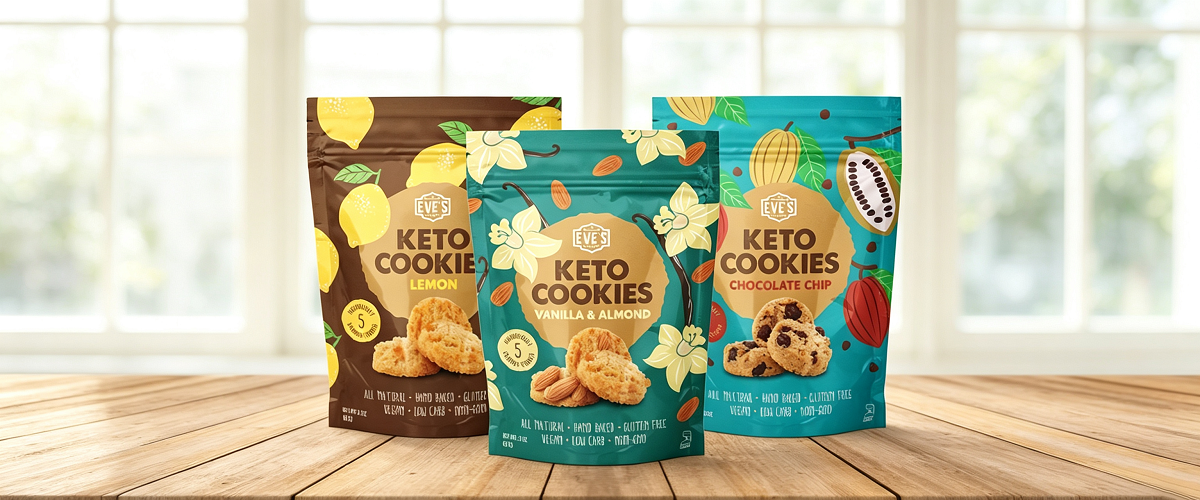
4. What Packaging Features Should You Consider for Cookie Products?
Material selection protects the product, but functional packaging features can significantly improve consumer convenience, brand differentiation, and commercial performance.
Resealable Zippers
Resealable zippers are particularly useful for larger cookie packs intended for multiple servings.
They allow consumers to:
- Open the package repeatedly
- Reseal the package after consumption
- Reduce unnecessary exposure to humidity
- Improve storage convenience
A zipper does not replace the need for a high-quality barrier film. Instead, it works together with the film and package seal to improve the overall consumer experience.
Tear Notches
Easy-open tear notches can make cookie bags easier to open without requiring scissors.
This is useful for:
- Household cookie packs
- Snack-size packages
- Premium products
- On-the-go products
The notch should be designed carefully so that opening remains controlled and does not accidentally damage the package.
Hang Holes
Hang holes can help retailers display smaller cookie packs on hooks or pegboards.
They are particularly useful for:
- Convenience stores
- Specialty shops
- Small snack packs
- Travel retail
Transparent Windows
A small transparent window can allow consumers to see:
- Cookie color
- Shape
- Texture
- Filling
- Product quantity
This can increase visual trust, particularly for premium or artisanal cookies.
However, the window should be evaluated against light and barrier requirements.
Handles
For larger family-size or bulk cookie packages, a handle can improve carrying convenience.
Handles may be considered for:
- Large cookie packs
- Assortment boxes with flexible outer bags
- Foodservice packaging
- Club-store products
Matte and Gloss Finishes
Surface finishing can dramatically change how consumers perceive the package.
Matte finishes can create:
- A premium appearance
- A soft visual effect
- A modern aesthetic
- A sophisticated brand image
Gloss finishes can provide:
- Bright colors
- High visual contrast
- Strong shelf visibility
- Vibrant graphics
Some brands combine matte and gloss areas to create visual contrast.
High-Quality Printing
Flexible packaging provides a large printable surface for communicating the brand's identity.
Cookie packaging can incorporate:
- Product photography
- Flavor descriptions
- Brand colors
- Origin stories
- Serving suggestions
- Certifications
- Nutritional information
- Promotional messaging
For premium cookies, the packaging itself can become a major part of the product experience.
Custom Shapes
Specially shaped bags can differentiate cookie products from standard rectangular packaging.
Custom shapes may be useful for:
- Children's cookies
- Seasonal products
- Gift packs
- Limited editions
- Premium products
However, unusual shapes should be evaluated for filling efficiency, sealing complexity, material usage, transportation, and production cost.
QR Codes and Digital Brand Experiences
QR codes can connect physical packaging to digital content such as:
- Brand stories
- Recipes
- Product information
- Promotional campaigns
- Traceability content
- Customer loyalty programs
This can turn the package into an interactive marketing tool.
Functional Feature Selection Matrix
| Feature | Main Benefit | Best Application |
|---|---|---|
| Zipper | Resealability | Multi-serve cookie packs |
| Tear notch | Easy opening | Retail and snack packs |
| Hang hole | Retail display | Small packs |
| Window | Product visibility | Premium/artisan cookies |
| Handle | Carrying convenience | Large packs |
| Matte finish | Premium appearance | Specialty cookies |
| Gloss finish | Visual impact | Mass-market cookies |
| Custom shape | Differentiation | Seasonal/premium products |
| QR code | Digital engagement | Brand-building campaigns |
The best cookie packaging does not necessarily contain every available feature. Over-customization can increase cost and complexity. Features should be selected based on actual consumer needs and product positioning.
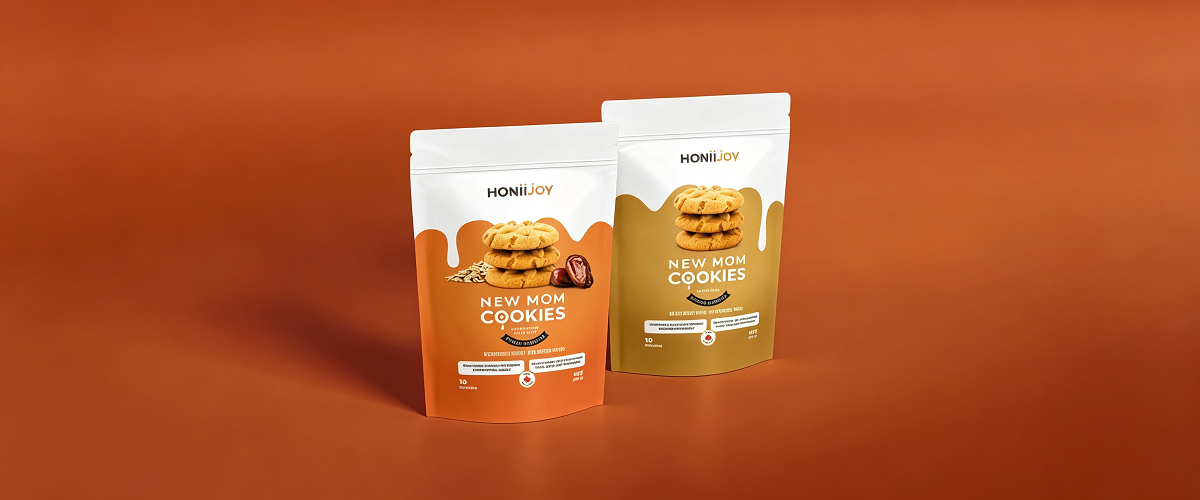
5. Flexible Cookie Packaging: Key Factors for Freshness, Shelf Life, Branding, and Distribution
Choosing cookie packaging requires a balance between product protection, shelf-life performance, brand positioning, manufacturing efficiency, logistics, sustainability, and cost.
Cookie Characteristics
The first step is understanding the product itself.
Important variables include:
- Moisture content
- Water activity
- Fat content
- Cookie thickness
- Product hardness
- Filling type
- Chocolate or nut content
- Desired crispness
- Sensitivity to oxidation
For example, a very dry and crispy cookie may be especially sensitive to moisture ingress, while a high-fat cookie may require stronger oxygen protection.
Shelf-Life Requirements
Shelf life should be established through product and packaging validation rather than relying solely on general industry assumptions.
Packaging performance can influence:
- Texture retention
- Flavor stability
- Aroma retention
- Color stability
- Oxidation rate
- Overall sensory quality
Brands targeting long shelf lives should conduct appropriate shelf-life studies using the final product and final packaging structure.
Distribution Conditions
A cookie package intended for local retail distribution may have very different requirements from one intended for international export.
Export packaging may need to withstand:
- Long transportation periods
- Multiple loading and unloading events
- Temperature changes
- High humidity
- Vibration
- Compression
- Extended warehouse storage
Packaging specifications should therefore be evaluated against the actual supply chain.
Packaging Equipment Compatibility
A material structure must work with the manufacturer's packaging machinery.
Important parameters include:
- Film thickness
- Coefficient of friction
- Heat-seal temperature
- Seal strength
- Web handling
- Forming characteristics
- Cutting performance
- Printing registration
A theoretically excellent material is not useful if it cannot run efficiently on the production line.
Barrier Performance
Cookie packaging should be evaluated according to the required:
- Water vapor transmission rate
- Oxygen transmission rate
- Light barrier
- Aroma barrier
- Grease resistance
The required performance level depends on the product and shelf-life target.
Seal Integrity
Seal quality is one of the most overlooked aspects of flexible packaging.
A package with excellent barrier film can still fail if the seals are:
- Incomplete
- Contaminated
- Too weak
- Inconsistent
- Damaged during handling
Manufacturers should establish appropriate seal specifications and conduct routine quality control.
Branding Strategy
Packaging is one of the first points of contact between a cookie brand and its consumer.
Effective cookie packaging should quickly communicate:
- What the product is
- What makes it different
- Who it is intended for
- What flavor it offers
- Why consumers should trust it
Premium cookies may benefit from restrained typography, sophisticated finishes, and storytelling, while children's cookies may use brighter graphics and playful designs.
Retail Shelf Performance
The package needs to work in its real selling environment.
Consider:
- Shelf orientation
- Package stability
- Front-panel visibility
- Product hierarchy
- Brand recognition
- Competitor positioning
- Display dimensions
A technically excellent package can still underperform if the design does not communicate clearly on the shelf.
E-Commerce Considerations
Online sales introduce additional packaging requirements.
Cookie packaging may encounter:
- Repeated handling
- Compression
- Drops
- Vibration
- Temperature fluctuations
Brands selling cookies through e-commerce should consider using appropriate secondary packaging to reduce the risk of crushing.
The primary flexible package should protect the product, while cartons or mailers can provide additional mechanical protection when necessary.
Sustainability
Sustainability is becoming increasingly important in packaging development.
Cookie brands can explore:
- Lightweighting
- Material reduction
- Mono-material structures
- Recyclable packaging where infrastructure supports it
- Responsible printing systems
- Efficient package dimensions
- Reduced secondary packaging
However, sustainability should not come at the expense of product protection.
If a package reduces material use but causes cookies to spoil or break more frequently, the overall environmental impact may not improve.
A more practical approach is to optimize the entire packaging system for material efficiency, product protection, logistics efficiency, and end-of-life considerations.
Cost Optimization
Packaging cost should be evaluated as a complete system rather than only by film price.
Total packaging cost can include:
- Film
- Printing
- Lamination
- Bag making
- Zippers
- Valves or other features
- Packaging labor
- Machine speed
- Product losses
- Secondary packaging
- Transportation
- Storage
A slightly more expensive high-barrier package may ultimately reduce product returns, spoilage, and customer complaints.
Practical Selection Guide
| Factor | Key Question | Packaging Implication |
|---|---|---|
| Moisture sensitivity | Does the cookie need to stay crisp? | Prioritize moisture barrier |
| Fat content | Is oxidation a major concern? | Consider oxygen barrier |
| Fragility | Does the cookie break easily? | Improve mechanical protection |
| Shelf life | How long must quality remain stable? | Select appropriate barrier level |
| Distribution | Local or international? | Adjust protection for logistics |
| Consumer use | Single-use or multi-serve? | Consider zipper or easy-open |
| Retail | How will it be displayed? | Select suitable package geometry |
| E-commerce | Will it face compression or drops? | Strengthen secondary packaging |
| Branding | Premium or mass-market? | Customize finishes and graphics |
| Sustainability | What infrastructure exists locally? | Evaluate recyclable structures realistically |
| Production | What machinery is used? | Validate film compatibility |
| Cost | What is the total package cost? | Balance performance and economics |
Recommended Development Process
A professional cookie packaging development process can follow these steps:
Step 1: Define the product
Document cookie type, moisture level, fat content, dimensions, filling, and fragility.
Step 2: Define the target shelf life
Establish the desired shelf-life period and storage conditions.
Step 3: Identify distribution conditions
Analyze transportation distance, humidity, temperature, handling, and storage.
Step 4: Select the packaging format
Choose between flow wrap, pillow bags, stand-up pouches, flat-bottom bags, three-side seal bags, or other suitable formats.
Step 5: Select the material structure
Determine the required moisture, oxygen, light, and mechanical barriers.
Step 6: Select functional features
Add zippers, tear notches, windows, hang holes, handles, or other features only when they provide meaningful value.
Step 7: Conduct packaging trials
Test filling, sealing, machine performance, package strength, and product protection.
Step 8: Validate shelf life
Evaluate the actual cookie product in the final package under relevant storage conditions.
Step 9: Test transportation performance
Simulate or evaluate vibration, compression, drops, and other expected logistics stresses.
Step 10: Optimize the final structure
Balance protection, branding, sustainability, production efficiency, and cost before commercial launch.
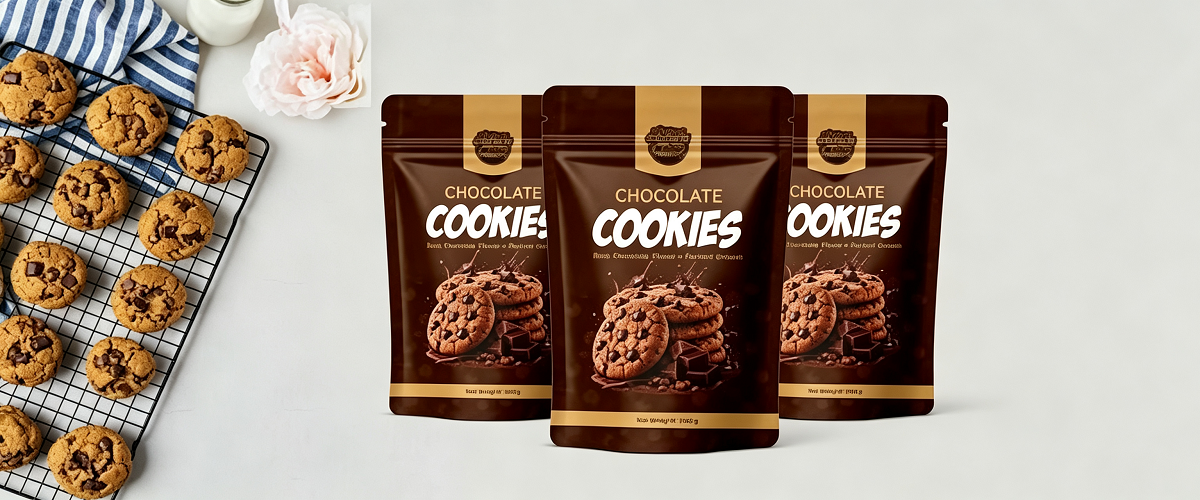
FAQ
What is the best flexible packaging for cookies?
The best flexible packaging depends on the cookie type and shelf-life requirements. Stand-up pouches, pillow bags, flow-wrap packaging, three-side seal bags, and flat-bottom bags can all be suitable. For many retail cookies, a moisture-resistant high-barrier structure with reliable heat seals provides a strong starting point.
Do cookies need high-barrier packaging?
Many cookies benefit from good moisture barrier protection because moisture can cause crisp products to soften. Cookies containing significant amounts of fat, nuts, chocolate, or other oxidation-sensitive ingredients may also benefit from stronger oxygen barrier protection.
What material is commonly used for cookie packaging?
Common materials include PET, BOPP, PE, CPP, VMPET, and aluminum foil. The final structure is usually a laminate designed to combine printing, mechanical strength, barrier performance, and heat sealing.
Is aluminum foil necessary for cookie packaging?
Not necessarily. Aluminum foil provides very high barrier performance, but it may not be required for every cookie product. Metallized films or other high-barrier structures can provide an effective balance between protection and cost for many applications.
Can stand-up pouches be used for cookies?
Yes. Stand-up pouches are particularly suitable for premium, specialty, and multi-serve cookies. They can be equipped with resealable zippers and customized with premium printing and finishes.
How can flexible packaging prevent cookies from becoming soft?
A packaging structure with an appropriate moisture barrier can reduce water vapor entering the package. Reliable seals are equally important because moisture can enter through defective or compromised seals.
How can packaging reduce cookie breakage?
Cookie breakage can be reduced through appropriate film strength, package dimensions, product arrangement, controlled headspace, and suitable secondary packaging. Fragile cookies may require additional protection beyond the primary flexible bag.
Are resealable cookie bags useful?
Yes. Resealable zippers are particularly useful for larger packages that consumers open and consume over multiple occasions. They can help reduce exposure to the external environment after opening.
Is flexible packaging suitable for cookie exports?
Yes. Flexible packaging can be highly suitable for international cookie distribution when the material structure, seals, package strength, and secondary packaging are designed for the actual transportation and storage conditions.
Can cookie packaging be recyclable?
Potentially, depending on the packaging structure and local recycling infrastructure. Mono-material structures may offer recycling advantages in markets where the appropriate collection and processing systems exist. Sustainability claims should always be evaluated against the final package and applicable local requirements.
Conclusion
Choosing flexible packaging for cookies requires a combination of product knowledge, barrier science, packaging engineering, consumer understanding, and supply-chain planning. The goal is not simply to create an attractive bag, but to develop a complete packaging system that protects cookies from moisture, oxygen, breakage, and environmental exposure while maintaining efficient production and distribution.
For crisp cookies, moisture barrier performance is often a central consideration. For high-fat or ingredient-rich products, oxygen and aroma protection may become more important. Fragile cookies may require stronger films, optimized package dimensions, controlled headspace, or additional secondary packaging. Meanwhile, premium brands can use stand-up pouches, flat-bottom bags, sophisticated finishes, windows, and resealable features to create a stronger market identity.
Material structures such as PET, BOPP, PE, CPP, VMPET, and aluminum foil can be combined to create different levels of protection and cost efficiency. The appropriate choice should always be based on actual product characteristics, packaging equipment, shelf-life requirements, distribution conditions, and regulatory considerations.
The most successful cookie packaging strategy balances four objectives: freshness protection, mechanical protection, brand presentation, and commercial efficiency. When these elements are considered together, flexible packaging becomes more than a container. It becomes an essential part of preserving cookie quality, improving the consumer experience, supporting efficient logistics, and building long-term brand value.