How to Choose Flexible Packaging for Flavored Almonds
Anna_Yu
How to Choose Flexible Packaging for Flavored Almonds
Flavored almonds occupy a unique position in the snack market. They combine the nutritional appeal of nuts with the stronger sensory experience of seasonings, coatings, roasting, and flavor innovations. From salted and smoked almonds to chili, barbecue, garlic, honey-roasted, herb-seasoned, and other specialty varieties, consumers increasingly expect flavored almonds to deliver a consistent combination of crunchiness, freshness, aroma, and flavor intensity.
For manufacturers and brands, maintaining these qualities throughout the product's shelf life is not always simple. Almonds naturally contain oils that can gradually oxidize when exposed to oxygen. At the same time, roasted almonds can lose their desirable crisp texture when exposed to excessive moisture. Added seasonings may also be sensitive to humidity, light, temperature changes, and aroma migration. As a result, packaging plays a direct role in determining whether flavored almonds reach consumers with the intended taste and texture.
Flexible packaging has become one of the most practical solutions for flavored nut products because it can combine product protection, lightweight logistics, customizable bag formats, strong branding opportunities, and convenient consumer features. A single flexible pouch can be designed to protect the almonds during storage, provide a barrier against environmental exposure, stand upright on a retail shelf, and allow consumers to reseal the product after opening.
However, there is no single packaging solution that is ideal for every flavored almond product. Packaging requirements can change depending on factors such as roasting method, seasoning formulation, oil content, package size, target shelf life, distribution distance, climate conditions, and brand positioning. A small single-serve chili almond pack, for example, may require a different structure and feature set from a premium family-size honey-roasted almond pouch intended for export.
Choosing the right packaging therefore requires a broader approach. Brands need to consider the relationship between the product and its packaging environment, including moisture exposure, oxygen control, physical protection, opening convenience, shelf presentation, and transportation efficiency. Packaging must also work effectively with filling equipment and support the product's intended retail or e-commerce channel.
This guide explains how to choose flexible packaging for flavored almonds by examining the most suitable pouch formats, the main product protection challenges, practical material-selection considerations, consumer-friendly features, and the broader factors affecting shelf life, branding, and distribution.
1. What Types of Flexible Packaging Are Best for Flavored Almonds?
The best packaging format for flavored almonds depends on how the product is sold, how much product is packed, how often consumers are expected to open the package, and how the product will be displayed and transported.
Because almonds are relatively hard products, the package should also provide sufficient durability during filling, handling, and transportation. A pouch that looks attractive but is easily punctured or damaged may create product losses and quality complaints.
Stand-Up Pouches
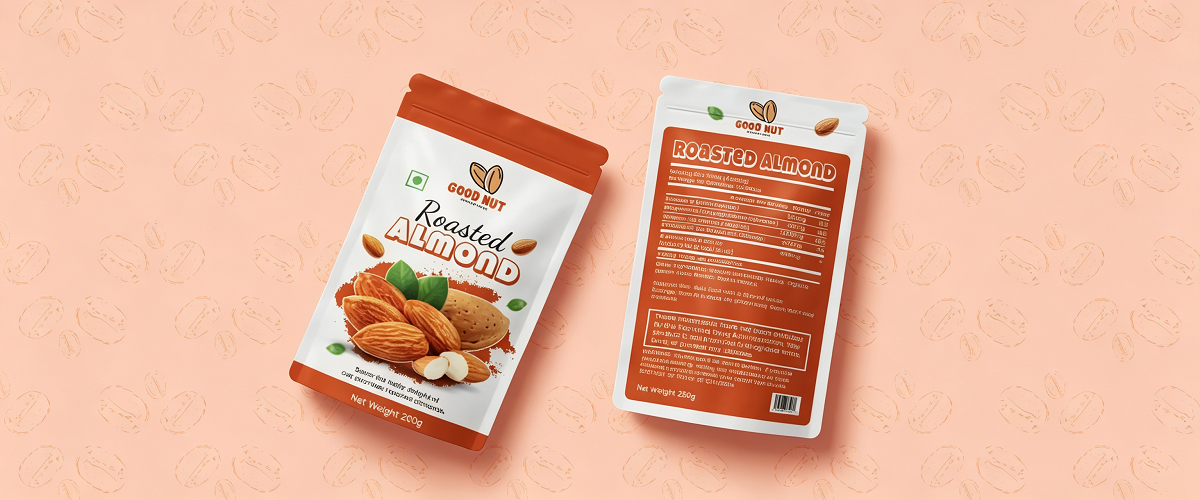
Stand-up pouches are one of the most versatile packaging formats for flavored almonds.
They are suitable for:
- Salted almonds
- Roasted almonds
- Chili-flavored almonds
- Barbecue almonds
- Garlic and herb almonds
- Honey-roasted almonds
- Mixed flavored nuts
- Premium snack products
The bottom gusset allows the package to stand independently, making it highly visible on retail shelves.
For flavored almonds sold in multi-serve quantities, stand-up pouches can also incorporate resealable closures. This makes them particularly suitable for consumers who may eat the product over multiple occasions.
Key advantages include:
- Strong shelf visibility
- Flexible package sizing
- Good printable surface area
- Compatibility with resealable closures
- Suitable for premium and mainstream brands
Flat-Bottom Bags
Flat-bottom bags are often selected for premium flavored almond products.
Their structured shape creates a more substantial appearance than many conventional pouches and provides several printable panels for product information and branding.
They can be particularly suitable for:
- Premium nut brands
- Specialty flavored almond ranges
- Gift packaging
- Private-label products
- Export-oriented products
- Larger consumer packs
A flat-bottom bag can provide a strong shelf presence while also supporting a more organized visual hierarchy for branding and flavor communication.
Pillow Bags
Pillow bags remain a practical option for high-volume snack production.
They are commonly suitable for:
- Value-oriented flavored almonds
- Small snack packs
- Promotional products
- Multipacks
- High-speed automated production
This format can be efficient for manufacturers using automated packaging lines. However, conventional pillow bags are generally less convenient for repeated opening and storage unless additional resealing solutions are added.
Three-Side Seal Bags
Three-side seal bags are useful for smaller portions and simple packaging applications.
They can be suitable for:
- Single-serve flavored almonds
- Sampling packs
- Promotional packs
- Travel-size snacks
- Specialty products
Their compact structure makes them useful when portability and portion control are priorities.
Quad-Seal Bags
Quad-seal bags can provide additional structure and are suitable for products requiring a more substantial package.
They may be used for:
- Family-size almond packs
- Larger retail quantities
- Bulk products
- Wholesale packaging
- Export products
The structure can improve package stability while also providing multiple surfaces for branding and regulatory information.
Single-Serve Packs
Individual flexible packages are increasingly relevant in snack markets where consumers value portability and portion control.
Single-serve flavored almond packs can support:
- On-the-go consumption
- Office snacks
- Travel products
- Hospitality applications
- Subscription boxes
- Multipacks
Because the product is consumed soon after opening, single-serve packaging can also reduce the repeated exposure that occurs with larger packages.
Choosing the Right Format
| Packaging Format | Suitable Application | Main Benefit |
|---|---|---|
| Stand-up pouch | Retail and multi-serve products | Shelf visibility and resealability |
| Flat-bottom bag | Premium products | High-end appearance and stability |
| Pillow bag | High-volume production | Efficient production and material use |
| Three-side seal bag | Small portions | Compact and convenient |
| Quad-seal bag | Larger packages | Strength and capacity |
| Single-serve pack | Portion-controlled snacks | Portability and convenience |
The best format should support both the physical needs of the almonds and the commercial requirements of the brand.
2. How Does Flexible Packaging Protect Flavored Almonds from Moisture, Oxygen, and Flavor Loss?
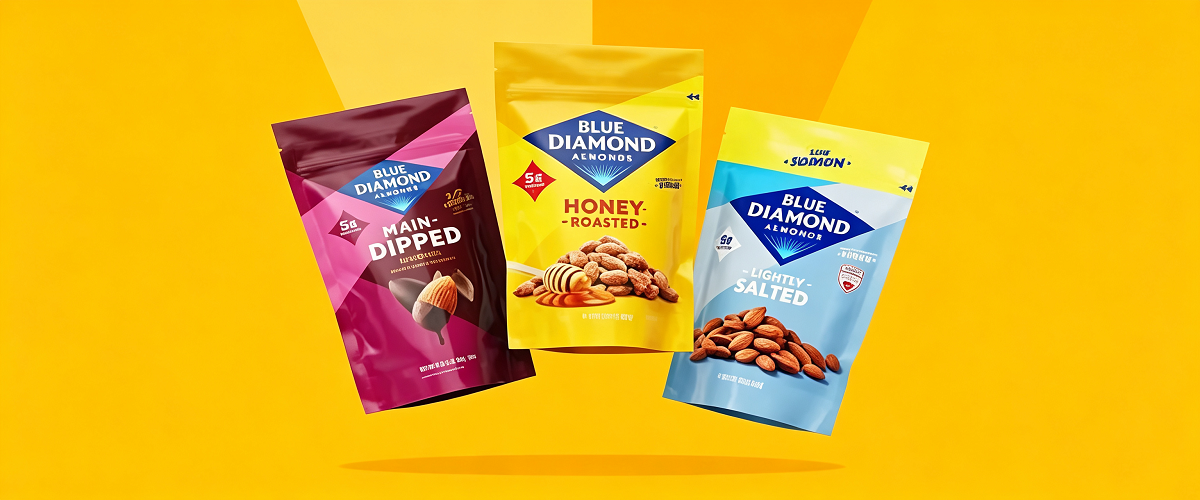
Flavored almonds face several environmental challenges during storage and distribution.
The most important include:
- Moisture exposure
- Oxygen exposure
- Aroma loss
- External odors
- Light exposure
- Physical damage
Flexible packaging helps create a protective environment around the product and slows the rate at which these external factors affect quality.
Protecting Almond Crunchiness from Moisture
Crunchiness is one of the most important sensory characteristics of roasted almonds.
When excessive moisture enters the package, consumers may notice:
- Reduced crispness
- A softer texture
- Less satisfying bite
- Changes in seasoning texture
For seasoned almonds, moisture can also affect the appearance and stability of powdered or granular flavor coatings.
A suitable moisture barrier helps maintain the product's intended texture throughout storage.
Reducing Oxygen Exposure
Almonds contain natural oils that can gradually deteriorate when exposed to oxygen.
Potential effects can include:
- Oxidized flavors
- Reduced freshness
- Aroma changes
- Rancid characteristics
Flavored almond products may also contain oil-based seasonings or flavor systems that require additional protection.
The objective of the packaging is not simply to keep the product physically contained. It is also to reduce the rate of oxygen exposure during the intended shelf-life period.
Preserving Flavor and Aroma
Consumers often purchase flavored almonds specifically because of their distinctive seasoning profile.
A chili almond, barbecue almond, or garlic herb almond must maintain a recognizable flavor experience from production until consumption.
Packaging can help protect this value by reducing:
- Aroma loss
- External odor absorption
- Environmental contamination
- Excessive exposure to air
This is particularly important when products are stored or transported near other goods with strong odors.
Light Protection
Light can contribute to the gradual deterioration of sensitive oils and flavor components.
The degree of protection required depends on the product, distribution environment, and expected shelf life.
More opaque packaging designs may provide improved protection in situations where retail lighting or extended storage is a concern.
Physical Protection
Almonds are hard products and can create mechanical stress inside a flexible package.
During transportation, product movement can place pressure on:
- Seals
- Corners
- Fold areas
- Package walls
The packaging must therefore balance barrier performance with sufficient mechanical durability.
Nitrogen Flushing and Internal Atmosphere
Some nut products use nitrogen flushing as part of their freshness strategy.
This approach can help:
- Reduce oxygen inside the package
- Slow oxidation
- Support freshness goals
- Provide cushioning for the product
When this process is used, the pouch structure and seals must be capable of maintaining the intended internal environment.
Seal Integrity
Strong seals are essential for product protection.
A package can have an excellent barrier structure but still fail to protect the almonds if:
- Product particles interfere with sealing
- Seal settings are incorrect
- The sealing layer is unsuitable
- Seal strength is insufficient
Seal integrity should therefore be considered part of the overall freshness-protection strategy.
A Complete Protection Approach
Effective flavored almond packaging typically combines:
Moisture control + oxygen protection + aroma retention + physical durability + reliable seals
Focusing on only one of these factors may not provide sufficient protection for the finished product.
3. Which Packaging Materials Provide the Best Barrier and Oil Resistance for Flavored Nuts?
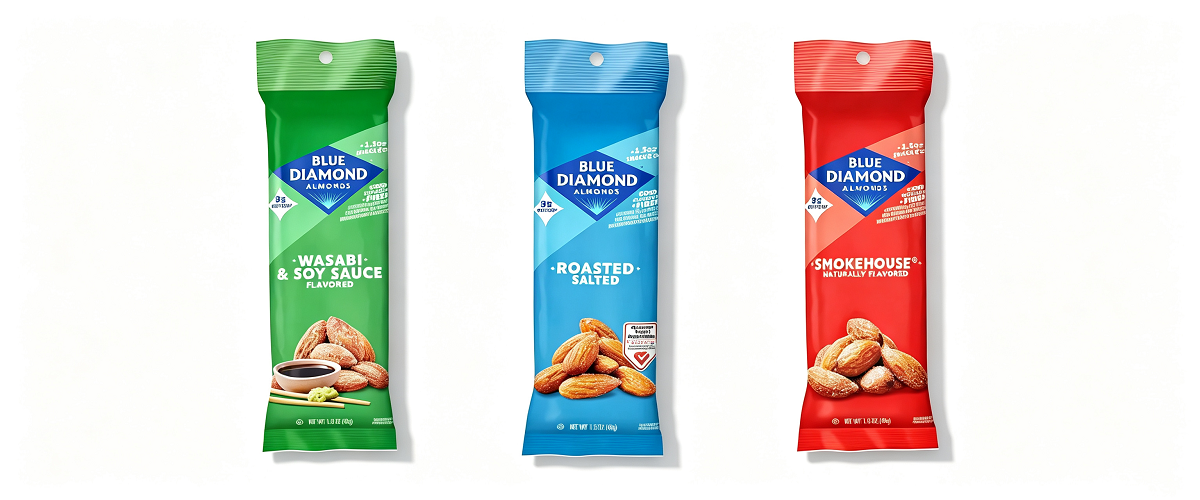
For flavored almond packaging, material selection should focus less on memorizing individual material properties and more on identifying the right performance combination for the actual product.
The packaging structure must be selected according to the almond's characteristics, seasoning formulation, oil exposure, shelf-life target, and distribution environment.
Focus on Performance Rather Than Material Names
A flavored almond package may require different levels of:
- Moisture resistance
- Oxygen barrier performance
- Aroma retention
- Light protection
- Oil compatibility
- Puncture resistance
- Seal reliability
Instead of assuming that one standard laminate is appropriate for every product, manufacturers should first define the product's protection priorities.
For example, a dry-roasted salted almond may primarily require strong moisture and oxygen control, while an almond with a rich oil-based seasoning may require additional attention to product-package compatibility and seal performance.
Standard Barrier Structures
For mainstream flavored almond products, a medium- to high-barrier laminate is often used to balance protection, production efficiency, and cost.
Such structures may combine:
- A printable outer layer
- A barrier layer
- A food-contact sealing layer
The exact combination should be selected according to the required shelf life and packaging process.
Higher Barrier Structures
Products with longer distribution cycles or more demanding storage conditions may require enhanced protection.
This can be relevant for:
- Export products
- Premium products with longer shelf-life targets
- Products distributed in humid climates
- Almonds with oxidation-sensitive flavor systems
Higher barrier structures can reduce the rate of environmental exposure during storage.
Oil Resistance and Seasoning Compatibility
Flavored almonds can have surface oils, oil-based seasonings, or coatings that influence packaging performance.
Potential considerations include:
- Interaction between the product and the sealing layer
- Oil contamination near the sealing area
- Long-term laminate stability
- Resistance to flavor and oil migration
This is why product-package compatibility testing is particularly important for heavily seasoned or oil-coated almond products.
Light Protection Options
If light exposure is a significant concern, packaging may use:
- Opaque printed structures
- Metallized barrier layers
- Foil-based structures
The appropriate option depends on the required balance between protection, cost, appearance, and sustainability objectives.
Transparent Packaging Considerations
Transparent packaging can improve product visibility and allow consumers to see:
- Almond size
- Seasoning coverage
- Product quality
- Product quantity
However, a fully transparent pouch may provide less protection against light than an opaque design.
A smaller transparent window can sometimes provide a practical compromise between product visibility and protection.
Practical Packaging Structure Comparison
| Product Requirement | Packaging Performance Priority |
|---|---|
| Standard roasted almonds | Moisture and oxygen control |
| Heavily seasoned almonds | Barrier performance and seasoning compatibility |
| Oil-coated almonds | Oil resistance and reliable seals |
| Premium products | High barrier and premium appearance |
| Export products | Long-term barrier and mechanical durability |
| Products exposed to strong retail lighting | Improved light protection |
Material Selection Should Be Tested
Packaging selection should be validated using the actual product.
Testing may evaluate:
- Product freshness
- Crunchiness
- Flavor stability
- Aroma retention
- Oil-related changes
- Seal performance
- Package integrity
This approach is more reliable than selecting a structure solely because it has been used for another snack product.
4. What Packaging Features Help Maintain Freshness and Improve Consumer Convenience?
The consumer experience does not begin only when the almonds are eaten. It begins when the package is seen, opened, handled, stored, and reused.
Functional packaging features can therefore influence both product protection and customer satisfaction.
Resealable Zippers
A resealable zipper is one of the most useful features for multi-serve flavored almond packaging.
It allows consumers to:
- Close the package after opening
- Store the remaining product more conveniently
- Reduce repeated exposure to the surrounding environment
- Carry the product more easily
For family-size packages, resealability can significantly improve usability.
Easy-Open Tear Notches
Consumers generally expect snack packages to be easy to open.
Tear notches can provide:
- Controlled opening
- Improved convenience
- Reduced need for scissors
- Better first-use experience
The opening design should be tested to ensure that it performs consistently.
Transparent Windows
A transparent window can help communicate product quality before purchase.
It can show:
- Almond appearance
- Product size
- Seasoning coverage
However, the window should be designed carefully when light protection is important.
Hang Holes
Smaller almond packages may benefit from hang holes.
They can support:
- Convenience-store displays
- Specialty retail
- Promotional displays
The placement should not weaken important areas of the package.
Portion Control
Different package sizes can target different consumption occasions.
Examples include:
- Single-serve portions
- Daily snack packs
- Multi-serve packages
- Family-size packs
- Bulk products
A well-designed product range can use packaging size as part of its marketing strategy.
Premium Surface Finishes
Packaging finishes can strengthen perceived product value.
Options may include:
- Matte surfaces
- Gloss elements
- Metallic effects
- Spot UV
- Textured finishes
These should support the brand identity rather than being added without a clear design purpose.
Flavor Identification
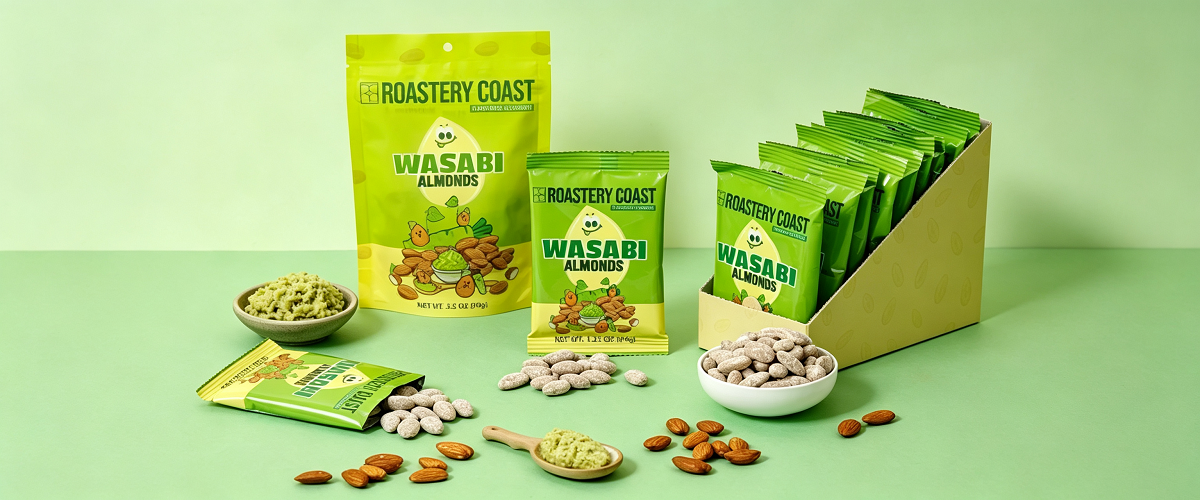
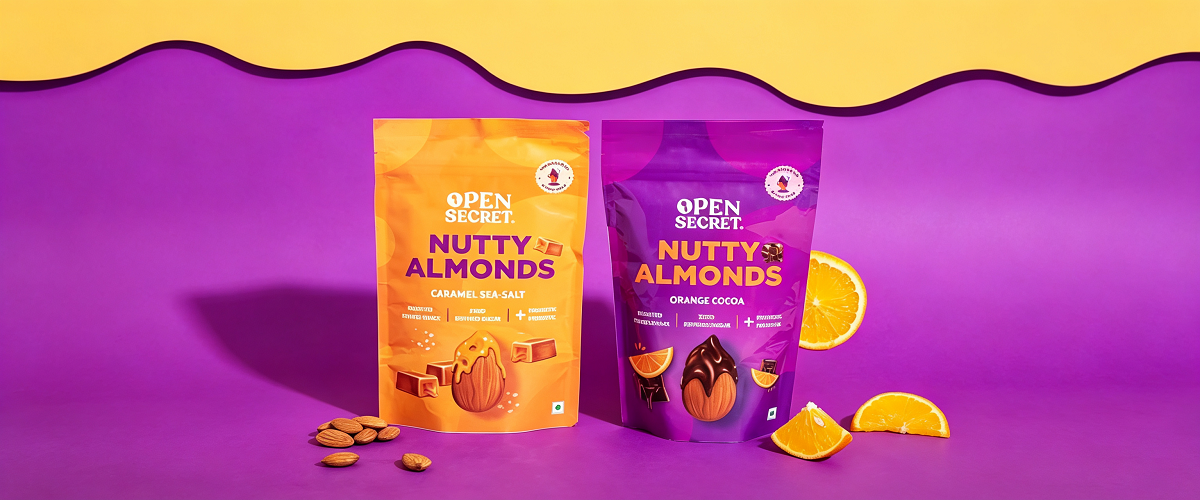
For a flavored almond product range, packaging should make it easy for consumers to identify different flavors quickly.
Visual systems can use:
- Flavor-specific colors
- Ingredient illustrations
- Product photography
- Clear flavor names
- Consistent brand architecture
This is particularly important when multiple products share the same shelf.
QR Codes and Digital Communication
Packaging can also connect physical products with digital content.
A QR code may provide access to:
- Product details
- Ingredient information
- Recipes
- Brand stories
- Promotions
This can add information without overcrowding the primary package design.
Functional Feature Comparison
| Feature | Main Benefit |
|---|---|
| Resealable zipper | Better storage after opening |
| Tear notch | Easy opening |
| Transparent window | Product visibility |
| Hang hole | Flexible retail display |
| Portion sizing | Convenience and market segmentation |
| Premium finish | Improved perceived value |
| QR code | Extended consumer engagement |
The most effective packaging does not necessarily contain every possible feature. It includes the features that provide meaningful value for the specific product and target consumer.
5. Flexible Packaging for Flavored Almonds: Key Factors for Shelf Life, Branding, and Distribution
Packaging decisions for flavored almonds should consider the entire product journey.
The package must perform from:
Production → Filling → Sealing → Warehousing → Transportation → Retail Display → Consumer Storage
Each stage can create different challenges.
Shelf-Life Requirements
Shelf-life goals should be defined before the final packaging structure is selected.
Important quality factors may include:
- Crunchiness
- Flavor intensity
- Aroma
- Oil freshness
- Seasoning appearance
- Product texture
The packaging should help maintain acceptable product quality for the intended market period.
Distribution Environment
Distribution conditions can vary significantly.
Products may be exposed to:
- High humidity
- Temperature fluctuations
- Long transportation times
- Warehouse storage
- Retail lighting
Export products may require more demanding packaging performance than products distributed locally.
E-Commerce Considerations
Products sold online can experience repeated handling and longer transportation cycles.
The packaging should be evaluated for:
- Compression resistance
- Puncture resistance
- Seal strength
- Overall package durability
Secondary packaging may also be important for preventing damage during shipment.
Packaging Machine Compatibility
A packaging structure must perform effectively during manufacturing.
Important factors include:
- Filling speed
- Film handling
- Sealing conditions
- Cutting performance
- Product contamination in the seal area
A theoretically high-performing material is not always the best commercial choice if it creates frequent production difficulties.
Branding and Shelf Appeal
Flavored almonds compete in visually crowded snack categories.
Packaging should communicate the most important information quickly.
This typically includes:
- Brand name
- Product type
- Flavor
- Product image or visual cue
- Key product positioning
A clear design hierarchy can improve consumer recognition and purchasing efficiency.
Premium and Mainstream Positioning
Different market segments may require different packaging strategies.
Premium products may emphasize:
- Minimalist layouts
- High-quality finishes
- Sophisticated typography
- Refined color palettes
- Brand storytelling
Mainstream products may prioritize:
- Strong flavor communication
- Bold graphics
- Clear product visibility
- Easy recognition
The design should match the product's intended price and market position.
Sustainability Considerations
Sustainability is becoming increasingly important in packaging decisions.
Potential strategies include:
- Reducing unnecessary material
- Lightweighting the pouch
- Simplifying material structures
- Exploring recyclable designs where suitable
- Improving transportation efficiency
However, sustainability goals should be evaluated alongside product protection.
A package that uses less material but significantly reduces product shelf life may not necessarily deliver the best overall environmental outcome.
Cost Optimization
Packaging cost should be evaluated as part of the total product system.
Factors may include:
- Material cost
- Printing
- Conversion
- Bag-making complexity
- Functional features
- Production efficiency
- Product loss
- Transportation
The lowest-cost pouch may not provide the lowest total cost if it results in shorter shelf life, higher product waste, or increased quality complaints.
Practical Decision Framework
| Decision Factor | Key Question |
|---|---|
| Product characteristics | How sensitive are the almonds and seasonings? |
| Moisture | How important is crunch retention? |
| Oxygen | How sensitive are the oils and flavors? |
| Shelf life | How long must quality be maintained? |
| Distribution | Local, regional, or export? |
| Package size | Single-serve or multi-serve? |
| Branding | Premium or mainstream positioning? |
| Convenience | Is resealability important? |
| Sustainability | Which realistic material strategy is suitable? |
| Cost | What is the total packaging-system cost? |
Recommended Packaging Development Process
Step 1: Analyze the flavored almond product
Understand the roasting method, oil exposure, seasoning formulation, and target texture.
Step 2: Define the shelf-life objective
Determine how long the product must maintain its intended sensory quality.
Step 3: Evaluate storage and distribution
Consider humidity, temperature, transportation distance, and retail conditions.
Step 4: Select the packaging format
Choose a pouch based on package size, consumer use, and retail presentation.
Step 5: Define protection priorities
Identify the required moisture, oxygen, aroma, light, and mechanical protection.
Step 6: Select functional features
Consider zippers, tear notches, windows, hang holes, and other consumer-focused features.
Step 7: Test production compatibility
Confirm that the package works effectively with the filling and sealing equipment.
Step 8: Conduct product-package testing
Evaluate the real flavored almond product inside the proposed package.
Step 9: Validate shelf-life performance
Monitor texture, flavor, aroma, and package integrity over time.
Step 10: Optimize cost and sustainability
Adjust the final structure to balance protection, efficiency, cost, and environmental objectives.
FAQ
What is the best flexible packaging format for flavored almonds?
Stand-up pouches are one of the most versatile options because they provide strong shelf visibility and can incorporate resealable closures. Flat-bottom bags, pillow bags, and single-serve packs may also be suitable depending on the product and target market.
Why do flavored almonds need moisture protection?
Excessive moisture can reduce the crisp texture of roasted almonds and may affect the appearance and stability of certain seasonings.
Why is oxygen protection important for almond packaging?
Almond oils can gradually oxidize when exposed to oxygen, potentially affecting flavor and freshness.
Do oil-coated flavored almonds require special packaging considerations?
Yes. Products with surface oils or oil-based seasonings should be evaluated for product-package compatibility, seal reliability, and long-term packaging performance.
Are resealable zippers useful for flavored almond packaging?
Yes. They are particularly useful for multi-serve products because they improve storage convenience after the package has been opened.
Can flavored almond packaging have transparent windows?
Yes. Transparent windows can improve product visibility, but the design should balance visibility with the product's light-protection requirements.
Is nitrogen flushing suitable for flavored almonds?
Nitrogen flushing may be used as part of a freshness strategy to reduce oxygen exposure and support shelf-life objectives. The packaging system should be designed to maintain the intended internal environment.
What should brands consider when exporting flavored almonds?
Export packaging should consider longer transportation periods, humidity, temperature changes, mechanical handling, and the required shelf life.
Can flexible packaging help premium flavored almond brands stand out?
Yes. Premium pouch structures, high-quality printing, refined finishes, and strong flavor communication can improve shelf appeal and perceived value.
How can flavored almond packaging become more sustainable?
Brands can evaluate material reduction, lightweighting, simplified structures, and recyclable packaging options where they provide adequate product protection and align with available recycling systems.
Conclusion
Choosing flexible packaging for flavored almonds requires more than selecting an attractive pouch. The packaging must help maintain the product's crunchiness, oil freshness, flavor intensity, aroma, and overall sensory quality throughout storage and distribution.
The right packaging format depends on product size, target market, consumption habits, and brand positioning. Stand-up pouches provide versatility for retail and multi-serve products, flat-bottom bags can support premium positioning, and smaller sealed packs are useful for portion-controlled consumption.
Material selection should focus on the actual protection requirements of the product rather than repeating generic material descriptions. Flavored almonds may require different combinations of moisture resistance, oxygen protection, light protection, oil compatibility, and mechanical durability depending on the roasting process and seasoning formulation.
Functional features such as resealable zippers, tear notches, transparent windows, portion-controlled sizes, and premium finishes can further improve consumer convenience and brand appeal. At the same time, packaging must remain compatible with production equipment and capable of performing throughout the complete distribution process.
For brands targeting export markets, e-commerce, premium retail, or extended shelf-life applications, testing the actual product-package combination is particularly important. Shelf-life performance should be evaluated using real storage and distribution conditions whenever possible.
Ultimately, effective flavored almond packaging is a balance between product protection, consumer convenience, branding, logistics efficiency, sustainability, and cost. By defining the specific needs of the almond product first and then selecting the appropriate packaging format and performance characteristics, brands can create flexible packaging that protects product quality while supporting long-term market growth.