How to Choose Packaging Bags for Fava Bean Snacks
Anna_Yu
How to Choose Packaging Bags for Fava Bean Snacks
Fava bean snacks have become an increasingly versatile category within the broader snack market. Depending on how they are processed, they can be sold as roasted fava beans, fried broad beans, seasoned crunchy beans, coated snacks, protein-rich snacks, or flavored legume products. Their appeal comes from their combination of crunch, distinctive flavor, plant-based protein, and convenient snackability. But maintaining that appeal throughout the product's commercial life depends heavily on packaging.
For fava bean snacks, crispness is one of the most important quality attributes. Consumers expect the product to remain crunchy rather than becoming soft, chewy, stale, or oily. At the same time, roasted or fried fava beans can contain fats that are vulnerable to oxidation. Seasonings may also be sensitive to moisture and aroma loss. A packaging failure can therefore affect texture, flavor, aroma, appearance, and overall consumer satisfaction at the same time.
Flexible packaging provides an effective platform for addressing these challenges. Stand-up pouches, pillow bags, flat-bottom bags, three-side seal bags, and other flexible formats can be designed with barrier layers, resealable closures, high-quality printing, and structures suited to automated snack packaging lines. Compared with rigid containers, flexible packaging can also reduce package weight and improve packing efficiency during transportation.
However, selecting a package for fava bean snacks is not simply a matter of choosing the thickest film or the most attractive pouch. The right solution depends on whether the beans are roasted or fried, oil content, seasoning, target shelf life, pack size, oxygen sensitivity, moisture sensitivity, distribution environment, filling process, and consumer usage pattern.
This guide explains how to choose packaging bags for fava bean snacks, focusing on bag formats, crispness protection, oxygen and moisture barriers, material structures, functional features, branding, shelf life, transportation, and practical packaging development.
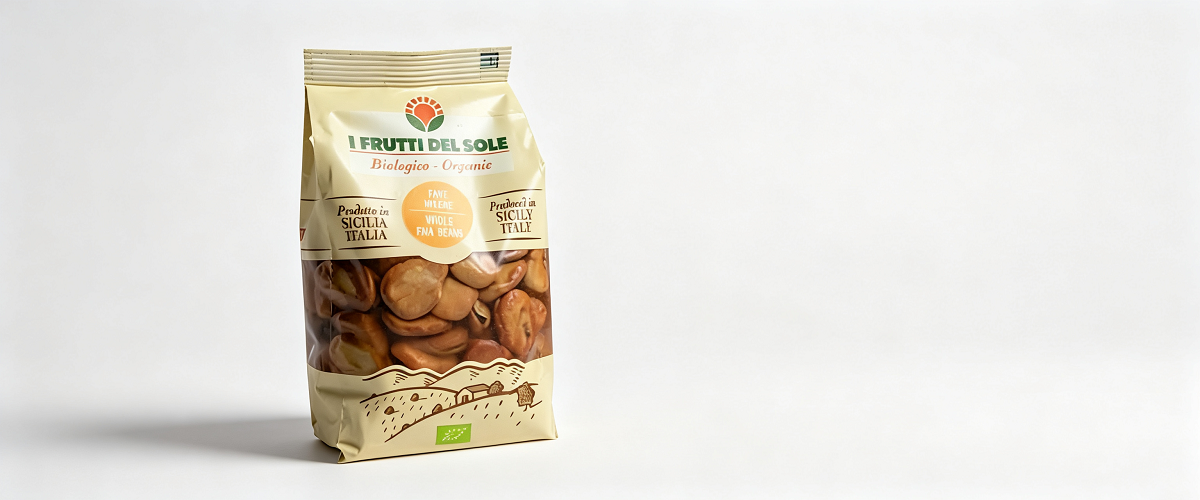
1. What Types of Packaging Bags Are Best for Fava Bean Snacks?
The most suitable packaging format for fava bean snacks depends on product processing, fill weight, serving size, retail channel, and whether the product is intended for single-use or repeated consumption.
Because fava bean snacks are often sold as crunchy roasted or fried products, the package needs to provide not only a strong barrier but also enough mechanical protection to reduce crushing during distribution.
Stand-Up Pouches for Retail Fava Bean Snacks
Stand-up pouches are one of the most versatile options for retail fava bean snacks.
They are suitable for:
- Roasted fava beans
- Fried broad beans
- Salted fava bean snacks
- Spicy fava bean snacks
- Wasabi-flavored fava beans
- Seasoned crunchy beans
- Plant-protein snack products
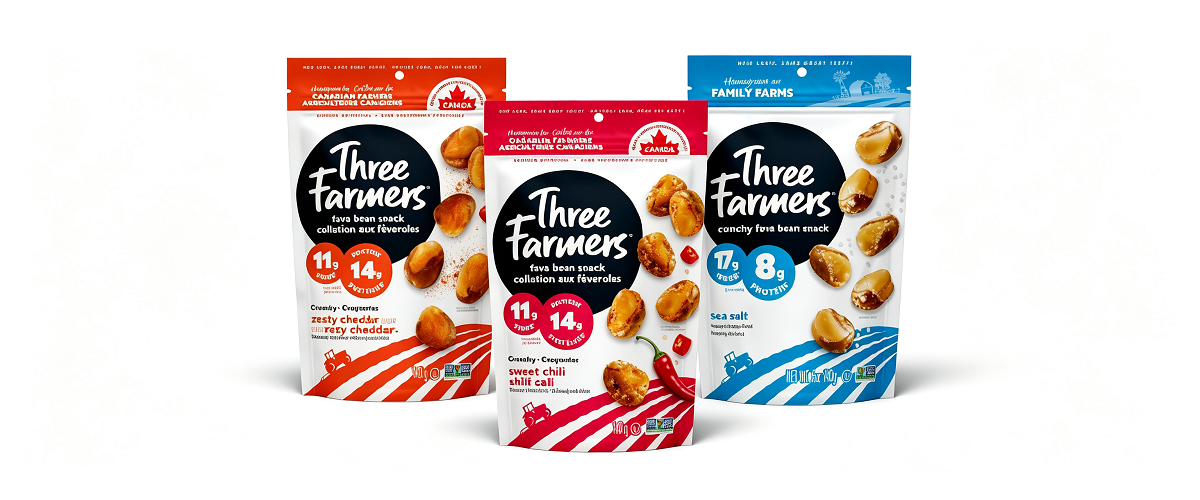
The upright format provides strong shelf visibility and creates a large printable area for product branding.
For multi-serving packages, a zipper can make the pouch easier to use after opening. This is particularly useful when consumers do not finish the entire package in one sitting.
The stand-up structure also gives brands considerable flexibility in terms of:
- Pack size
- Shape
- Finish
- Window design
- Zipper placement
- Tear notch position
- Printing layout
Flat-Bottom Bags for Premium Fava Bean Snacks
Flat-bottom bags can be considered when a brand wants a more structured and premium presentation.
They can work well for:
- Premium roasted fava beans
- Organic snack lines
- Specialty flavors
- High-protein snack products
- Gourmet legume snacks
- Premium export products
The stable base allows the package to stand securely on retail shelves and kitchen surfaces.
Another advantage is the availability of multiple printable panels. This can give brands more space for:
- Product storytelling
- Ingredient information
- Nutrition facts
- Preparation or serving suggestions
- Brand information
- Certification marks
- Storage instructions
For a premium fava bean snack, the package itself can become an important part of the perceived product value.
Pillow Bags for High-Volume Fava Bean Snacks
Pillow bags are often suitable for high-speed, high-volume snack production.
They can be used for:
- Mass-market fava bean snacks
- Smaller serving sizes
- Convenience-store products
- Value-oriented snack packs
- Promotional packs
Their relatively simple structure can make them efficient for automated packaging operations.
For products that are intended to be consumed in one sitting, the lack of resealability may not be a major concern.
However, if the package contains multiple servings, brands may want to consider whether consumers need a resealable option.
Three-Side Seal Bags for Smaller Portions
Three-side seal bags are useful for:
- Trial packs
- Small snack portions
- Promotional products
- Private-label products
- Single-serving fava bean snacks
Their simple geometry can support efficient production and flexible sizing.
For premium applications, the package can still use high-barrier materials and high-quality printing even though the bag format is relatively simple.
Quad-Seal and Gusseted Bags for Larger Fills
For larger fava bean snack packs, quad-seal or gusseted bags can provide additional structural stability.
These formats may be suitable for:
- Family-size snacks
- Larger retail packs
- Foodservice products
- Wholesale packs
- Refill formats
Larger bags need careful consideration because the product may remain in use for a longer period after opening.
If the consumer repeatedly opens and closes the package, resealability and moisture protection become increasingly important.
Nitrogen-Flushed Snack Bags
For crunchy fava bean snacks, the packaging process itself can be just as important as the bag format.
Nitrogen flushing or another modified-atmosphere process may be used to reduce oxygen inside the package and provide additional protection against oxidation.
It can also create a protective gas cushion that helps reduce physical damage to fragile snacks during transportation.
However, the effectiveness of this approach depends on:
- Filling equipment
- Gas-flushing efficiency
- Seal integrity
- Headspace management
- Product characteristics
- Package structure
The bag should therefore be designed as part of the complete packaging system rather than treated separately from the filling process.
Packaging Format Comparison
| Packaging Format | Typical Fava Bean Application | Main Advantage | Key Consideration |
|---|---|---|---|
| Stand-up pouch | Retail snacks | Flexible and highly customizable | Zipper may be needed for multi-serve packs |
| Flat-bottom bag | Premium snacks | Stable and premium appearance | More complex converting |
| Pillow bag | Mass-market snacks | Efficient high-speed production | Usually not resealable |
| Three-side seal bag | Small portions | Simple and cost-efficient | Less suitable for repeated opening |
| Quad-seal bag | Larger packs | Good structural stability | Requires careful dimension planning |
| Gusseted bag | Family and bulk sizes | High capacity | Needs strong seals and mechanical performance |
Choosing the Package According to Serving Size
Package size should reflect actual consumption behavior.
A 30–50 g single-serving pack has very different requirements from a 250–500 g family-size bag.
For a single-use pack, the priority may be:
barrier protection + easy opening + transportation durability.
For a multi-serving package, the priorities may shift toward:
barrier protection + resealability + convenient storage + opening design.
This distinction can prevent brands from adding unnecessary features to products that do not need them.
Packaging for Retail and E-Commerce
Retail and e-commerce also create different packaging demands.
A retail package needs:
- Shelf visibility
- Clear product identification
- Attractive graphics
- Stable presentation
- Adequate label space
An e-commerce package additionally needs to withstand:
- Parcel handling
- Drops
- Compression
- Abrasion
- Long-distance transportation
For online sales, puncture resistance and seal integrity can become particularly important because flexible bags may be handled repeatedly before reaching the consumer.
Filling Equipment Compatibility
The package must also work efficiently with the intended production line.
Manufacturers should evaluate:
- Filling speed
- Product particle size
- Product dust
- Bag opening behavior
- Seal area cleanliness
- Heat-sealing conditions
- Zipper operation
- Bag dimensions
- Automatic inspection requirements
Fava bean snacks can produce crumbs and seasoning particles during filling. These particles can become trapped in the sealing area and potentially weaken the seal.
A successful package therefore needs to perform well both on the shelf and on the packaging machine.
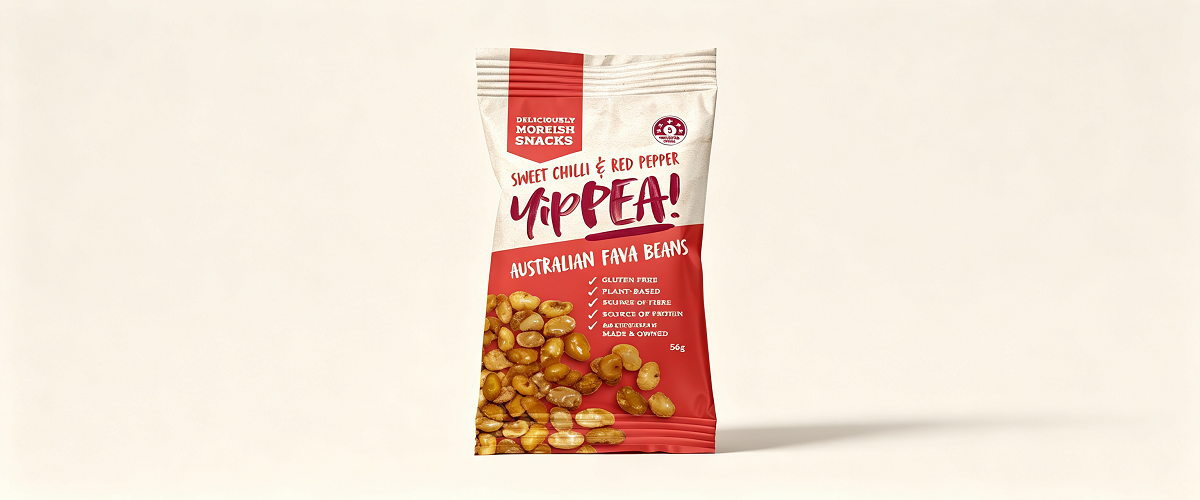
2. How Do Packaging Bags Protect Fava Bean Snacks from Moisture, Oxygen, and Flavor Loss?
The defining quality of many fava bean snacks is their crunch. Maintaining that crunch requires controlling environmental exposure throughout the product's shelf life.
Three major factors deserve particular attention:
moisture, oxygen, and flavor migration.
Moisture Is the Main Threat to Crispness
Fava bean snacks can lose their characteristic crunch when they absorb moisture.
Moisture can cause:
- Softening
- Loss of crispness
- Chewy texture
- Seasoning changes
- Surface stickiness
- Reduced consumer satisfaction
This is especially important for fried or roasted products with a carefully controlled final moisture level.
Even a small amount of moisture ingress over an extended period can gradually change the texture.
Moisture Barrier Requirements Depend on the Product
Not all fava bean snacks have identical moisture sensitivity.
For example:
- Dry roasted beans may have one set of requirements.
- Fried beans may have additional oil-related concerns.
- Coated beans may be sensitive to both moisture and surface changes.
- Heavily seasoned products may respond differently because of salt, sugar, or flavoring ingredients.
The packaging specification should therefore be based on the finished product rather than simply the raw bean.
Humid Climates Increase Packaging Pressure
Fava bean snacks exported to humid regions may face greater moisture exposure during:
- Ocean freight
- Port storage
- Warehousing
- Retail distribution
- Consumer storage
A package designed for a dry domestic environment may not provide the same level of protection under tropical or coastal conditions.
For international distribution, brands should consider:
- Destination humidity
- Transportation duration
- Container conditions
- Warehouse conditions
- Expected retail storage
Oxygen and Oxidation
Oxygen is particularly important for fava bean snacks containing oil.
Oxidation can gradually lead to:
- Rancid or stale flavors
- Aroma deterioration
- Changes in taste
- Reduced sensory freshness
Fried fava bean snacks may be more sensitive to oxidation because of the oil associated with the product.
For these products, oxygen-barrier packaging and appropriate filling conditions can help slow deterioration.
Nitrogen Flushing Can Reduce Oxygen Exposure
Nitrogen flushing can reduce the amount of oxygen remaining inside the package.
For fragile snacks, the gas-filled package can also provide some cushioning during transportation.
However, nitrogen flushing does not replace barrier packaging.
A package with poor oxygen-barrier performance or weak seals may still allow oxygen to enter over time.
The best results generally come from combining:
appropriate barrier film + controlled gas flushing + reliable seals + suitable storage.
Flavor Retention
Fava bean snacks often rely heavily on seasoning.
Popular flavor profiles can include:
- Salted
- Spicy
- Wasabi
- Barbecue
- Garlic
- Chili
- Cheese
- Five-spice
- Sweet and savory combinations
The package should help maintain the intended flavor profile.
Seasoning compounds can also contribute to aroma migration, so aroma retention should be considered when selecting the final structure.
External Odor Protection
Flexible packaging should also protect the snack from external odors.
During transportation and storage, products may be exposed to:
- Spices
- Coffee
- Cleaning products
- Perfumes
- Chemicals
- Strongly scented foods
An effective barrier can reduce unwanted odor migration and help preserve the original product profile.
Light Protection
Light is another factor that can influence snack quality.
For oil-containing fava bean snacks, excessive light exposure may accelerate quality deterioration.
Opaque or metallized packaging can provide stronger protection than transparent packaging.
This creates an important design trade-off.
A window may improve visual merchandising, but a fully opaque package may provide stronger protection.
Transparent Windows Should Be Used Carefully
Consumers may appreciate seeing the actual fava beans inside the package.
A window can help communicate:
- Product size
- Roast appearance
- Coating
- Color
- Overall visual quality
However, the window should be designed based on the product's light sensitivity.
A smaller window may provide sufficient product visibility while limiting unnecessary exposure.
Seal Integrity Protects the Barrier System
Even the best barrier laminate can fail if the seal is compromised.
Common causes of seal problems include:
- Product particles in the seal area
- Incorrect sealing temperature
- Insufficient sealing pressure
- Poor machine settings
- Incompatible sealing layers
- Damaged film
- Inconsistent bag dimensions
For fava bean snacks, crumbs and seasoning particles deserve special attention.
Finished-Package Testing
The actual package should be tested rather than relying only on raw material specifications.
Useful tests include:
| Test | Purpose |
|---|---|
| Water vapor transmission testing | Evaluate moisture protection |
| Oxygen transmission testing | Evaluate oxygen barrier |
| Seal strength testing | Check seal durability |
| Leak testing | Identify package integrity problems |
| Drop testing | Evaluate handling resistance |
| Compression testing | Assess stacking performance |
| Aging studies | Monitor long-term stability |
| Sensory testing | Track crispness and flavor retention |
Crispness Testing Should Be Product-Specific
For a snack where crunch is the primary quality attribute, sensory evaluation should be included in packaging development.
Brands can compare product samples stored in different packaging structures over time and monitor:
- Crunch
- Hardness
- Flavor
- Aroma
- Oiliness
- Appearance
This allows the final package to be selected based on actual product performance rather than theoretical barrier specifications alone.
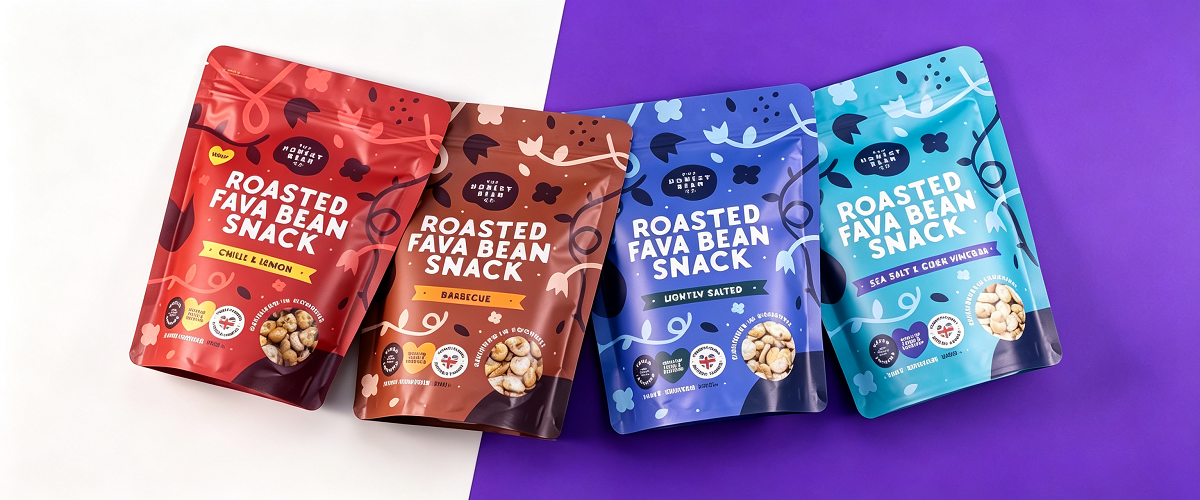
3. Which Packaging Materials Provide the Best Barrier Protection for Fava Bean Snacks?
Material selection for fava bean snacks should focus on moisture barrier, oxygen barrier, mechanical strength, sealing performance, and compatibility with the filling process.
The exact structure should be selected based on product sensitivity and shelf-life requirements rather than using one standard laminate for every snack.
PET-Based Structures
PET is commonly used as an outer layer in flexible snack packaging because it provides mechanical strength and good print performance.
A structure such as:
PET / VMPET / PE
can provide strong overall protection while supporting attractive retail printing.
It may be appropriate for:
- Roasted fava beans
- Seasoned fava bean snacks
- Fried bean snacks
- Premium retail packs
Metallized Structures
Metallized films can provide a useful balance between barrier performance and cost.
They are often considered when the product needs stronger protection than a basic clear structure but does not necessarily require a full aluminum foil laminate.
For many mainstream fava bean snacks, a metallized structure can provide an effective combination of:
- Oxygen protection
- Moisture protection
- Light shielding
- Attractive appearance
- Reasonable material efficiency
Aluminum Foil Structures
For highly sensitive products or demanding shelf-life targets, aluminum foil can provide a very high level of barrier protection.
A representative construction is:
PET / AL / PE
This structure can provide strong resistance to:
- Oxygen
- Moisture
- Light
- Aroma transfer
It may be appropriate when:
- The snack contains significant oil
- Long shelf life is required
- Distribution conditions are challenging
- Strong light protection is desired
- Export conditions are demanding
However, the highest barrier structure is not necessarily required for every fava bean snack.
PE and Other Sealing Layers
The inner layer is responsible for forming the heat seal.
For fava bean snacks, the sealing layer should provide:
- Reliable heat sealing
- Appropriate seal strength
- Good resistance to product contamination
- Suitable food-contact performance
- Compatibility with production equipment
Seal performance is particularly important because crumbs and seasoning particles can interfere with the sealing process.
BOPP-Based Snack Structures
BOPP can be useful when stiffness, printability, and cost efficiency are important.
Depending on the required barrier performance, it can be combined with other layers to create a suitable snack laminate.
The final choice should be based on the actual oxygen and moisture requirements rather than simply selecting BOPP because it is commonly used for snack packaging.
Material Comparison for Fava Bean Snacks
| Structure | Barrier Level | Typical Application | Main Consideration |
|---|---|---|---|
| BOPP/PE or similar basic structure | Moderate | Less demanding snacks | Lower barrier |
| PET/VMPET/PE | High | Retail roasted or seasoned beans | Balanced protection |
| PET/AL/PE | Very high | Oil-sensitive or long-shelf-life products | Maximum barrier with greater complexity |
| Mono-material PE/PP | Application-dependent | Sustainability-focused products | Requires performance validation |
Moisture Barrier Should Often Be a Priority
For crunchy fava bean snacks, moisture protection is usually one of the first performance requirements to establish.
A package with excellent oxygen protection but inadequate moisture protection may still allow the product to lose its defining crunch.
The specification should therefore establish target moisture-barrier performance before finalizing the structure.
Oxygen Barrier Becomes More Important with Oil
If the product is fried or coated with oil, oxygen protection may become more important.
The product development team should evaluate:
- Total fat content
- Oil type
- Surface oil
- Expected shelf life
- Storage temperature
- Oxygen exposure during filling
This information can guide the barrier specification.
Avoid Choosing Material Only by Film Thickness
A thicker film does not automatically provide better moisture or oxygen protection.
Performance depends on the complete laminate structure and the specific barrier layer.
Therefore, buyers should evaluate technical data such as:
- Water vapor transmission rate
- Oxygen transmission rate
- Seal strength
- Puncture resistance
- Flex-crack resistance
- Tensile strength
- Overall thickness
Mono-Material Options and Sustainability
Some snack brands are exploring recyclable mono-material structures as sustainability requirements develop.
PE- or PP-based structures may be engineered for appropriate applications, but the actual performance needs to be validated.
The package should still meet the required:
- Moisture barrier
- Oxygen barrier
- Mechanical strength
- Seal performance
- Shelf-life target
In addition, recyclability depends on the complete package and the collection and recycling infrastructure available in the target market.
Material Selection Should Follow the Product
A practical decision sequence is:
- Analyze the fava bean snack formulation.
- Determine oil and moisture sensitivity.
- Establish the target shelf life.
- Review destination climate.
- Evaluate distribution conditions.
- Select the bag format.
- Define oxygen and moisture requirements.
- Choose the laminate structure.
- Test the finished package.
- Validate the shelf life.
This approach avoids both under-specification and unnecessary material costs.
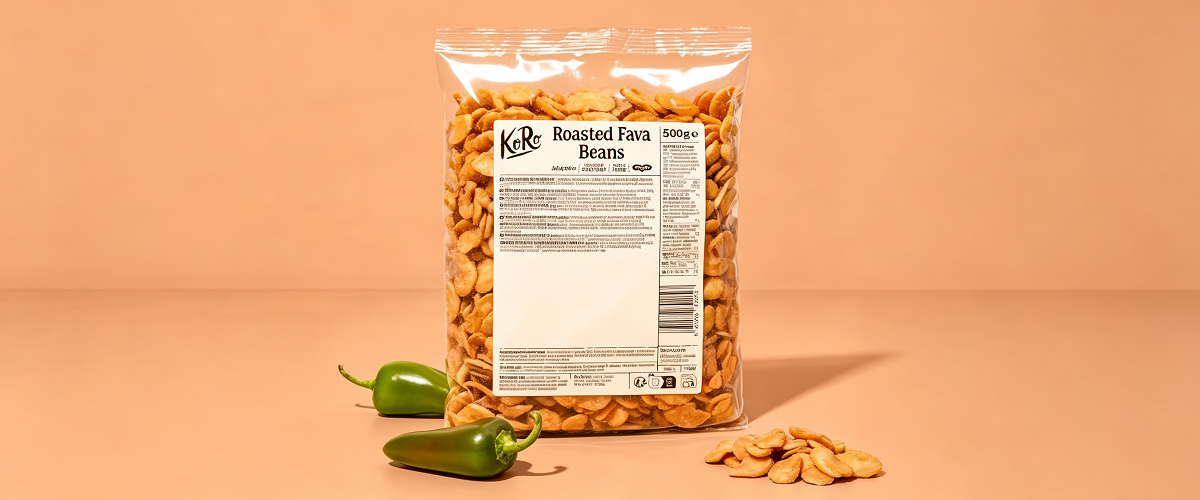
4. What Packaging Features Help Maintain Crispness and Extend the Shelf Life of Fava Bean Snacks?
For fava bean snacks, packaging features should contribute to product protection, easy opening, resealing, storage, and transportation durability.
Resealable Zippers
A zipper can be particularly useful for multi-serving packages.
It helps consumers:
- Close the bag after opening
- Reduce exposure to humidity
- Store leftovers more easily
- Maintain product quality between servings
For a crunchy snack, reducing repeated exposure to humid air can be valuable.
However, the zipper is not a substitute for a strong primary seal or high-barrier film.
Tear Notches
A tear notch makes the first opening easier.
For snack products, it can improve convenience without significantly complicating the bag structure.
The notch should be positioned so that the consumer can open the package cleanly without accidentally damaging the zipper or creating an uncontrolled tear.
Wide Opening
A wider opening can make it easier for consumers to reach the product by hand.
This is especially relevant for larger bags.
However, the opening should not be so wide that the package becomes difficult to reseal or exposes excessive product surface area after opening.
Stable Base
Flat-bottom and other structured bags can improve stability.
This helps consumers store the package:
- In cabinets
- On countertops
- In pantry shelves
- In office kitchens
Stable packages can also improve retail presentation.
Nitrogen-Flushing Compatibility
If the snack is packaged under modified atmosphere conditions, the bag should be compatible with the filling and gas-flushing process.
Important factors include:
- Seal integrity
- Headspace
- Film barrier
- Filling speed
- Gas retention
- Bag geometry
The packaging supplier and filling-line provider should evaluate the complete system together.
Puncture and Abrasion Resistance
Fava beans are relatively hard compared with many soft snack products.
Sharp edges or irregular surfaces can create mechanical stress on the package during transportation.
The package should therefore have sufficient resistance to:
- Puncture
- Abrasion
- Flex cracking
- Compression
- Handling damage
This is especially important for e-commerce and export distribution.
Anti-Static Considerations
Depending on the product and packaging line, static electricity can influence how particles behave during filling.
While this may not be a primary consumer-facing feature, packaging and production teams can consider material behavior and filling-line conditions when designing the package.
Controlled Windows
A small transparent window can show the product while retaining much of the package's barrier coverage.
This can be useful for premium or natural-positioned snacks.
However, if light sensitivity is significant, an opaque design may provide stronger protection.
Hanging Holes
For smaller fava bean snack packages, hanging holes can support flexible retail merchandising.
This is useful in:
- Convenience stores
- Specialty snack shops
- Small-format retail
- Travel stores
Custom Shapes and Sizes
Flexible packaging allows brands to create different dimensions for different market segments.
For example:
- 30 g single serving
- 60 g convenience pack
- 120 g standard retail pack
- 250 g family pack
- Larger foodservice formats
The exact sizes should be determined by the brand's market strategy and product economics.
Printing and Surface Finishes
Packaging is also a major branding tool.
Fava bean snacks can use:
- Matte finishes
- Gloss finishes
- Metallic effects
- High-resolution product images
- Bold flavor colors
- Minimalist natural designs
- Premium spot effects
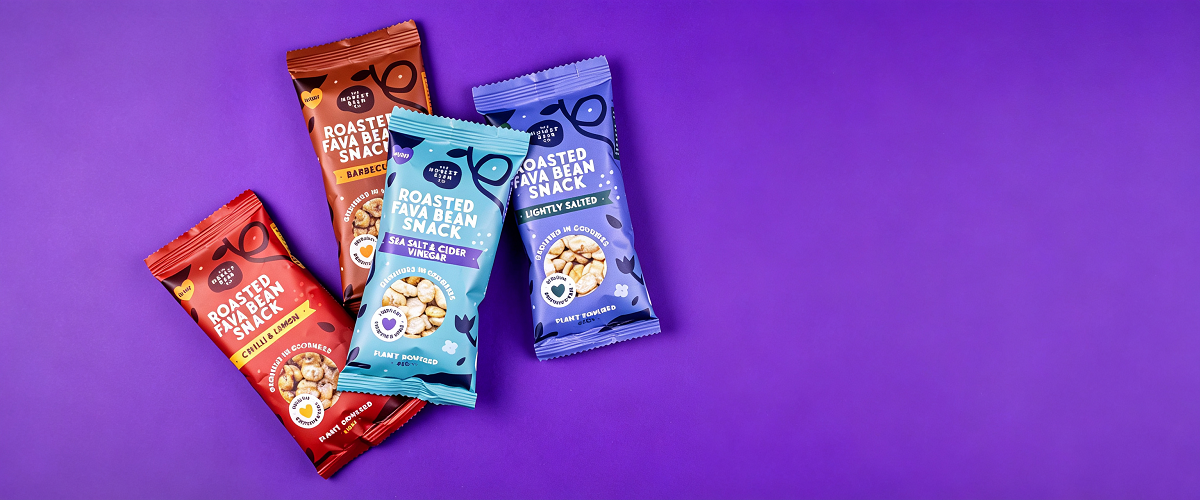
The visual system should make flavor recognition easy.
For example, if a brand offers chili, sea salt, barbecue, and wasabi flavors, the packaging should distinguish them clearly while maintaining a consistent brand identity.
Label and Regulatory Space
The package should have sufficient room for:
- Product name
- Ingredients
- Nutrition information
- Allergen information where applicable
- Net weight
- Storage instructions
- Manufacturer information
- Country-of-origin information where required
- Lot or traceability information
- Applicable certifications
Packaging design should reserve this space from the beginning rather than trying to fit regulatory information into the design after the artwork is completed.
Feature Comparison
| Feature | Main Benefit | Particularly Useful For |
|---|---|---|
| Resealable zipper | Reduces exposure after opening | Multi-serving snacks |
| Tear notch | Easy first opening | Retail packs |
| Wide opening | Easier product access | Larger bags |
| Flat bottom | Stable storage | Premium and family packs |
| Nitrogen compatibility | Supports low-oxygen packaging | Oil-containing snacks |
| Puncture resistance | Reduces transportation damage | Export and e-commerce |
| Window | Product visibility | Selected premium products |
| Hanging hole | Flexible merchandising | Small packs |
| Premium finish | Brand differentiation | Specialty snacks |
5. Fava Bean Snack Packaging Bags: Key Factors for Freshness, Branding, Convenience, and Distribution
Choosing the right fava bean snack packaging requires a balance between crispness protection, oxidation control, production efficiency, consumer convenience, brand identity, and logistics.
Start with the Finished Snack
Packaging development should begin after understanding the actual snack.
Important questions include:
- Is the fava bean roasted or fried?
- What is the final moisture level?
- What is the fat content?
- Is the product heavily seasoned?
- Does it contain a coating?
- How fragile is the finished product?
- How long is the target shelf life?
- How quickly will consumers typically consume the package after opening?
These answers influence the packaging specification.
Shelf-Life Requirements
The package should be developed around a defined shelf-life target.
Brands should evaluate the expected period from:
packaging → distribution → retail → consumer purchase
The product should remain acceptably:
- Crisp
- Flavorful
- Aromatic
- Visually attractive
- Free from unacceptable oxidation
throughout the intended shelf life.
Actual shelf-life performance should be confirmed through testing with the finished product and final packaging structure.
Distribution Environment
Fava bean snacks may be shipped domestically or internationally.
Potential stresses include:
- Humidity
- Temperature fluctuations
- Compression
- Vibration
- Drops
- Carton stacking
- Container transportation
- Warehouse storage
The packaging specification should reflect the actual distribution route.
E-Commerce Considerations
Online snack sales can expose packages to more physical handling than traditional retail distribution.
A flexible fava bean snack pouch should be evaluated for:
- Seal durability
- Puncture resistance
- Abrasion
- Compression
- Appearance after shipping
A bag that protects the product but arrives heavily damaged may still create a poor customer experience.
Packaging and Product Crushing
Fava beans are relatively robust, but the snack can still suffer from crushing or breakage depending on processing and coating.
The package should provide an appropriate balance between:
- Product protection
- Headspace
- Gas cushioning
- Package flexibility
For fragile coated products, transportation testing can help determine whether additional protective measures are required.
Brand Positioning
Fava bean snacks can occupy several market positions.
They may be marketed as:
- Traditional snacks
- Plant-based snacks
- High-protein snacks
- Better-for-you snacks
- Premium roasted snacks
- International or ethnic snack products
- Functional snack products
The packaging design should reflect the actual product positioning.
A premium product may use restrained graphics and sophisticated finishes, while a mass-market snack may use stronger flavor cues and bold visual communication.
Front-of-Pack Information Hierarchy
The front panel should communicate the product quickly.
A useful hierarchy may include:
Brand → Product Name → Flavor → Key Product Attribute → Net Weight
The exact claims should comply with applicable market regulations.
For example, if a brand wants to emphasize protein content, the nutritional claim should be supported by the product's actual nutritional composition and the applicable regulations.
Color Coding
Color coding can help consumers distinguish flavors quickly.
A consistent brand architecture can maintain:
- Logo position
- Product name placement
- Typography
- Core brand elements
while changing selected colors for different flavors.
This approach supports both brand recognition and product navigation.
Sustainability Considerations
Fava bean snacks are often positioned around plant-based or natural eating, which can make packaging sustainability particularly relevant to consumers.
Potential packaging strategies include:
- Lightweighting
- Reducing unnecessary material
- Optimizing package dimensions
- Recyclable mono-material structures where suitable
- Reducing secondary packaging
- Efficient carton packing
However, sustainability decisions should always be evaluated alongside shelf-life performance.
If reducing barrier protection causes a crunchy snack to become stale or soft before the end of its shelf life, the resulting product waste may offset the intended packaging benefit.
Cost Optimization
Packaging cost should not be evaluated only by the price of the film.
A broader calculation can include:
Material + printing + conversion + filling efficiency + transportation + product loss + returns + storage + consumer usability
A slightly more expensive high-barrier structure may provide better total economics if it significantly reduces quality loss.
Packaging Machine Compatibility
Before mass production, the final bag should be tested on the intended packaging line.
Important factors include:
- Bag dimensions
- Film stiffness
- Filling speed
- Product flow
- Seal contamination
- Heat-sealing conditions
- Zipper positioning
- Gas flushing
- Automatic inspection
Fava bean crumbs and seasoning can enter the seal area, so production trials are particularly valuable.
Quality-Control Specifications
A commercial packaging specification can include:
| Parameter | Example Evaluation |
|---|---|
| Film structure | Confirm approved laminate |
| Thickness | Verify production tolerance |
| Oxygen barrier | Confirm target OTR |
| Moisture barrier | Confirm target WVTR |
| Seal strength | Test finished seals |
| Dimensions | Verify bag tolerance |
| Print quality | Inspect color and registration |
| Zipper performance | Test opening and closure |
| Puncture resistance | Evaluate transport durability |
| Finished-package appearance | Check wrinkles, defects, and contamination |
The exact acceptance criteria should be established between the brand, packaging supplier, and production team.
A Practical Development Process
A structured development process can reduce packaging problems.
Step 1: Analyze the snack
Define moisture, oil, seasoning, particle characteristics, and fragility.
Step 2: Establish the shelf-life target
Determine the required commercial storage period.
Step 3: Map the supply chain
Identify transportation distance, climate, warehouse conditions, and sales channels.
Step 4: Define barrier requirements
Set moisture, oxygen, and light protection requirements.
Step 5: Select the package format
Choose stand-up, flat-bottom, pillow, three-side seal, quad-seal, or another suitable format.
Step 6: Select functional features
Consider zippers, tear notches, windows, hanging holes, and gas-flushing compatibility.
Step 7: Run production trials
Test the bag on the actual filling and sealing equipment.
Step 8: Test the finished package
Evaluate barrier performance, seal integrity, puncture resistance, and handling durability.
Step 9: Conduct shelf-life testing
Monitor crispness, flavor, aroma, appearance, and oxidation-related quality changes.
Step 10: Finalize commercial specifications
Document the laminate, dimensions, artwork, features, tolerances, testing standards, and quality requirements.
Five Priorities for Fava Bean Snack Packaging
A practical packaging strategy can be summarized into five priorities:
- Crispness protection — control moisture throughout the supply chain.
- Oxidation control — limit oxygen exposure, particularly for oil-containing products.
- Mechanical protection — prevent puncture, abrasion, and excessive crushing.
- Consumer convenience — make the package easy to open, store, and reseal.
- Brand communication — clearly communicate flavor, positioning, and product information.
When these factors are considered together, the package becomes more than a simple container. It becomes part of the product's quality system and a visible component of the consumer experience.
Frequently Asked Questions
What is the best packaging bag for fava bean snacks?
For many retail fava bean snacks, high-barrier stand-up pouches with reliable seals and optional resealable zippers are a practical solution. Flat-bottom bags can also be suitable for premium or larger products, while pillow and three-side seal bags can work well for single-serving or high-volume applications.
Do fava bean snacks need high-barrier packaging?
They often benefit from strong moisture and oxygen protection. Moisture can reduce crispness, while oxygen can contribute to oxidation, particularly when the product contains oil. The required barrier level depends on the formulation and shelf-life target.
Is nitrogen flushing useful for fava bean snack packaging?
It can be useful for reducing oxygen exposure and providing some cushioning for fragile snacks. However, nitrogen flushing should be combined with an appropriate barrier structure and reliable seal system.
Should fava bean snack packaging have a zipper?
For multi-serving products, a zipper can improve convenience and help reduce environmental exposure after opening. Single-serving products generally have less need for resealability.
Is aluminum foil necessary for fava bean snacks?
Not always. Metallized structures can provide strong barrier performance for many applications. Aluminum foil can be considered when the product has particularly demanding oxygen, moisture, light, or shelf-life requirements.
Can fava bean snacks use recyclable mono-material packaging?
Potentially. Suitable PE- or PP-based structures may be developed for some applications, but the final package needs to meet the required barrier and sealing performance. Recyclability also depends on local collection and recycling infrastructure.
How can packaging keep fava bean snacks crispy?
The main strategy is to control moisture ingress. This requires an appropriate moisture-barrier structure, reliable seals, suitable filling conditions, and proper storage. Nitrogen flushing can address oxygen exposure but does not replace moisture protection.
What package size is suitable for fava bean snacks?
There is no universal size. Single-serving packs can be useful for convenience channels, while larger resealable pouches can suit household consumption. Package size should reflect serving behavior, price positioning, distribution requirements, and expected consumption speed.
What should be tested before launching a new fava bean snack package?
Brands should evaluate moisture and oxygen barrier performance, seal integrity, puncture resistance, transportation durability, crispness retention, flavor stability, and shelf life using the actual product and final packaging structure.
Is flexible packaging suitable for e-commerce fava bean snacks?
Yes. Flexible pouches can be lightweight and space-efficient, but the finished package should be tested for drops, compression, abrasion, puncture, and seal integrity because parcel distribution can involve significant physical handling.
Conclusion
Choosing packaging bags for fava bean snacks requires a product-specific approach centered on crispness, oxidation control, mechanical protection, and consumer convenience.
Stand-up pouches provide a versatile solution for many retail products, while flat-bottom bags can support premium positioning and larger formats. Pillow bags and three-side seal bags are useful for simpler or single-serving applications, and gusseted or quad-seal formats can provide additional capacity and stability for larger packages.
Material selection should be driven by the actual snack rather than by a generic packaging formula. Moisture protection is particularly important because loss of crispness can quickly reduce consumer satisfaction. For oil-containing products, oxygen protection also deserves close attention. Metallized structures can provide a strong balance of performance and cost for many applications, while aluminum-based laminates may be considered for more demanding shelf-life requirements.
Functional features such as zippers, tear notches, controlled windows, stable bases, nitrogen-flushing compatibility, and puncture-resistant structures can further improve the package's performance and usability.
Ultimately, the best fava bean snack packaging is not simply the thickest or most sophisticated option. It is the structure and format that provide the right combination of barrier protection, seal integrity, production efficiency, transportation durability, consumer convenience, branding, and total cost.
For snack brands, a well-designed flexible package can help preserve the crunch and flavor consumers expect while giving the product a stronger presence across retail shelves, e-commerce channels, and international distribution.