How to Choose Packaging Bags for Malt Powder
Anna_Yu
How to Choose Packaging Bags for Malt Powder
Malt powder is widely used in food and beverage applications, including bakery products, confectionery, malted drinks, nutritional mixes, brewing ingredients, and specialty food formulations. Although it is a dry ingredient, malt powder can be surprisingly sensitive to its surrounding environment. Moisture, humidity, oxygen, temperature fluctuations, odors, and poor package sealing can all affect its physical and sensory properties during storage.
One of the most common problems is moisture absorption. Malt powder can absorb water vapor from the surrounding environment, causing particles to stick together and form lumps. Once the powder begins to cake, its flowability, appearance, dosing accuracy, and consumer experience can deteriorate. In some formulations, moisture can also accelerate quality changes in flavor, color, or other sensitive ingredients.
Packaging therefore plays an important role in maintaining malt powder quality from production to final use. The right packaging bag should provide an appropriate moisture barrier while also offering sufficient mechanical strength, reliable seals, convenient handling, and protection against external contamination. For commercial products, packaging must also provide enough surface area for branding, ingredient information, instructions, and regulatory labeling.
Flexible packaging is particularly well suited to malt powder because it can be customized for different package sizes, filling systems, distribution channels, and product positioning. Stand-up pouches can provide strong retail presentation, flat-bottom bags can support premium or larger-volume products, and three-side-seal or pillow bags can be integrated into high-speed filling operations.
However, there is no universal malt powder packaging solution. The ideal structure depends on the powder's moisture content, formulation, particle size, packaging process, expected shelf life, storage conditions, and sales channel. A small consumer pouch for malted beverages may require different specifications from a large industrial bag used by bakeries or beverage manufacturers.
This guide explains how to choose packaging bags for malt powder by focusing on packaging formats, moisture and clumping protection, material performance, functional features, shelf-life requirements, branding, logistics, and practical packaging-development considerations.
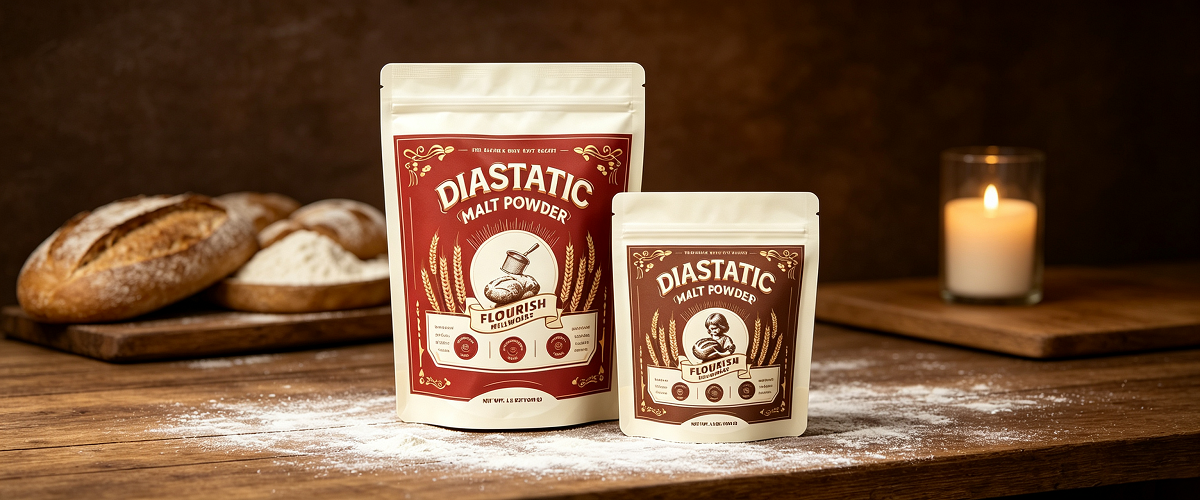
1. What Types of Packaging Bags Are Best for Malt Powder?
The most suitable packaging bag for malt powder depends on package size, filling method, consumption pattern, distribution channel, and desired product positioning.
Because malt powder is a fine particulate product, packaging should also minimize exposure to humidity during filling and provide reliable sealing after the package is filled.
Stand-Up Pouches
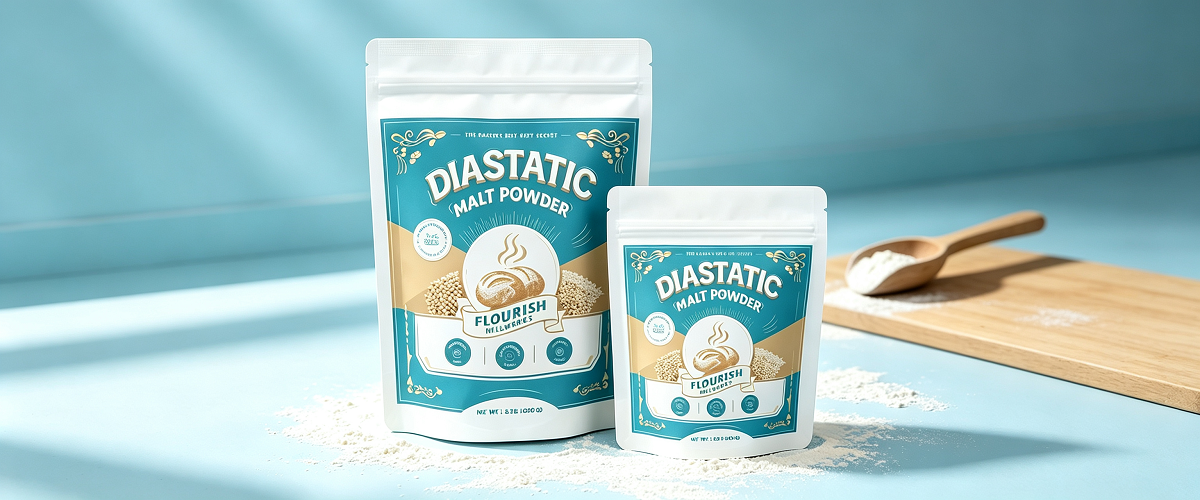
Stand-up pouches are one of the most versatile options for retail malt powder.
They are suitable for:
- Malted drink powders
- Baking malt powder
- Confectionery ingredients
- Specialty beverage mixes
- Consumer-sized malt products
- Premium formulations
The bottom gusset allows the package to stand upright, creating better shelf visibility.
For products intended for repeated use, a zipper can also be incorporated.
Key advantages include:
- Strong retail presentation
- Flexible package sizing
- Large printable surface
- Compatibility with resealable closures
- Convenient storage
Flat-Bottom Bags
Flat-bottom bags provide a more structured appearance and can be suitable for premium or larger-volume malt powder products.
They are particularly useful for:
- Premium malt powders
- Large retail packs
- Foodservice products
- Specialty ingredients
- Private-label products
The structure provides a stable base and multiple printable panels.
This can be valuable for brands that need more space for product information, preparation instructions, recipes, or nutritional communication.
Pillow Bags
Pillow bags are commonly used in high-speed automated packaging.
They can be suitable for:
- Single-use malt powder
- Sachets
- Small consumer portions
- Promotional packs
- Mass-market products
Their relatively simple construction can support efficient high-volume production.
Three-Side Seal Bags
Three-side-seal bags are useful when compact packaging and flexible sizing are important.
Applications can include:
- Individual malt powder portions
- Sampling packs
- Beverage sachets
- Small ingredient packs
- Subscription products
They can also be combined with easy-open features for consumer convenience.
Larger Bulk Bags
Malt powder used in industrial or foodservice applications may require larger flexible bags.
These may be designed for:
- Bakeries
- Beverage manufacturers
- Confectionery production
- Food processing facilities
- Ingredient distributors
For larger bags, mechanical strength and handling performance become increasingly important.
Sachets for Single-Serve Malt Powder
Single-serve sachets can be useful for products designed for immediate consumption.
They support:
- Portion control
- Travel use
- Hospitality applications
- Cafés
- Instant beverage preparation
- Promotional sampling
The smaller format also limits the number of times the product is exposed to ambient air after opening.
Packaging Format Comparison
| Packaging Format | Typical Application | Main Advantage |
|---|---|---|
| Stand-up pouch | Retail malt powder | Shelf presence and convenience |
| Flat-bottom bag | Premium and larger packs | Stability and branding space |
| Pillow bag | High-volume production | Production efficiency |
| Three-side seal bag | Small portions | Compact and flexible |
| Sachet | Single-serve products | Portion control |
| Bulk flexible bag | Foodservice and industrial | Capacity and handling efficiency |
Match the Bag to the Filling Process
Packaging selection should not be separated from the production process.
Fine malt powder can create dust during filling, and powder particles around the seal area may interfere with seal formation.
The packaging format should therefore be compatible with:
- Filling equipment
- Powder-dosing systems
- Heat-sealing equipment
- Production speed
- Bag-opening mechanisms
A packaging bag that performs well in storage but creates production problems may not be the best commercial solution.
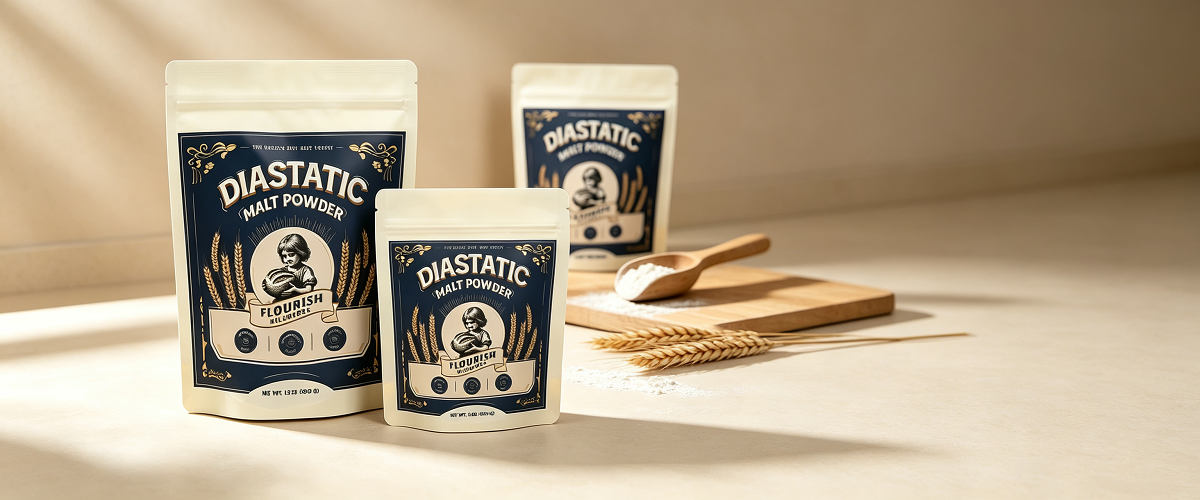
2. How Do Packaging Bags Protect Malt Powder from Moisture and Clumping?
Moisture control is one of the most important functions of malt powder packaging.
Malt powder can absorb moisture from the surrounding atmosphere. When moisture enters the package, powder particles may begin to stick together, resulting in caking, lump formation, and reduced flowability.
Why Moisture Is a Problem
Moisture can affect malt powder in several ways.
Potential consequences include:
- Clumping
- Reduced powder flow
- Uneven dosing
- Changes in texture
- Reduced visual quality
- Potential quality deterioration
For consumer products, even moderate caking can create the impression that the product is old or poorly stored.
High Moisture Barrier
A suitable packaging structure helps reduce the movement of water vapor through the package.
The required barrier level depends on:
- Product formulation
- Initial moisture level
- Shelf-life target
- Storage humidity
- Package size
- Distribution conditions
Products intended for humid markets may require stronger moisture protection than products stored in controlled environments.
Seal Integrity Is Equally Important
A high-barrier film cannot provide reliable moisture protection if the package has a defective seal.
Moisture can enter through:
- Incomplete seals
- Contaminated seal areas
- Microchannels
- Poorly controlled sealing conditions
- Package damage
For fine powders, keeping particles away from the seal area is particularly important.
Controlling Powder Contamination During Filling
Malt powder particles can interfere with heat sealing when they become trapped between the sealing layers.
This may result in:
- Weak seals
- Small leakage paths
- Moisture ingress
- Package failure
Production processes should therefore control powder movement and keep the sealing area as clean as practical.
Proper Package Sizing
An appropriately sized package can reduce unnecessary internal space and improve handling.
Oversized packaging may create:
- Excessive material use
- More air inside the package
- Poor shelf presentation
Undersized packaging may make filling difficult and increase stress on seals.
Resealing After Opening
For multi-use malt powder, moisture exposure continues after the consumer opens the package.
A resealable zipper can help reduce exposure between uses.
However, resealability does not make the package completely moisture-proof after opening. Consumers should still follow the recommended storage instructions.
Desiccants and Additional Moisture-Control Strategies
Some dry-powder products may use additional moisture-control approaches depending on the formulation and packaging system.
For example, a desiccant may sometimes be considered for specific applications.
However, this should be evaluated carefully based on:
- Food-contact requirements
- Product formulation
- Package size
- Consumer safety
- Regulatory requirements
Packaging should not rely on an auxiliary moisture-control component when an appropriate barrier structure and sealing system can provide the necessary performance.
Humidity and Distribution Conditions
The packaging should be tested under realistic conditions.
Important environments may include:
- Tropical climates
- Coastal regions
- Warehouses without humidity control
- Long-distance shipping
- Temperature cycling
This helps determine whether the package can maintain the desired powder characteristics throughout the distribution cycle.
Moisture Protection Strategy
A reliable malt powder package generally combines:
Moisture-resistant packaging structure + clean seals + reliable closure + appropriate storage conditions
Each component contributes to maintaining powder quality.
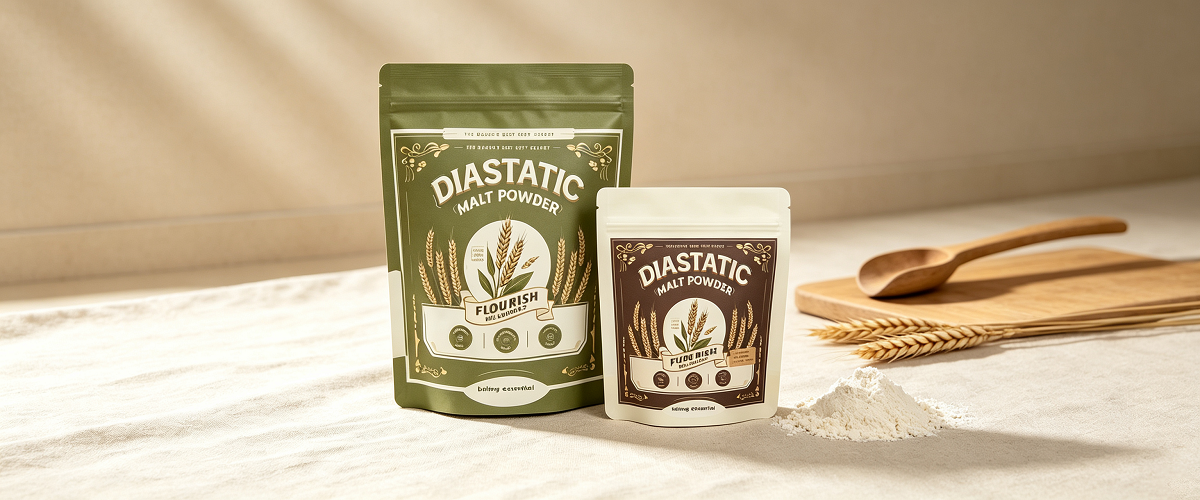
3. Which Packaging Materials Provide the Best Barrier Protection for Malt Powder?
For malt powder, material selection should focus primarily on the required moisture barrier, oxygen protection, mechanical performance, sealability, and cost rather than repeatedly comparing generic material names.
The right structure depends on the actual product and its intended shelf life.
Moisture Barrier as the Primary Priority
For many malt powder products, moisture protection is the first packaging requirement.
The structure should be selected according to:
- Water vapor transmission requirements
- Product sensitivity
- Target shelf life
- Storage humidity
- Package size
A stronger barrier may be justified when the product is highly hygroscopic or must remain stable through humid international distribution.
Oxygen Barrier Considerations
Oxygen may be less critical than moisture for some malt powder products, but it can still matter when the formulation contains:
- Sensitive flavor components
- Oils or fats
- Other oxidation-sensitive ingredients
- Natural colorants
In these cases, a structure providing both moisture and oxygen protection may be appropriate.
Common Flexible Packaging Layers
Depending on the application, packaging structures may use combinations of:
- PET or BOPP for strength and printing
- PE or CPP for sealing
- Metallized layers for enhanced barrier
- Aluminum foil for very high barrier applications
The exact laminate should be selected according to the required performance rather than automatically using the most complex structure.
Standard vs. High-Barrier Structures
A standard barrier structure may be sufficient for:
- Shorter shelf-life products
- Controlled warehouse environments
- Products with lower moisture sensitivity
- Local distribution
A higher-barrier structure may be more appropriate for:
- Extended shelf-life products
- Humid climates
- International exports
- Highly moisture-sensitive powders
- Premium products requiring greater stability
Aluminum Foil Structures
Aluminum foil can provide very high protection against:
- Water vapor
- Oxygen
- Light
It may therefore be suitable for highly sensitive products or demanding distribution environments.
However, foil-based structures can increase material and manufacturing costs, so the protection level should match the actual product requirements.
Metallized Structures
Metallized films can provide a useful balance between:
- Barrier performance
- Material efficiency
- Visual appearance
- Cost
They may be suitable for many mainstream malt powder products where very high barrier performance is required without necessarily using a foil-based structure.
Recyclable Mono-Material Options
As sustainability requirements develop, brands may investigate recyclable mono-material flexible packaging.
Potential advantages include:
- Simplified material composition
- Compatibility with certain recycling systems
- Reduced structural complexity
However, suitability depends on the specific packaging design, required barrier level, sealing requirements, and recycling infrastructure available in the target market.
Material Selection Comparison
| Packaging Requirement | Priority |
|---|---|
| Moisture-sensitive malt powder | Strong moisture barrier |
| Long shelf life | Moisture and oxygen protection |
| Humid export market | Enhanced moisture resistance |
| Light-sensitive formulation | Opaque or light-barrier structure |
| Powder with oils/flavors | Barrier and product compatibility |
| Cost-sensitive product | Balanced barrier and material efficiency |
| Sustainability-focused brand | Evaluate recyclable structures where suitable |
Product-Packaging Compatibility Testing
The final packaging structure should be validated using the actual malt powder.
Testing may evaluate:
- Caking
- Powder flowability
- Flavor stability
- Package integrity
- Seal strength
- Moisture transmission
- Storage performance
This is more reliable than selecting a structure solely because it is commonly used for another dry powder.
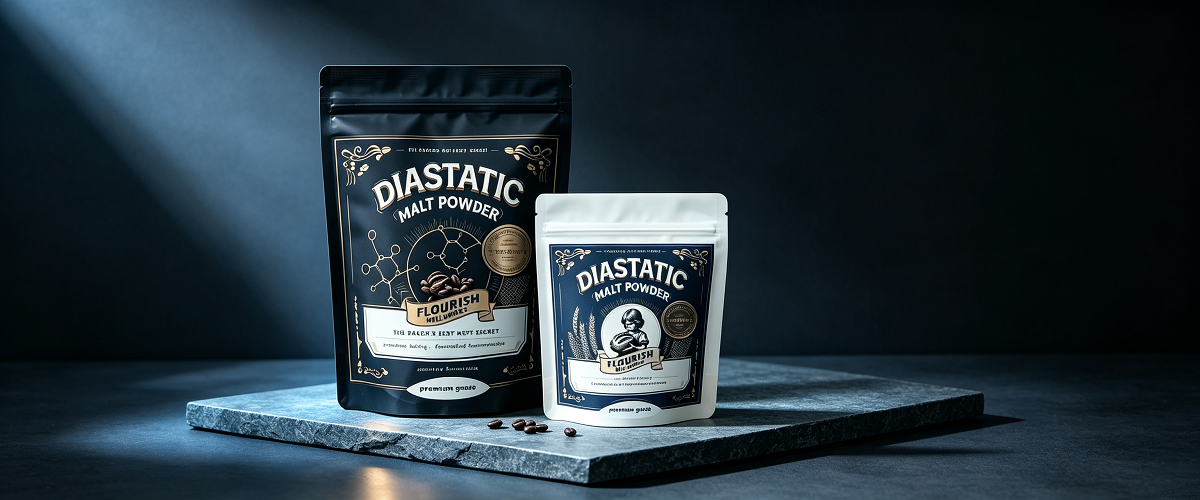
4. What Packaging Features Should You Consider for Malt Powder Products?
Packaging features should be selected according to how consumers use the product and how the package needs to perform throughout its life cycle.
Resealable Zippers
For multi-use malt powder, a zipper can improve convenience by allowing the consumer to close the pouch after each use.
Benefits include:
- Easier storage
- Reduced exposure between uses
- Improved handling
- Better consumer experience
For moisture-sensitive powders, zipper quality and closure alignment should be tested carefully.
Tear Notches
Tear notches provide a simple opening mechanism.
They can help consumers:
- Open the package quickly
- Avoid using scissors
- Create a more controlled opening
The notch should be designed so that it does not compromise package integrity before opening.
Easy-Pour or Controlled-Dispensing Design
Some malt powder products may benefit from packaging that supports controlled dispensing.
Depending on the package format, this can include:
- Narrow openings
- Pour spouts
- Specialized dispensing features
These options can be useful when the powder is used repeatedly or needs to be added gradually to beverages or recipes.
Measuring and Portion Control
Packaging can support accurate product use through:
- Single-serve sachets
- Portion packs
- Scoop-compatible formats
- Clearly marked serving information
This is particularly useful for beverage powders and nutritional products.
Transparent Windows
A small transparent window can help consumers see the product inside.
However, transparency should be balanced against:
- Light protection
- Brand appearance
- Product sensitivity
For highly light-sensitive formulations, an opaque design may be more appropriate.
Hang Holes
Smaller consumer packs can include hang holes for retail displays.
They may be useful in:
- Convenience stores
- Specialty shops
- Small-format retail
- Promotional displays
Premium Finishes
Surface finishes can help differentiate malt powder products in competitive retail environments.
Possible options include:
- Matte finishes
- Gloss effects
- Metallic details
- Spot UV
- Textured surfaces
The finish should support the brand's positioning rather than compromise package performance.
Label and Regulatory Information
Malt powder packaging may need space for:
- Product name
- Ingredient information
- Allergen declarations where applicable
- Nutritional information
- Preparation instructions
- Storage instructions
- Net weight
- Batch or lot information
- Expiration or best-before information
- Origin information where required
Adequate design space should be planned before the bag dimensions are finalized.
QR Codes and Digital Information
A QR code can provide additional information without overcrowding the package.
Possible uses include:
- Recipes
- Preparation videos
- Product information
- Brand stories
- Traceability
- Promotions
Feature Selection Guide
| Feature | Best Use |
|---|---|
| Resealable zipper | Multi-use consumer packs |
| Tear notch | Easy opening |
| Controlled opening | Repeated dispensing |
| Single-serve format | Portion control |
| Transparent window | Product visibility |
| Hang hole | Retail display |
| Premium finish | Brand differentiation |
| QR code | Extended digital communication |
Not every package needs every feature. The best design includes features that solve real consumer or production problems.
5. Malt Powder Packaging Bags: Key Factors for Freshness, Shelf Life, Branding, and Distribution
Choosing a malt powder package requires a complete evaluation of the product's journey from manufacturing to final consumption.
The packaging needs to perform during:
Filling → Sealing → Warehousing → Transportation → Retail → Consumer Storage
Product Characteristics
Before selecting packaging, brands should understand:
- Powder particle size
- Moisture content
- Hygroscopic behavior
- Flavor system
- Fat content
- Intended application
A simple malt powder and a flavored malt beverage mix may have significantly different packaging requirements.
Shelf-Life Requirements
Shelf life should be defined before finalizing the packaging structure.
Important quality indicators may include:
- Powder flowability
- Absence of excessive caking
- Flavor stability
- Aroma retention
- Color consistency
- Package integrity
Packaging should be validated against the actual shelf-life target.
Storage Conditions
The package must protect the product under realistic storage conditions.
Potential challenges include:
- High humidity
- Temperature fluctuations
- Long warehouse storage
- Repeated opening
- Poorly controlled storage environments
Products intended for tropical or humid markets may require greater moisture protection.
Distribution and Transportation
Malt powder may be shipped through multiple logistics stages.
During transportation, packages can experience:
- Compression
- Vibration
- Impact
- Stacking
- Temperature changes
The bag should have sufficient mechanical strength to withstand these conditions.
E-Commerce Distribution
Online sales introduce additional handling.
Packages may move through:
- Fulfillment centers
- Parcel networks
- Delivery vehicles
- Residential storage
For e-commerce, packaging should be evaluated for puncture resistance, seal strength, abrasion resistance, and overall durability.
Packaging Machine Compatibility
The packaging structure should work with the production line.
Important considerations include:
- Filling speed
- Powder dosing accuracy
- Film feeding
- Bag forming
- Heat sealing
- Cutting
- Closure installation
Fine powder around the seal area can be particularly challenging, so production trials are important.
Branding and Shelf Appeal
Malt powder can compete with numerous beverage and food ingredient products.
The packaging should communicate:
- Product identity
- Flavor
- Usage
- Brand positioning
- Key benefits where permitted
A clear visual hierarchy helps consumers understand the product quickly.
Premium vs. Mainstream Packaging
Premium malt powder brands may emphasize:
- Minimalist layouts
- High-quality printing
- Refined finishes
- Ingredient storytelling
- Specialty positioning
Mainstream products may prioritize:
- Strong product recognition
- Clear flavor communication
- Value messaging
- Easy identification on the shelf
Sustainability
Sustainability decisions should be considered alongside product protection.
Potential approaches include:
- Right-sizing the package
- Reducing unnecessary material
- Lightweighting where practical
- Evaluating recyclable structures
- Improving transport efficiency
The most sustainable solution is not necessarily the package with the least material. If inadequate protection causes product waste, the overall environmental impact may increase.
Cost Optimization
Packaging cost includes more than the film itself.
It may involve:
- Film and laminate costs
- Printing
- Bag conversion
- Closures
- Packaging-machine efficiency
- Storage
- Transportation
- Product losses
A slightly more expensive package may be more economical if it significantly improves shelf-life performance and reduces product waste.
Practical Selection Process
Step 1: Analyze the malt powder
Determine moisture sensitivity, formulation, particle characteristics, and intended application.
Step 2: Define the shelf-life target
Establish how long the product must maintain acceptable quality.
Step 3: Evaluate the storage environment
Consider humidity, temperature, warehouse conditions, and consumer storage.
Step 4: Choose the package format
Select a stand-up pouch, flat-bottom bag, sachet, pillow bag, or other suitable format.
Step 5: Define barrier requirements
Determine the required moisture, oxygen, and light protection.
Step 6: Select functional features
Consider zippers, tear notches, dispensing options, and portion-control formats.
Step 7: Test the packaging line
Verify filling, sealing, forming, and production efficiency.
Step 8: Conduct product-package testing
Evaluate caking, flowability, flavor, appearance, and package integrity.
Step 9: Validate distribution performance
Simulate realistic transportation and storage conditions.
Step 10: Optimize cost and sustainability
Balance product protection, material efficiency, production performance, and environmental goals.
FAQ
What is the best packaging bag for malt powder?
Stand-up pouches are a versatile choice for many retail malt powder products, while flat-bottom bags, sachets, pillow bags, and bulk bags may be better for specific package sizes and applications.
Why does malt powder need moisture-resistant packaging?
Malt powder can absorb moisture from the surrounding environment, which may cause clumping, caking, reduced flowability, and changes in product quality.
Does malt powder need high-barrier packaging?
The required barrier level depends on the formulation and shelf-life target. Moisture protection is often particularly important, while oxygen and light barriers may become more important for formulations containing sensitive flavors, oils, or other oxidation-sensitive components.
Are resealable zippers useful for malt powder?
Yes. Zippers are especially useful for multi-use retail packs because they help reduce environmental exposure after opening.
Can aluminum foil be used for malt powder packaging?
Yes. Foil-based structures can provide very high moisture, oxygen, and light protection, making them suitable for demanding applications. However, the required barrier level should be evaluated before selecting a foil structure.
Can malt powder be packaged in recyclable flexible packaging?
Potentially. Recyclable structures are available for some applications, but the final design must balance barrier performance, sealability, durability, and the recycling infrastructure of the target market.
What package size is best for malt powder?
There is no universal ideal size. Single-serve sachets work well for immediate consumption, while larger stand-up or flat-bottom pouches are better suited to repeated household or foodservice use.
How can malt powder packaging prevent caking?
A suitable moisture barrier, reliable seals, controlled filling conditions, and appropriate storage practices all help reduce moisture exposure and caking risk.
Is flexible packaging suitable for exporting malt powder?
Yes. Flexible packaging can be designed for international distribution, but export applications should account for humidity, temperature variation, transportation duration, mechanical handling, and destination-market requirements.
Conclusion
Choosing packaging bags for malt powder requires a product-specific approach. Because malt powder can be sensitive to moisture and humidity, packaging must do more than simply contain the powder. It should help maintain flowability, texture, flavor, appearance, and overall product quality throughout the intended shelf life.
Stand-up pouches provide an excellent combination of retail presentation and consumer convenience, while flat-bottom bags can support premium and larger-volume products. Pillow bags, three-side-seal bags, and sachets can be useful for high-volume or portion-controlled applications.
Material selection should focus on the actual performance requirements of the malt powder. Moisture barrier protection is often the primary consideration, while oxygen and light protection may become more important depending on the formulation. Rather than automatically selecting the highest-barrier structure, manufacturers should balance protection with cost, production performance, sustainability, and distribution requirements.
Functional features such as resealable zippers, tear notches, controlled dispensing, portion-control formats, transparent windows, and premium finishes can further improve consumer convenience and brand differentiation. At the same time, powder handling and sealing conditions must be carefully controlled because fine particles can interfere with seal integrity.
For products sold through export markets or e-commerce channels, packaging should also be evaluated against realistic transportation and storage conditions. Product-package compatibility testing and shelf-life validation can help identify potential problems before commercial launch.
Ultimately, the best malt powder packaging is the solution that creates the right balance between moisture protection, package integrity, consumer convenience, branding, logistics, sustainability, and total cost. By defining the product's specific requirements first and then selecting the appropriate pouch format and performance level, malt powder brands can build packaging that protects quality from production line to consumer use.