How to Choose the Right Flexible Packaging for Cheese?
Anna_Yu
How to Choose the Right Flexible Packaging for Cheese?
Cheese is a complex dairy product with diverse textures, moisture levels, fat content, and microbial characteristics. From fresh mozzarella and soft brie to semi-hard cheddar and aged parmesan, each type of cheese presents unique packaging challenges. Improper packaging can lead to moisture loss, mold overgrowth, oxidation, texture degradation, off-flavors, and shortened shelf life. Therefore, selecting the right flexible packaging structure is critical for maintaining product safety, quality, and commercial value.
Unlike dry snacks or low-fat foods, cheese contains significant moisture and fat. This combination makes it highly sensitive to oxygen exposure, light, microbial contamination, and temperature fluctuations. Additionally, certain cheeses continue to release gases during maturation, while others require controlled oxygen environments to preserve structure and flavor development. Flexible packaging solutions, including vacuum bags, thermoforming films, and modified atmosphere packaging (MAP), provide adaptable and cost-efficient protection across retail, foodservice, and export markets.
Understanding barrier requirements, sealing technology, mechanical strength, and retail presentation needs allows dairy brands to optimize both product preservation and marketing performance. This comprehensive guide explains how to select appropriate flexible packaging for different cheese types, extend shelf life, and ensure safe distribution from production to consumer.
1. What Types of Flexible Packaging Are Best for Different Types of Cheese?
Cheese packaging must match moisture content and maturation behavior.
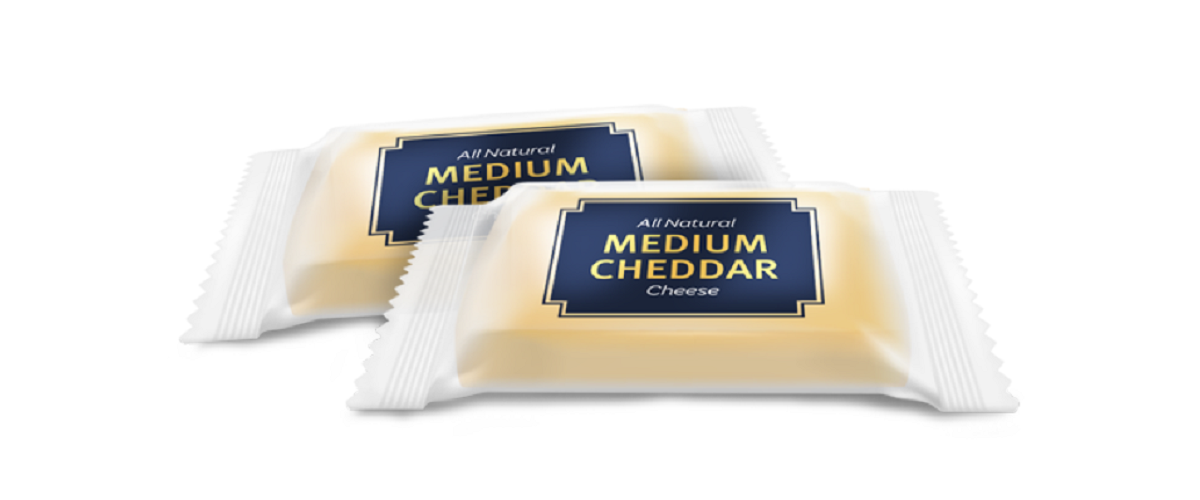
Vacuum Pouches
Best for:
- Hard cheeses (Parmesan, aged Cheddar)
- Semi-hard cheeses (Gouda, Edam)
Benefits:
- Removes oxygen
- Reduces mold growth
- Extends shelf life
Common in retail blocks and sliced cheese packaging.
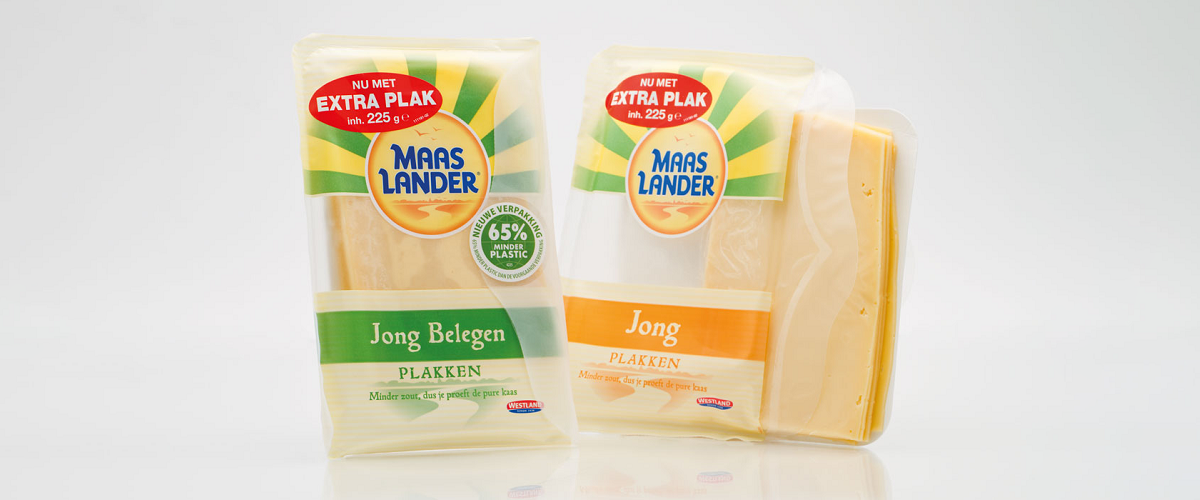
Thermoforming Films (Top & Bottom Web)
Used for:
- Sliced cheese
- Portion-controlled packs
- Foodservice distribution
Offer:
- High clarity display
- Strong seal integrity
- Automated high-speed production compatibility
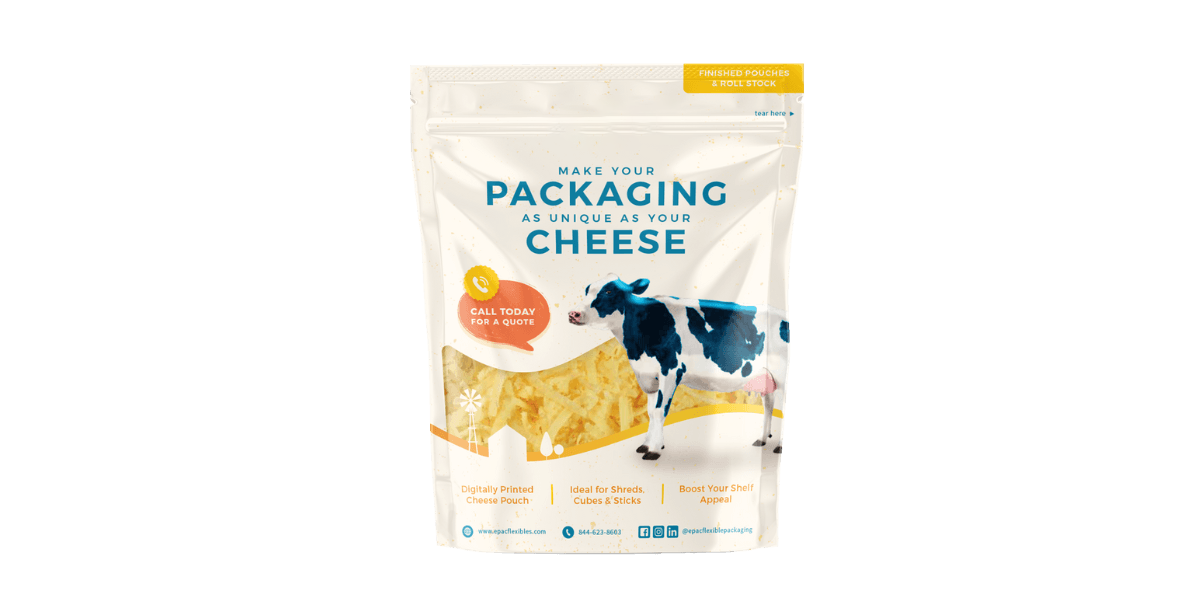
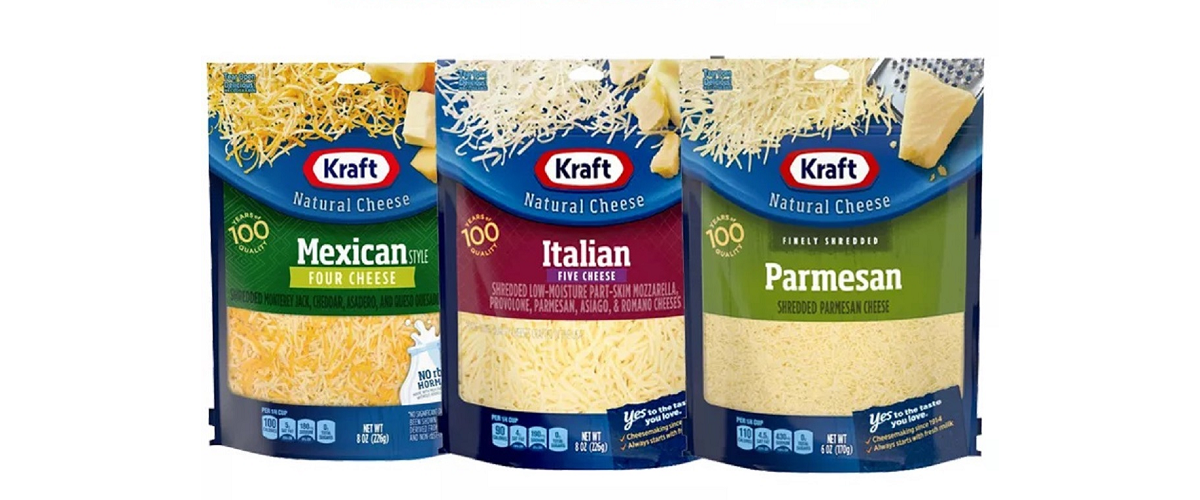
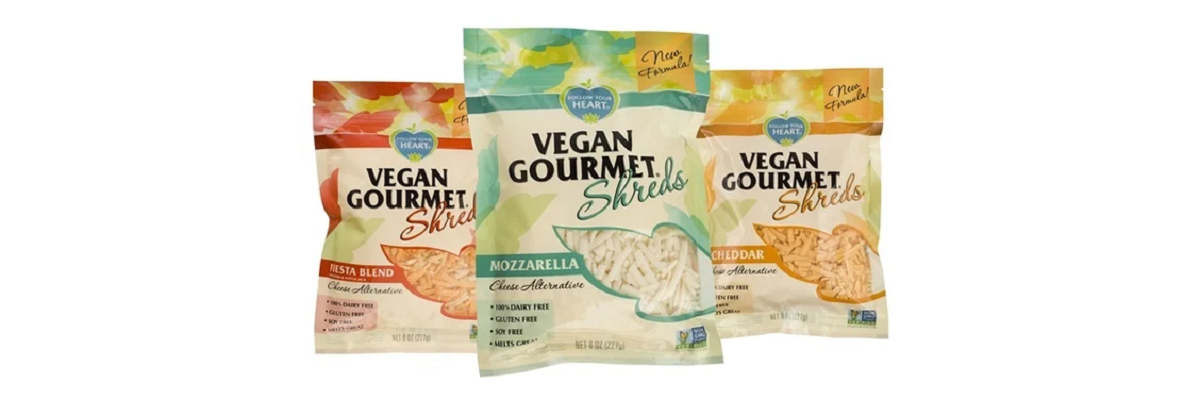
Stand-Up Resealable Pouches
Suitable for:
- Shredded cheese
- Cubed cheese
- Snack cheese portions
Provide:
- Consumer convenience
- Reclosure after opening
Modified Atmosphere Packaging (MAP)
Applied to:
- Fresh mozzarella
- Soft cheeses
- Specialty artisan cheeses
Controls internal gas composition to slow spoilage.
Wax-Coated or Paper-Laminate Wraps (Supplementary)
Often combined with flexible films for:
- Traditional branding
- Artisan product positioning
2. How Does Flexible Packaging Help Extend Cheese Shelf Life and Freshness?
Effective packaging protects against four primary risks.
Oxygen Exposure
Oxygen causes:
- Mold growth
- Fat oxidation
- Discoloration
High-barrier films significantly reduce oxygen transmission.
Moisture Control
Moisture imbalance leads to:
- Surface drying
- Texture hardening
- Weight loss
Low moisture vapor transmission rate (MVTR) films preserve texture.
Microbial Protection
Vacuum and MAP packaging:
- Limit aerobic bacterial growth
- Maintain food safety
Light Protection
Light exposure accelerates:
- Oxidation
- Flavor deterioration
Opaque or metallized layers help protect light-sensitive cheeses.
3. Which Barrier Materials Are Ideal for Soft, Semi-Hard, and Hard Cheeses?
Material selection depends on moisture and fat content.
Soft Cheeses (High Moisture)
Examples:
- Brie
- Camembert
- Fresh mozzarella
Recommended structures:
- PA/PE vacuum bags
- PET/PE high-barrier laminates
- EVOH co-extruded films
Require:
- Excellent oxygen barrier
- Strong puncture resistance
Semi-Hard Cheeses
Examples:
- Gouda
- Cheddar
Recommended structures:
- PET/PA/PE
- PA/PE co-extruded films
Balance flexibility and mechanical strength.
Hard and Aged Cheeses
Examples:
- Parmesan
- Grana Padano
Recommended structures:
- PA/PE vacuum bags
- PET/AL/PE for extended export
Focus on:
- Oxygen barrier
- Long-term storage stability
4. What Packaging Features Are Essential for Vacuum and Modified Atmosphere Packaging (MAP)?
Advanced cheese packaging requires functional precision.
Vacuum Seal Integrity
Critical factors:
- Uniform heat sealing
- Strong seal strength
- Leak resistance
Even minor leaks can cause spoilage.
Gas Barrier Performance (MAP)
MAP systems often use:
- Nitrogen (N₂)
- Carbon dioxide (CO₂)
Films must maintain gas composition stability over time.
Puncture Resistance
Cheese edges and crystals may puncture thin films. Multi-layer laminates with PA improve durability.
Anti-Fog Properties
Retail display packaging often requires:
- Anti-fog coatings
- High clarity
To maintain visual appeal in refrigerated environments.
Easy-Open & Resealable Features
Consumer-friendly features include:
- Zippers
- Easy-peel seals
- Tear notches
Improve usability and reduce food waste.
5. Flexible Packaging for Cheese: Key Factors for Storage, Distribution, and Retail Display
Strategic packaging design ensures supply chain success.
Cold Chain Compatibility
Cheese packaging must withstand:
- Refrigerated transport
- Temperature fluctuations
- Condensation risk
Shelf-Life Requirements
Typical shelf life:
| Cheese Type | Shelf Life (Vacuum/MAP) |
|---|---|
| Soft cheese | 2–6 weeks |
| Semi-hard cheese | 2–4 months |
| Hard cheese | 6–12 months |
Barrier structure must match storage duration.
Retail Display Optimization
Packaging must provide:
- High clarity
- Strong branding area
- Structural stability for stacking
Export Considerations
Long-distance shipping requires:
- Strong puncture resistance
- High oxygen barrier
- Stable seals under pressure changes
Sustainability Trends
Growing demand for:
- Recyclable mono-material PE films
- Reduced aluminum content
- Lightweight co-extruded structures
Balancing sustainability with performance is an industry priority.
Industry Trends in Cheese Flexible Packaging
| Trend | Application | Market Impact |
|---|---|---|
| High-barrier EVOH films | Soft & MAP cheeses | Extended freshness |
| Reclosable zippers | Shredded cheese | Consumer convenience |
| Anti-fog clear films | Retail display | Improved visibility |
| Recyclable mono-material films | Dairy brands | Sustainability growth |
| Lightweight vacuum bags | Export logistics | Cost efficiency |
FAQ
What is the best packaging for soft cheese?
High-barrier PA/PE or EVOH-based vacuum packaging is recommended.
Does all cheese require vacuum packaging?
No. Hard cheeses often use vacuum packaging, while soft cheeses may require MAP.
Why is oxygen control critical for cheese?
Because oxygen promotes mold growth and fat oxidation.
Can flexible packaging extend cheese shelf life significantly?
Yes. Proper barrier films combined with vacuum or MAP can extend shelf life by several months.
Conclusion
Choosing the right flexible packaging for cheese requires careful evaluation of moisture content, fat composition, maturation behavior, and distribution conditions. Vacuum pouches, thermoforming films, and MAP systems provide adaptable solutions for soft, semi-hard, and hard cheeses. By selecting appropriate barrier materials, ensuring seal integrity, and incorporating consumer-friendly features, dairy brands can extend shelf life, maintain freshness, enhance retail presentation, and support export growth. As sustainability and performance demands continue to evolve, flexible packaging remains a critical component in modern cheese production and distribution strategies.