How to Choose the Right Flexible Packaging for High-Altitude Coffee Beans
Anna_Yu
How to Choose the Right Flexible Packaging for High-Altitude Coffee Beans
High-altitude coffee beans are often associated with distinctive flavor profiles, complex aromas, bright acidity, and strong specialty-market appeal. Coffee grown at higher elevations can develop unique sensory characteristics that attract specialty coffee roasters, exporters, and consumers. However, protecting these qualities after roasting requires more than selecting high-quality beans. Packaging plays a critical role in preserving freshness, aroma, flavor, and overall product quality throughout storage and distribution.
Freshly roasted coffee is particularly sensitive to oxygen, moisture, light, temperature fluctuations, and aroma loss. At the same time, roasted coffee continues to release carbon dioxide after roasting. This creates a unique packaging challenge: the package must prevent oxygen from entering while allowing accumulated carbon dioxide to escape. For specialty high-altitude coffee, where the value of the product is closely connected to its aroma and sensory characteristics, packaging performance can directly influence the consumer's final experience.
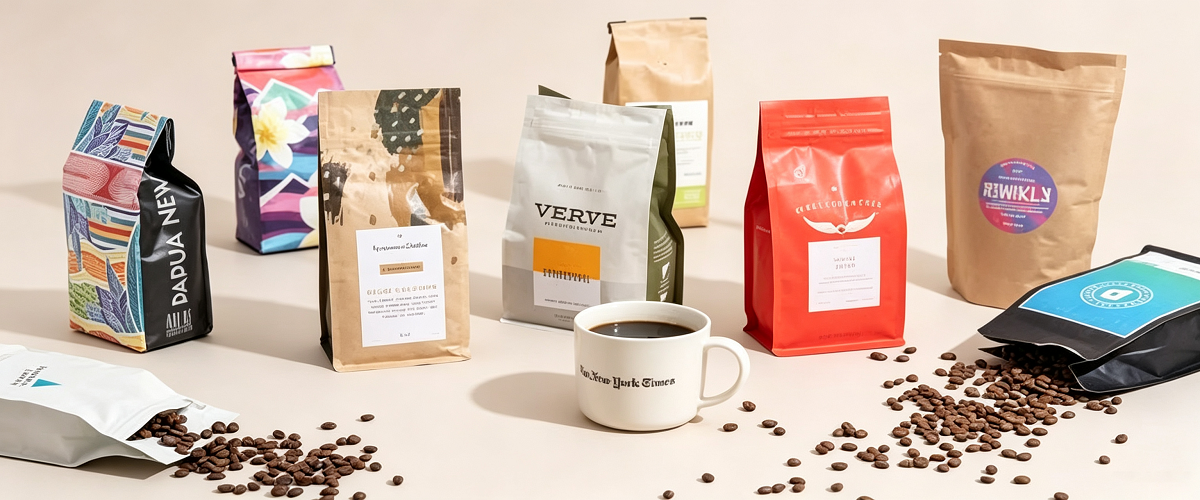
Flexible packaging has become a popular solution because it can combine high barrier protection with lightweight construction, customizable structures, convenient closures, and premium printing. Stand-up pouches, flat bottom bags, side-gusset bags, and other flexible formats can be engineered with high-barrier films and one-way degassing valves to help protect roasted coffee during its shelf life.
However, there is no universal packaging structure that is suitable for every high-altitude coffee product. Different roasting profiles, bean types, package sizes, distribution distances, storage environments, and market positioning can require different material combinations and functional features.
This guide explains how to choose flexible packaging for high-altitude coffee beans, focusing on bag formats, oxygen and moisture barriers, material selection, degassing systems, design features, export requirements, branding, and overall packaging performance.
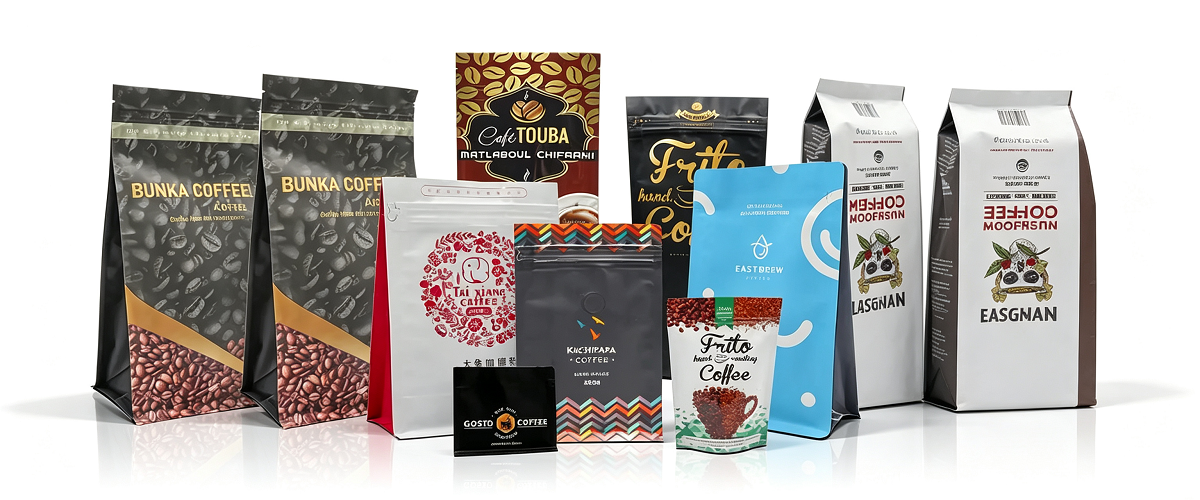
1. What Types of Flexible Packaging Are Best for High-Altitude Coffee Beans?
The ideal flexible packaging format depends on the coffee's positioning, package size, roasting profile, distribution channel, and consumer usage habits.
Specialty high-altitude coffee is often sold as a premium product, so packaging needs to protect the beans while also communicating quality and origin.
Stand-Up Pouches
Stand-up pouches are widely used for specialty coffee because they combine practical functionality with strong shelf presentation.
They can be suitable for:
- Whole high-altitude coffee beans
- Specialty coffee
- Single-origin coffee
- Small-batch roasted coffee
- Premium coffee blends
The bottom gusset allows the pouch to stand upright, while the broad front surface provides considerable space for branding and product storytelling.
A zipper can also be incorporated to provide resealing after opening.
Flat Bottom Coffee Bags
Flat bottom bags are particularly suitable for premium coffee brands.
They provide:
- Excellent shelf stability
- Large printable surfaces
- Strong premium appearance
- Efficient use of package space
- Compatibility with one-way degassing valves
The structured shape can create a distinctive specialty-coffee appearance while providing sufficient capacity for different fill weights.
Side Gusset Coffee Bags
Side gusset bags remain popular for traditional and specialty coffee packaging.
They can be suitable for:
- Larger coffee quantities
- Wholesale products
- Foodservice coffee
- Traditional coffee brands
- Export products
Their shape provides efficient filling and can accommodate larger quantities of beans.
Vacuum-Style Flexible Bags
Vacuum packaging can be considered for certain coffee applications, although freshly roasted whole beans require careful consideration because they continue to release carbon dioxide.
If the packaging system is designed for roasted coffee, degassing behavior should be evaluated before selecting a vacuum approach.
Small Specialty Coffee Pouches
Smaller pouches can be useful for:
- Coffee samples
- Limited-edition beans
- Tasting sets
- Subscription products
- Single-origin trial packs
These formats allow specialty brands to introduce consumers to different high-altitude origins without requiring a large purchase.
Coffee Bag Format Comparison
| Bag Type | Suitable Application | Main Advantage |
|---|---|---|
| Stand-Up Pouch | Specialty retail coffee | Convenience and shelf appeal |
| Flat Bottom Bag | Premium coffee | Stability and premium appearance |
| Side Gusset Bag | Larger coffee packs | High fill capacity |
| Small Pouch | Samples and specialty sets | Portion flexibility |
| Vacuum-Style Bag | Selected applications | Reduced air exposure |
For roasted high-altitude coffee, the bag format should always be selected together with the degassing system and barrier structure.
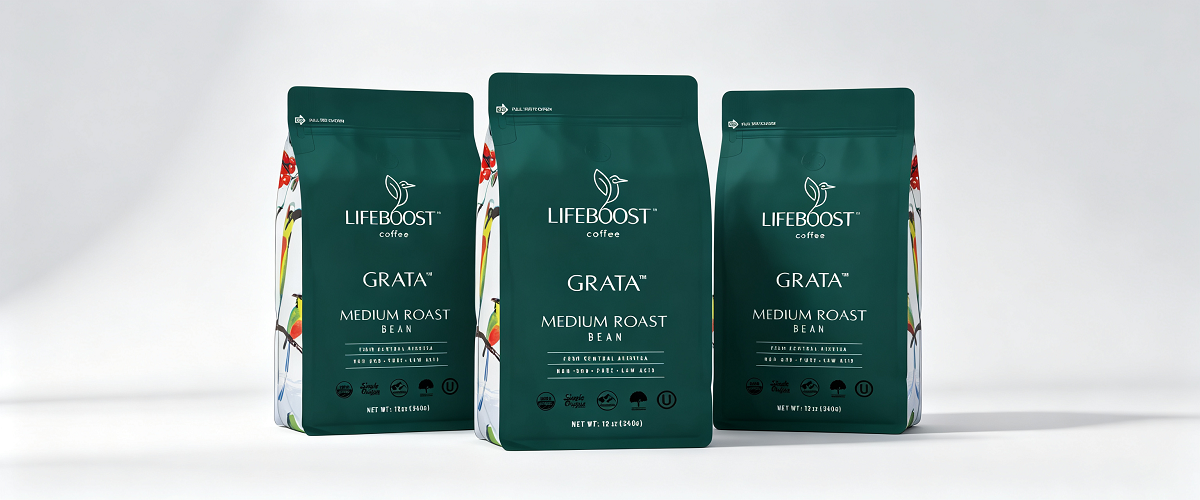
2. How Does Flexible Packaging Protect High-Altitude Coffee Beans from Oxygen, Moisture, and Light?
High-altitude coffee beans can have valuable volatile aroma compounds that contribute to their sensory profile. Once coffee is roasted, exposure to the external environment can gradually change its flavor and aroma.
Flexible packaging creates a controlled barrier between the beans and the surrounding environment.
Oxygen Protection
Oxygen is one of the most important factors affecting roasted coffee freshness.
Oxygen exposure can contribute to:
- Oxidation of coffee oils
- Aroma loss
- Stale flavors
- Changes in sensory quality
A high oxygen-barrier packaging structure can significantly reduce oxygen transmission through the package.
For specialty coffee, the packaging should be designed to minimize oxygen ingress while allowing appropriate carbon dioxide release through a one-way valve.
Moisture Protection
Coffee beans should also be protected from excessive moisture.
Moisture exposure can contribute to:
- Flavor deterioration
- Loss of roasting characteristics
- Reduced product stability
- Changes in physical properties
A suitable moisture barrier helps protect coffee during storage and transportation, particularly in humid regions.
This can be especially relevant when high-altitude coffee is exported from a dry production region to a humid destination.
Light Protection
Light can accelerate quality deterioration, particularly when coffee is exposed for extended periods.
Opaque or metallized packaging structures can provide stronger protection against light than fully transparent films.
For specialty coffee, brands may want to display the beans visually. A small controlled window can provide product visibility, but excessive transparent surface area may reduce protection.
Aroma Retention
Coffee's aroma is one of its most important value attributes.
Packaging needs to minimize:
- Aroma loss
- External odor migration
- Interaction between the product and packaging
A suitable high-barrier laminate can help preserve the aromatic characteristics of roasted beans.
Temperature and Environmental Changes
Packaging cannot completely eliminate the effects of temperature fluctuations, but it can help maintain product protection when combined with appropriate storage and distribution practices.
Export coffee may experience:
- Warehouse temperature changes
- Container temperature fluctuations
- Long transit times
- Humidity changes
- Repeated handling
The packaging should therefore be evaluated under realistic distribution conditions.
Protection Comparison
| Environmental Risk | Packaging Response |
|---|---|
| Oxygen | High oxygen-barrier layer |
| Moisture | High moisture-barrier layer |
| Light | Opaque or metallized structure |
| External Odors | Strong aroma barrier |
| Temperature Fluctuation | Appropriate laminate and storage |
| Mechanical Stress | Strong outer film and seals |
The objective is to create a packaging system that protects the coffee throughout its complete distribution cycle.
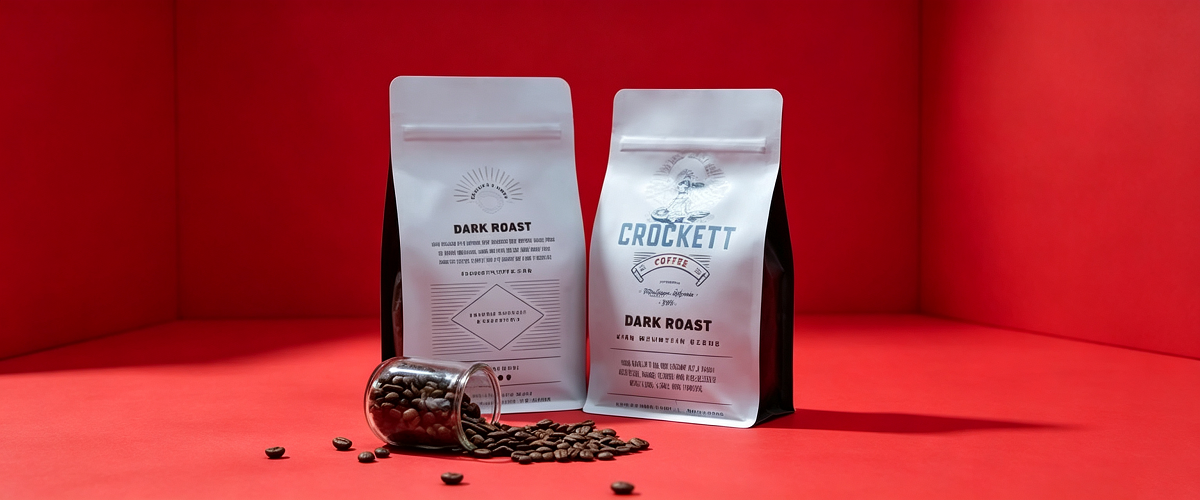
3. Which Packaging Materials Provide the Best Barrier Performance for Specialty Coffee Beans?
Material selection is one of the most important decisions when developing flexible packaging for high-altitude coffee.
Different films provide different combinations of mechanical strength, barrier performance, printability, flexibility, and sealing characteristics.
PET
PET is commonly used as an outer layer in coffee packaging.
It provides:
- Mechanical strength
- Dimensional stability
- Good printability
- Surface durability
- Resistance to handling damage
PET is generally combined with additional barrier and sealing layers to create the complete structure.
BOPP
BOPP can provide:
- Good stiffness
- Attractive appearance
- Printability
- Moisture resistance
- Cost efficiency
It can be used in certain coffee packaging structures depending on the required barrier performance.
PE and LLDPE
PE-based films are commonly used as inner sealing layers.
They provide:
- Heat-sealing performance
- Flexibility
- Toughness
- Moisture resistance
- Good processability
The sealing layer is particularly important because a high-barrier film cannot compensate for weak or defective seals.
VMPET
Metallized PET can provide enhanced protection against:
- Oxygen
- Moisture
- Light
It is often considered when a brand wants strong barrier performance while maintaining a flexible multilayer structure.
Aluminum Foil
Aluminum foil provides a very high barrier against:
- Oxygen
- Moisture
- Light
- External odors
Foil-based structures can be considered for premium specialty coffee or products requiring particularly strong protection.
However, the additional material complexity should be considered when sustainability and recyclability are important.
EVOH and Other Barrier Films
Specialized barrier layers can be incorporated into flexible packaging where specific oxygen-barrier requirements exist.
The appropriate barrier technology should be selected according to the coffee's shelf-life target, packaging process, and distribution conditions.
Common Coffee Packaging Structures
| Structure | Main Benefit | Possible Application |
|---|---|---|
| PET/PE | Strength and basic protection | Shorter shelf-life applications |
| BOPP/PE | Cost efficiency and flexibility | Selected coffee products |
| PET/VMPET/PE | Strong oxygen, moisture, and light barrier | Specialty coffee |
| PET/AL/PE | Very high barrier | Premium and export coffee |
| Barrier Mono-Material Structure | Recyclability potential | Sustainability-focused products |
The exact laminate should be selected according to actual product requirements rather than simply choosing the highest barrier available.
Why the Sealing Layer Matters
Coffee packaging performance depends on the complete package.
Even an excellent barrier laminate can fail if the heat seals allow oxygen or moisture to enter.
Important considerations include:
- Seal strength
- Seal width
- Filling conditions
- Product contamination
- Sealing temperature
- Pressure
- Dwell time
Packaging suppliers and coffee producers should validate the finished package rather than evaluating film performance alone.
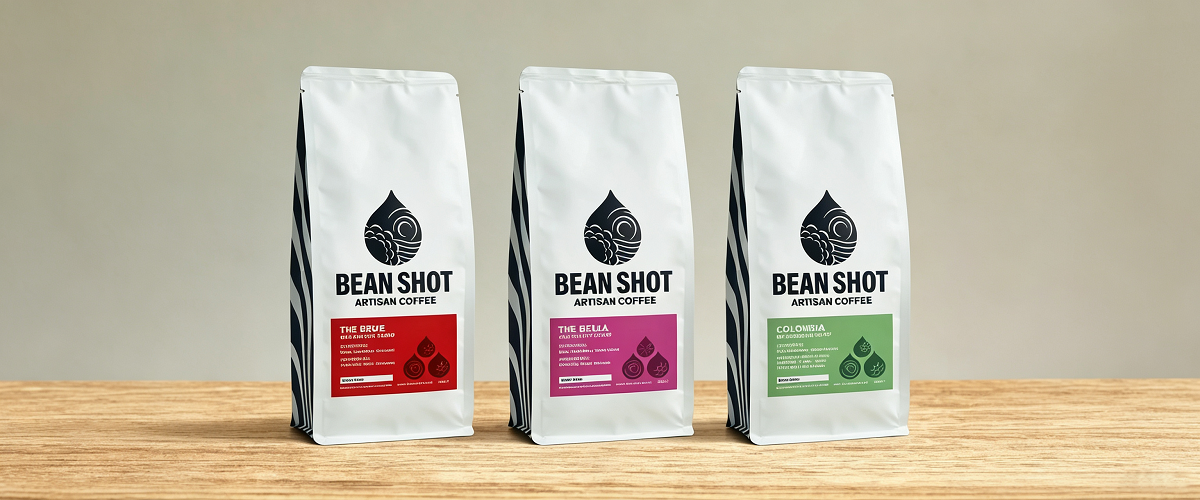
4. What Packaging Features Should You Consider for Coffee Freshness and Degassing?
High-altitude specialty coffee often requires packaging features that go beyond basic film protection.
The most important feature for freshly roasted whole beans is usually the one-way degassing valve.
One-Way Degassing Valves
Freshly roasted coffee releases carbon dioxide as part of the post-roast degassing process.
If the gas accumulates inside a completely sealed package, internal pressure can increase and potentially cause package deformation or failure.
A one-way valve provides a controlled pathway for carbon dioxide to escape while helping prevent outside air from entering.
This makes the valve particularly valuable for freshly roasted whole-bean coffee.
Valve Placement
The valve is commonly positioned on the front or upper portion of the coffee bag.
Its position should be selected according to:
- Bag dimensions
- Filling level
- Product volume
- Branding layout
- Consumer visibility
The valve should not interfere with important printed information.
Resealable Zippers
A zipper can improve freshness after the package has been opened.
It can help consumers:
- Open the package repeatedly
- Close the bag after use
- Reduce unnecessary exposure
- Store remaining beans more conveniently
For premium retail coffee, the combination of a high-barrier structure, valve, and zipper can provide a strong balance of freshness protection and convenience.
Tear Notches
A tear notch allows consumers to open the bag easily without scissors.
This small feature can improve the first-use experience.
Flat Bottom and Gusseted Construction
A stable bottom can improve:
- Shelf presentation
- Storage
- Handling
- Package stability
For premium coffee brands, structural appearance can also contribute to perceived product value.
Controlled Transparent Windows
A small window can allow consumers to see the coffee beans.
However, the size should be carefully considered because transparency can reduce light protection.
For specialty coffee, brands often need to balance visual product inspection with freshness protection.
Functional Feature Comparison
| Feature | Main Benefit |
|---|---|
| One-Way Valve | Releases CO₂ after roasting |
| Zipper | Resealable after opening |
| Tear Notch | Easy opening |
| Flat Bottom | Stable shelf presentation |
| Gusset | Increased capacity and stability |
| Window | Product visibility |
| High-Barrier Laminate | Oxygen, moisture, and light protection |
5. Flexible Packaging for High-Altitude Coffee Beans: Key Factors for Freshness, Branding, and Export
High-altitude coffee is often sold as a premium or specialty product, which means packaging needs to perform both technically and commercially.
Freshness Requirements
Packaging should be selected according to:
- Roast date
- Roast profile
- Bean characteristics
- Desired shelf life
- Distribution duration
- Storage environment
Freshly roasted coffee generally requires stronger attention to oxygen control and degassing than products that have already undergone extended stabilization.
Branding and Origin Storytelling
High-altitude coffee often has a strong geographic identity.
Packaging can communicate:
- Growing altitude
- Country of origin
- Region
- Farm or estate
- Variety
- Processing method
- Roast profile
- Flavor notes
- Producer information
This turns the flexible pouch into an important storytelling tool rather than simply a protective container.
Premium Printing and Finishes
Specialty coffee brands can use flexible packaging to create a distinctive visual identity through:
- Matte finishes
- Gloss finishes
- Metallic effects
- Spot effects
- High-resolution graphics
- Minimalist typography
- Premium textures
The design should reinforce the positioning of the coffee rather than overwhelm the product story.
Export Requirements
High-altitude coffee is often exported internationally, so packaging may need to withstand extended transportation.
Potential distribution challenges include:
- Long transit times
- Temperature fluctuations
- Humidity
- Pressure changes
- Vibration
- Compression
- Repeated handling
Packaging should therefore be tested under realistic supply-chain conditions.
Pressure Changes During Air Transportation
Air shipment can create pressure changes that are relevant to coffee packaging.
Because roasted coffee continues to release carbon dioxide, the degassing system becomes particularly important when the product is transported by air.
The packaging should be evaluated according to the intended transportation method.
Sustainability Considerations
Coffee brands increasingly consider recyclable packaging and reduced material use.
Potential approaches include:
- Mono-material structures
- Reduced film thickness
- Recyclable PE-based structures
- Lightweight packaging
- Reduced secondary packaging
However, sustainability should not compromise the barrier and degassing performance required to protect premium coffee.
Cost vs. Performance
A premium high-barrier structure may cost more than a basic laminate, but the additional packaging investment can be justified when protecting high-value coffee.
The evaluation should consider total product value rather than packaging cost alone.
A suitable structure should provide the necessary:
- Oxygen barrier
- Moisture barrier
- Light protection
- Mechanical strength
- Seal performance
- Degassing capability
High-Altitude Coffee Packaging Checklist
| Factor | Key Question |
|---|---|
| Coffee Type | Whole bean or ground coffee? |
| Roast | How fresh is the roast at filling? |
| Degassing | Is a one-way valve required? |
| Oxygen | What oxygen barrier is needed? |
| Moisture | What moisture protection is required? |
| Light | Does the coffee need opaque packaging? |
| Size | What fill weight is required? |
| Closure | Is a zipper required? |
| Branding | How should origin and specialty positioning be communicated? |
| Transportation | Sea, land, air, or mixed distribution? |
| Sustainability | Can recyclable materials meet performance requirements? |
| Cost | Does the structure match the product's market position? |
6. FAQ
Why Does High-Altitude Coffee Need High-Barrier Packaging?
High-altitude coffee is often positioned as specialty coffee with valuable aroma and flavor characteristics. High-barrier packaging can help reduce oxygen, moisture, light, and external odor exposure, helping preserve these characteristics after roasting.
What Is the Best Packaging for High-Altitude Coffee Beans?
Flat bottom bags, stand-up pouches, and side-gusset coffee bags can all be suitable. For freshly roasted whole beans, a high-barrier structure combined with a one-way degassing valve is often an important consideration.
Do High-Altitude Coffee Beans Need a Degassing Valve?
If the coffee is freshly roasted and packaged as whole beans, a one-way degassing valve is generally an important packaging feature because roasted coffee continues to release carbon dioxide after roasting.
Is Aluminum Foil Necessary for Specialty Coffee?
Not necessarily. Metallized films and other high-barrier structures can provide strong protection for many coffee applications. Aluminum foil may be selected when particularly high barrier performance is required.
Should Coffee Bags Have a Zipper?
A zipper is useful for retail coffee because consumers often open the package multiple times. It can make resealing easier and help protect the remaining beans after opening.
Can High-Altitude Coffee Be Packaged in Recyclable Flexible Bags?
Potentially. Recyclable mono-material structures are being developed for coffee applications, but the final design must still provide sufficient oxygen and moisture protection, seal performance, and compatibility with the degassing valve.
Is Flexible Packaging Suitable for Exporting High-Altitude Coffee?
Yes. Flexible coffee bags can be designed for international distribution. For export applications, the complete package should be evaluated for long transit times, humidity, temperature changes, vibration, compression, and other transportation conditions.
Can Coffee Packaging Communicate the Origin of High-Altitude Beans?
Absolutely. Flexible packaging provides a large printable surface that can be used to communicate growing region, altitude, farm, processing method, variety, roast profile, tasting notes, and other specialty-coffee information.
7. Conclusion
Choosing the right flexible packaging for high-altitude coffee beans requires a careful balance between freshness protection, degassing, material performance, convenience, branding, export durability, sustainability, and cost.
Stand-up pouches, flat bottom bags, and side-gusset bags can all provide effective packaging formats for specialty coffee, but the most important consideration is the complete packaging system. A high-quality coffee bag should provide appropriate oxygen and moisture barriers, reliable seals, sufficient mechanical strength, and—when required—a properly designed one-way degassing valve.
Material selection can involve PET, BOPP, PE, LLDPE, nylon, VMPET, aluminum foil, and other barrier films, depending on the product and market requirements. The ideal structure is not necessarily the most complex one. Instead, it should provide the level of protection required for the coffee's expected shelf life and distribution conditions.
Functional features such as one-way valves, resealable zippers, tear notches, stable gussets, and controlled transparent windows can further improve the consumer experience while supporting freshness and product presentation.
For specialty and high-altitude coffee, packaging also plays a major role in branding. The large printable surface can communicate the coffee's origin, altitude, farm, variety, processing method, roast profile, and flavor characteristics, transforming the package into an important part of the product story.
For export markets, the package must be able to withstand long transportation periods, environmental fluctuations, vibration, compression, and handling. Air transportation may require particular attention to pressure changes and degassing performance.
Ultimately, the right flexible packaging for high-altitude coffee beans is the solution that protects the coffee's sensory qualities while supporting the brand's positioning and distribution strategy. When barrier protection, degassing performance, structural design, premium appearance, sustainability, and cost are considered together, flexible packaging can help preserve the distinctive character and market value of specialty coffee from roasting facility to consumer.