How to Choose the Right Flexible Packaging for Spices?
Anna_Yu
How to Choose the Right Flexible Packaging for Spices?
Spices are among the most aroma-sensitive, oxidation-prone, and value-dense food products in the global food supply chain. From whole spices like peppercorns and cinnamon sticks to ground powders such as chili, turmeric, and cumin, spices are highly vulnerable to moisture, oxygen, light, and aroma loss. A minor packaging mistake can lead to clumping, fading color, loss of flavor intensity, or even microbial risks—directly impacting consumer perception and repeat purchases.
In recent years, flexible packaging has become the dominant packaging format for spices, gradually replacing glass jars, tins, and paper boxes in many markets. The reasons are clear: flexible packaging offers superior barrier performance, lower logistics costs, greater design flexibility, and better compatibility with modern retail and e-commerce channels.
However, not all flexible packaging is suitable for spices. Different spice forms, target markets, shelf-life requirements, and export destinations require very specific material structures, bag types, and functional features. This article provides a comprehensive, industry-oriented guide to help spice brands, exporters, and manufacturers choose the right flexible packaging. We will analyze bag types, barrier properties, material selection, functional features, and long-term storage considerations—so you can make packaging decisions that protect product quality while strengthening your brand.
1. What Types of Flexible Packaging Are Best for Spices?
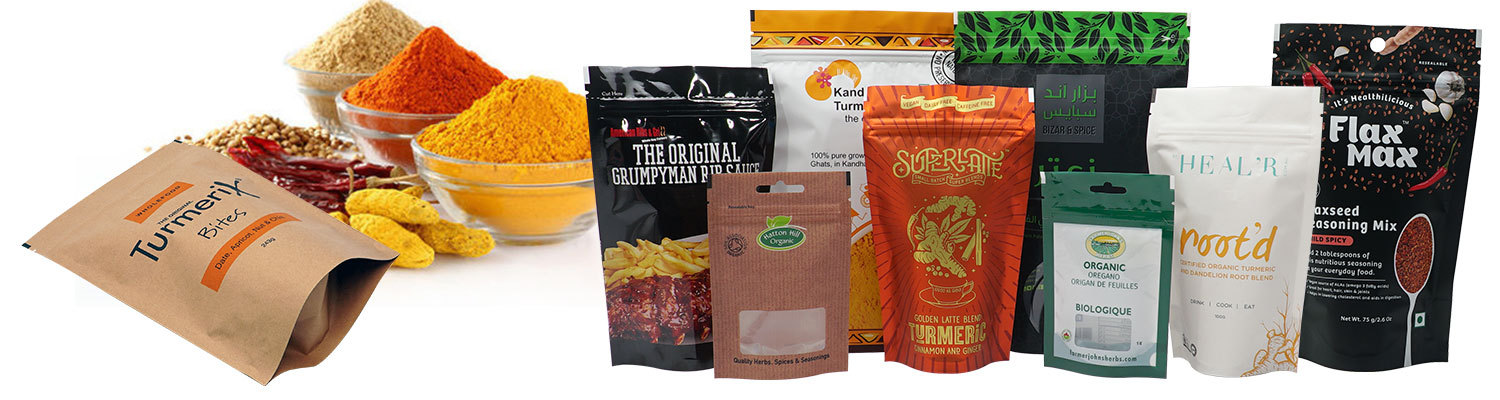
The optimal flexible packaging bag for spices depends on spice form, serving size, usage frequency, and sales channel.
Stand-Up Pouches (Doypacks)
Stand-up pouches are the most widely used flexible packaging format for spices. They are suitable for:
- Ground spices and spice blends
- Whole spices (pepper, cloves, star anise)
- Retail-ready consumer packaging
Their ability to stand upright improves shelf visibility, while compatibility with zippers enhances usability.
Flat Bottom Bags (Box Pouches)
Flat bottom bags are often used for premium or bulk spice products. They offer:
- Excellent stability and load capacity
- Five printable panels for branding and regulatory information
- A strong, premium shelf presence
These bags are especially popular for export-oriented and private-label spice brands.
Pillow Bags and 3-Side Seal Bags
These bag types are commonly used for:
- Single-use sachets
- Foodservice and industrial spice packaging
- Sampling and promotional packs
They are cost-effective and ideal for high-speed filling lines.
Stick Packs
Stick packaging is suitable for:
- Single-serve spice seasonings
- Instant spice mixes and meal kits
They offer precise portion control and strong convenience for on-the-go or foodservice use.
2. How Do Barrier Properties Affect Spice Freshness and Aroma Retention?
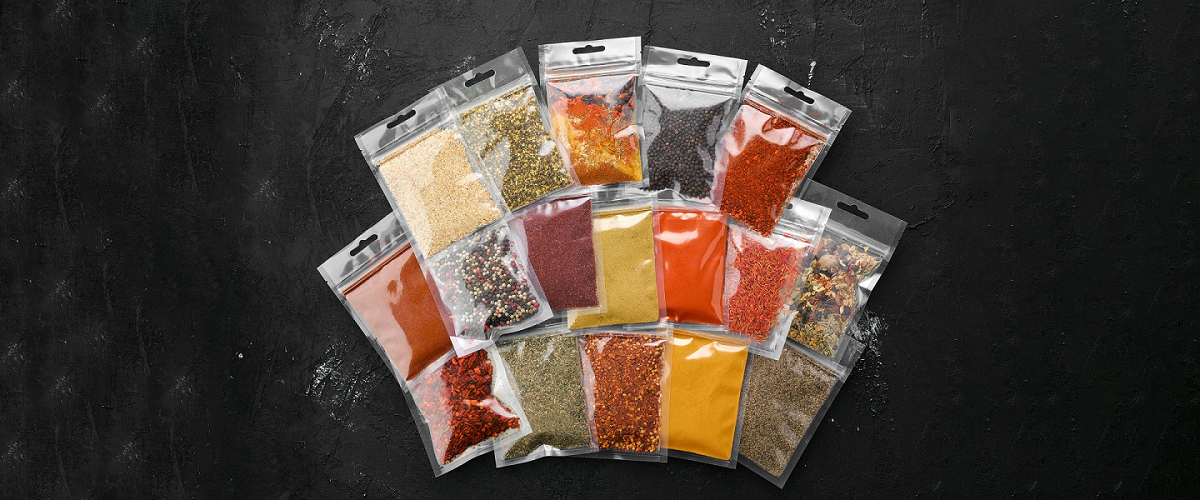
Barrier performance is the most critical factor in spice packaging. Spices lose value rapidly when exposed to unfavorable environmental conditions.
Oxygen Barrier
Oxygen causes:
- Oxidation of essential oils
- Loss of aroma intensity
- Fading of natural color
High oxygen barrier materials help preserve the volatile compounds responsible for spice flavor.
Moisture Barrier
Moisture is a major enemy of spices, especially powders. Poor moisture resistance leads to:
- Clumping and caking
- Mold growth
- Reduced flowability
Effective moisture barriers are essential for long-term storage and humid climates.
Light Barrier
UV light degrades:
- Natural pigments (e.g., paprika, turmeric)
- Nutritional components
- Aroma compounds
Metallized or aluminum-based layers provide excellent light protection.
Aroma Retention and Migration Control
Spices are highly aromatic. Without proper barriers, aromas can escape—or external odors can migrate into the packaging. High-barrier laminates help lock in fragrance and maintain product authenticity.
3. Which Packaging Materials Are Most Suitable for Different Types of Spices?
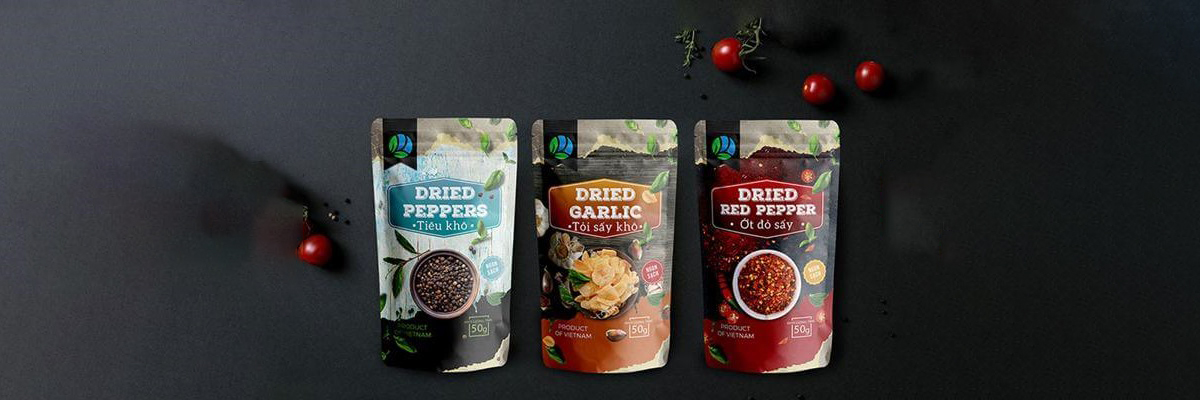
Different spices require different material structures depending on oil content, grind size, and sensitivity.
Common Materials Used in Spice Flexible Packaging
- PET (Polyester): Strength, print quality, heat resistance
- BOPP: Cost-effective stiffness and clarity
- PE / LLDPE: Food-safe inner sealing layer
- VMPET (Metallized PET): Enhanced barrier with reduced cost
- Aluminum Foil (AL): Maximum oxygen, moisture, and light barrier
Material Recommendations by Spice Type
| Spice Type | Recommended Structure | Reason |
|---|---|---|
| Ground spices | PET/VMPET/PE | Strong aroma and moisture protection |
| Whole spices | BOPP/VMPET/PE | Good barrier with cost efficiency |
| High-oil spices | PET/AL/PE | Maximum oxidation protection |
| Premium spices | PET/AL/PE or PET/VMPET/PE | Long shelf life and premium perception |
Selecting the correct laminate structure directly impacts shelf life, export viability, and brand reputation.
4. What Features Should You Look for in Spice Flexible Packaging Bags?
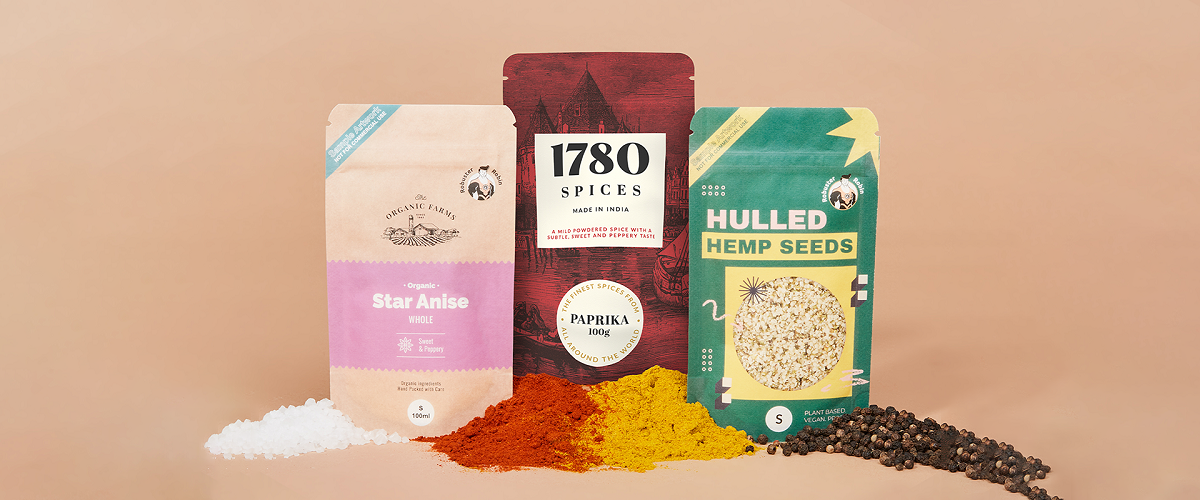
Beyond materials and bag shape, functional features play a key role in consumer satisfaction and product protection.
Resealable Closures
Zippers or Velcro-style closures help:
- Maintain freshness after opening
- Reduce waste
- Improve user convenience
Resealability is now an expected feature in retail spice packaging.
Easy-Open and Tear Notches
Controlled opening prevents spillage and enhances first-use experience.
High-Quality Printing and Finishes
Matte finishes, spot UV, and metallic effects elevate shelf appeal and help spices stand out in competitive retail environments.
Transparent Windows (Optional)
Small transparent windows allow consumers to see spice color and texture. However, window size must be carefully controlled to avoid excessive light exposure.
Compliance-Friendly Design
Adequate space for:
- Ingredient lists
- Origin information
- Certifications and regulatory markings
is essential, especially for export markets.
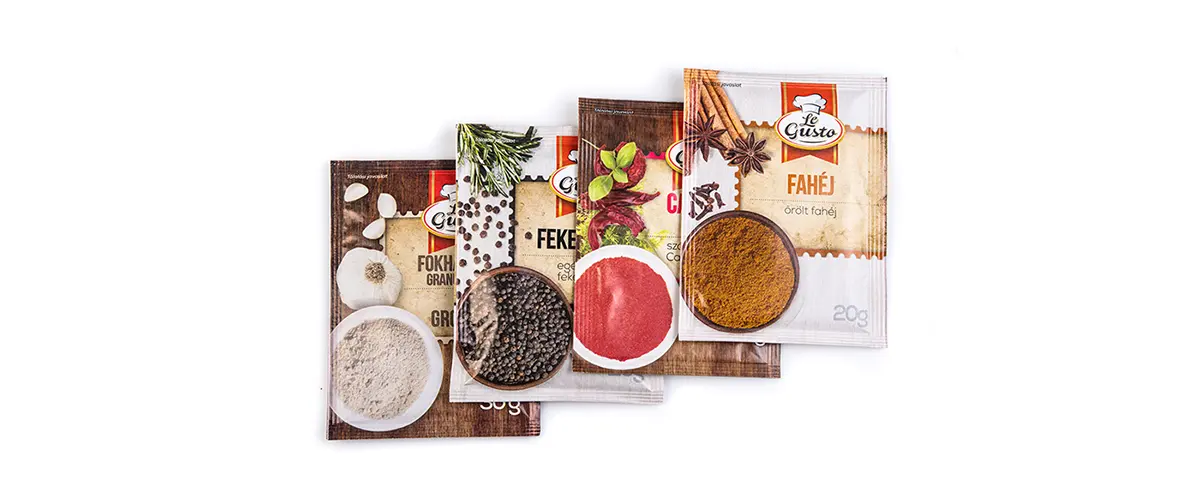
5. Flexible Packaging for Spices: Key Factors to Consider for Long-Term Storage and Export
For long-term storage and international trade, packaging decisions must go beyond basic functionality.
Climate and Transportation Conditions
Spices exported to tropical or coastal regions require enhanced moisture and oxygen barriers to withstand humidity and temperature fluctuations.
Shelf-Life Expectations
Retail spices often require 12–24 months of shelf life. High-barrier flexible packaging is essential to meet these expectations without preservatives.
Regulatory Compliance
Packaging materials must comply with food-contact regulations in destination markets such as:
- FDA (USA)
- EU food contact standards
- Local import regulations
Cost vs. Performance Balance
While aluminum foil structures offer maximum protection, metallized films may provide a cost-effective alternative for mid-range products.
Sustainability Considerations
Recyclable mono-material structures and reduced material thickness are becoming increasingly important as sustainability influences purchasing decisions.
FAQ
What is the best flexible packaging for ground spices?
High-barrier stand-up pouches made from PET/VMPET/PE or PET/AL/PE are ideal.
Do spices really need high-barrier packaging?
Yes. Spices are extremely sensitive to oxygen, moisture, and light, making barrier performance critical.
Are transparent windows recommended for spice packaging?
They can be used sparingly, but excessive transparency may reduce shelf life.
Is flexible packaging suitable for spice export?
Absolutely. High-barrier flexible packaging is widely used for global spice exports.
Conclusion
Choosing the right flexible packaging for spices is a strategic decision that directly affects product quality, shelf life, brand perception, and market competitiveness. By carefully evaluating bag types, barrier properties, material structures, and functional features, spice brands can protect aroma, preserve freshness, and meet the demands of both domestic and international markets. In a category where sensory quality defines value, smart packaging is not just a container—it is a critical part of the product itself.