How to Choose the Right Packaging for Your Candy?
Anna_Yu
How to Choose the Right Packaging for Your Candy?
Selecting the right packaging for candy is far more strategic than many people realize. Modern consumers evaluate confectionery products not only by taste but also by presentation, convenience, protection, freshness, and brand identity. With the global candy market continuously expanding, packaging has evolved from a simple protective layer to a crucial marketing, preservation, and brand-building tool. Candy products come in countless shapes, textures, and formulations—gummies, hard candies, chocolates, mints, caramels, coated nuts, and more—and each category has specific storage, moisture-control, and shelf-life needs. As a result, the choice of packaging directly influences product stability, customer satisfaction, and even the long-term success of a confectionery brand.
In today’s competitive retail environment, brands are increasingly adopting flexible packaging, advanced barrier materials, personalized designs, and eco-friendly solutions to match modern expectations. Whether you're selling mass-market candies or premium artisanal sweets, the right packaging can enhance product value, improve shelf appeal, and maintain freshness. This guide provides an in-depth explanation of the most common candy packaging types, materials, selection criteria, and future industry trends. You'll gain a complete understanding of how to choose ideal packaging solutions based on your product characteristics, target market, production scale, and brand positioning.
1. What are some common types of bags used for candy packaging?
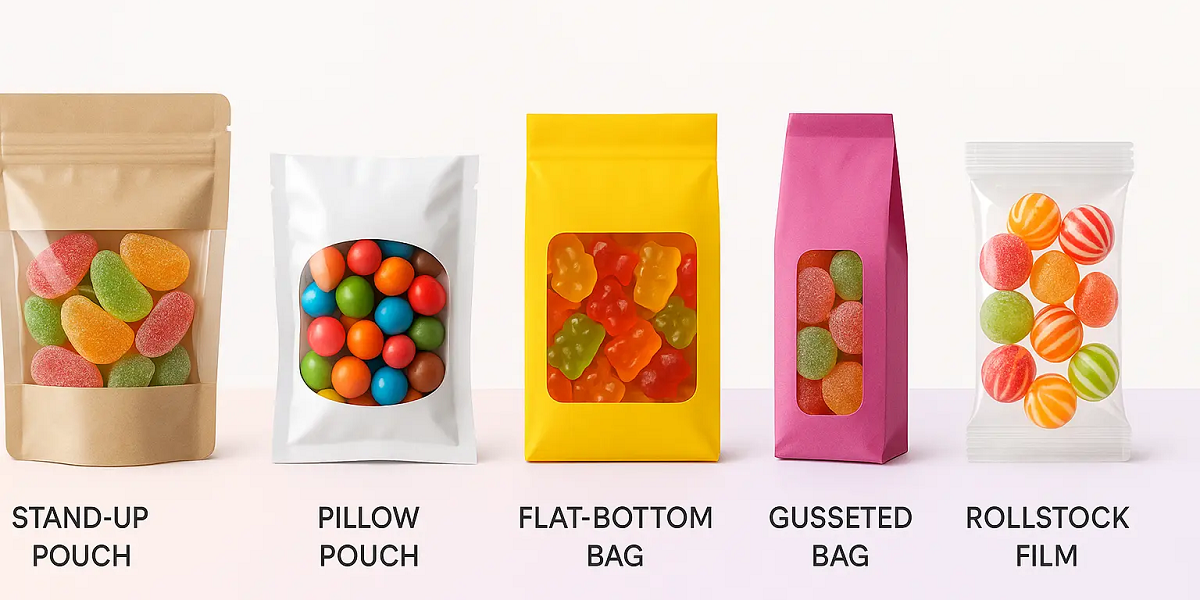
Candy packaging must satisfy multiple requirements: moisture protection, aroma retention, oxygen control, hygiene, convenience, and branding needs. The following are the most commonly used bag types in the candy industry:
➤ Stand-Up Pouches
Stand-up pouches are widely used for gummies, chocolates, jelly candies, and mixed confectionery. Their flat bottom allows the pouch to stand upright on shelves, improving visibility and premium appeal. They also support zippers, tear notches, windows, matte textures, spot UV, and metallic finishes—making them a favorite for retail brands.
➤ Pillow Pouches
Known for their cost-effectiveness and efficiency in high-speed packaging, pillow pouches are commonly used for individually wrapped candies, mints, and small confectionery units. They offer great sealing performance but have less visual appeal compared to stand-up or flat-bottom pouches.
➤ Flat Pouches
Flat pouches (3-side seal bags) are suitable for single-serving candy packs or premium chocolate samples. They are lightweight, simple, and easy to customize with windows and gloss or matte finishes.
➤ Flat Bottom Bags / Box Pouches
These bags offer the highest shelf appeal. Their shape resembles a box, giving them stability and superior branding surface area. They are ideal for gourmet candies, chocolate-covered nuts, and premium assortments.
➤ Gusset Bags
Side-gusset bags are traditional packaging for large candy quantities and bulk items. They expand to accommodate higher volumes and are commonly used in wholesale or warehouse club retail.
➤ Single-Serve or Stick Packs
These are narrow, convenient packs used for mints, sugar-coated candies, or functional candy products aimed at on-the-go consumers.
Each bag type has unique benefits, cost implications, and compatibility with different candy categories, making selection an essential part of your packaging strategy.
2. What are some common raw materials used in candy packaging?
Modern candy packaging uses multi-layer flexible materials tailored for moisture, oxygen, grease, and aroma control. Some of the most commonly used materials include:
➤ BOPP (Biaxially Oriented Polypropylene)
BOPP is one of the most common candy packaging materials because it is:
- Crystal-clear and glossy
- Moisture-resistant
- Low-cost
- Printable with gravure or digital printing
Perfect for candies where visibility or cost control matters.
➤ PET (Polyester Film)
PET provides:
- Strength and durability
- Heat resistance
- Excellent clarity
- Good oxygen barrier
Often used as the outer layer in laminated candy bags.
➤ Aluminum Foil
Aluminum foil provides the highest barrier performance, making it suitable for:
- Chocolate
- Caramel
- Heat-sensitive candies
It protects against oxygen, moisture, light, and odors.
➤ Metalized PET (MPET)
MPET offers foil-like properties at lower cost and lower weight, making it ideal for:
- Gummies
- Chocolate-coated items
- Sugar candies requiring extended shelf life
➤ PE (Polyethylene)
Commonly used as the sealing layer due to its:
- Heat-sealing properties
- Flexibility
- Compatibility with food contact
➤ Kraft Paper (with barrier layers)
Paper-based packaging is used for:
- Premium candy lines
- Eco-friendly brands
However, traditional kraft paper needs barrier lamination (e.g., PE, PLA, or foil) for adequate protection.
➤ Biodegradable & Compostable Materials
Emerging options include:
- PLA
- PBS
- Kraft + bio-film
- Cellulose-based films
These are widely used by sustainable brands and artisan candy makers.

3. What factors should be considered when choosing candy packaging materials?
Choosing the right packaging involves balancing product properties, shelf-life needs, customer expectations, and cost efficiency. Here are the main factors:
✔ Moisture Sensitivity
Candies like gummies and marshmallows absorb moisture easily, causing stickiness. Conversely, hard candies may become sticky or grainy in humid environments.
Materials needed:
- BOPP
- MET-PET
- Foil-laminated films
✔ Oxygen Sensitivity
Chocolates and fatty candies oxidize when exposed to air, leading to:
- Whitening (fat bloom)
- Off-flavors
- Texture degradation
Best materials:
- Foil
- MET-PET
- Multi-layer structures with EVOH
✔ Temperature Sensitivity
Heat can melt many confectionery items. PET and foil laminates offer higher heat resistance for shipping and storage.
✔ Aroma Retention
Candy flavors are strong and require packaging that keeps scent inside.
Suitable materials:
- Foil laminates
- MET-PET
- High-barrier PE
✔ Branding & Shelf Appeal
Premium candy brands often choose:
- Matte finishes
- Spot UV
- Window patches
- Embossing
- Custom shapes
Flexible packaging supports all these design options.
✔ Sustainability
Eco-conscious consumers look for:
- Compostable films
- Recyclable mono-material bags (PE/PE, PET/PET)
- Paper-based structures
✔ Cost and Production Scale
For high-volume products, pillow pouches and BOPP films remain cost-effective. For premium chocolates, flat-bottom bags or kraft-based designs offer elevated branding at reasonable costs.
4. What are the future trends in candy packaging?
Candy packaging is rapidly evolving as consumer expectations shift. Major trends include:
➤ Sustainable & Recyclable Materials
Brands are increasingly adopting:
- Mono-material PE or PP structures
- Recyclable PET solutions
- Compostable materials
- Paper-based packaging
➤ Smart Packaging & QR Codes
Digital elements on packaging help:
- Track product authenticity
- Offer nutritional details
- Provide promotions or brand stories
- Enhance consumer engagement
➤ High-Resolution and Hyper-Realistic Printing
Digital printing enables:
- Small batch production
- Rapid customization
- Limited-edition packaging for holidays
- Vibrant and detailed graphics
➤ Convenience-Focused Designs
More brands now add:
- Zippers
- Tear notches
- Easy-pour spouts
- Resealable closures
as consumers expect packaging to deliver functionality, not just protection.
➤ Minimalist & Premium Aesthetic
Clean labels, matte textures, and elegant designs are becoming the new norm for premium confectionery.
➤ Barrier Advancements
Improved oxygen and moisture barriers extend shelf life and ensure product stability without resorting to heavy foil structures.
FAQ
Q1: What is the best packaging for chocolate?
Aluminum foil laminates or high-barrier MET-PET structures to protect from oxygen and light.
Q2: Can candy packaging be environmentally friendly?
Yes. Mono-material recyclable bags and compostable pouches are increasingly available.
Q3: Are stand-up pouches better than pillow bags?
Stand-up pouches offer better shelf appeal and resealability. Pillow bags are more cost-effective for mass production.
Q4: What is the best material for moisture-sensitive gummies?
MET-PET or foil laminates, paired with resealable zippers.
Q5: Can window packaging affect candy freshness?
If properly laminated with barrier materials, windows do not compromise freshness.
Conclusion
Candy packaging plays an essential role in preserving taste, ensuring freshness, enhancing shelf appeal, communicating brand values, and meeting sustainability expectations. Whether you produce gummies, chocolates, hard candies, or artisanal sweets, selecting the appropriate bag type and material is crucial. Understanding barrier performance, branding needs, moisture sensitivity, and market trends will help you create packaging that elevates your product and wins consumer trust. With ongoing advancements in flexible packaging, high-quality printing, and eco-friendly materials, candy brands have more options than ever to differentiate themselves and build a competitive edge.