How to Select Flexible Packaging Bags for Multigrain Rice
Anna_Yu
How to Select Flexible Packaging Bags for Multigrain Rice
Multigrain rice has become an increasingly popular food product among consumers seeking variety, convenience, and more diverse everyday meals. Combining rice with grains such as brown rice, black rice, millet, quinoa, oats, barley, sorghum, and other cereal ingredients allows brands to develop products for different cooking habits, dietary preferences, and retail markets. However, the diversity of ingredients also makes multigrain rice packaging more complicated than packaging conventional white rice.
Different grains can have different moisture levels, kernel sizes, oil contents, surface characteristics, and storage requirements. Brown rice and certain whole grains contain more natural oils than polished white rice, which can make them more susceptible to oxidation and flavor deterioration during prolonged storage. Small grains and broken kernels can create dust that accumulates around sealing areas, while sharp or irregular grain edges may increase the risk of punctures during transportation. At the same time, multigrain rice must be protected against moisture fluctuations, insects, external odors, and contamination throughout the supply chain.
Flexible packaging offers a practical solution for these challenges. Compared with many rigid packaging formats, flexible bags can reduce shipping volume, support efficient filling operations, provide a wide range of barrier options, and accommodate customized designs for supermarkets, specialty food stores, online retailers, and export markets. From transparent rice bags to high-barrier stand-up pouches and large-capacity bulk packaging, the available formats allow manufacturers to match the package to the product rather than relying on a single packaging solution.
Nevertheless, choosing the right bag involves more than selecting a size or attractive design. Packaging performance depends on the grain mixture, product weight, expected storage period, local climate, distribution method, filling equipment, and target price point. A package suitable for a small retail bag of polished white rice may not provide sufficient protection for a premium multigrain blend containing brown rice, seeds, and other oil-rich ingredients. Likewise, a high-barrier laminate may be unnecessary for a fast-moving product sold locally if a properly designed, tested, and sealed alternative can meet the same requirements.
This guide explains how to select flexible packaging bags for multigrain rice by examining suitable bag formats, moisture and contamination protection, material structures, functional features, and the practical factors that affect freshness, shelf life, branding, and distribution. Whether you are a rice processor, food manufacturer, private-label brand, distributor, or packaging buyer, understanding these factors can help you choose packaging that protects product quality while balancing production efficiency, cost, and market expectations.
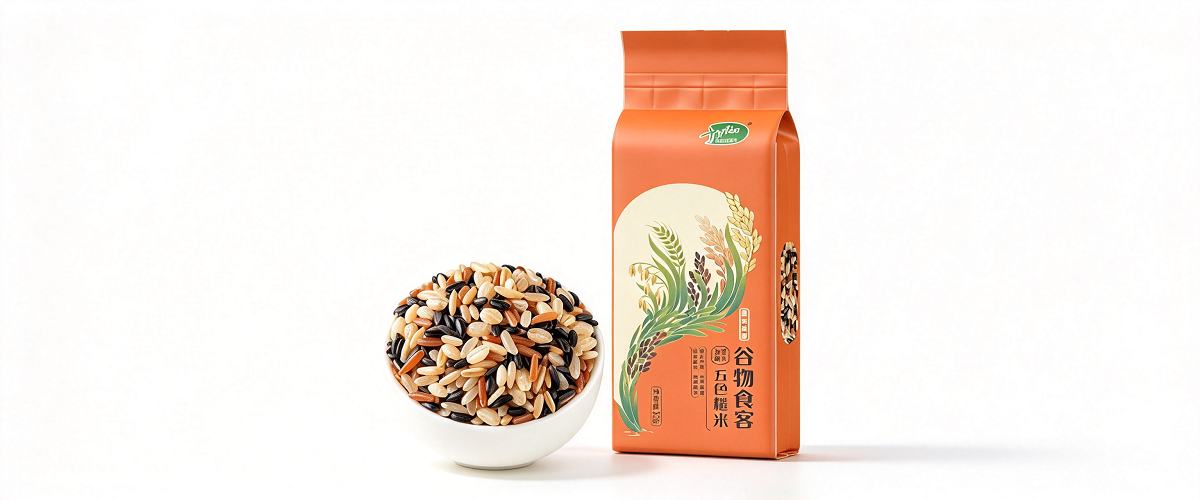
1. What Types of Flexible Packaging Bags Are Best for Multigrain Rice?
The best flexible packaging bag for multigrain rice depends on the product's weight, grain composition, expected storage period, retail positioning, and sales channel. A small 250-gram trial pack has different requirements from a 2-kilogram family-size bag or a 10-kilogram foodservice package. Similarly, a premium blend containing brown rice, black rice, quinoa, and seeds may require different barrier performance from a conventional mixture of polished rice, millet, and other dry grains.
Before choosing a bag format, manufacturers should determine how the product will be filled, transported, displayed, opened, and stored after purchase. The following packaging formats are among the most practical options for multigrain rice.
Stand-Up Pouches for Premium Retail Multigrain Rice
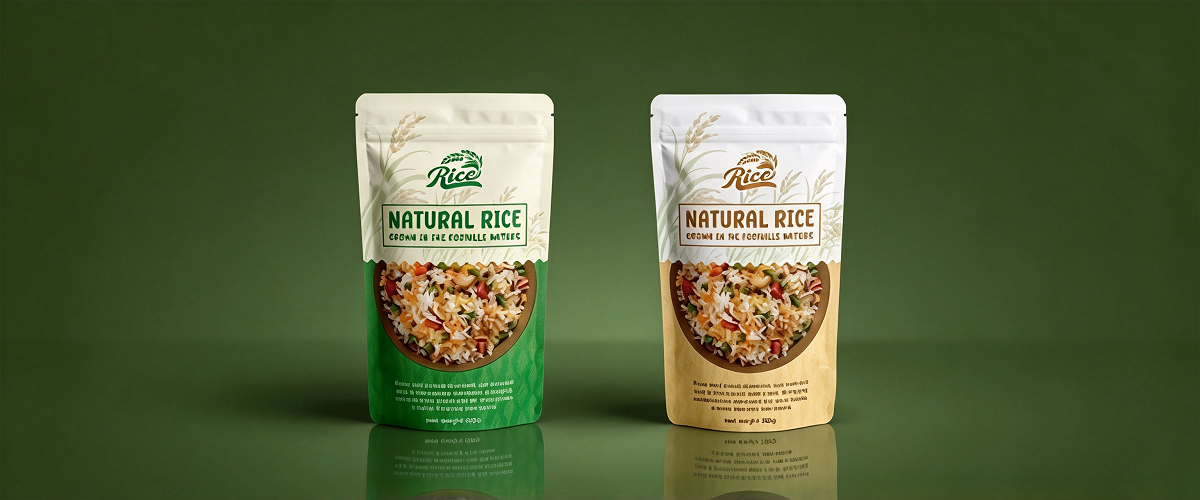
Stand-up pouches, also known as doypacks, are a popular option for retail multigrain rice products that need a distinctive appearance and convenient storage. Their bottom gusset allows the filled bag to stand upright, making it suitable for supermarket shelves, specialty food retailers, and direct-to-consumer sales.
Stand-up pouches are particularly useful for products sold in moderate quantities, such as 250-gram, 500-gram, 750-gram, and 1-kilogram packs. They can accommodate printed branding, product photography, preparation instructions, nutritional information, and other labeling requirements. Depending on the design and material structure, manufacturers can also incorporate resealable zippers, tear notches, hanging holes, or transparent windows.
For premium multigrain rice, the main advantage is the combination of product protection and shelf presentation. The front panel can communicate the blend's ingredient composition, origin, texture, and intended use, while the gusset provides stability when the package is displayed.
However, a stand-up pouch should not be selected on appearance alone. Grain weight and distribution can place stress on the bottom seals and gusset folds. The pouch must have sufficient material strength and appropriate seal dimensions to support the intended fill weight. A package designed for a lightweight cereal product may not withstand the same handling conditions when filled with dense grains.
Manufacturers should evaluate the following considerations:
- Fill weight: Confirm that the pouch dimensions and bottom structure can support the actual product weight.
- Barrier performance: Select a laminate that provides the necessary moisture protection and, where relevant, oxygen and light barriers.
- Opening and resealing: Add a zipper if consumers are likely to use the contents over several meals.
- Shelf display: Consider pouch width, height, gusset depth, and how the package looks when filled.
- Filling compatibility: Ensure the pouch opening and dimensions work with the intended filling and sealing equipment.
Stand-up pouches are most appropriate when the product requires a retail-ready presentation, moderate pack sizes, and convenient household storage. They may be less economical than simpler bags for high-volume, price-sensitive products, especially when premium features are unnecessary.
Flat-Bottom Bags for Premium and Specialty Grain Blends
Flat-bottom bags, also called box pouches, provide a rectangular base and relatively structured appearance. They are well suited to premium multigrain rice products, organic grain blends, specialty rice collections, and brands that want a more substantial retail presence.
The format offers several relatively flat surfaces for brand graphics and product information. Manufacturers can use these areas to explain the blend's ingredients, highlight preparation methods, communicate sourcing information, and differentiate several varieties within one product line.
Flat-bottom bags can be useful for multigrain rice products containing several visually distinct ingredients. For example, a blend of white rice, brown rice, black rice, red quinoa, and millet may benefit from a package that presents the product as a carefully developed mixture rather than a basic commodity grain.
The format also supports several practical customization options, including resealable closures, tear notches, matte or gloss finishes, and high-barrier laminates. These features can help brands create a consistent packaging family across multiple product weights and flavors.
Nevertheless, flat-bottom bags generally require more complex construction than simple pillow bags. Their material consumption, conversion process, and unit cost may therefore be higher, depending on bag dimensions, order volume, laminate structure, and manufacturing specifications.
They are most suitable when the additional shelf presence and branding space justify the extra packaging cost.
Pillow Bags for High-Volume Multigrain Rice
Pillow bags are formed from flexible film and sealed to create a simple package, commonly using vertical or horizontal form-fill-seal equipment. They are widely used for commodity food products because they can be produced efficiently and are compatible with high-speed automated packing operations.
For multigrain rice, pillow bags can be a practical choice for:
- Mainstream retail products with competitive price targets.
- Smaller packs intended for supermarkets and convenience stores.
- High-volume production runs.
- Products distributed through wholesale channels.
- Packaging lines that already use compatible form-fill-seal equipment.
The primary advantage is production efficiency. Compared with more elaborate pouch formats, a simple pillow bag may reduce conversion complexity and packaging cost, particularly when the product requires neither a stand-up base nor a zipper.
The actual cost advantage depends on the film specification, machine setup, production volume, printing method, and required seal performance. A low-cost film that produces frequent leaks or damaged packages can ultimately be more expensive than a stronger structure.
Pillow bags also tend to offer less convenient resealing unless an additional closure or secondary storage solution is provided. This may be acceptable for smaller packs intended for single-use or rapid consumption, but it can be a disadvantage for larger household packages.
When selecting pillow bags, manufacturers should focus on seal reliability, film toughness, suitable barrier properties, and compatibility with automated filling equipment. Grain dust around the sealing zone deserves particular attention because contamination can prevent the film from forming a reliable seal.
Three-Side-Seal Bags for Small Packs and Trial Sizes
Three-side-seal bags are made by sealing three edges of a flexible material structure, leaving one side available for filling before final closure. They are useful for compact retail products, sample packs, promotional products, and small portions of multigrain rice.
Typical applications include:
- Trial packs for consumers who want to test a new grain blend.
- Small packs for specialty food retailers.
- Portion-controlled packages for meal preparation.
- Promotional samples included in food subscription boxes.
- Compact packages for selected export or travel-oriented retail channels.
The format is relatively simple and can accommodate printed designs and a range of material structures. It may be especially useful when a brand wants to introduce several multigrain combinations without immediately investing in more complex pouch formats.
For very small packs, the packaging specification should account for the ratio between film, seals, and product volume. Seal width and opening dimensions must remain practical for the selected filling process, even when the package is compact.
Three-side-seal bags are not inherently less protective than other formats. Their performance depends on the material laminate, seal design, manufacturing quality, and storage conditions. A properly designed high-barrier three-side-seal bag may outperform a poorly manufactured stand-up pouch.
Gusseted Bags for Larger Pack Sizes
Side-gusseted bags expand along their sides, allowing them to accommodate a relatively large quantity of rice while maintaining a compact overall profile. They are commonly used for larger food packages and can be suitable for multigrain rice sold in family-size, wholesale, or foodservice quantities.
Their main advantages include efficient use of storage space, relatively high capacity, and a familiar format for dry staple foods.
Gusseted bags can be designed for products weighing several kilograms, although the appropriate capacity depends on the bag dimensions, material thickness, seal design, handling requirements, and grain density. Manufacturers should not assume that a structure suitable for a small bag will perform adequately at a much higher fill weight.
For larger packs, key considerations include:
- Resistance to puncture from grain edges and foreign objects.
- Strength of the bottom and side seals.
- Resistance to impact during stacking and transport.
- Comfortable handling for consumers and warehouse personnel.
- Adequate barrier performance throughout the intended storage period.
A gusseted bag may be a better choice than a premium stand-up pouch when capacity, packing efficiency, and cost control are the main priorities.
Reclosable Pouches for Multi-Use Household Packaging
Multigrain rice is often consumed over multiple meals. A package that opens easily and closes securely can help households store unused contents more conveniently.
Reclosable stand-up pouches, flat-bottom bags, and selected gusseted designs can incorporate press-to-close zippers or other suitable closure systems. These features allow consumers to open the bag, remove the required quantity, and close it again without transferring the remaining grains to another container.
However, a zipper is not a substitute for a high-quality primary seal. The original package seals must provide the required protection before first opening, while the zipper helps reduce exposure during repeated household use.
A resealable package should be assessed for:
- Ease of opening without spilling the grains.
- Reliable closure after repeated use.
- Compatibility with the intended pouch width and product weight.
- Resistance to accidental opening during transportation.
- Consumer usability when the bag is partly empty.
A zipper can be especially valuable for 1-kilogram and 2-kilogram household packages. For smaller packs intended to be consumed quickly, the added cost may not provide enough practical benefit.
Packaging Format Comparison
| Bag Type | Best-Fit Applications | Main Advantages | Potential Limitations |
|---|---|---|---|
| Stand-up pouch | Premium retail and household packs | Shelf visibility, customization, optional zipper | Higher cost than simpler formats in some applications |
| Flat-bottom bag | Specialty and premium grain blends | Structured appearance and generous branding area | More complex construction |
| Pillow bag | High-volume mainstream products | Efficient automated packing and cost control | Usually requires an additional feature for resealing |
| Three-side-seal bag | Trial packs and small portions | Compact format and flexible sizing | Limited standing ability |
| Side-gusseted bag | Larger household and wholesale packs | Capacity and efficient storage | Requires careful design for heavy fills |
| Reclosable pouch | Multi-use household products | Convenient opening and closing | Closure adds cost and does not replace primary seal integrity |
How Should You Match Bag Type to Product Weight?
Packaging size should be determined by more than the nominal weight printed on the label. Multigrain blends vary in bulk density, so two products weighing 1 kilogram may require different internal volumes.
A mixture containing lightweight flakes and small grains may occupy more space than a blend made primarily from dense rice kernels. The package must also provide sufficient headspace for filling and sealing without becoming unnecessarily large.
The following table offers a starting point for format selection rather than a universal specification.
| Approximate Pack Size | Formats Worth Evaluating | Key Design Priority |
|---|---|---|
| 100–250 g | Three-side-seal bags, small stand-up pouches | Compact presentation and portion control |
| 250–500 g | Stand-up pouches, pillow bags, three-side-seal bags | Retail visibility and efficient packing |
| 500 g–1 kg | Stand-up pouches, flat-bottom bags, pillow bags | Balance of usability, strength, and cost |
| 1–2 kg | Reclosable stand-up pouches, gusseted bags | Household storage and reliable closure |
| 2–5 kg | Gusseted bags and appropriately engineered larger pouches | Load resistance and distribution durability |
| Above 5 kg | Heavy-duty gusseted bags or other suitable bulk formats | Handling strength, stacking, and transport protection |
These ranges are indicative only. Final bag dimensions and construction should be established through filling trials and package performance testing.
Choosing a Bag for Retail, E-Commerce, or Wholesale
The sales channel influences which format makes the most sense.
For supermarket retail, shelf visibility, readable product information, and easy handling may be major priorities. Stand-up and flat-bottom bags can help brands distinguish premium multigrain products from conventional rice.
For e-commerce, the package may face repeated handling, vibration, compression, and contact with other items inside a shipping carton. The primary package must withstand these conditions, but the outer shipping system also matters. A flexible pouch should not be expected to withstand every transport hazard without appropriate carton design and distribution testing.
For wholesale and foodservice, high-volume filling efficiency, reliable seals, and predictable handling performance often matter more than elaborate finishes. Gusseted bags or other robust formats may offer a better balance between capacity and cost.
Ultimately, the best bag is the one that meets the product's protection requirements, performs reliably on the intended equipment, and suits the way customers purchase and store multigrain rice.

2. How Does Flexible Packaging Protect Multigrain Rice from Moisture, Pests, and Contamination?
Multigrain rice is generally a low-moisture food, but that does not mean it can be stored safely in any bag. Its quality can deteriorate when moisture enters the package, insects gain access through openings or damaged seals, or foreign substances contaminate the product during production and distribution.
The packaging system must protect the grains from external conditions while preserving the characteristics of the original blend. Effective protection depends on the film structure, seal integrity, package handling, filling environment, and storage practices.
Moisture Control: Preventing Dampness and Quality Deterioration
Moisture control is one of the most important functions of multigrain rice packaging.
Dry grains can absorb moisture from humid air when the packaging barrier is inadequate or the package is left open. Depending on the product and conditions, this can change texture, encourage clumping in grain mixtures containing flakes or powders, and increase the risk of quality deterioration. Under sufficiently favorable conditions, moisture-related problems may also contribute to mold growth or other food-safety concerns.
Different grain components respond differently to moisture. Polished rice, brown rice, oats, millet, and other ingredients may have distinct equilibrium moisture characteristics. A mixture containing several grain types should therefore be evaluated as a complete product rather than by considering only its rice component.
A moisture-resistant flexible package helps limit moisture transfer through the film. However, overall protection also depends on the quality of the seals and the presence of any holes, channels, or damaged areas.
When evaluating moisture protection, manufacturers should consider:
- Storage humidity: Warehouses and retail environments in humid climates may create greater moisture challenges.
- Storage duration: Longer distribution and storage periods increase the importance of controlling moisture ingress.
- Product moisture at filling: Packaging cannot correct a product that already contains excessive moisture.
- Film performance: Water vapor transmission should be assessed for the selected structure and relevant test conditions.
- Seal quality: Even a high-barrier laminate may fail if moisture enters through a defective seal.
For multigrain rice intended for long-distance export, a stronger moisture barrier may be appropriate, particularly where the product will experience extended storage or humid conditions. For rapidly sold local products, a simpler structure may be adequate if testing confirms that it meets the required performance.
The correct choice should be supported by shelf-life validation rather than assumptions based solely on material names.
Why Water Vapor Transmission Rate Matters
The water vapor transmission rate, commonly abbreviated as WVTR, describes the amount of water vapor that passes through a material over a specified area and period under defined test conditions.
For packaging buyers, WVTR is useful for comparing candidate films. In general, a lower WVTR indicates better resistance to water vapor transmission under the same test conditions.
However, WVTR values cannot be compared reliably unless the test temperature, relative humidity, method, and specimen conditions are also considered. Real-world performance can differ from laboratory measurements because of the package's total surface area, seals, folds, handling damage, and changing environmental conditions.
When requesting specifications from a flexible packaging supplier, buyers should ask for relevant technical data and confirm that the results correspond to the intended laminate structure.
A practical evaluation should include the following steps:
- Establish the initial moisture condition and quality specifications of the grain blend.
- Define the expected storage period and likely temperature and humidity range.
- Compare candidate material structures using relevant barrier data.
- Evaluate the complete package, including seals and closures.
- Conduct storage trials under representative conditions.
- Inspect the product for moisture changes, odor, appearance, and other relevant quality indicators.
This approach helps translate a laboratory material property into a packaging decision that reflects the actual product and supply chain.
Protecting Multigrain Rice from Insects and Pests
Stored grains can be vulnerable to insect infestation, including pests that may already be present in raw materials or that enter through damaged packaging and inadequate storage conditions.
A sealed flexible bag can reduce the likelihood of external insects entering the product, but ordinary flexible packaging should not be treated as an insect-control treatment. If grain is already infested before packaging, the package alone may not eliminate the problem.
Effective pest management therefore requires coordinated controls across procurement, cleaning, processing, packaging, warehousing, and transportation.
Packaging-related measures include:
- Using films with sufficient mechanical strength for the intended handling conditions.
- Maintaining consistent, reliable heat seals.
- Preventing punctures and tears during filling and conveying.
- Inspecting finished packages for damage before shipment.
- Using appropriate secondary cartons or other protective shipping systems.
- Storing finished goods in clean, dry, pest-managed warehouses.
For bulk products, bag material selection should account for load weight, stacking pressure, and handling equipment. A bag that performs adequately on a retail shelf may not withstand the stresses associated with palletized transport or repeated warehouse movement.
Pest management should also include incoming raw-material inspection and appropriate grain storage practices. Packaging works best as one part of a complete preventive system.
Can Vacuum Packaging or Nitrogen Flushing Prevent Pests?
Vacuum packaging and nitrogen flushing can reduce oxygen inside a package, but neither should be assumed to solve every pest or shelf-life problem.
Vacuum packaging removes much of the air from the package and causes the film to conform closely to the product. For some grain mixtures, this can reduce package volume. However, compression may crush fragile ingredients, deform the bag, or create a less attractive retail presentation. The process can also place additional demands on puncture resistance.
Nitrogen flushing replaces part of the air inside a package with nitrogen. This can reduce residual oxygen when the system is properly designed and controlled. It may be useful when a multigrain blend contains oil-rich ingredients that are sensitive to oxidation.
Neither method corrects excessive initial moisture, poor hygiene, damaged seals, or existing infestation. Their suitability should be determined through product trials and an assessment of the actual quality risks.
For many conventional multigrain rice products, a reliable moisture barrier, sound seals, clean filling conditions, and appropriate warehouse controls are more fundamental than vacuum or gas flushing.
Preventing External Odor Transfer and Aroma Loss
Multigrain rice has a characteristic grain aroma, and some blends contain ingredients with distinctive natural notes. Exposure to strong external odors may affect the perceived quality of the product, while certain components can lose desirable volatile compounds during prolonged storage.
Flexible packaging should therefore be evaluated for more than moisture resistance. Depending on the blend and expected shelf life, aroma retention and resistance to external odor transmission may also be relevant.
Packaging can be exposed to odors from inks, adhesives, cleaning chemicals, fuel, or other goods during production and transport. This does not mean these substances will necessarily migrate into the product, but it reinforces the importance of suitable food-contact materials, proper curing and manufacturing controls, and appropriate warehouse practices.
Manufacturers should:
- Select packaging materials intended for the relevant food-contact application.
- Follow supplier instructions for adhesive curing and material handling.
- Prevent finished packaging from being stored near strong-smelling chemicals.
- Avoid transporting food packaging alongside incompatible substances.
- Conduct sensory assessments when odor retention is important to the product.
A properly specified laminate can help preserve product quality, but the entire supply chain must also be managed to reduce unwanted odor exposure.
Contamination Prevention Starts Before the Bag Is Sealed
Flexible packaging provides a physical barrier after the package has been closed, but it cannot compensate for poor hygiene before or during filling.
Potential contamination sources include foreign particles in the grain, dust, residues on filling equipment, unsuitable packaging materials, damaged packages, and contact with unclean surfaces.
A comprehensive packaging process should incorporate appropriate preventive controls, such as:
- Inspection and cleaning of incoming grains.
- Removal of foreign materials through suitable processing steps.
- Sanitary handling of the product and packaging.
- Protection of open bags from dust and environmental contaminants.
- Routine inspection and maintenance of filling and sealing equipment.
- Verification of seal integrity and package cleanliness.
- Traceability procedures for raw materials and finished products.
Where the product is subject to specific food-safety requirements, manufacturers should establish the applicable controls through their food-safety management system and destination-market regulations.
The bag's role is to maintain the required protection after filling. Product quality depends on the combined performance of the food-processing operation and the packaging system.
Seal Integrity: The Critical Point Between the Product and the Environment
The seals are often the most vulnerable parts of a flexible package. A high-barrier film cannot deliver its intended protection if the finished bag contains a weak seal, an open channel, a pinhole, or a tear.
Multigrain rice presents a particular sealing challenge because grain dust or small particles may become trapped in the sealing area. This can prevent the sealing layers from contacting one another evenly and create a pathway for moisture or contaminants.
Seal quality depends on several factors:
- Film composition and sealing-layer properties.
- Sealing temperature, pressure, and dwell time.
- Machine condition and alignment.
- Product dust near the sealing zone.
- Bag dimensions and seal width.
- Production speed and the consistency of operating conditions.
Packaging manufacturers and food processors should validate the sealing process using the actual film, equipment, and product. Testing methods may include visual inspection, seal-strength measurement, leak detection, and other suitable integrity assessments.
The correct test method depends on the package design and the failure modes that must be detected. A visual check alone may not identify every channel leak or weak seal.
How Should Packaging Be Tested for Moisture and Contamination Protection?
A useful validation program should evaluate the finished package rather than relying entirely on film specifications.
| Test or Inspection | What It Helps Evaluate | When It Is Useful |
|---|---|---|
| WVTR testing | Resistance to water vapor transmission | Comparing candidate barrier materials |
| Seal-strength testing | Mechanical strength of sealed areas | Establishing and monitoring sealing conditions |
| Leak or integrity testing | Potential openings or seal channels | Checking package integrity |
| Puncture and handling evaluation | Resistance to damage during use and transport | Larger packs and rough distribution conditions |
| Storage trials | Product and package performance over time | Confirming practical shelf-life suitability |
| Sensory assessment | Changes in odor, flavor, or appearance | Blends with sensitive ingredients |
| Package inspection | Visible damage, contamination, and manufacturing defects | Routine quality control |
The precise test plan should be determined by the product's risk profile and the package's intended use. Testing should also consider realistic distribution conditions, not only ideal laboratory storage.
Storage Practices That Complement Flexible Packaging
Even a well-designed bag can perform poorly if finished products are stored under unsuitable conditions.
Multigrain rice should generally be kept in a clean, dry, well-managed environment, away from direct sunlight, water sources, strong odors, and pest activity. Storage areas should support suitable temperature and humidity control for the product and packaging system.
Packages should be stacked and handled according to their load capacity. Excessive stacking pressure can damage seals or create folds that become vulnerable during later handling. Palletized shipments should be secured to limit movement and prevent cartons or bags from rubbing against sharp edges.
For export shipments, buyers should assess container condition, moisture exposure, loading practices, and transit duration. The packaging specification and shipping method should be considered together.
A successful protection strategy combines suitable film, reliable seals, clean processing, pest management, and disciplined storage. No single material or feature can replace this system.
3. Which Packaging Materials Provide the Best Barrier Protection for Multigrain Rice?
Selecting a packaging material requires understanding the characteristics of the complete multigrain blend. Conventional polished white rice, brown rice, black rice, millet, quinoa, oats, and seed-containing blends can have different quality risks. Some products primarily require moisture protection, while others benefit from stronger oxygen and light barriers because their ingredients contain more natural oils or are particularly sensitive to oxidation.
Flexible packaging materials are often combined into multilayer laminates. Each layer performs a specific role, such as providing printability, mechanical strength, barrier performance, or heat sealing. The final construction must balance these functions while remaining compatible with the filling process, distribution environment, regulatory requirements, and budget.
PET-Based Structures for Strength and Print Quality
Polyethylene terephthalate, commonly called PET, is widely used as an outer layer in flexible packaging laminates. It offers good mechanical strength, dimensional stability, and print performance.
For multigrain rice, PET can support detailed graphics and clear product information while helping the package withstand routine handling. It is often combined with another layer that provides the primary sealing function or improves barrier performance.
PET alone should not automatically be considered a complete high-barrier solution. Its suitability depends on the required moisture and oxygen protection, film thickness, package design, and expected shelf life.
PET-based laminates may be appropriate when the product needs a durable printed exterior and a separate layer to provide sealing and barrier functions.
BOPP Structures for Cost-Efficient Packaging
Biaxially oriented polypropylene, or BOPP, is frequently used in flexible food packaging because it can provide stiffness, attractive print presentation, and cost-efficient performance.
For multigrain rice, BOPP-based structures may be worth evaluating for mainstream retail products where visual presentation and material cost are important. Depending on the construction, BOPP can also contribute to moisture protection.
However, the performance of a BOPP package depends on the exact grade, thickness, laminate combination, and sealing design. Not all BOPP films have the same barrier properties, and some constructions may require a separate heat-sealing layer.
BOPP-based solutions should be selected according to measured performance rather than the assumption that all polypropylene films provide equivalent protection.
PE and LLDPE for Heat Sealing and Toughness
Polyethylene, including linear low-density polyethylene (LLDPE), is commonly used as a sealing layer in flexible packaging. It can provide a practical balance of flexibility, toughness, and heat-sealing performance.
For multigrain rice, a suitable PE sealing layer helps form the package's closed edges and can contribute to resistance against handling damage. Its flexibility can also support pouches that need to expand around the product without becoming excessively rigid.
However, PE-based sealing layers must be matched with the other laminate layers and the operating conditions of the filling equipment. The correct sealing temperature, pressure, and dwell time depend on the actual structure and machine configuration.
PE is not a universal substitute for every barrier layer. Where the product requires stronger oxygen or light protection, PE may need to be combined with other materials.
VMPET for Enhanced Barrier Performance
Vacuum-metallized PET, commonly abbreviated as VMPET, is PET film coated with a thin metallic layer. It is often used in flexible packaging to improve barrier performance and create a metallic appearance.
In a suitable laminate, VMPET can reduce the transmission of oxygen, water vapor, and light compared with some uncoated film structures. This can be beneficial for multigrain rice products that need better protection during longer storage or distribution.
VMPET may be a useful option for brands seeking an intermediate solution between simpler film structures and more demanding foil-based constructions. It can support premium graphics while helping control packaging costs, although the actual cost depends on the full laminate, conversion process, order volume, and supplier specifications.
Its performance can be affected by metallization quality, flexing, abrasion, and damage to the barrier layer. Therefore, the material should be assessed as part of the finished laminate and tested under conditions representative of the intended application.
Aluminum Foil for High-Barrier Applications
Aluminum foil is widely used in flexible packaging when strong protection against moisture, oxygen, and light is required.
For multigrain rice, foil-based laminates may be worth considering when the blend includes oxidation-sensitive ingredients, the intended storage period is long, or distribution conditions create demanding barrier requirements. They may also be appropriate for specialty blends positioned at a premium price point.
A typical foil laminate combines an outer printable layer, aluminum foil, and an inner heat-sealing layer. The exact construction depends on the product, bag format, sealing equipment, and performance target.
Aluminum foil can provide a very strong barrier when the laminate is correctly manufactured and the finished package remains intact. However, foil does not eliminate the need for proper sealing, handling, and storage. Folding, cracking, pinholes, or damage during conversion and distribution can reduce its protective performance.
Foil-based structures may also cost more than simpler alternatives. They should therefore be selected when the additional barrier performance is justified by product requirements rather than used automatically for every multigrain rice package.
Mono-Material PE or PP Structures for Recyclability-Oriented Designs
Some brands are evaluating mono-material packaging structures to improve compatibility with particular recycling systems. PE-based or PP-based designs may be considered where suitable material combinations can deliver the required barrier, seal strength, print quality, and mechanical performance.
For multigrain rice, mono-material structures can be attractive when a brand wants to reduce material complexity or prepare for market-specific packaging regulations. Nevertheless, a mono-material design is not automatically recyclable in every market, nor does it necessarily provide the same barrier performance as a conventional multilayer laminate.
Performance depends on the exact film grades, coatings, barrier technologies, inks, adhesives, closures, and recycling infrastructure available in the destination market.
Before adopting a new structure, brands should verify:
- Whether the package meets the required moisture and oxygen barrier targets.
- Whether the sealing layer performs reliably on the intended equipment.
- Whether the complete package is accepted by relevant local recycling systems.
- Whether printing, coatings, and closures affect recycling compatibility.
- Whether shelf-life and distribution testing confirm acceptable performance.
A responsible material strategy considers both the product's protection requirements and the real end-of-life options available to customers.
Comparing Common Flexible Packaging Materials
| Material or Structure | Main Contribution | Potential Application | Important Consideration |
|---|---|---|---|
| PET-based laminate | Strength and print quality | Retail pouches and printed bags | Often requires other layers for sealing and enhanced barriers |
| BOPP-based laminate | Stiffness and cost-efficient presentation | Mainstream retail rice | Performance depends on film grade and construction |
| PE/LLDPE sealing layer | Heat sealing and flexibility | Inner layer of many laminates | Must be compatible with the outer layers and equipment |
| PET/VMPET/PE | Enhanced barrier in a multilayer structure | Products requiring improved moisture, oxygen, and light protection | Metallization and finished-package integrity matter |
| PET/Aluminum foil/PE | Strong barrier against moisture, oxygen, and light | Demanding storage or specialty products | Higher cost and potential sensitivity to mechanical damage |
| Mono-material PE or PP | Potential recycling-system compatibility | Sustainability-oriented packaging programs | Must be validated for barrier, seals, and local recycling acceptance |
These structures are illustrative starting points, not universal prescriptions. Actual performance depends on the film grades, thicknesses, adhesives, coatings, seals, and manufacturing quality.
How to Select a Material According to Grain Composition
The composition of the multigrain blend is one of the most important variables in material selection.
A blend made mainly from polished white rice and relatively stable dry grains may have different needs from one containing brown rice, oats, seeds, or other ingredients with higher natural oil content. The latter may benefit from stronger oxygen protection, especially if the target shelf life is long or the product will be exposed to elevated temperatures during distribution.
The following matrix can help guide initial discussions with packaging suppliers.
| Multigrain Product Profile | Main Quality Concerns | Material Strategy to Evaluate |
|---|---|---|
| White rice with millet | Moisture ingress, foreign contamination, seal reliability | Cost-efficient structure with suitable moisture resistance |
| Brown rice blend | Moisture and oxidation-related quality changes | Consider enhanced oxygen and moisture protection |
| Black rice and mixed whole grains | Moisture, light exposure, and appearance retention | Evaluate opaque or high-barrier laminates where justified |
| Blend containing oats or seeds | Potential oxidation of oil-rich ingredients | Consider improved oxygen barrier and validated shelf-life testing |
| Premium organic multigrain blend | Product integrity, quality perception, and traceability | High-quality printed laminate with barrier performance matched to the blend |
| Export-oriented mixed grains | Long transit, variable humidity, and handling damage | Validate moisture barrier, seal strength, and distribution durability |
The correct choice should be confirmed using the actual recipe and product specifications. Ingredient names alone cannot establish the required barrier level.
Oxygen Barrier and Oxidation Risk
Oxygen can contribute to the oxidation of natural oils in grains and seeds. Over time, this may lead to undesirable odors or flavors and reduce the perceived quality of the product.
Oxidation risk depends on ingredient composition, residual oxygen inside the package, storage temperature, light exposure, and storage duration. A blend containing more oil-rich ingredients may therefore benefit from a stronger oxygen barrier than a product composed primarily of polished rice.
Where oxidation is a significant concern, manufacturers should evaluate oxygen transmission rate (OTR) data for candidate materials. OTR describes the rate at which oxygen passes through a material under specified test conditions. As with WVTR, meaningful comparisons require consistent testing conditions.
The package should also be evaluated as a complete system. The initial oxygen level, headspace volume, seal integrity, and possible use of gas flushing may affect the outcome. A material with low oxygen transmission cannot compensate for a large leak or an unsuitable filling process.
Light Barrier and Product Appearance
Light exposure can contribute to quality changes in some food ingredients, particularly when combined with oxygen and elevated temperatures. The importance of light protection varies according to the grains included, the storage environment, and the expected shelf life.
Opaque, metallized, or foil-based structures can reduce light exposure, while transparent materials provide product visibility. The decision should balance product protection with the brand's retail strategy.
A transparent window may help customers see the grains, but it introduces an area with different barrier characteristics from the surrounding laminate. If a window is important to the design, manufacturers should evaluate its size, location, material, and effect on shelf-life performance.
For blends that contain oxidation-sensitive ingredients or require long storage, a fully opaque package may be preferable. For products sold quickly in controlled conditions, a limited window may be acceptable if the complete package meets its performance targets.
Why Laminate Structure Matters More Than a Single Material Name
A flexible package is a system of interacting layers. PET may provide print quality and strength, a metallized or foil layer may provide barrier performance, and PE may provide heat sealing. The combination is what determines the package's practical performance.
When reviewing a supplier quotation, buyers should request the full material structure rather than accepting a description such as "premium film" or "high-barrier bag." The quotation should identify the proposed layers and provide relevant performance information where available.
Important specification items include:
- Material composition and layer order.
- Nominal thickness or grammage, as applicable.
- Bag dimensions and finished capacity.
- Seal design and sealing-layer characteristics.
- Relevant oxygen and water vapor barrier data.
- Food-contact compliance documentation for the intended market.
- Print and finish specifications.
- Any recycling-related claims and their applicable scope.
This information supports meaningful comparison between suppliers and reduces the risk of choosing a bag based on appearance or price alone.
Cost Versus Barrier Performance
The highest-barrier material is not necessarily the most economical solution for every multigrain rice product. If a product is sold quickly and requires only moderate protection, a simpler laminate may provide adequate performance at a lower cost.
Conversely, choosing a low-cost structure that allows the product to deteriorate before the end of its intended shelf life can increase waste, customer complaints, and commercial losses.
A practical cost evaluation should consider total packaging performance, not only the price per bag.
Relevant factors include:
- Unit packaging cost.
- Minimum order quantity and printing costs.
- Product loss from damaged or leaking packages.
- Expected shelf life and storage conditions.
- Filling-line efficiency and reject rates.
- Freight costs and package dimensions.
- Customer expectations and brand positioning.
- Compliance requirements in the target market.
The best material is the one that meets the required product-protection and production targets at an economically reasonable total cost.
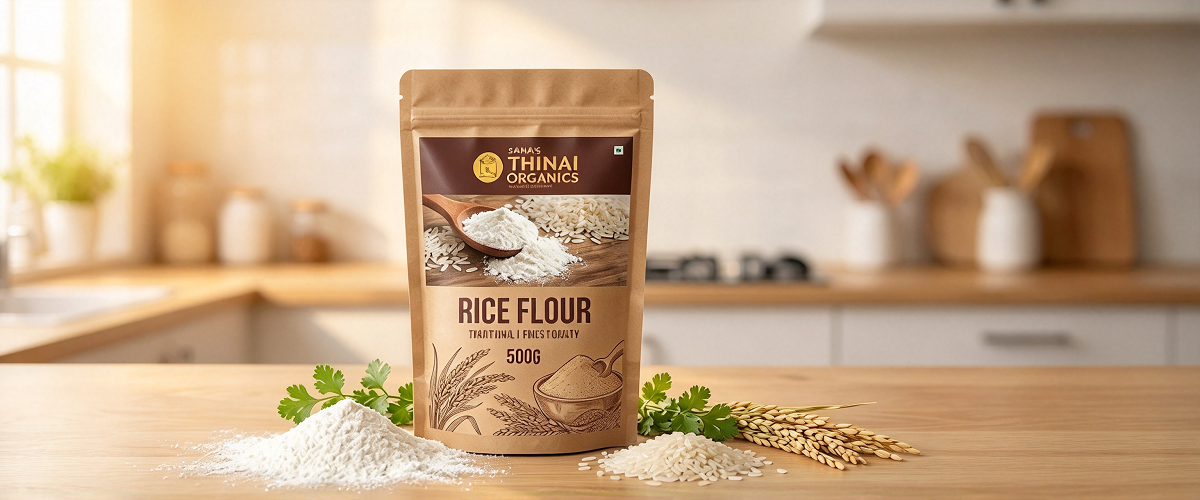
4. What Packaging Features Should You Consider for Multigrain Rice Storage and Retail Sales?
Packaging features influence how easily a multigrain rice product can be filled, transported, displayed, opened, and stored. Some features primarily support product protection, while others improve consumer convenience or brand visibility.
The ideal configuration depends on the target market and pack size. A small trial pack may need little more than a reliable seal and easy opening. A 2-kilogram family-size pouch may benefit from a zipper, while a premium retail product may require a carefully designed window, distinctive finish, and generous labeling area.
Resealable Zippers for Repeated Household Use
A resealable zipper allows consumers to close the package after removing the amount of multigrain rice they need. This can reduce exposure to household air and humidity compared with leaving a package open.
Zippers are particularly useful for products sold in medium and large household sizes. They are less essential for small packs that are likely to be consumed in one or two uses.
When specifying a zipper, consider the package width, filling process, grain size, opening position, and expected consumer behavior. The zipper should be positioned so that consumers can access the product without excessive spillage.
The primary seal above or below the zipper must still provide the required protection before first opening. The zipper is a convenience feature, not a replacement for a properly sealed package.
Tear Notches and Easy-Open Design
A tear notch helps consumers open the package without scissors. It is a relatively simple feature, but its placement and design affect usability.
For multigrain rice, the opening should be large enough to pour the grains into a measuring cup or cooking vessel without excessive spilling. If the opening is too narrow, larger grains or mixed ingredients may flow inconsistently. If it is too wide, the user may have difficulty controlling the pour.
The notch should also be positioned so that tearing does not damage the zipper or create an irregular opening that interferes with resealing.
Manufacturers should test opening performance across the intended consumer group and under realistic conditions. The film should tear in a controlled manner without compromising the package during distribution.
Transparent Windows for Product Visibility
A transparent window can help customers see the grain mixture before purchasing. This is particularly relevant for multigrain rice because the product's appearance is part of its appeal. Consumers may want to confirm the proportions of white rice, brown rice, black rice, millet, quinoa, and other ingredients.
However, a window should be included only when its benefits justify the trade-offs.
Potential considerations include:
- Whether visual inspection is important to the target customer.
- Whether the product is sensitive to light exposure.
- Whether the window material provides suitable moisture and oxygen protection.
- Whether the window can be integrated without weakening the package.
- Whether the grain mixture settles or separates during transport.
A small, strategically placed window may provide sufficient visibility without making the entire package transparent. For products requiring stronger light protection, a fully opaque design may be more appropriate.
Handles for Larger Packages
Handles can improve carrying convenience for larger multigrain rice bags, particularly when customers purchase several kilograms at a time.
A handle must be designed to support the filled package without tearing the film or placing excessive stress on the top seal. Its shape, location, reinforcement, and compatibility with the package's weight should be tested.
For some products, a reinforced handle can improve usability. For others, a separate carry bag or carton may be more practical. The decision should reflect the package weight, customer needs, and total cost.
Handles should not be added purely for appearance. They must perform reliably during lifting and carrying.
Rounded Corners and Puncture Resistance
Multigrain rice typically consists of dry, relatively hard particles. While individual grains may not always puncture a suitable package, irregular edges, broken kernels, foreign particles, or pressure during handling can contribute to damage.
Puncture resistance depends on the complete film structure, thickness, material properties, bag design, and handling conditions. Rounded corners, suitable gusset construction, and well-designed seals may reduce stress concentration in selected formats.
For large bags, manufacturers should assess how the product shifts during lifting, stacking, and transportation. Package performance should be checked after filling rather than judged only from an empty sample.
Labels, Printing, and Product Information
Packaging is also an important information surface. Multigrain rice products often contain several ingredients, so clear labeling helps consumers understand what they are buying and how to prepare it.
Depending on the target market and product, the package may need space for:
- Product name and grain composition.
- Net weight.
- Ingredient list.
- Allergen declarations where applicable.
- Nutrition information.
- Storage and cooking instructions.
- Manufacturer or distributor details.
- Lot or batch identification.
- Date marking and traceability information.
- Country-of-origin or other mandatory statements where required.
- Relevant certification marks, only when properly authorized.
Labeling requirements vary by jurisdiction and product type. Exporters should verify the applicable rules for the destination market instead of assuming that one label is acceptable everywhere.
Printed text should remain readable after the bag is filled and displayed. Important information should not be hidden by gusset folds, seals, or areas likely to be covered by shelf labels.
Matte, Gloss, and Specialty Finishes
Surface finishes help establish brand positioning and distinguish product lines.
A matte finish can communicate a restrained or premium identity, while gloss finishes may create a brighter, more colorful presentation. Metallic effects, selective gloss, and other decorative treatments can also be used where technically compatible with the chosen laminate.
For multigrain rice, design should support the product's identity rather than overwhelm the information consumers need. A clear ingredient hierarchy, readable product name, and recognizable brand mark are often more important than adding numerous decorative effects.
Finishes should be reviewed alongside the intended printing process, film structure, production quantity, and packaging cost. Some effects may increase cost or affect the material's end-of-life options.
QR Codes and Digital Product Information
A QR code can connect the package to information that may not fit comfortably on the printed surface. Brands can use it to provide cooking videos, recipes, sourcing details, storage recommendations, or product-specific information.
For multigrain rice, this is especially useful because blends may require different water ratios, soaking times, or cooking methods depending on their composition.
A digital information strategy should complement, not replace, required on-pack information. Codes should be large enough to scan, printed with adequate contrast, and tested on the finished package.
The destination page should remain accessible, mobile-friendly, and consistent with the product actually sold. Any claims about nutrition, health benefits, sourcing, or certification should be substantiated and compliant with relevant advertising and labeling rules.
Anti-Slip and Handling Considerations
Packages are often stacked during storage, placed on pallets, or transported in cartons. Their surface properties can affect how they move against one another.
For larger bags, excessive sliding may complicate pallet stability. Conversely, a surface that creates too much friction can interfere with certain automated packaging operations.
Packaging buyers should discuss surface treatment and friction characteristics with the supplier when handling performance is important. Finished packages should be tested under representative stacking and transportation conditions.
The goal is to select a film and finish that support both machine performance and stable distribution.
Should You Add Oxygen Absorbers or Desiccants?
Oxygen absorbers and desiccants are sometimes used in food packaging, but they should not be included automatically.
An oxygen absorber may be considered when the product contains oxidation-sensitive ingredients and the packaging system is designed to work with that technology. Its suitability depends on residual oxygen, package barrier performance, the product's moisture characteristics, and the required shelf life.
A desiccant may be relevant in certain applications, but it must be appropriate for the food, package, and intended use. Adding one without a clear technical justification may not improve the product and can create usability or compliance concerns.
For multigrain rice, the first priorities should normally be suitable raw-material moisture, a suitable barrier structure, reliable seals, and appropriate storage conditions. Additional active packaging components should be selected only after a technical assessment.
Any absorber or desiccant used in a food package must be appropriate for the application, properly controlled, and clearly managed to prevent accidental consumption where applicable.
Feature Selection by Product and Sales Channel
| Packaging Feature | Most Relevant Application | Main Benefit | Key Consideration |
|---|---|---|---|
| Resealable zipper | Medium and large household packs | Convenient repeated opening and closing | Adds cost and requires correct placement |
| Tear notch | Most retail formats | Easier first opening | Must not compromise seals or zipper |
| Transparent window | Visually distinctive grain blends | Shows grain composition | May affect light protection |
| Carry handle | Larger packs | Easier carrying | Requires load and tear testing |
| High-quality printing | Retail and premium products | Stronger shelf identity | Must remain readable and compliant |
| QR code | Recipe-led or educational products | Additional product information | Needs scanning tests and a reliable destination |
| Reinforced structure | Heavy packs and demanding distribution | Better handling durability | May increase material consumption |
| Oxygen absorber | Selected oxidation-sensitive blends | May reduce residual oxygen | Requires product-specific validation |
Designing the Bag Around the Consumer's Cooking Routine
Packaging design should reflect how customers actually use multigrain rice.
Some consumers cook a whole bag over a few meals, while others use small quantities over several weeks. Some prefer to pour grains directly into a measuring cup, while others scoop them out of the package. These habits influence the ideal opening size, zipper location, bag width, and package capacity.
Brands can gather useful information through customer feedback, retail observations, product trials, and online reviews. If consumers frequently report spills, difficulty closing the bag, or confusion about cooking instructions, these problems may be addressed through packaging changes.
The most effective design is not necessarily the one with the most features. It is the one that removes practical barriers to use while protecting the product and maintaining a commercially viable cost.

5. Flexible Packaging Bags for Multigrain Rice: Key Factors for Freshness, Shelf Life, Branding, and Distribution
Selecting a suitable package requires balancing product protection, consumer usability, manufacturing efficiency, and market positioning. A bag that performs well during filling may not necessarily be ideal for long-distance transport, and a premium design may not be economically suitable for a high-volume commodity product.
The following factors help manufacturers make a more complete decision.
Shelf-Life Requirements and Product Composition
Shelf life should be established from the actual product, not copied from another rice product or inferred from the packaging material alone.
A multigrain blend may include polished rice, brown rice, black rice, millet, oats, quinoa, seeds, or other ingredients. Each component can contribute different storage characteristics. Oil-rich ingredients may be more susceptible to oxidation, while ingredients with different moisture levels may respond differently to storage conditions.
Shelf-life planning should consider:
- The initial moisture condition of the grains.
- Ingredient composition and relative proportions.
- Potential oxidation sensitivity.
- Expected storage temperature and humidity.
- The package's oxygen and water vapor barrier performance.
- The quality of the primary seals.
- The distribution route and expected transit time.
- The product's intended date-marking period.
- The quality changes consumers can detect.
The appropriate shelf life should be confirmed through a documented validation program. Packaging material specifications are an important input, but they do not independently establish a product's shelf life.
Establishing Practical Shelf-Life Testing
A shelf-life study should evaluate the product at defined intervals under suitable storage conditions. Depending on the product, relevant observations may include odor, flavor, color, texture, visible contamination, moisture-related changes, package condition, and other quality or safety indicators.
Accelerated storage studies can help identify potential risks more quickly, but they do not always predict real-time performance perfectly. A reliable program may therefore combine accelerated testing with real-time observations.
A practical study can include the following stages:
- Define product specifications. Record the blend composition, initial moisture condition, and quality requirements.
- Select candidate packaging structures. Compare materials that are expected to meet the required barrier and mechanical targets.
- Produce representative finished packages. Use the actual filling and sealing process wherever possible.
- Set storage conditions. Include conditions relevant to the target market and distribution environment.
- Inspect at planned intervals. Record product changes and package defects consistently.
- Review results against acceptance criteria. Determine whether the product continues to meet the established quality and safety requirements.
- Document the final decision. Retain the test conditions, results, material specification, and approved packaging configuration.
The length and complexity of the study should reflect the product's risk profile, the expected shelf life, and the applicable regulatory requirements.
Storage Temperature and Humidity
Temperature and humidity can influence both grain quality and packaging performance.
High humidity increases the importance of moisture control, especially in regions where products are stored in non-air-conditioned warehouses or transported through tropical climates. Temperature fluctuations can also contribute to condensation in some circumstances, depending on the product, package, and environment.
Manufacturers should assess the actual conditions likely to occur along the supply chain rather than relying only on the climate at the production site.
For export products, the review may include warehouse conditions, container loading, transit duration, port storage, and the receiving distributor's storage practices. The packaging structure should be selected to meet the anticipated conditions, with a reasonable margin for foreseeable variation.
However, packaging should not be expected to correct unsuitable storage practices. Even high-barrier bags require sensible warehouse management and protection from water, direct sunlight, and excessive heat.
Transportation Durability and Distribution Testing
Flexible packaging can be exposed to impact, vibration, compression, friction, and repeated handling during distribution.
Multigrain rice bags may experience these stresses while moving from the filling line to cartons, pallets, warehouses, shipping containers, distributors, retailers, and consumers. Large packages can place considerable loads on their lower seals and gussets, while small retail bags may be damaged when packed loosely with heavier products.
Distribution testing should consider:
- Drop or impact exposure appropriate to the package and shipping configuration.
- Compression and stacking loads.
- Vibration during road or sea transport.
- Puncture and abrasion risks.
- Seal integrity after handling.
- Carton dimensions and package movement within the carton.
- Pallet stability and load restraint.
Testing should use a representative package and distribution configuration. An empty bag or a package filled with an unrelated material may not accurately represent the stresses experienced by the actual product.
For e-commerce shipments, it is particularly important to evaluate the primary bag together with the outer shipping carton or mailer. The flexible bag provides the food-contact barrier, while the outer packaging may be needed to protect against impact and abrasion.
Choosing Packaging for Domestic and Export Markets
Domestic and export products may have different requirements.
A product sold locally with rapid stock turnover may not need the same distribution strategy as a premium multigrain blend shipped internationally. Export shipments can involve longer transit times, additional handling stages, variable humidity, and different labeling obligations.
Before approving packaging for export, brands should confirm:
- The applicable food-contact requirements for the destination market.
- The mandatory labeling and language requirements.
- The suitability of the material structure for the expected storage period.
- The durability of the package and outer shipping system.
- The traceability information required by the customer or authorities.
- The availability of technical documents from the packaging supplier.
- Any market-specific requirements affecting packaging materials or recycling claims.
Compliance should be verified for the specific destination and application. A statement that a material is suitable for food contact in one market does not automatically establish compliance in another.
Food-Contact Compliance and Documentation
Packaging materials intended for direct food contact must be suitable for the intended product and conditions of use.
Manufacturers should request relevant declarations, technical specifications, and supporting documentation from the packaging supplier. The documents needed depend on the destination market, material structure, and intended use.
A complete review may consider the film layers, inks, adhesives, coatings, and other components that form part of the finished package. It may also consider whether the package will contact dry food, whether it will be exposed to elevated temperatures, and how long the product will remain in contact with the packaging.
Food-contact suitability should not be inferred from the name of a resin or the appearance of a finished bag. The complete structure and the applicable regulatory framework matter.
Where required, businesses should seek qualified regulatory guidance and maintain appropriate supplier approval and traceability procedures.
Branding and Product Differentiation
Multigrain rice can be difficult to differentiate when several brands sell similar combinations of grains. Packaging gives brands an opportunity to explain what makes their product distinctive.
A clear brand identity should communicate the product's purpose, ingredient composition, quality level, and intended use. For example, a blend designed for everyday family meals may benefit from straightforward cooking instructions and a practical package size, while a specialty blend may emphasize grain variety, sourcing, and preparation guidance.
Effective branding can include:
- A recognizable logo and consistent color system.
- Clear product naming and ingredient hierarchy.
- Readable net-weight information.
- Practical cooking and storage instructions.
- Distinctive but appropriate photography or illustrations.
- A finish that matches the intended market position.
- Consistent design across different bag sizes.
The design should not make unsupported nutritional, health, organic, or sustainability claims. Any claim displayed on the package should be accurate, substantiated, and compliant with applicable regulations.
Using Packaging to Explain How to Cook Multigrain Rice
One challenge with multigrain rice is that consumers may not know how to prepare a particular blend. Different ingredients can absorb water at different rates, and some combinations may require soaking or a longer cooking time than conventional white rice.
Packaging can reduce uncertainty by providing product-specific cooking instructions. Useful information may include the recommended washing method, water ratio, soaking guidance, cooking method, approximate cooking time, and storage instructions after opening.
These instructions should be validated against the actual blend. A generic instruction may not produce satisfactory results for every formulation.
Brands can also include a QR code that links to recipes or more detailed preparation guidance. Digital content can be updated more easily than printed packaging, but essential information should remain available on the package where appropriate.
Clear instructions can improve the consumer experience and reduce the likelihood that a customer blames the product for a cooking result caused by unsuitable preparation.
Cost Efficiency: Evaluate the Complete Packaging System
The cheapest bag is not always the lowest-cost solution over the product's full commercial life.
A low-cost material may require more frequent quality checks, create a higher rate of package damage, or fail to maintain the intended shelf life. Conversely, a premium high-barrier structure may add unnecessary cost when the product is sold quickly and a simpler structure already meets the required performance.
Cost evaluation should include:
- Material cost per finished bag.
- Printing and cylinder or plate costs, where applicable.
- Minimum order quantity.
- Bag conversion and finishing costs.
- Filling-line speed and setup requirements.
- Waste and rejection rates.
- Outer carton and pallet requirements.
- Freight and warehousing efficiency.
- Product loss associated with package failure.
- Costs of compliance documentation and validation testing.
The right comparison is based on total cost and performance, not unit price alone.
Minimum Order Quantity and Inventory Planning
Custom-printed flexible packaging often involves minimum order quantities that depend on the bag format, material structure, printing process, number of designs, and supplier production setup.
A small brand launching a new multigrain blend may not need the same packaging volume as an established brand with stable demand. Ordering too much packaging can tie up working capital and increase the risk of obsolete inventory if the product recipe, branding, or labeling changes.
Before placing an order, brands should estimate demand across the intended sales period and consider whether several product variants can share a common packaging design system.
Potential approaches include:
- Using a consistent brand layout across multiple grain blends.
- Standardizing bag dimensions where product capacity permits.
- Evaluating digital printing for selected short runs.
- Separating common design elements from product-specific information where technically and legally appropriate.
- Planning packaging orders around realistic sales forecasts and product shelf life.
The best approach depends on order volume, unit cost, launch timing, and the flexibility offered by the packaging supplier.
Production Compatibility and Filling Efficiency
A package must work with the equipment used to fill and seal it. A structure that performs well in a laboratory may create difficulties if it is incompatible with the filling machine or requires operating conditions that the production line cannot maintain consistently.
For multigrain rice, important considerations include the bag opening, product flow, dust generation, sealing area, machine speed, and package dimensions.
A supplier should understand whether the customer uses pre-made pouches, vertical form-fill-seal equipment, horizontal packaging equipment, or another filling configuration. These systems may impose different requirements on the film, bag shape, registration, and sealing performance.
Before approving a large production order, manufacturers should conduct filling trials using the intended product and equipment. The trial should assess:
- Whether the grains flow consistently into the package.
- Whether dust accumulates near the sealing area.
- Whether the bag opens and fills reliably.
- Whether the seals form consistently at the intended speed.
- Whether finished bags maintain their shape and stability.
- Whether the process generates excessive waste or rejected packages.
Early testing can help identify problems before they affect a large production run.
Sustainability and Packaging End-of-Life
Sustainability is increasingly important in food packaging decisions, but it requires a practical assessment of the complete package.
Some brands are exploring recyclable mono-material structures, reduced material thickness, and designs that simplify separation of packaging components. These approaches may help reduce material complexity, but they must still meet the required barrier and mechanical performance.
Multilayer laminates can be difficult to recycle through some existing systems because different materials are bonded together. However, replacing a high-performance laminate with a simpler material is not automatically better if the new package causes greater food waste or fails to protect the product.
A balanced sustainability review should consider:
- The amount and type of packaging material used.
- The protection required to maintain product quality.
- The availability of appropriate recycling infrastructure.
- The compatibility of inks, coatings, adhesives, and closures with relevant recycling systems.
- The durability and expected service life of the package.
- Applicable regulations and substantiation requirements for environmental claims.
Claims such as "recyclable," "eco-friendly," or "sustainable" should be used only when they can be supported for the actual package and relevant market. A design that is recyclable in one jurisdiction may not be accepted by collection and processing systems elsewhere.
Building a Packaging Specification for Suppliers
Once the product requirements are understood, brands should prepare a clear packaging specification. This helps suppliers quote comparable solutions and reduces the likelihood of misunderstandings during sampling and production.
A useful specification should include:
| Specification Item | Information to Provide |
|---|---|
| Product | Multigrain rice blend and ingredient composition |
| Nominal net weight | Target fill weight and any relevant tolerances |
| Bag format | Stand-up, flat-bottom, pillow, three-side-seal, or gusseted |
| Bag dimensions | Width, height, gusset depth, and opening requirements |
| Material structure | Required or proposed layer construction |
| Barrier targets | Moisture and oxygen protection needs, where applicable |
| Mechanical requirements | Puncture, seal, stacking, and handling expectations |
| Features | Zipper, tear notch, window, handle, QR code, or other options |
| Printing | Number of designs, colors, finish, and artwork requirements |
| Compliance | Destination market and required documentation |
| Order quantity | Initial order, forecast, and possible repeat-order volume |
| Production equipment | Filling and sealing method, where known |
| Testing | Required quality checks and validation expectations |
A detailed specification allows the packaging supplier to propose a solution that reflects the actual application rather than offering a generic bag.
A Practical Workflow for Selecting the Right Bag
The following workflow can help purchasing, product development, quality, and marketing teams make a coordinated decision.
Step 1: Define the product. Identify the grains, proportions, moisture condition, oil-sensitive ingredients, and intended use.
Step 2: Establish the sales requirements. Determine pack size, sales channel, target market, storage period, and distribution route.
Step 3: Choose candidate formats. Compare stand-up pouches, flat-bottom bags, pillow bags, three-side-seal bags, and gusseted bags based on capacity and usability.
Step 4: Set the barrier requirements. Determine whether moisture protection alone is sufficient or whether stronger oxygen and light protection is justified.
Step 5: Specify functional features. Decide whether zippers, windows, tear notches, handles, or digital information features provide meaningful benefits.
Step 6: Check compliance. Confirm food-contact suitability and destination-market labeling requirements.
Step 7: Test the package. Conduct filling trials, seal checks, storage studies, and relevant distribution evaluations.
Step 8: Compare total cost. Include material, printing, production efficiency, logistics, and potential product losses.
Step 9: Approve the specification. Document the chosen construction, dimensions, features, quality criteria, and approved supplier.
Step 10: Monitor performance. Review customer feedback, package defects, shelf-life results, and production data to identify opportunities for improvement.
This workflow helps prevent decisions based solely on bag appearance or initial price and encourages a more complete evaluation of packaging performance.
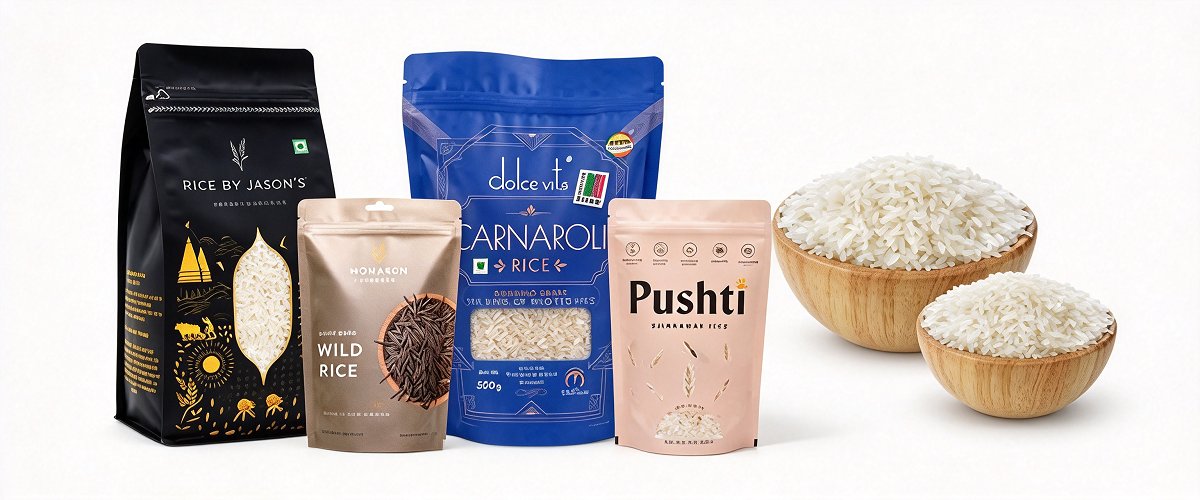
Frequently Asked Questions
What Is the Best Flexible Packaging Bag for Multigrain Rice?
There is no single best bag for every multigrain rice product. Stand-up pouches are suitable for many retail products, flat-bottom bags work well for premium positioning, pillow bags can support high-volume production, and gusseted bags may be better for larger packs. The best choice depends on product composition, fill weight, barrier needs, sales channel, and cost targets.
Which Packaging Material Is Best for Multigrain Rice?
The best material depends on the blend and the expected storage conditions. PET- or BOPP-based laminates may be suitable for some mainstream products, while VMPET or aluminum foil layers may be appropriate when stronger moisture, oxygen, or light protection is required. Final selection should be based on actual barrier specifications and package testing.
Does Multigrain Rice Need High-Barrier Packaging?
Not every multigrain rice product requires the highest available barrier. A blend sold quickly under controlled conditions may perform well with a suitable moderate-barrier structure. Products containing oxidation-sensitive ingredients or intended for long storage may benefit from stronger oxygen and moisture protection. Shelf-life testing should determine the appropriate level.
Is a Transparent Window Suitable for Multigrain Rice Bags?
A transparent window can help consumers see the grain mixture and evaluate its appearance. However, it may reduce light protection compared with an opaque or metallized design. Window size and placement should be considered alongside the product's sensitivity and intended shelf life.
Are Resealable Zippers Necessary for Multigrain Rice Packaging?
Zippers are useful for medium and large household packs that are opened repeatedly. They can make storage more convenient, but they do not replace the original heat seal or provide unlimited protection after opening. For small single-use packs, a zipper may not justify its additional cost.
Can Flexible Packaging Protect Multigrain Rice from Insects?
A properly sealed, undamaged package can help prevent external insects from entering. However, flexible packaging does not eliminate insects that may already be present in the raw material. Effective protection requires incoming-grain inspection, suitable processing, reliable seals, and appropriate pest management throughout storage and distribution.
Should Multigrain Rice Be Vacuum Packed?
Vacuum packaging may be appropriate for selected products, but it is not automatically necessary. It can reduce air inside the package, yet may compress fragile ingredients or increase puncture-related concerns. Its suitability should be assessed against the product composition, packaging cost, and intended shelf-life target.
Is Nitrogen Flushing Useful for Multigrain Rice?
Nitrogen flushing can reduce the amount of oxygen remaining inside a package when the filling process and packaging structure are properly designed. It may be useful for blends containing oxidation-sensitive ingredients. However, it cannot correct excessive moisture, poor seals, or unsuitable storage conditions.
How Can Manufacturers Extend the Shelf Life of Multigrain Rice?
Shelf life can be supported by starting with suitable raw materials, controlling product moisture, selecting an appropriate barrier structure, maintaining reliable seals, preventing contamination, and storing finished products under suitable conditions. The actual shelf life should be established through product-specific testing rather than assumed from the package material alone.
What Packaging Size Is Suitable for Multigrain Rice?
Small packs of approximately 100–250 grams may be suitable for samples or trial purchases, while 500-gram and 1-kilogram bags are common options to evaluate for household retail. Larger packs may be appropriate for family consumption or wholesale sales. Final sizing should account for the blend's bulk density, expected usage, bag dimensions, and distribution requirements.
Can Multigrain Rice Packaging Be Customized for Private-Label Brands?
Yes. Flexible packaging can be customized by bag format, dimensions, laminate structure, printing, finish, zipper, window, and other functional features. The minimum order quantity and cost depend on the selected format, printing process, number of designs, and supplier production requirements.
What Should Buyers Ask a Flexible Packaging Supplier?
Buyers should ask for the proposed material structure, barrier data where available, bag dimensions, seal specifications, food-contact documentation, printing options, minimum order quantity, lead time, and testing recommendations. They should also explain the product composition, target market, intended shelf life, and filling equipment so that the supplier can recommend a suitable package.
Conclusion
Selecting flexible packaging bags for multigrain rice requires a balanced understanding of product characteristics, barrier performance, packaging format, consumer convenience, and distribution demands. Stand-up pouches and flat-bottom bags can support premium retail presentation, pillow bags can provide an efficient option for high-volume products, and gusseted bags can accommodate larger household or wholesale quantities. Each format must be matched with a suitable material structure and reliable sealing system.
Moisture protection is essential for maintaining the quality of dry grains, while oxygen and light barriers may be especially important for blends containing brown rice, oats, seeds, or other oxidation-sensitive ingredients. Mechanical strength, seal integrity, and pest prevention also deserve careful attention, particularly for larger packages and long-distance shipments.
The most effective packaging solution is not necessarily the thickest, most elaborate, or most expensive option. It is the one that protects the actual multigrain blend, performs reliably on the production line, satisfies the destination market's requirements, and meets consumer expectations at a reasonable total cost.
By defining the product and shelf-life requirements early, comparing appropriate bag formats, requesting clear material specifications, and validating finished packages through filling, storage, and distribution tests, multigrain rice brands can make better packaging decisions. Well-selected flexible packaging helps preserve product quality, support a consistent retail identity, improve the customer experience, and create a dependable foundation for domestic and international growth.