Information You Need To Know About Vacuum Packaging of Meat
Anna_Yu
Information You Need To Know About Vacuum Packaging of Meat
Vacuum packaging has become one of the most important preservation technologies in the modern meat industry. As consumer expectations for freshness, safety, hygiene, and convenience continue to rise, brands are forced to rethink how they store, transport, and present meat products. In the past, traditional wrap-and-seal packaging methods were enough to meet the needs of local markets. However, today’s food supply chain is longer, colder, more globalized, and much more competitive. In this environment, vacuum packaging is no longer just a technical option—it has become a strategic tool for delivering quality, extending shelf life, reducing waste, and building consumer trust.
The rise of vacuum-sealed meat packaging is closely tied to advancements in packaging materials, sealing technologies, and food science. Modern multilayer films provide stronger oxygen barriers, higher puncture resistance, and more stable sealing properties than ever before. At the same time, improved vacuum equipment has made the process faster, more precise, and more suitable for mass production. For businesses, retailers, and consumers, this shift has created a packaging ecosystem that preserves flavor, prevents contamination, slows oxidation, and presents products attractively.
In this detailed guide, we will explore why vacuum packaging is essential for meat, what types of bags are commonly used, which materials are preferred, what benefits the technology brings, and what the future holds for vacuum-packed meat. Whether you are a manufacturer, brand, or distributor, understanding these insights will help you select the right packaging for efficiency, safety, and long-term growth.
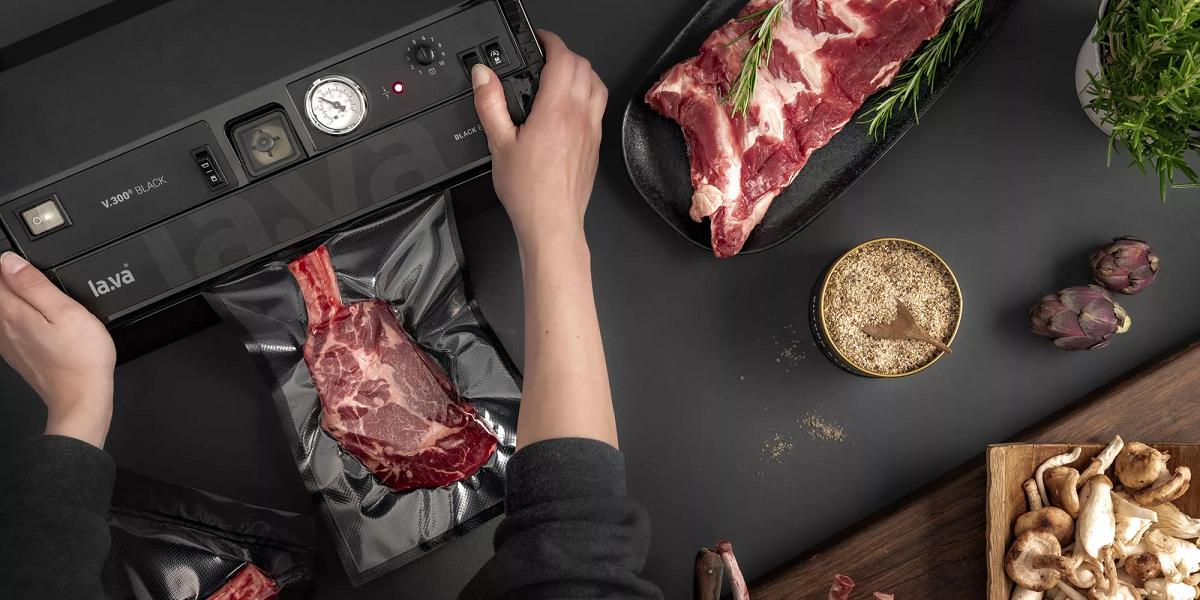
1. Why Is Vacuum Packaging of Meat So Important?
Vacuum packaging plays a critical role in the storage, distribution, and retail display of meat products. This technology provides a sealed environment with minimal oxygen, which helps extend shelf life and improve overall safety. The importance of vacuum packaging lies not only in its ability to maintain freshness but also in its contribution to hygiene, economic efficiency, and consumer satisfaction.
1.1 Extending Shelf Life
Oxygen exposure is the biggest threat to meat quality. When meat is exposed to air:
- Oxidation increases
- Bacteria grow more rapidly
- Color deteriorates
- Fat turns rancid
Vacuum packaging removes oxygen, slowing these processes significantly. Under refrigerated conditions, vacuum-packed meat can have:
- Up to 3–5 times longer shelf life than meat exposed to air
- Up to 2–3 times longer shelf life than meat packed in standard plastic wrap
For frozen meat, vacuum packaging prevents freezer burn, helping the product maintain its texture and flavor for extended periods.
1.2 Preserving Flavor and Juiciness
Meat exposed to air loses moisture through evaporation and oxidation. Vacuum sealing minimizes dehydration, allowing the meat to retain juices and natural flavors.
1.3 Preventing Contamination
Vacuum packaging is also an effective barrier against:
- Dust
- External bacteria
- Handling contamination
- Cross-contamination in storage
By limiting direct contact with air and surfaces, meat stays cleaner throughout the supply chain.
1.4 Reducing Waste for Retailers and Consumers
Extended shelf life means fewer products need to be discounted or thrown away. This is crucial for:
- Supermarkets
- Meat processors
- Restaurants
- Exporters
A reduction in spoilage directly translates to significant financial savings.
1.5 Enhancing Appearance on Shelves
Vacuum packaging keeps meat compact and allows for attractive display while showing the product clearly through transparent high-barrier films.
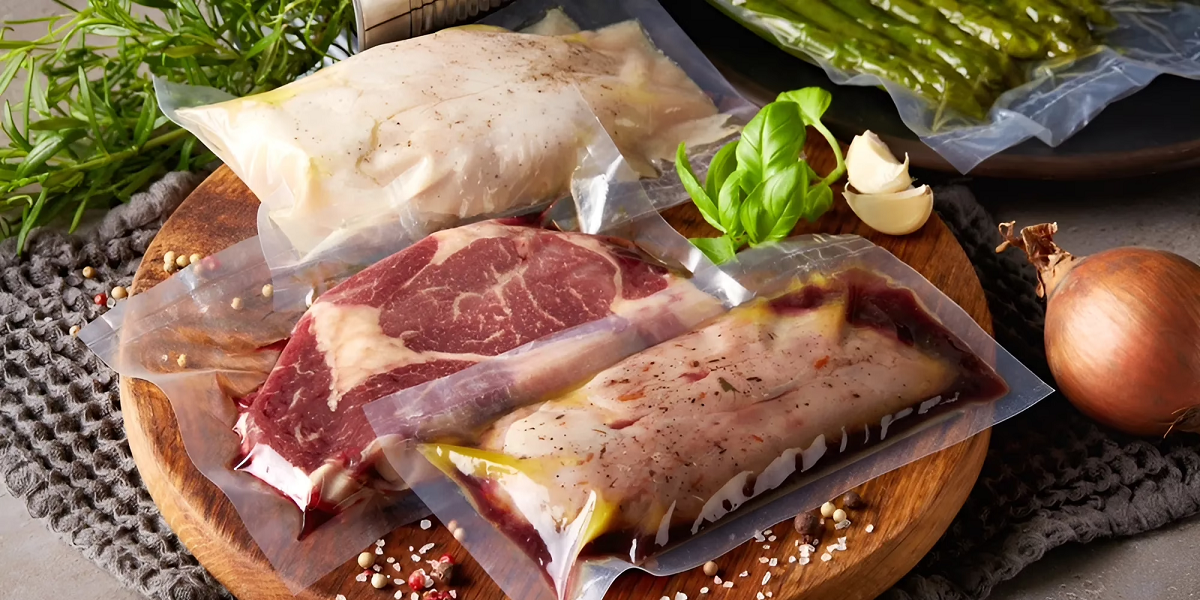
2. What Are Some Commonly Used Vacuum Packaging Bags for Meat?
Different applications require different types of vacuum bags. The meat industry relies heavily on several categories of vacuum packaging solutions that balance durability, barrier strength, and sealing efficiency.
2.1 PA/PE Vacuum Bags (Nylon/Polyethylene)
These are the most widely used vacuum bags for meat.
Structure typically includes:
- Outer layer: PA (Polyamide/Nylon)
- Inner layer: PE (Polyethylene)
Features:
- Excellent puncture resistance
- Strong oxygen barrier
- High sealing performance
- Flexibility sufficient for irregular shapes
- Cost-effective and suitable for mass production
These bags are ideal for raw meat, sausages, cold cuts, poultry, and fish.
2.2 Multilayer Coextruded Bags
Modern meat packaging often uses coextruded structures with 7–11 layers.
Common materials include:
- PA
- PE
- EVOH (Ethylene Vinyl Alcohol)
- PP (Polypropylene)
Advantages:
- Stronger barrier than traditional laminated bags
- Superior burst resistance
- Clearer transparency
- Better sealing under high-speed machinery
These are commonly used for high-value meats such as steak, lamb cuts, and export products.
2.3 Retort Vacuum Bags
For cooked or ready-to-eat meats, retort-resistant vacuum pouches are essential.
Material structure typically contains:
- PET
- AL (Aluminum Foil) or high-barrier nylon
- PP
Benefits:
- Withstands temperatures up to 135°C
- Excellent oxygen and moisture barrier
- Suitable for sterilized meat products
These bags are used for canned-style meat, seasoned chicken, and braised beef.
2.4 Shrink Vacuum Bags
Shrink bags are used for:
- Smoked meats
- Whole chickens
- Turkey
- Ham
- Ribs
After sealing, the bag shrinks tightly around the meat during heat treatment.
Advantages:
- Eliminates wrinkles
- Enhances product appearance
- Reduces oxidation
- Provides tight, professional presentation
Shrink bags typically use EVOH and PA for strength and barrier performance.
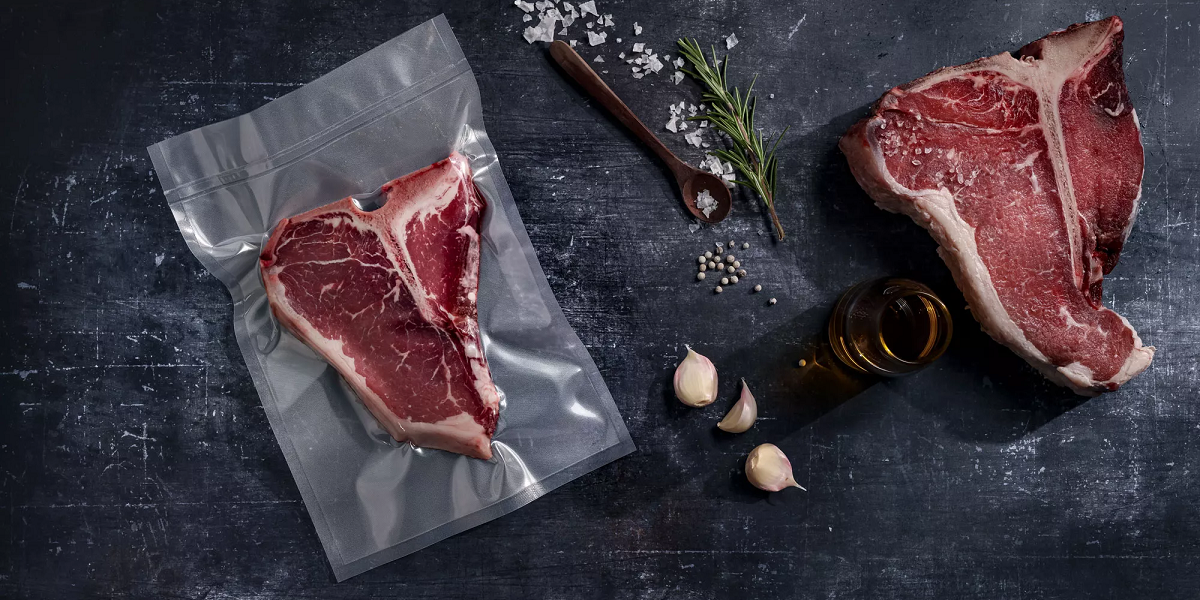
3. What Are the Commonly Used Materials for Vacuum Packaging of Meat?
Vacuum packaging materials must offer high oxygen barrier performance, moisture resistance, and toughness. The most commonly used materials include:
3.1 PA (Nylon)
Nylon is used as the outer layer of vacuum bags.
Advantages:
- Strong abrasion resistance
- High puncture durability
- Excellent oxygen resistance
- Flexibility under cold temperatures
Nylon prevents sharp bone edges from puncturing the packaging.
3.2 PE (Polyethylene)
PE is used as the inner contact layer.
Advantages:
- Strong sealing ability
- Good moisture resistance
- Food-safe and stable
- Low cost
PE helps create a secure and airtight seal.
3.3 EVOH
EVOH is one of the best oxygen barrier materials.
Advantages:
- Extremely low oxygen transmission
- Protects against spoilage
- Maintains freshness in long-chain distribution
EVOH is commonly included in coextruded and multilayer films.
3.4 PET (Polyester)
Used primarily for retort bags and laminated structures.
Advantages:
- High heat resistance
- High mechanical strength
- Clear visibility
PET improves durability and clarity.
3.5 PP (Polypropylene)
Often used as the inner layer for retort vacuum bags.
Advantages:
- Heat-resistant
- Safe for high-temperature sterilization
- Strong moisture barrier
PP is essential for cooked meat packaging.
3.6 Aluminum Foil (AL)
Aluminum foil is used for the highest barrier needs.
Advantages:
- 100% light barrier
- Near-zero oxygen transmission
- High puncture resistance
- Temperature-resistant
Often used for ready meals, military food packs, and export meat.
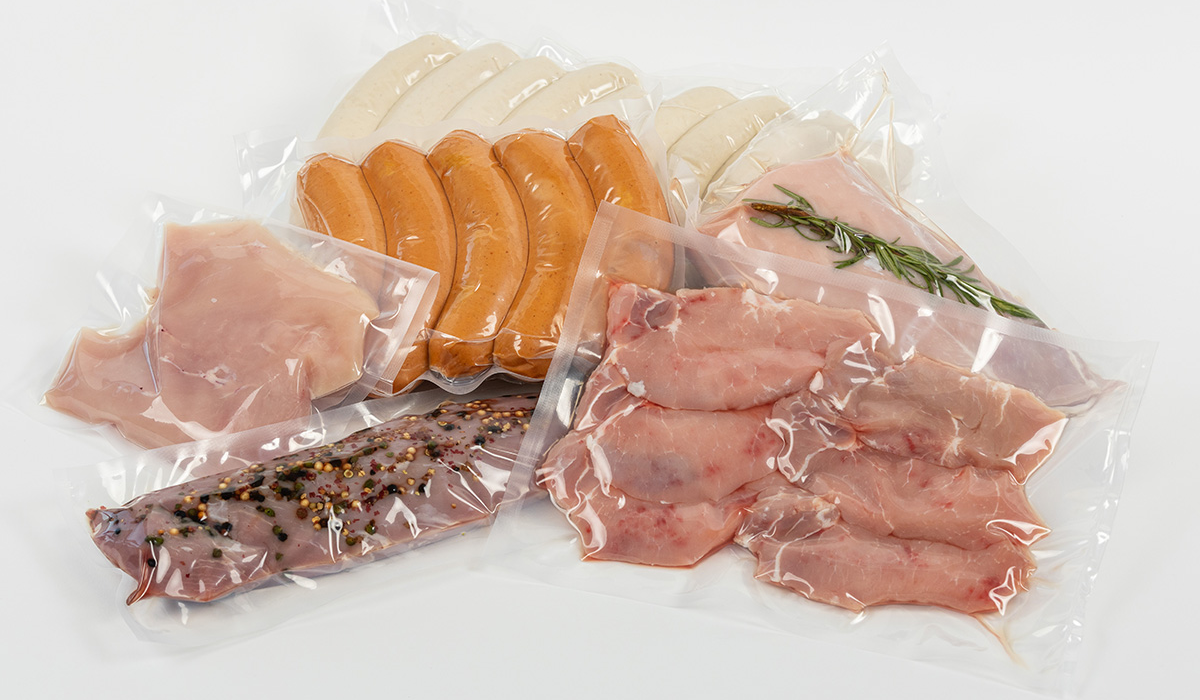
4. What Are the Advantages of Using Vacuum Packaging for Meat?
Vacuum packaging provides significant technical, economic, and commercial benefits.
4.1 Superior Oxygen Barrier
Vacuum technology maintains extremely low oxygen levels, which:
- Slows bacterial growth
- Reduces discoloration
- Prevents rancidity
- Protects vitamins
This ensures meat stays fresher for longer.
4.2 Reduction of Drip Loss
Vacuum seals prevent excessive moisture loss.
Benefits include:
- Juicier meat
- Better texture
- Reduced dehydration
Consumers experience a higher-quality product when opening vacuum-packed meat.
4.3 Improved Food Safety
Vacuum packaging reduces contamination risks throughout processing, storage, and transport.
4.4 Better Storage Efficiency
Vacuum bags are:
- Compact
- Stackable
- Space-saving
- Efficient for cold chain logistics
This greatly improves storage management.
4.5 Enhanced Product Appearance
Transparent high-barrier films display meat clearly and attractively.
Benefits:
- Increased consumer trust
- More premium appearance
- Greater merchandising flexibility
4.6 Cost Efficiency
Vacuum packaging reduces:
- Spoilage
- Food waste
- Transportation costs
- Packaging material usage
It offers one of the best ROI ratios in food packaging.
5. What Are the Future Trends in Vacuum Packaging for Meat?
With the growth of global meat consumption and the rise of sustainable packaging, vacuum packaging continues to evolve rapidly.
5.1 Recyclable Vacuum Packaging
Traditional multilayer films are difficult to recycle because of mixed materials. The future will shift toward:
- Mono-material PA/PE bags
- Recyclable PE-based structures
- Recyclable all-PP films
- Solvent-free laminates
Consumers increasingly demand eco-friendly solutions.
5.2 Biodegradable and Compostable Vacuum Films
Materials such as:
- PLA
- PBS
- Starch-based polymers
are being explored for vacuum packaging applications.
5.3 High-Barrier Sustainable Coextrusions
EVOH and nylon will be optimized to create thinner, lighter, more sustainable films.
5.4 Advanced MAP + Vacuum Hybrid Systems
These systems combine vacuum technology with modified atmosphere packaging (MAP).
Benefits:
- Longer shelf life
- Customized gas compositions
- Better preservation of color and texture
5.5 Smart Packaging
Future vacuum bags may integrate:
- Freshness indicators
- QR-coded traceability
- Temperature sensors
- Real-time supply chain data
Digital packaging can elevate transparency and trust.
FAQ
**1. Is vacuum packaging safe for meat?
Yes.**
Vacuum packaging is widely used in professional food processing and is considered one of the safest preservation methods.
**2. Does vacuum sealing change the taste of meat?
No.**
In fact, it helps maintain natural flavor by reducing oxidation and preventing moisture loss.
3. How long does vacuum-packed meat last?
- Refrigerated: 2–3 weeks
- Frozen: up to 2–3 years (depending on temperature and material)
**4. Can vacuum bags be reused?
Not recommended.**
Bags may become contaminated or lose barrier performance.
5. Are vacuum bags environmentally friendly?
Newer mono-material PE and PP structures are improving recyclability.
Conclusion
Vacuum packaging has transformed the meat industry by improving shelf life, safety, freshness, and visual presentation. As technology advances, vacuum packaging continues to evolve with more sustainable materials, smarter barrier solutions, and improved manufacturing efficiency. Whether you are a brand, retailer, or manufacturer, choosing the right type of vacuum bag and material is essential for protecting product quality and building consumer trust. With future innovations focusing on recyclability, smart indicators, and sustainable materials, vacuum packaging will remain a key pillar in the global food supply chain.