Some Things You Need to Know About Flexible Packaging for Oats
Anna_Yu
Some Things You Need to Know About Flexible Packaging for Oats
Oats have quietly moved from a traditional breakfast staple to a global symbol of healthy living. From instant oatmeal and rolled oats to high-protein blends and flavored oat cereals, consumers now expect oat products to be fresh, convenient, and visually appealing. Behind this shift, packaging plays a far more important role than many people realize. Flexible packaging, in particular, has become the backbone of modern oat brands, helping protect product quality while supporting branding, sustainability, and everyday usability.
Unlike many dry foods, oats are highly sensitive to moisture, oxygen, pests, and odor absorption. Even small packaging mistakes can lead to clumping, loss of flavor, or shortened shelf life. At the same time, oat buyers tend to be health-conscious and detail-oriented. They read labels carefully, care about sustainability, and value packaging that feels trustworthy and easy to use. This makes flexible packaging not just a container, but a silent communicator between brand and consumer.
In this article, I’ll walk you through why flexible packaging matters so much for oats, which bag shapes work best, what materials are commonly used, and where oat packaging is heading as we approach 2026. If you’re planning to package oats—or rethink your current solution—this guide will help you make smarter, future-ready decisions.
1. Why Is Flexible Packaging Important for Oats?
Flexible packaging has become the preferred choice for oats because it solves several critical challenges at once. The most obvious reason is product protection. Oats are hygroscopic, meaning they easily absorb moisture from the air. Once moisture enters the package, oats can clump, lose texture, or even develop mold over time. High-quality flexible packaging creates a reliable barrier against moisture and oxygen, keeping oats dry and fresh.
Another key factor is shelf life extension. Compared to paper-only or loosely sealed packaging, laminated flexible structures significantly slow down oxidation and environmental exposure. This is especially important for oats distributed across long distances or stored for extended periods.
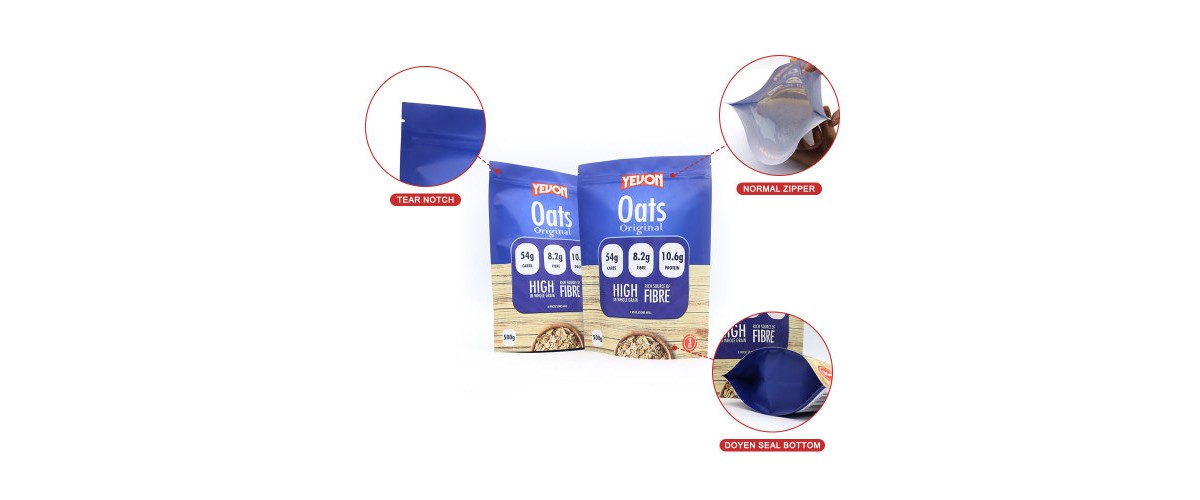
Flexible packaging also improves consumer convenience. Features like resealable zippers, easy-tear notches, and lightweight materials make oats easier to store and use daily. For families and health-focused consumers, being able to open, reseal, and pour oats without mess is a real advantage.
From a brand perspective, flexible packaging offers unmatched design flexibility. It supports high-quality printing, transparent windows, matte or gloss finishes, and modern visual storytelling—helping oat brands stand out on crowded shelves. At the same time, flexible packaging uses less material than rigid alternatives, reducing transportation costs and environmental impact.
2. Which Bag Shapes Are Suitable for Oats?
Choosing the right bag shape is just as important as choosing the right material. Different oat products and sales channels benefit from different pouch structures.
Stand-up pouches are one of the most popular choices for oats. Their flat bottom allows them to stand upright on shelves, improving visibility and shelf efficiency. They are ideal for retail packaging and premium oat brands that want strong shelf presence.
Gusseted bags are often used for larger volumes or family-size oat packaging. Side or bottom gussets increase capacity while maintaining a compact footprint, making them suitable for both retail and bulk sales.
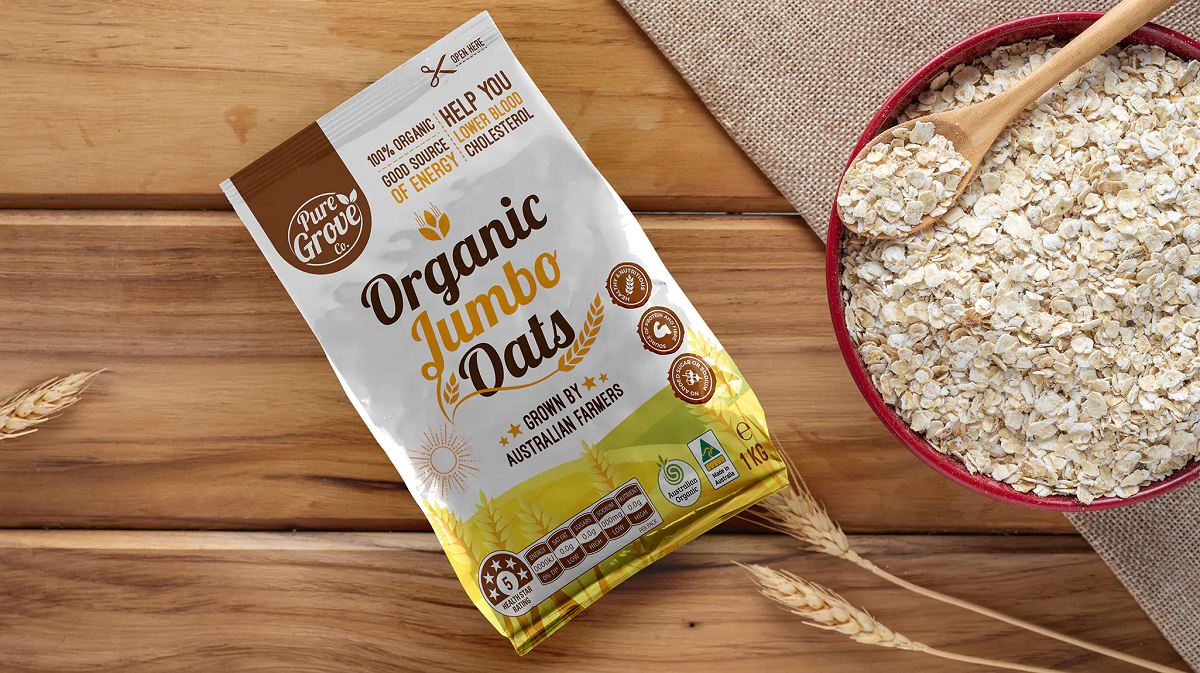
Pillow bags are a cost-effective option commonly used for instant oats or single-serve packs. They work well with high-speed production lines and are often used for promotional or value-oriented products.
Resealable zipper bags are increasingly becoming the standard for oats. Since oats are rarely consumed all at once, resealability helps maintain freshness after opening and reduces food waste. Many brands combine zippers with stand-up pouch formats for the best overall user experience.
The best bag shape depends on portion size, target market, and how consumers typically use the product.

3. What Materials Are Typically Used to Make Flexible Packaging for Oats?
Flexible packaging for oats usually relies on multi-layer laminated structures, with each layer serving a specific function.
The outer layer is often made from materials like BOPP or PET. This layer provides strength, print quality, and visual appeal. Matte finishes are especially popular for oat packaging because they convey a natural, premium, and health-focused image.
The barrier layer plays a critical role in protecting oats from moisture and oxygen. Depending on shelf life requirements, materials such as EVOH, metallized films, or aluminum-based laminations may be used. These layers significantly reduce permeability and help preserve product quality.
The inner sealing layer, typically PE or CPP, is responsible for food safety and heat sealing. It ensures the package closes securely and remains safe for direct food contact.
More brands are also exploring mono-material structures, such as all-PE or all-PP laminations, to improve recyclability while maintaining adequate barrier performance. Material choice should always balance protection, cost, sustainability, and regulatory compliance.
4. What Are the Trends in Oat Packaging in 2026?
Looking ahead to 2026, oat packaging is expected to follow several clear trends driven by consumer behavior, regulations, and sustainability goals.
First, sustainable packaging will move from a “nice-to-have” to a baseline expectation. Recyclable flexible packaging, reduced material usage, and clear sustainability messaging will become standard for oat brands.
Second, functional convenience will continue to evolve. Resealable closures, easy-open features, and ergonomic pouch designs will be refined to improve daily use. Packaging that fits easily into kitchen storage will gain preference.
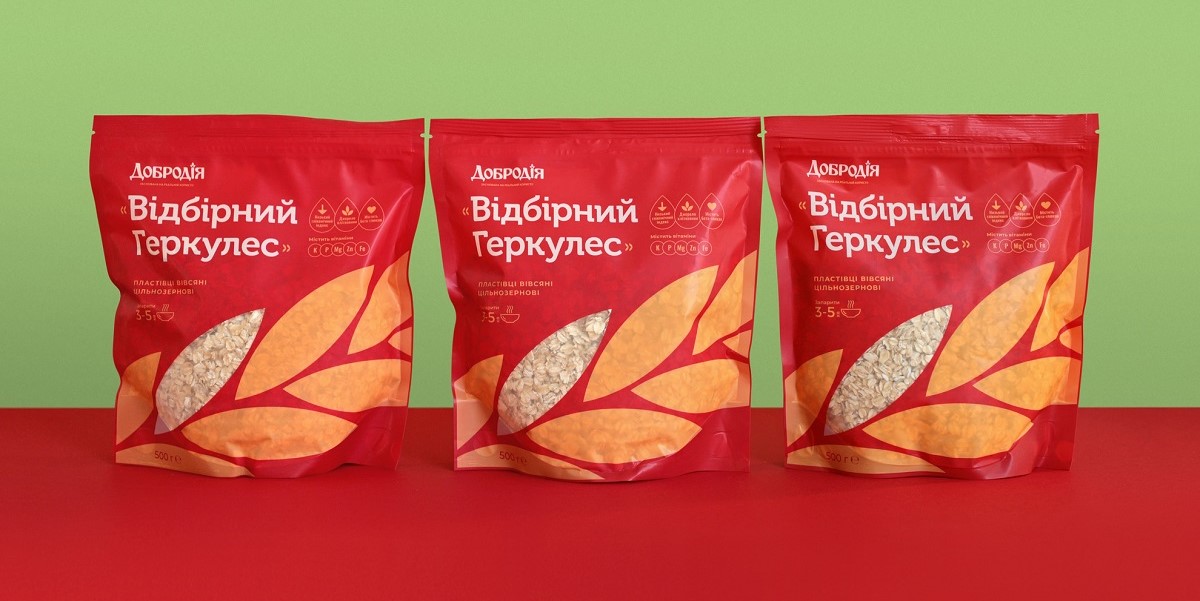
Third, clean and transparent design will dominate branding. Consumers want to see what they are buying and trust what they eat. Window pouches, minimal graphics, and natural color palettes will remain popular in oat packaging.
Finally, digital printing and customization will grow rapidly. Shorter production runs, seasonal designs, and personalized packaging will allow brands to respond faster to market trends without excessive inventory risk.
FAQ
Why can’t oats be packed in simple paper bags?
Paper alone offers poor moisture and oxygen resistance, which can quickly reduce oat quality.
Is flexible packaging safe for oats?
Yes, when food-grade materials and compliant production processes are used.
Do oats really need resealable packaging?
While not mandatory, resealable packaging significantly improves freshness and user convenience.
Are recyclable flexible oat packages available?
Yes, many suppliers now offer recyclable mono-material options suitable for oats.
Conclusion
Flexible packaging has become essential for modern oat products, offering the right balance of protection, convenience, branding, and sustainability. From moisture control to shelf appeal, the right packaging directly influences product quality and consumer trust. As oat consumption continues to grow and evolve, brands that invest in thoughtful, future-ready flexible packaging will be better positioned to stand out and succeed in an increasingly competitive market.