Tea Packaging Guide
Anna_Yu
Tea Packaging Guide
1. What is Tea Packaging?
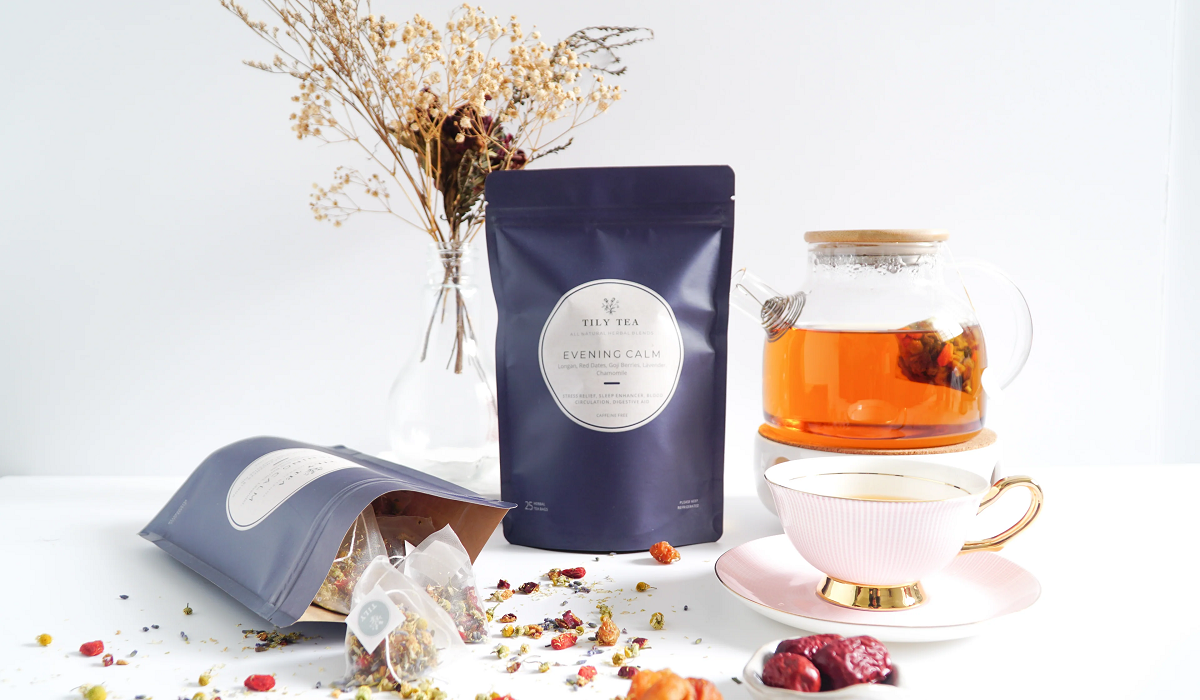
Tea packaging is more than just a container for loose leaves or tea bags—it is the critical barrier that maintains the delicate aroma, flavor, and freshness of one of the world’s most sensitive agricultural products. Because tea readily absorbs moisture and odors from the surrounding environment, proper packaging is essential to preserve its quality from the moment it leaves the tea estate until it reaches the cup of the consumer.
In its simplest definition, tea packaging refers to the process of enclosing processed tea leaves in materials designed to protect them from physical, chemical, and environmental damage. This includes packaging for retail (small sachets or pouches), bulk transportation (laminated multi-layer sacks), and premium gifting (metal tins or paper canisters).
The Purpose of Tea Packaging
Tea is hygroscopic—it readily absorbs moisture and airborne odors. Therefore, its packaging must perform multiple protective roles:
- Moisture Control – Prevents dampness that can cause fungal growth and flavor degradation.
- Aroma Retention – Stops the loss of volatile essential oils that give tea its characteristic scent.
- Light Protection – Shields delicate leaves from sunlight, which can trigger oxidation.
- Barrier Against Contaminants – Protects from dust, microorganisms, and foreign odors.
- Preservation of Appearance – Keeps the texture and color of tea intact.
- Convenience and Branding – Offers ease of storage, transportation, and visual appeal for marketing.
Historically, tea was packed in wooden chests lined with lead foil to ensure freshness during long sea voyages. Modern packaging, however, relies on laminated films and vacuum sealing that provide better preservation while being cost-effective and customizable.
2. What Are the Common Types of Tea Packaging Bags?
Tea packaging varies widely depending on the type of tea (green, black, oolong, herbal, matcha, etc.), target market, and desired shelf life. Different packaging styles serve both practical and marketing purposes. Below are the most common types of tea packaging bags used in the modern tea industry.
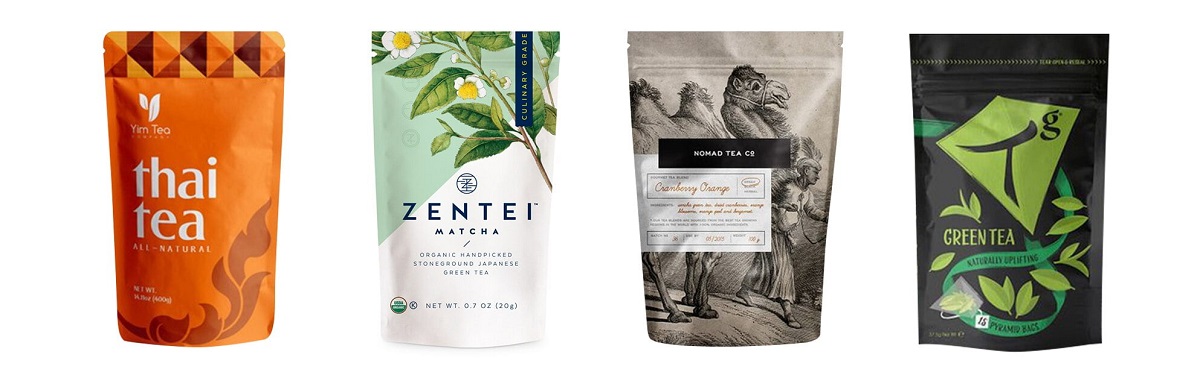
1. Stand-Up Pouches (Doypack)
Description:
Stand-up pouches are among the most popular packaging types for loose-leaf tea and specialty blends. They feature a bottom gusset that allows the bag to stand upright on shelves, improving product visibility and consumer convenience.
Advantages:
- Excellent presentation for retail display.
- Can include resealable zippers or tear notches.
- Compatible with high-quality printing for branding.
- Supports laminated materials for superior barrier properties.
Common Materials:
PET/AL/PE or BOPP/AL/CPP laminates for moisture and oxygen protection.
2. Flat Pouches
Description:
Flat pouches are simple, cost-effective packages typically used for sample-sized tea portions or single-serving sachets.
Advantages:
- Economical and lightweight.
- Ideal for travel, promotions, or sample packs.
- Easy to heat seal and print.
Limitations:
- Less durable than stand-up types.
- Not suitable for large tea quantities.
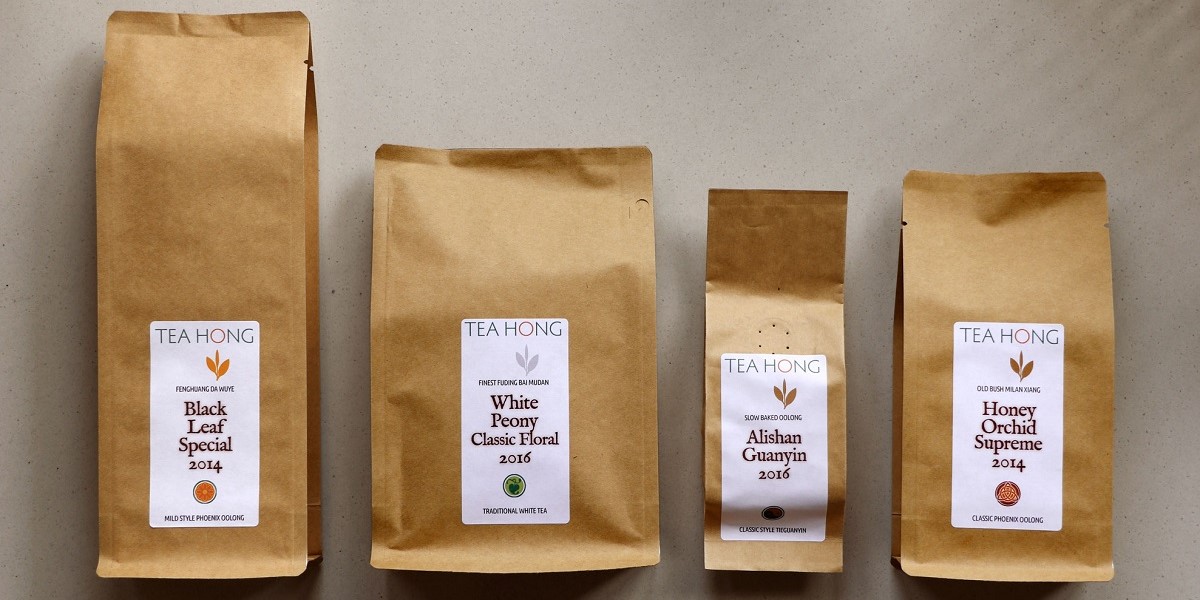
3. Kraft Paper Bags with Inner Foil
Description:
Kraft paper tea bags offer a natural, eco-friendly aesthetic. When paired with an inner layer of aluminum or metalized film, they provide adequate barrier protection.
Advantages:
- Eco-conscious look appeals to organic and artisanal brands.
- Can be compostable or recyclable depending on material selection.
- Excellent balance between sustainability and protection.
Applications:
Ideal for boutique tea brands, organic markets, or gift packaging.
4. Vacuum-Sealed Bags
Description:
Vacuum packaging removes oxygen from the bag before sealing, minimizing oxidation and extending the shelf life of tea.
Advantages:
- Retains aroma and freshness for long-term storage.
- Prevents mold growth and discoloration.
- Reduces the volume of the package for easier shipping.
Common Materials:
PET/NY/PE or PET/AL/PE laminated films, offering strong puncture resistance.
5. Tin-Tie Bags
Description:
These paper-based bags have a metal tie closure that allows resealing after each use. They are commonly used in artisanal tea shops.
Advantages:
- Reusable and resealable.
- Vintage and aesthetic design.
- Often lined with foil or biodegradable film for protection.
Applications:
Loose-leaf tea, herbal blends, or small-batch specialty products.
6. Pyramid Tea Bags
Description:
Made from food-grade nylon or biodegradable PLA mesh, pyramid tea bags provide more space for tea leaves to expand, improving infusion quality.
Advantages:
- Modern, convenient, and premium-looking.
- Enhances brewing performance and visibility.
- Can be heat-sealed or ultrasonic-sealed for hygiene.
Challenges:
Not all mesh materials are recyclable or compostable, which poses sustainability concerns.
7. Metal Tins and Rigid Containers
Description:
Premium teas, gift sets, or collectible editions often use rigid metal or paper canisters.
Advantages:
- Provides strong protection against moisture, light, and air.
- High perceived value for premium branding.
- Reusable and often recyclable.
Drawbacks:
- Higher production and shipping costs.
- Less flexible for large-scale retail packaging.
3. What Materials and Techniques Are Typically Used for Better Tea Storage?
To preserve tea quality, packaging materials must offer strong barrier protection, mechanical durability, and compatibility with filling processes. The selection of materials depends on tea type, shelf life, and branding requirements.
Common Packaging Materials
| Material | Key Features | Typical Use |
|---|---|---|
| PET (Polyethylene Terephthalate) | Excellent print surface, good gas barrier | Outer layer in laminates |
| BOPP (Biaxially Oriented Polypropylene) | Transparent, lightweight, moisture-resistant | Outer or mid layer |
| AL (Aluminum Foil) | Excellent oxygen and light barrier | Middle layer for long shelf life |
| PE (Polyethylene) | Provides heat sealability | Inner sealing layer |
| Kraft Paper | Natural look, compostable | Outer aesthetic layer |
| Nylon (PA) | Strength and puncture resistance | Barrier and structural support |
| PLA (Polylactic Acid) | Compostable bioplastic | Sustainable packaging options |
A typical three-layer structure for premium tea pouches might be PET/AL/PE or BOPP/VMCPP (where VMCPP is vacuum-metallized cast polypropylene).
Packaging Techniques
-
Vacuum Packaging
Removes air to prevent oxidation and moisture absorption, extending shelf life significantly. -
Nitrogen Flushing
Replaces oxygen with nitrogen gas to maintain aroma and prevent oxidation—commonly used in green tea and oolong packaging. -
Heat Sealing
Ensures airtight closure, often used with PE or CPP as the sealing layer. -
Lamination
Combines multiple materials into one structure, allowing for optimal barrier and mechanical properties. -
Matte and Gloss Finishes
Enhance shelf appeal, especially for gift teas or premium collections. -
Zipper or Resealable Closures
Improve consumer convenience and prevent repeated exposure to air. -
Printing Techniques
High-definition rotogravure or digital printing creates detailed, vibrant designs that reflect brand identity and product quality.
Importance of Material Compatibility
Tea’s aroma compounds are highly volatile, and certain plastics can absorb or react with these compounds. Therefore, packaging materials must be non-reactive, food-safe, and odorless. Laminated films with a neutral inner sealing layer (like PE or CPP) are ideal.
Manufacturers often conduct shelf-life testing to determine the best combination of materials for specific tea varieties, ensuring that flavor, color, and aroma remain consistent over time.
4. Future Trends in Tea Packaging
The tea industry is evolving rapidly due to global sustainability initiatives, e-commerce growth, and shifting consumer preferences. The future of tea packaging lies in combining eco-friendliness, functionality, and aesthetics without compromising tea quality.
1. Sustainable and Recyclable Packaging
Brands are moving toward mono-material structures—such as all-PE or all-PP pouches—that can be easily recycled through existing plastic recycling streams. Additionally, bio-based materials like PLA, cellulose film, and compostable coatings are emerging alternatives to aluminum-based laminates.
Some companies are adopting paper-based pouches with bio-barrier coatings, which provide moisture protection while maintaining recyclability.
2. Minimalist and Transparent Design
Modern consumers appreciate authenticity. Packaging trends now favor clear windows that showcase the tea leaves inside, along with minimalist typography and natural color palettes. These designs communicate purity, freshness, and quality, aligning with the wellness-driven tea culture.
3. Smart Packaging Technology
Smart packaging allows brands to connect with consumers digitally. QR codes or NFC tags can provide details about tea origin, brewing instructions, sustainability certifications, or harvest dates. In the premium market, traceability and transparency are becoming selling points.
4. Lightweighting and Material Efficiency
Reducing packaging thickness and optimizing film structures can lower carbon footprints. Advanced coatings and nano-barrier films can maintain protection even with thinner materials, aligning with sustainability goals.
5. Refillable and Reusable Containers
Eco-conscious consumers increasingly prefer refillable tins, jars, and paper tubes. Brands offering refill packs or subscription models can strengthen customer loyalty while reducing packaging waste.
6. Premiumization and Gifting
As tea culture continues to expand globally, the demand for luxury tea packaging is also growing. This includes embossed paper tubes, magnet boxes, and custom tins that combine elegance with practicality. Premium packaging also supports higher price positioning for artisanal and specialty teas.
7. E-commerce-Oriented Design
Online tea sales are booming, and packaging must adapt to survive long-distance shipping. This means stronger seals, puncture resistance, and moisture-proof coatings. Flat-bottom pouches and resealable zippers are particularly popular for online retail.
Conclusion
Tea packaging is a delicate balance between art, science, and sustainability. The perfect tea bag must protect against moisture, oxygen, and light while preserving aroma, freshness, and flavor. At the same time, packaging plays a vital role in communicating brand values and aesthetics.
The future of tea packaging will continue to evolve toward eco-friendly materials, smart digital features, and consumer convenience. From traditional foil-lined kraft paper to modern recyclable laminates, each packaging solution reflects a careful harmony between preservation technology and cultural appreciation of tea.
In a world where both freshness and sustainability matter, innovative packaging design will be the bridge that connects tea heritage with modern environmental responsibility.