Tear at Notch Packaging: What You Need to Know
Anna_Yu
Tear at Notch Packaging: What You Need to Know
Tear-at-notch packaging has quietly become one of the most important user-friendly design features in modern flexible packaging. Whether it’s food, snacks, pharmaceuticals, or daily-use consumables, the presence of a clean tearing point significantly enhances convenience and improves the overall customer experience. Although a tear notch seems like a small structural detail, it is actually the result of deliberate engineering decisions, material science, and design optimization. Understanding how tear notches function, where they are used, and how to optimize them can help brands improve their packaging performance as well as business outcomes.
Below is a complete and detailed guide that explains the core principles, applications, and design strategies behind tear-at-notch packaging.
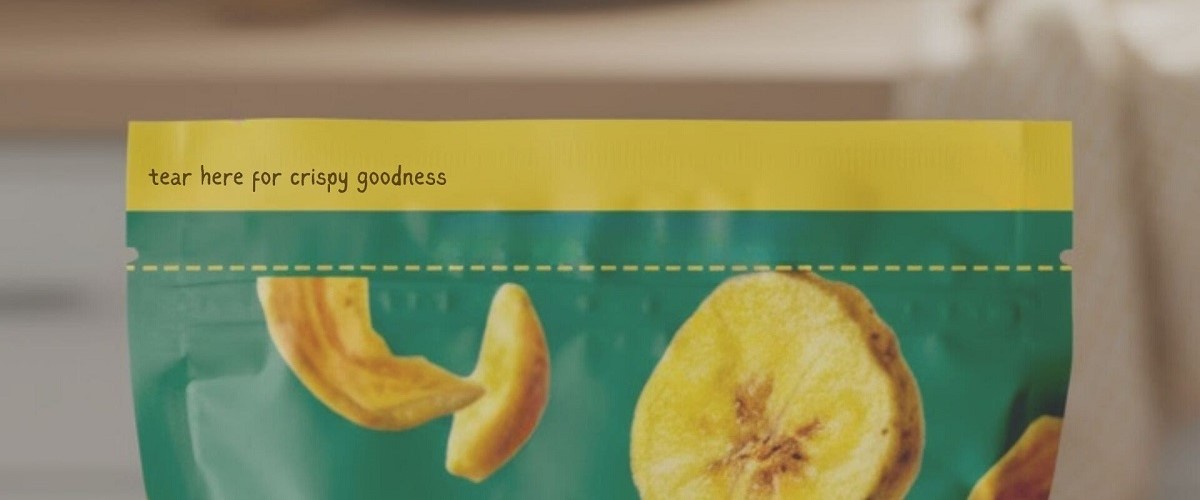
1. What Is a Tear Notch?
A tear notch is a small V-shaped or U-shaped cut placed on the edge of flexible packaging bags, allowing users to easily open the package without additional tools. It acts as a predefined weak point in an otherwise strong laminated material structure. Modern flexible packaging films such as PET, NY, MOPP, PE, and aluminum-foil laminates are engineered for durability, which means they resist random tearing. Because of this strength, a guiding point must be intentionally designed for users to open the bag smoothly and consistently.
Key functions of a tear notch:
- Creates a precise tear path
It tells the material where to break first, giving the user full control. - Enhances consumer convenience
The package can be opened without scissors or knives. - Improves perceived quality
Smooth tearing reinforces the sense of premium product engineering. - Maintains internal seal integrity before use
Tear notches only activate once the consumer pulls — until then the bag remains securely sealed.
A tear notch is not just a cut—it is a carefully positioned and dimensioned structural feature that transforms strong packaging into an accessible, user-friendly system.
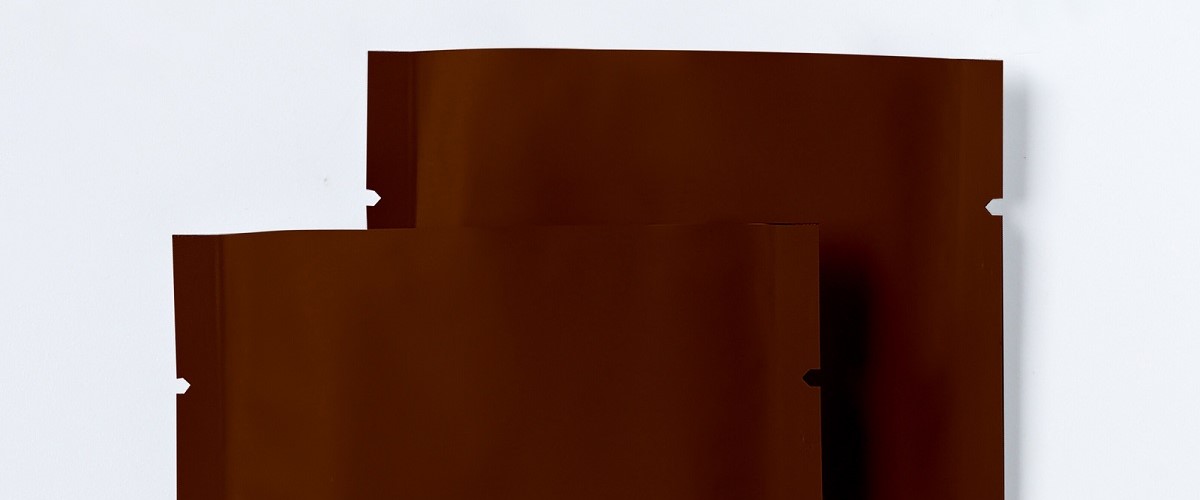
2. Which Packaging Will Use Tear Notch?
Tear notches are widely used across nearly all categories of flexible packaging. Below are the most common applications:
Food Packaging
- Snacks: chips, nuts, dried fruits
- Coffee packaging with degassing valve
- Powdered goods: protein, spices, drink mixes
- Candy, chocolate, small confectionery bags
Beverage & Liquid Packaging
- Single-serve juices
- Energy drinks in pouches
- Liquid condiments: ketchup, soy sauce, honey sachets
Pharmaceutical & Healthcare Packaging
- Vitamin sachets
- Medical powder packets
- Single-dose treatments
Pet Food & Treats
- Small trial-size pouches
- Daily-portion packaging
Cosmetics & Personal Care
- Facial masks
- Lotion samples
- Shampoo/conditioner sachets
Household Products
- Detergent powders
- Cleaning wipes
- Dehumidifying agents
Essentially, any product packed in small to medium flexible packaging bags—including stand-up pouches, three-side-seal bags, quad-seal bags, flat pouches, and sachets—can benefit from tear notch integration.
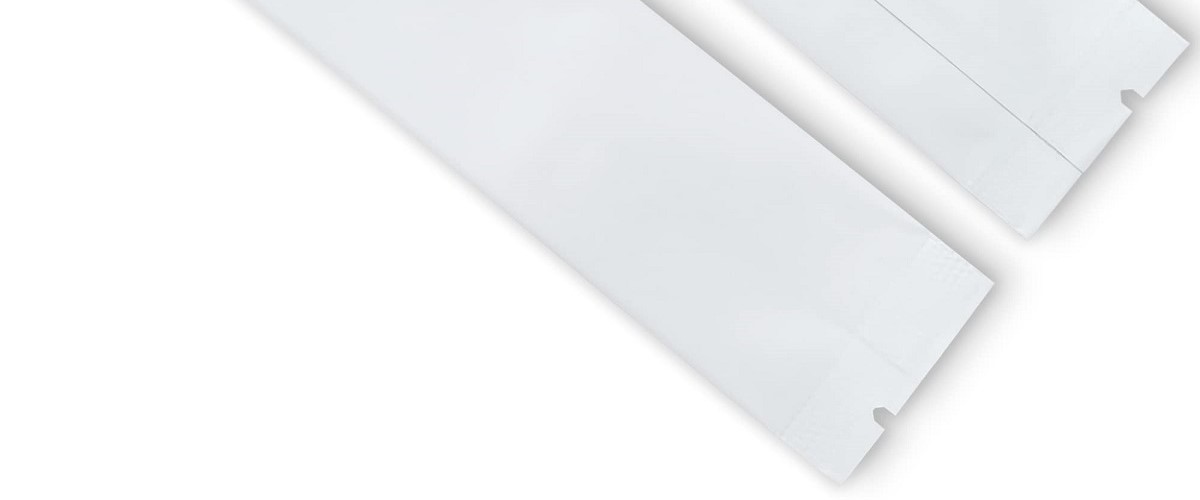
3. How Does Tear Notch Work?
The functionality of a tear notch relies on material science + mechanical leverage.
3.1 The principle of stress concentration
Flexible materials such as PET/NY/PE laminates are engineered to resist tearing. When no weak point exists, force spreads evenly through the film, preventing tearing.
A tear notch concentrates stress at a single point, causing the tear to begin exactly where intended.
3.2 Guiding the tear direction
A well-designed notch ensures the tear moves horizontally across the sealing layer rather than vertically down the pouch.
This requires:
- Correct notch placement
- Proper angle (typically 30–60 degrees)
- Adequate depth
- Alignment to the sealing line
3.3 Interaction with film thickness and structure
Multi-layer structures behave differently depending on:
- Tensile strength
- Material elasticity
- Lamination method
- Presence of barrier layers (aluminum/NY/EVOH)
The tear notch must consider these variables to ensure predictable tearing.
3.4 Support from mechanical processes
During production:
- The film passes through the bag-making machine.
- A die-cutting blade punches the notch precisely.
- Heat sealing creates a horizontal sealing layer aligned with the notch.
This ensures both structural strength and controlled tear functionality.
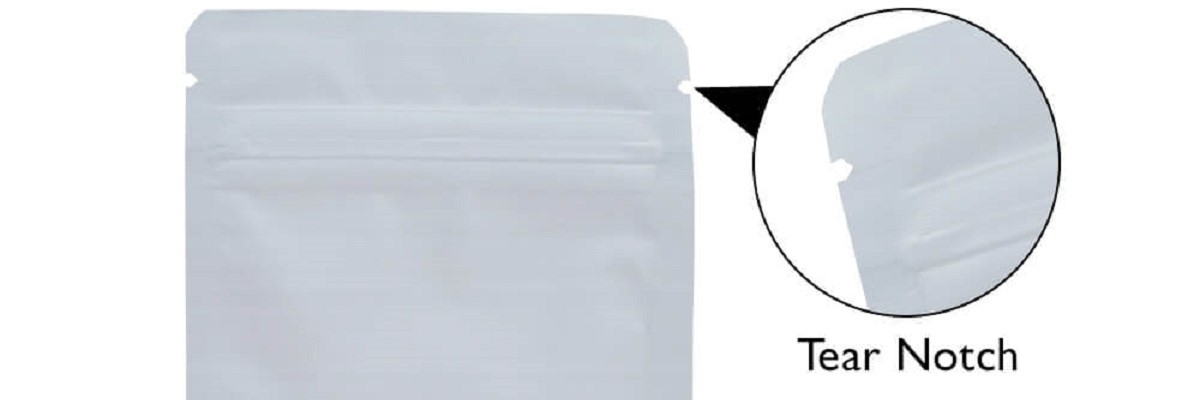
4. How Can We Design the System to Maximize the Effect of Tear Notch?
To design an effective tear notch system, several engineering and design elements must be considered.
4.1 Film Material Selection
Some materials tear smoothly, while others resist directional tearing.
Designers must evaluate:
- PET (polyester): strong, crisp tearing
- NY (nylon): high toughness, may require deeper notch
- MOPP: excellent printability but needs precise notch alignment
- PE: softer, may stretch before tearing
- ALU foil laminates: extremely strong, need larger notch angle
4.2 Material Thickness Optimization
A thicker structure provides durability but increases tear difficulty.
For example:
- 60–90 microns: ideal for small sachets
- 100–130 microns: requires deeper V-shaped notch
- 150+ microns: may require dual-side notches
4.3 Seal Width Alignment
The strongest part of any flexible bag is the seal.
Tear notch effectiveness increases when:
- The notch aligns precisely with the top sealing line
- Seal width is controlled (8–12 mm is typical)
If misaligned, users may struggle to tear straight, reducing perceived quality.
4.4 Dual Tear Notches for Premium Products
High-end brands often use double-sided notches to:
- Improve accessibility for both left- and right-handed users
- Create a more symmetric and visually pleasing design
- Minimize tearing errors
4.5 Add Tear-Assisting Features
Options include:
- Laser scoring: creates a micro cut for ultra-smooth tearing
- Micro-perf lines: for single-serve sachets
- Easy-open films: designed with reduced tear resistance
These enhance user satisfaction significantly.
5. How Does Tear Notch Improve the User Experience?
Tear notches directly influence how customers interact with your product. A smooth, effortless opening often becomes part of the brand’s identity.
5.1 Convenience and Accessibility
- No tools required
- Quick access for on-the-go consumption
- Works well for children and elderly users
5.2 Clean, Controlled Opening
- Prevents product spillage
- Preserves portion integrity
- Creates a consistent experience
5.3 Supports Resealable Systems
Tear notches are frequently paired with:
- Ziplocks
- Velcro closures
- Tin ties
This enhances long-term usability.
5.4 Strengthens Perceived Product Quality
A clean open = a positive emotional reaction.
Customers subconsciously associate easy opening with:
- Higher packaging cost
- Professional engineering
- Better overall product quality
5.5 Enhances Brand Trust
Consumers notice small details.
When packaging works flawlessly, they trust the brand more—and are more likely to repurchase.
FAQ
Q1: Why does some packaging have two tear notches?
To improve usability, ensure ambidextrous access, and provide a cleaner horizontal tear.
Q2: Can tear notches be added to any bag material?
Most flexible films support tear notches, but materials like high-strength nylon or aluminum foil may require special design adjustments.
Q3: Do tear notches affect the sealing strength?
No—when properly positioned, the notch affects only the opening point and does not compromise seal integrity before use.
Q4: Can tear notches be used with resealable zippers?
Yes. They are commonly used above the zipper as part of a two-step opening system.
Q5: Is laser scoring better than a normal tear notch?
Laser scoring provides smoother tearing but costs more. It is ideal for premium products.
Conclusion
Tear-at-notch packaging is much more than a simple cut on the side of a bag—it is a crucial element that shapes product accessibility, user satisfaction, and overall brand perception. With the right combination of film materials, notch geometry, seal alignment, and optional enhancements like laser scoring, brands can offer packaging that feels smart, premium, and user-friendly.
Whether you produce food, beverages, cosmetics, pharmaceuticals, or daily-use products, a well-engineered tear notch can act as a small investment with a big return: smoother operation, stronger customer loyalty, and an unmistakably elevated packaging experience.