The Ultimate Guide to Flexible Packaging for Ice Cream
Anna_Yu
The Ultimate Guide to Flexible Packaging for Ice Cream
Ice cream is one of the most popular frozen desserts worldwide, but it is also one of the most challenging products to package effectively. Unlike dry or shelf-stable foods, ice cream requires strict temperature control and protection from environmental factors such as oxygen, moisture, and temperature fluctuations. Improper packaging can lead to issues such as freezer burn, ice crystal formation, flavor degradation, and even leakage during distribution.
As consumer demand for convenience, sustainability, and premium product experiences continues to grow, flexible packaging has become an increasingly important solution for ice cream products. From single-serve ice cream bars to bulk packaging for foodservice applications, flexible packaging offers a combination of durability, barrier protection, and design versatility. It allows manufacturers to maintain product quality while optimizing logistics and enhancing brand appeal.
Flexible packaging also supports innovative formats that improve consumer convenience, such as easy-open wrappers, resealable pouches, and portion-controlled packaging. Additionally, advancements in material science have enabled flexible packaging to perform reliably under freezing and low-temperature conditions, ensuring that ice cream products remain fresh and visually appealing throughout their lifecycle.
This guide explores the best types of flexible packaging for ice cream, how these materials perform in cold environments, which structures provide optimal barrier protection, and what features are essential for maintaining product quality and preventing leakage.
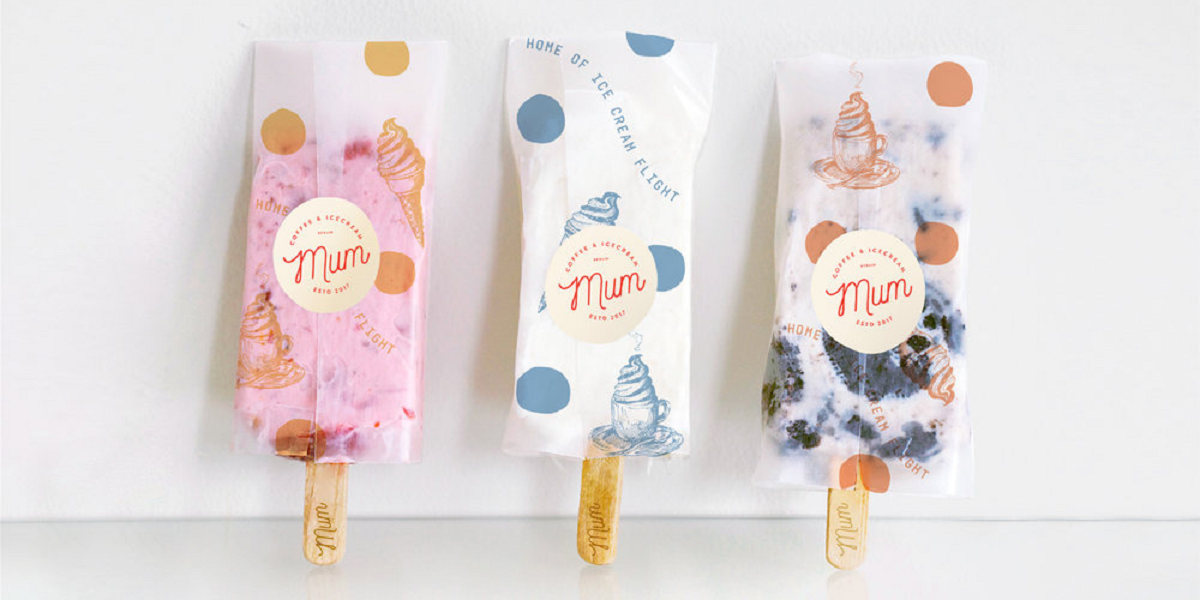
1. What Types of Flexible Packaging Are Best for Ice Cream Products?
Different ice cream formats require different packaging solutions.
Flow Wrap Packaging
Flow wrap is commonly used for:
- Ice cream bars
- Ice cream sandwiches
- Chocolate-coated frozen treats
It provides a tight seal and efficient packaging for high-speed production lines.
Pillow Pouches
Pillow pouches are suitable for:
- Small ice cream portions
- Frozen novelty products
They are cost-effective and easy to produce at scale.
Stand-Up Pouches
Stand-up pouches are increasingly used for:
- Ice cream bites
- Frozen desserts
- Bulk or family-sized portions
They offer strong shelf presence and resealable options.
Laminated Film Wrappers
Multi-layer laminated films are widely used to wrap ice cream products due to their flexibility and barrier properties.
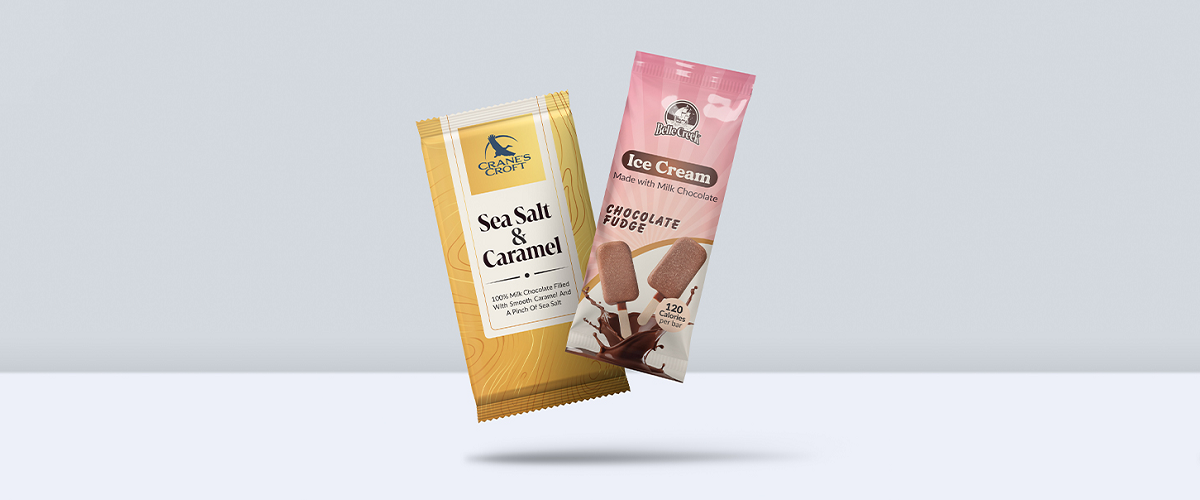
2. How Does Flexible Packaging Perform Under Freezing and Low-Temperature Conditions?
Ice cream packaging must withstand extreme cold without losing performance.
Flexibility at Low Temperatures
High-quality flexible packaging materials are designed to remain flexible even at freezing temperatures, preventing cracking or brittleness.
Seal Integrity
Strong heat seals must remain intact during freezing and handling to prevent leaks and contamination.
Resistance to Temperature Fluctuations
Packaging must handle temperature changes during:
- Transportation
- Storage
- Retail display
Without compromising product quality.
Prevention of Ice Crystal Formation
Proper packaging reduces moisture migration, helping prevent ice crystals that can affect texture.

3. Which Materials Provide the Best Barrier Protection for Ice Cream Packaging?
Material selection is critical for maintaining ice cream quality.
BOPP (Biaxially Oriented Polypropylene)
BOPP films offer:
- Good moisture resistance
- Excellent printability
- Cost efficiency
They are commonly used for outer layers.
PET (Polyethylene Terephthalate)
PET provides:
- Strength and durability
- Temperature resistance
- High-quality graphics
PE (Polyethylene)
PE is typically used as the inner sealing layer due to its flexibility and heat-sealing properties.
Aluminum Foil
Aluminum foil provides superior barrier protection against:
- Oxygen
- Light
- Moisture
It is often used for premium ice cream packaging.
Metallized Films
Metallized films offer a balance between cost and performance, improving barrier properties while maintaining flexibility.
Typical Laminated Structures
| Structure | Features | Applications |
|---|---|---|
| BOPP/PE | Cost-effective, basic protection | Standard ice cream products |
| PET/PE | Strong, good sealing | Frozen desserts |
| PET/MPET/PE | Enhanced barrier, cost balance | Mid-range products |
| PET/AL/PE | Excellent barrier protection | Premium ice cream |
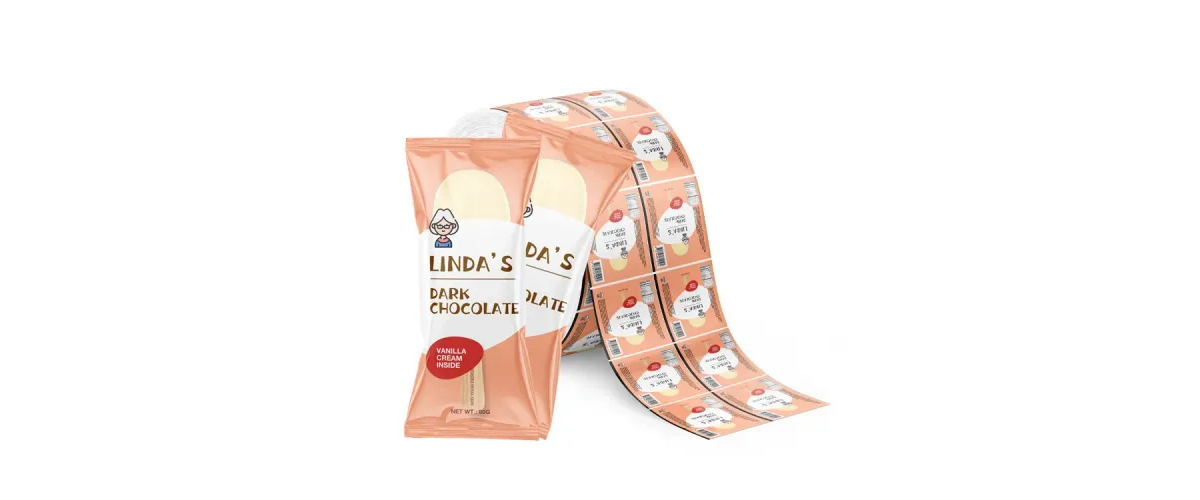
4. What Packaging Features Help Prevent Leakage and Maintain Product Quality?
Functional features are essential for ensuring product integrity.
Strong Heat Seals
Reliable sealing prevents leakage during melting and refreezing cycles.
Cold-Resistant Materials
Materials must maintain performance without becoming brittle in freezing conditions.
Easy-Open Features
Tear notches and peelable seals improve consumer convenience.
Resealable Options
For multi-serve products, resealable closures help maintain freshness after opening.
Anti-Stick Coatings
Some packaging includes coatings to prevent ice cream from sticking to the inner surface.
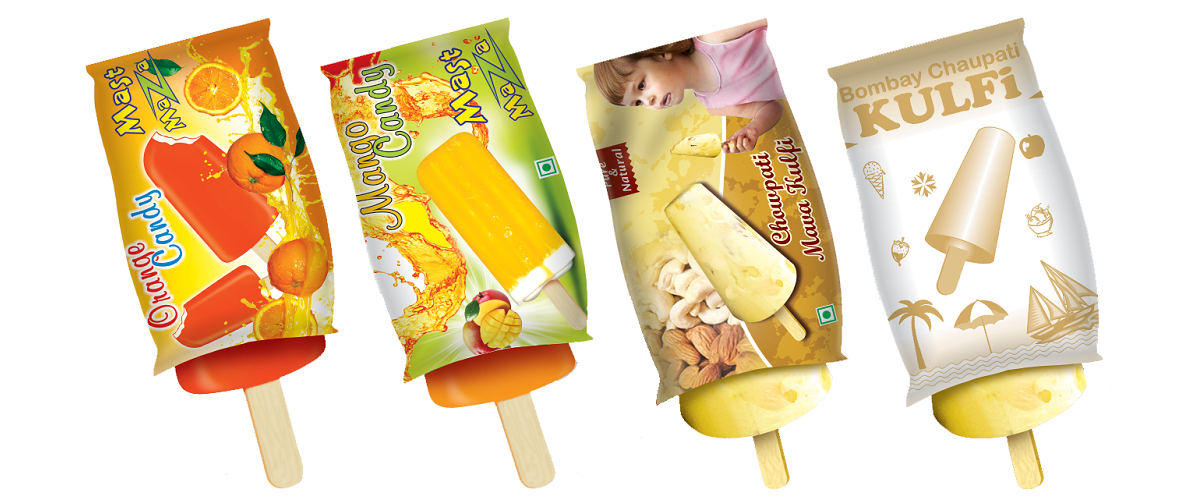
5. Flexible Packaging for Ice Cream: Key Factors for Storage, Distribution, and Branding
Flexible packaging offers multiple benefits across the supply chain.
Efficient Cold Chain Distribution
Lightweight packaging reduces transportation costs while supporting efficient cold storage.
Space Optimization
Flexible packaging takes up less space in freezers compared with rigid containers.
Enhanced Branding Opportunities
High-quality printing and unique designs help products stand out in freezer displays.
Sustainability Considerations
Flexible packaging uses less material than rigid alternatives, supporting sustainability goals.
Consumer Convenience
Portable, easy-to-open packaging enhances the overall consumption experience.
FAQ
Why is flexible packaging suitable for ice cream?
It provides strong barrier protection, flexibility at low temperatures, and cost efficiency while supporting various packaging formats.
What materials are best for ice cream packaging?
Common materials include BOPP, PET, PE, aluminum foil, and metallized films.
How does packaging prevent freezer burn?
High-barrier materials reduce moisture loss and protect the product from air exposure.
Can flexible packaging be used for premium ice cream products?
Yes. Advanced laminated structures and high-quality printing allow flexible packaging to meet premium branding requirements.
Conclusion
Flexible packaging has become an essential solution for ice cream products due to its ability to combine durability, barrier protection, and design flexibility. By selecting the right materials and incorporating features that perform well under freezing conditions, manufacturers can effectively protect product quality, prevent leakage, and enhance consumer experience. In addition to functional benefits, flexible packaging also supports efficient cold chain logistics and strong branding opportunities. As the frozen dessert market continues to grow, flexible packaging will remain a key driver of innovation, helping brands deliver high-quality products while optimizing cost and sustainability.