Things to Note When Customizing Coffee Bags
Anna_Yu
Things to Note When Customizing Coffee Bags
Coffee is one of the most aroma-sensitive food products in the global market. From roasted whole beans to ground coffee and specialty blends, maintaining freshness and preserving flavor are critical factors that directly influence consumer satisfaction. Coffee packaging is therefore far more than a simple container—it plays a vital role in protecting product quality, communicating brand identity, and enhancing shelf appeal.
As competition in the coffee industry continues to intensify, customized coffee bags have become an essential branding and marketing tool. Consumers increasingly expect premium packaging that not only preserves freshness but also reflects quality, sustainability, and convenience. For coffee brands, selecting the right flexible packaging structure, barrier materials, finishes, and functional features can significantly impact product success.
Flexible packaging is widely preferred for coffee products because it offers excellent barrier performance, lightweight efficiency, and highly customizable design possibilities. However, coffee packaging requires special considerations such as degassing valves, oxygen barriers, and sealing performance to properly protect roasted coffee. This guide explores the key factors to consider when customizing coffee bags for freshness, branding, and retail competitiveness.
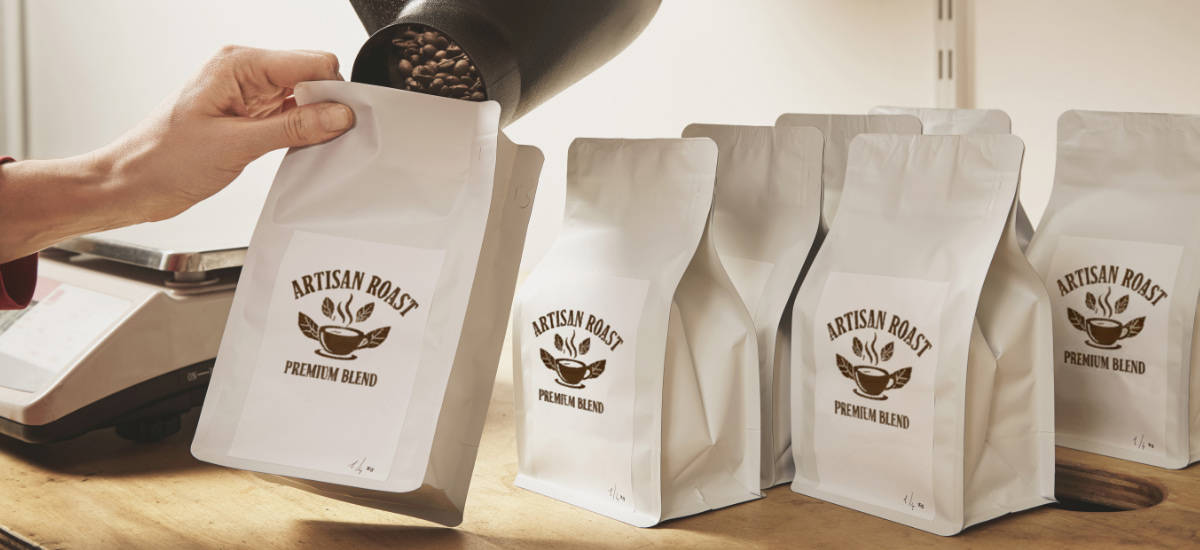
1. What Types of Flexible Packaging Are Best for Custom Coffee Bags?
Different coffee products require different packaging formats and structures.
Stand-Up Pouches (Doypack)
- Strong shelf presence
- Suitable for premium coffee brands
- Compatible with resealable zippers and valves
Side-Gusset Bags
- Traditional coffee packaging format
- Ideal for whole bean coffee
- High filling efficiency
Flat-Bottom Bags
- Premium appearance and stability
- Larger printable surface area
- Suitable for specialty coffee products
Pillow Pouches
- Cost-effective packaging solution
- Common for small coffee packs and single-serve products
Sachets and Stick Packs
- Suitable for instant coffee and portion-controlled products
- Convenient for travel and on-the-go consumption
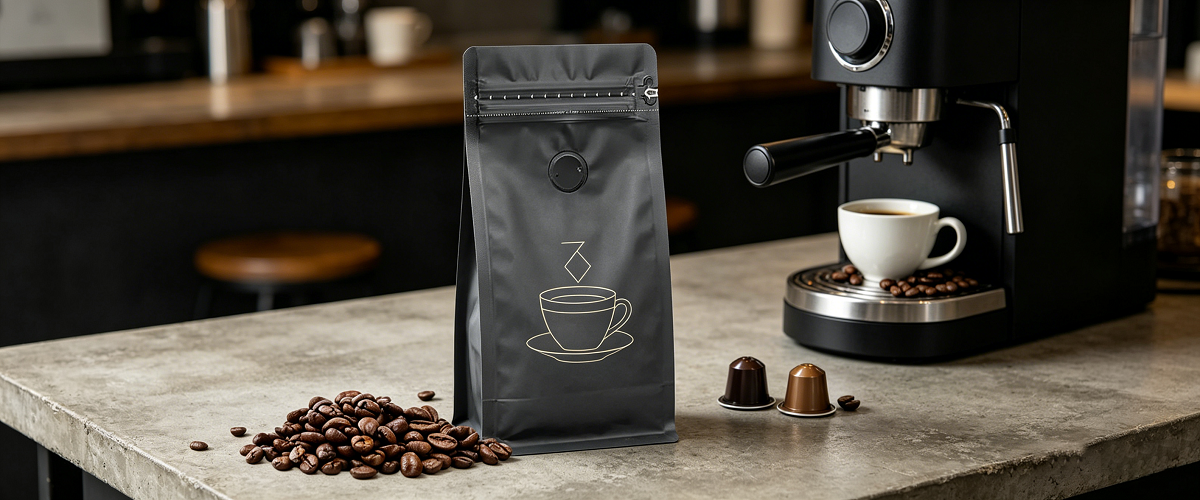
2. Why Are Barrier Properties and Degassing Valves Important for Coffee Packaging?
Coffee is highly sensitive to oxygen, moisture, and aroma loss.
Oxygen Barrier Protection
Exposure to oxygen causes:
- Flavor degradation
- Aroma loss
- Oxidation of coffee oils
Moisture Protection
Coffee easily absorbs moisture from the environment, affecting freshness and taste.
Aroma Retention
High-barrier materials help preserve the complex aroma profile of coffee.
Degassing Valve Function
Freshly roasted coffee releases carbon dioxide after roasting. Degassing valves:
- Release internal gas pressure
- Prevent package swelling or bursting
- Stop external oxygen from entering the bag
Light Protection
Opaque or metallized films reduce UV exposure and flavor deterioration.
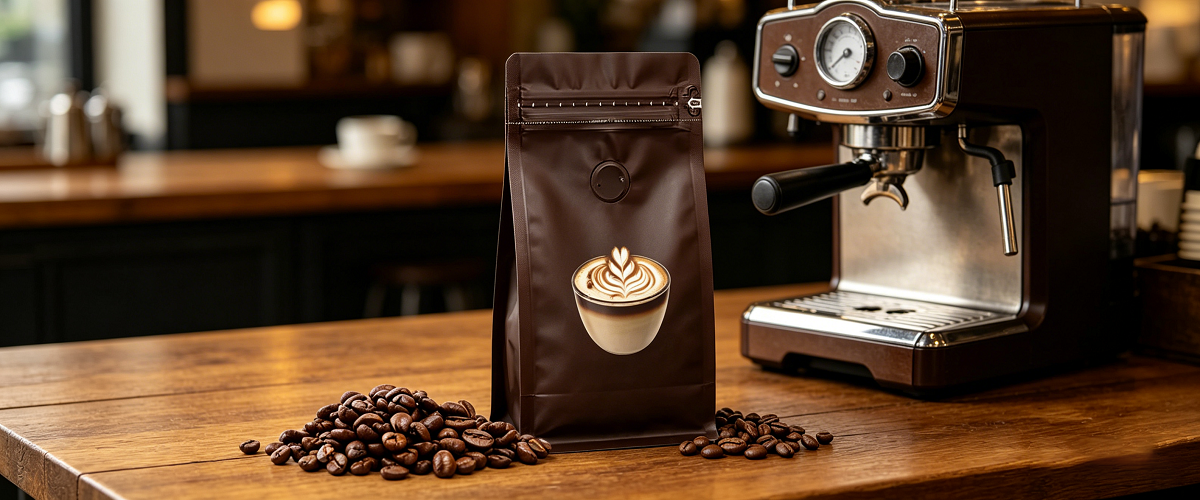
3. Which Materials and Finishes Are Most Suitable for Premium Coffee Bags?
Material selection directly impacts both protection and visual presentation.
PET (Polyethylene Terephthalate)
- Strong and durable
- Excellent printability
- Common outer layer
PE (Polyethylene)
- Excellent sealing performance
- Flexible inner contact layer
Aluminum Foil
- Superior oxygen and moisture barrier
- Ideal for premium coffee products
Metallized Films (MPET)
- Strong barrier performance
- Cost-effective alternative to foil
Kraft Paper Laminates
- Natural and eco-friendly appearance
- Popular for artisanal and specialty coffee brands
Typical Laminated Structures
| Structure | Features | Applications |
|---|---|---|
| PET/PE | Cost-effective | Standard coffee packaging |
| PET/MPET/PE | Enhanced aroma barrier | Premium retail coffee |
| PET/AL/PE | Maximum freshness protection | Specialty and export coffee |
| Kraft/PET/PE | Natural appearance with durability | Artisanal coffee brands |
Premium Finishing Options
- Matte finish for luxury appearance
- Gloss finish for vibrant colors
- Spot UV for visual contrast
- Soft-touch coating for premium feel
- Metallic effects for high-end branding
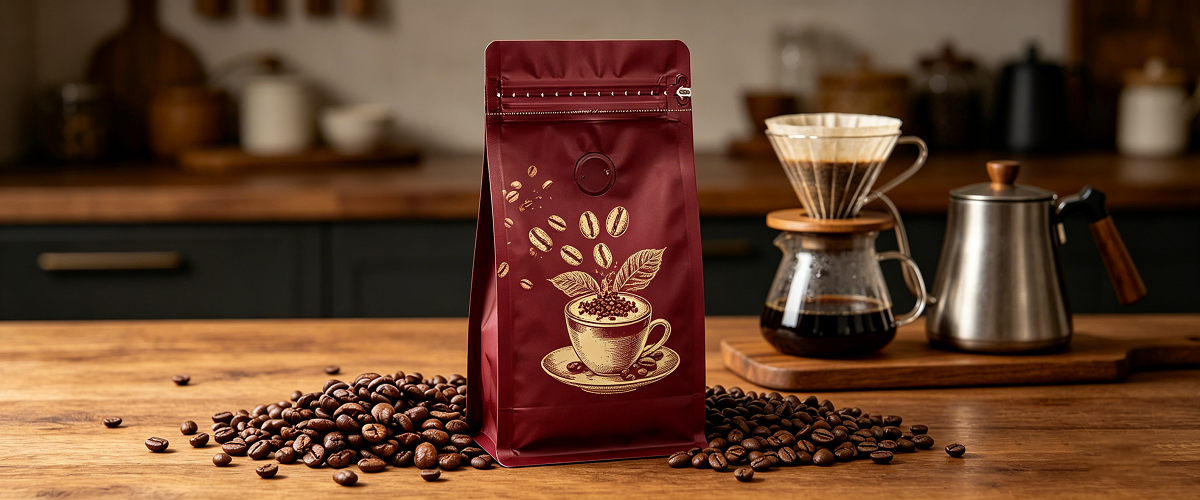
4. What Design Features Should You Consider When Customizing Coffee Packaging?
Functional and visual features both influence consumer perception.
Resealable Zippers
Allow consumers to preserve freshness after opening.
One-Way Degassing Valves
Essential for freshly roasted coffee packaging.
Easy-Tear Openings
Improve convenience and accessibility.
Transparent Windows
Allow consumers to view the coffee product while maintaining shelf appeal.
High-Quality Printing
Supports strong branding and premium presentation.
Sustainable Packaging Options
Recyclable and mono-material structures are increasingly popular among eco-conscious consumers.
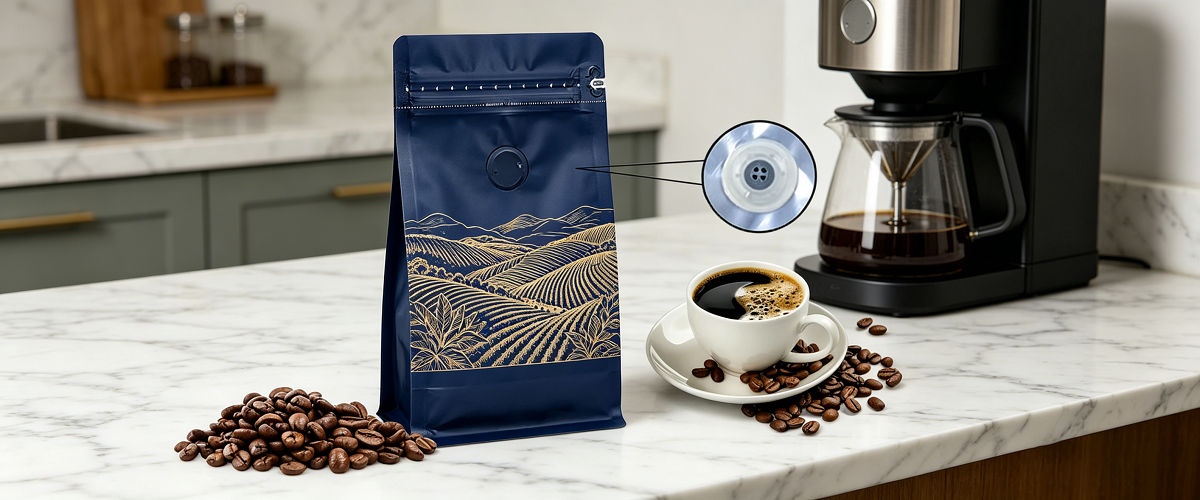
5. Custom Coffee Bag Packaging: Key Factors for Freshness, Branding, and Shelf Appeal
An effective coffee packaging strategy must balance protection and marketing.
Freshness Preservation
Barrier materials and valves help maintain aroma and flavor.
Shelf Life Optimization
Proper sealing and oxygen control extend product quality.
Brand Differentiation
Customized graphics and premium finishes improve consumer recognition.
Retail Display Performance
Stand-up and flat-bottom designs improve shelf visibility.
Transportation Efficiency
Flexible packaging reduces storage space and shipping costs.
FAQ
Why do coffee bags need degassing valves?
Freshly roasted coffee releases carbon dioxide, and valves allow gas to escape without letting oxygen enter.
What materials are best for coffee packaging?
PET, PE, aluminum foil, metallized films, and kraft laminates are commonly used.
Is resealable coffee packaging necessary?
Yes. Resealable zippers help maintain freshness after opening.
Can coffee bags be recyclable?
Yes. Many brands are adopting recyclable mono-material coffee packaging structures.
Conclusion
Custom coffee bag packaging plays a critical role in preserving coffee freshness, enhancing brand identity, and improving retail competitiveness. By carefully selecting packaging formats, barrier materials, finishing options, and functional features such as degassing valves and resealable closures, coffee brands can effectively protect product quality while creating a strong visual impact. Flexible packaging offers an ideal balance of performance, convenience, and customization, making it the preferred solution for modern coffee packaging. As consumer expectations for quality and sustainability continue to evolve, well-designed coffee bags will remain essential for successful coffee branding and market growth.