Things You Need to Know About Flow Packaging
Anna_Yu
Things You Need to Know About Flow Packaging
Flow packaging has gradually become one of the most important packaging formats in the modern food and consumer goods industry. As global consumption accelerates, brands are seeking faster, cleaner, and more cost-effective packaging solutions. Flow packaging—also known as horizontal form-fill-seal (HFFS) packaging—has emerged as a preferred choice for its outstanding production speed, ability to maintain product hygiene, and compatibility with a wide range of materials. Compared with traditional packaging systems, flow packaging offers not only efficiency but also a strong competitive edge by enabling brands to meet rising consumer expectations related to convenience, shelf appeal, durability, and sustainability.
In recent years, market data shows that flow packaging is becoming essential for companies producing snacks, bakery items, confectionery, biscuits, frozen foods, medical supplies, and various lightweight products. Its adaptability is one of its greatest strengths: manufacturers can package single units, multiple units, irregularly shaped items, or fragile goods with high precision and stable sealing quality. As industries continue to automate, flow packaging machines can seamlessly integrate into production lines and significantly reduce labor costs and operational risks. This guide will walk you through the key characteristics, materials, advantages, applications, and comparisons that define flow packaging today. By the end, you will understand why so many brands choose it and how you can determine whether it is the right choice for your products.
1. What is flow packaging?
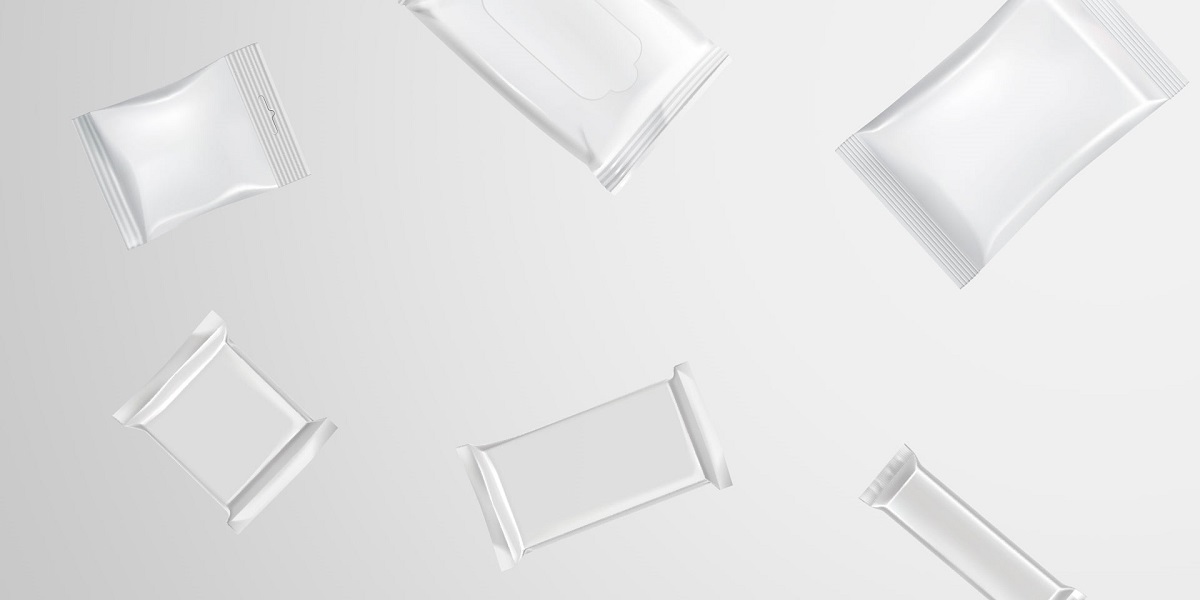
Flow packaging refers to a packaging method where products are wrapped continuously in a horizontal motion using a single sheet of film. As the film moves through the machine, it forms a tube, encloses the product, and is sealed on the bottom, top, and ends. This creates a tightly packed, tamper-evident, and highly protective package.
Key characteristics of flow packaging
- High-speed operation: Capable of 100–500 bags per minute, depending on the machine.
- Continuous packaging: Unlike vertical packaging, products are fed horizontally, improving stability.
- High degree of automation: Ideal for large-scale factory environments.
- Suitable for uniform or irregular shapes: From cookies to medical syringes.
- Excellent sealing consistency: Ensures the product stays fresh and protected.
Common names of flow packaging
- Flow wrap
- HFFS (Horizontal Form Fill Seal)
- Pillow wrapping
- Horizontal flow pack
Typical structure of a flow pack
Most flow packaging includes these core elements:
| Component | Function |
|---|---|
| Film Roll | Main packaging material that wraps the product. |
| Forming Box | Shapes the film into a tube around the product. |
| Center Seal | Creates the longitudinal seal on the back or bottom. |
| End Seals | Provide closure on both ends of the package. |
| Cutting System | Separates each packaged unit. |
Overall, flow packaging is valued not only for speed but also for protection, cleanliness, and scalability.
2. What are the commonly used materials in flow packaging?
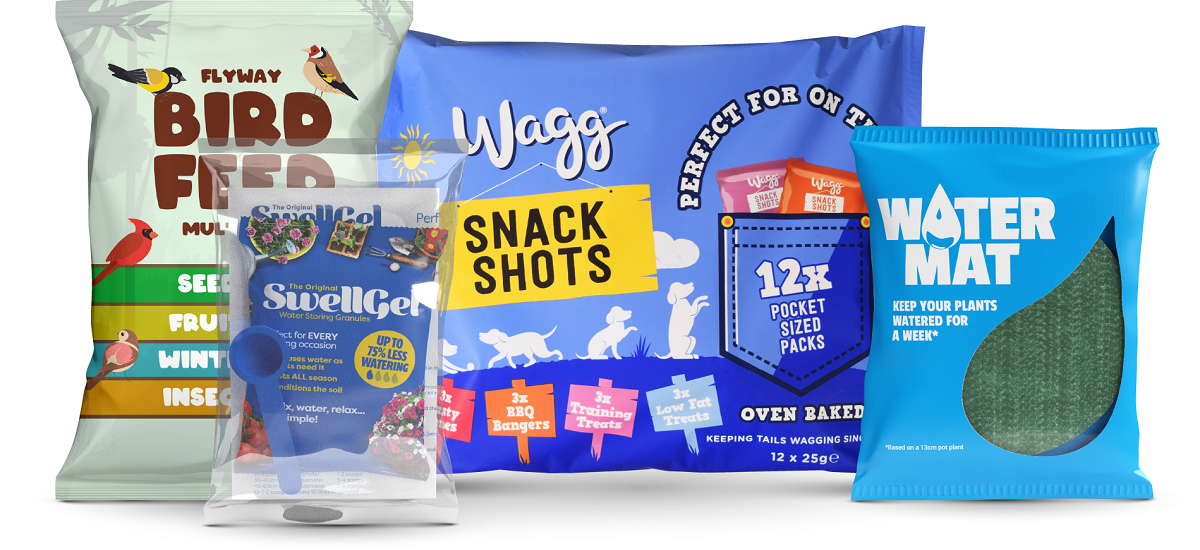
The choice of materials greatly determines shelf life, protection level, machinability, barrier quality, and visual appeal. Flow packaging uses a variety of films, depending on the product’s requirements.
Common flexible materials used for flow packaging
| Material | Properties | Typical Applications |
|---|---|---|
| OPP (Oriented Polypropylene) | High transparency, good stiffness, great printability | Cookies, snacks, bread |
| CPP (Cast Polypropylene) | Soft, good sealing performance, high heat resistance | Candy, baked goods |
| PE (Polyethylene) | Flexible, strong, safe for food contact | Frozen food, produce |
| PET (Polyester Film) | High tensile strength, excellent printability | Premium snacks, cereal bars |
| Metallized OPP/PET | Strong oxygen & moisture barrier | Chips, nuts, chocolate |
| Nylon (PA) | High puncture resistance | Meat, hard or sharp products |
| Aluminum Foil Laminates | Maximum barrier protection | High-end food or medical applications |
Why material selection matters
- Product shelf life depends on the film’s barrier ability.
- Product shape influences the film’s resistance to puncture or stretching.
- Machinability ensures films run smoothly on high-speed flow pack machines.
- Printing quality impacts customer perception and brand positioning.
Barrier performance comparison
| Material Type | Oxygen Barrier | Moisture Barrier | Cost Level |
|---|---|---|---|
| OPP | Moderate | Low | Low |
| Metallized OPP | High | Moderate | Medium |
| PET | Moderate | Moderate | Medium |
| Metallized PET | Very High | High | Medium |
| Aluminum Foil | Excellent | Excellent | High |
| Nylon | Low | Low | Medium |
Flow packaging materials can be mono-layer or laminated structures. Laminated materials usually offer superior performance.
3. What are the advantages of using flow packaging?
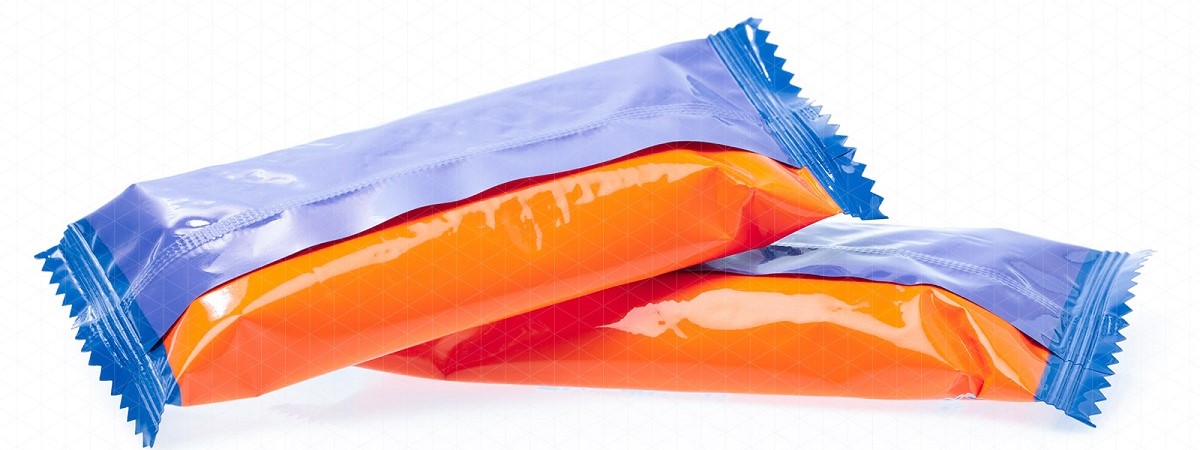
Flow packaging is popular because it delivers benefits across cost, efficiency, shelf appeal, and product protection.
1. Extremely high production efficiency
Compared with manual or semi-automatic packaging, flow packaging machines work at extremely fast speeds. This lowers labor costs and significantly increases productivity.
- Ideal for factories requiring continuous, stable output
- Reduces human error
- Increases consistency in packaging quality
2. Great cost-effectiveness
Flow packaging uses lightweight films, which reduce packaging waste and material consumption.
Cost advantages include:
- Lower film cost than rigid packaging
- Reduced storage and transportation costs
- Lower energy usage per package
- Less downtime due to machine automation
3. Excellent flexibility
Flow packaging can handle many different products:
- Flat items (cookies, chocolate bars)
- Round or irregular items (buns, fruits)
- Fragile items (biscuits, pastries)
Its flexibility makes it suitable for businesses of all sizes.
4. Enhanced shelf appearance
Flow packaging supports:
- High-resolution gravure or digital printing
- Matte, glossy, or soft-touch finishes
- Window designs
- Branding customization
This helps brands stand out on the shelf.
5. Superior protection
Flow packaging protects products from:
- Moisture
- Light
- Dust
- Contamination
- Oxygen
When using barrier film, products maintain freshness significantly longer.
6. Sustainability options
Today’s consumers expect environmentally friendly packaging. Flow packaging can now incorporate:
- Recyclable PE/PE structures
- Recyclable PP/PP structures
- Compostable films
- Bio-based materials
This positions flow packaging well for future global regulations.
4. What industries use flow packaging?
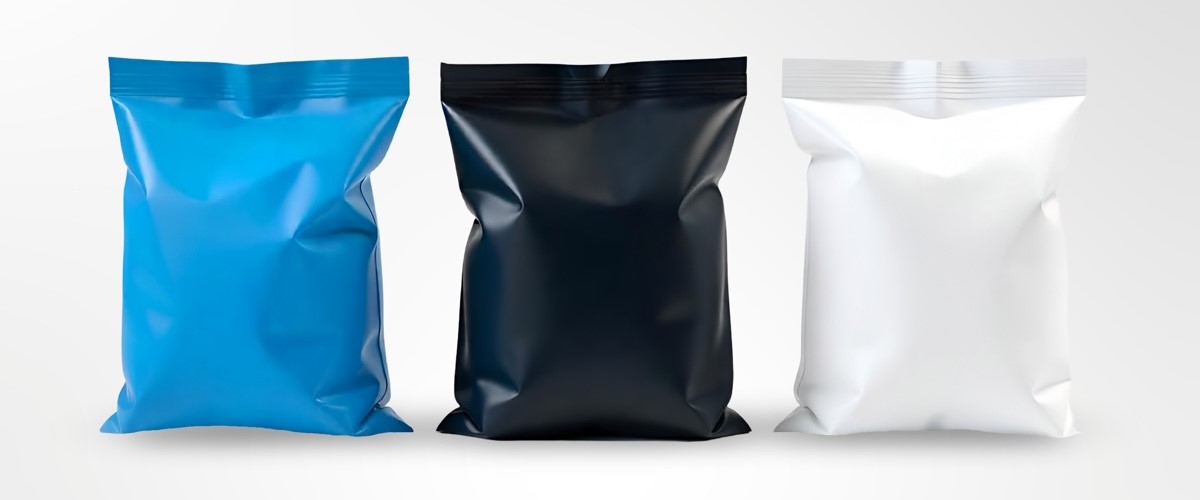
Flow packaging is incredibly versatile across industries.
Food Industry
- Cookies
- Bread
- Candies
- Cereal bars
- Snack foods
- Frozen foods
- Noodles
Non-food Industry
- Cosmetics
- Medical supplies (syringes, bandages)
- Hardware items
- Household products
- Disposable utensils
Agricultural Products
- Fruits
- Vegetables
- Mushrooms
Premium and specialized products
- High-end snacks
- Single-serve luxury confectionery
Its ability to work with both low- and high-barrier materials makes it adaptable for products requiring different levels of protection.
5. Comparison of flow packaging with other packaging
To truly understand why many brands prefer flow packaging, it helps to compare it with other common packaging types.
Flow Packaging vs. Vertical Packaging
| Feature | Flow Packaging | Vertical Packaging |
|---|---|---|
| Bag Form | Pillow-type continuous wrapping | Typically stand-up pouches |
| Ideal Products | Uniform solid items | Powders, granules |
| Speed | Higher | Moderate |
| Shape Flexibility | High | Low |
| Film Usage | Lower | Higher |
Flow Packaging vs. Rigid Packaging
| Feature | Flow Packaging | Rigid Packaging |
|---|---|---|
| Material Cost | Low | High |
| Environmental Impact | Lower | Higher |
| Branding Surface | Medium | High |
| Protection Level | Medium to High | High |
Flow Packaging vs. Pre-Made Bags
| Feature | Flow Packaging | Pre-Made Bags |
|---|---|---|
| Efficiency | Very High | Low to Moderate |
| Initial Investment | High (machine) | Low |
| Customization | High | Very High |
| Best For | Large-scale production | Small-batch or premium goods |
Summary
Flow packaging is not the best for all products—but for fast-moving consumer goods, it offers the best balance of speed, cost efficiency, and product protection.
FAQ
Q1: Can flow packaging be used for fragile items like wafers?
Yes. With proper cushioning and high-barrier laminates, flow packaging can safely protect fragile products.
Q2: Is flow packaging environmentally friendly?
Modern flow packaging increasingly supports recyclable PE or PP structures and bio-based films.
Q3: Can flow packs contain gas flushing?
Yes, many machines support nitrogen flushing for products needing extended shelf life.
Q4: Are flow packs suitable for premium brands?
Absolutely. High-quality printing and matte finishes make the packaging look luxurious.
Conclusion
Flow packaging has become one of the most efficient and effective packaging solutions in the global market. With its speed, versatility, strong material compatibility, and excellent protection performance, it allows brands to meet consumer expectations while improving production efficiency. Whether you are packaging snacks, bakery items, medical products, or household goods, flow packaging offers a powerful combination of function, cost savings, and market adaptability. As the packaging industry moves toward sustainability, recyclable materials and improved automation will further strengthen the role of flow packaging in modern production.