Which Packaging Is Right for Your Beef Jerky?
Anna_Yu
Which Packaging Is Right for Your Beef Jerky?
Beef jerky is one of the most popular high-protein snack products worldwide, valued for its rich flavor, portability, and long shelf life. However, despite its relatively low moisture content, beef jerky remains highly sensitive to oxygen, moisture, light, and microbial contamination. Improper packaging can lead to oxidation, flavor deterioration, texture changes, and reduced shelf life, ultimately affecting product quality and consumer satisfaction.
As the global snack market continues to expand, beef jerky manufacturers face increasing pressure to deliver products that remain fresh, safe, and visually appealing throughout storage, transportation, and retail display. Packaging has therefore become a critical component of product success, serving not only as a protective barrier but also as an important branding and marketing tool.
Flexible packaging has become the preferred choice for beef jerky products because it offers excellent barrier performance, lightweight efficiency, and extensive customization options. By selecting the right packaging format, materials, and functional features, brands can effectively preserve product quality while enhancing consumer convenience and shelf appeal. This guide explores the key considerations for choosing the right packaging for beef jerky products.
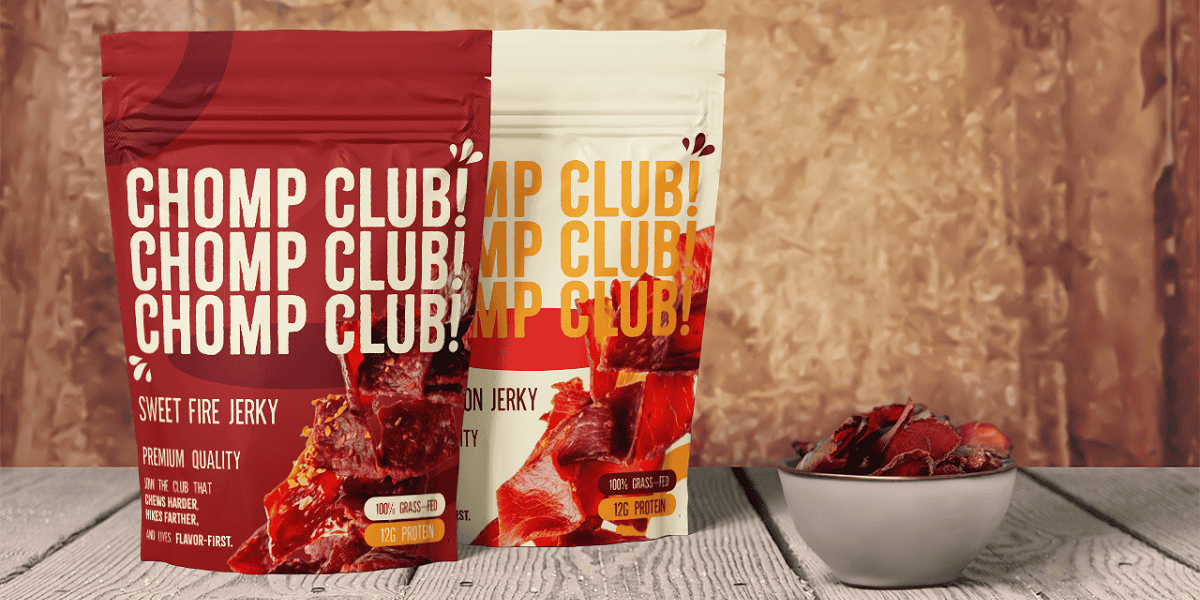
1. What Types of Flexible Packaging Are Best for Beef Jerky Products?
Different packaging formats are suitable for various beef jerky products and market segments.
Stand-Up Pouches (Doypack)
- Excellent shelf visibility
- Suitable for premium retail products
- Compatible with resealable zippers
Flat Pouches
- Cost-effective packaging format
- Suitable for single-serve jerky products
- Lightweight and efficient
Vacuum Packaging Bags
- Minimize oxygen exposure
- Extend shelf life
- Common for premium and export products
Pillow Pouches
- Compatible with high-speed packaging lines
- Suitable for mass-market jerky products
Multi-Pack Flexible Packaging
- Ideal for family-size packs and club-store distribution
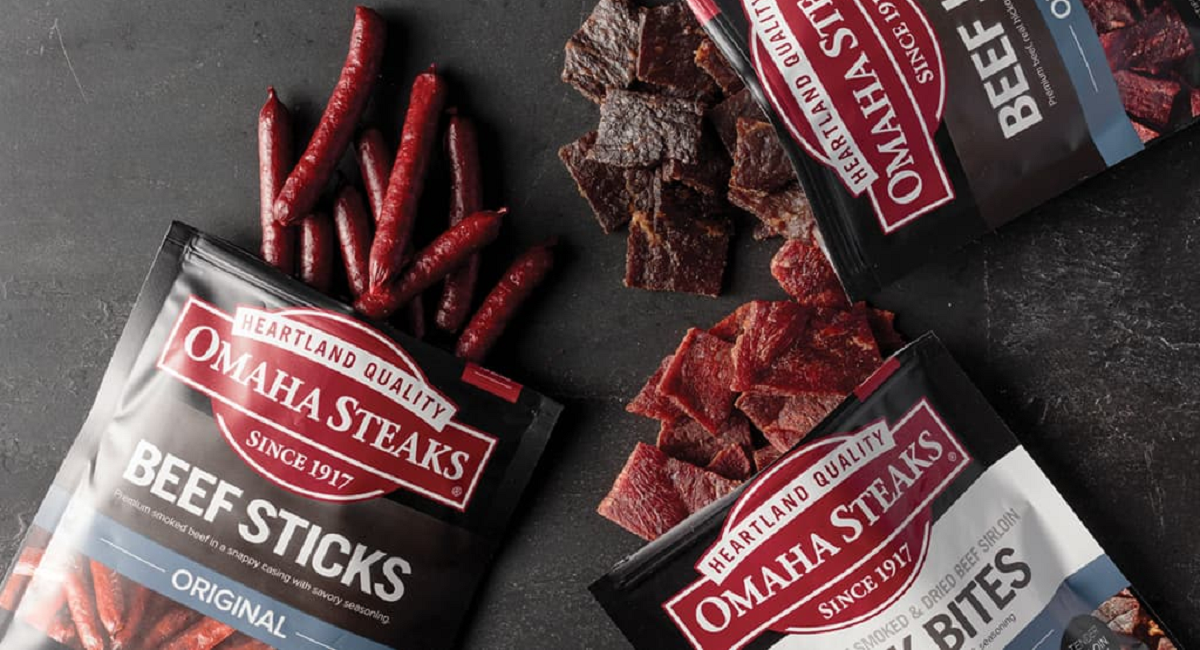
2. How Does Packaging Affect Beef Jerky Freshness and Shelf Life?
Packaging directly influences the stability and safety of beef jerky.
Oxygen Control
Oxygen exposure can cause:
- Fat oxidation
- Flavor deterioration
- Color changes
Moisture Protection
Excess moisture may lead to:
- Texture softening
- Microbial growth
- Reduced shelf life
Aroma Preservation
High-barrier packaging helps maintain the product's characteristic smoky and savory flavors.
Light Protection
Reducing UV exposure helps preserve product quality and appearance.
Contamination Prevention
Proper sealing protects against bacteria, dust, and external contaminants.
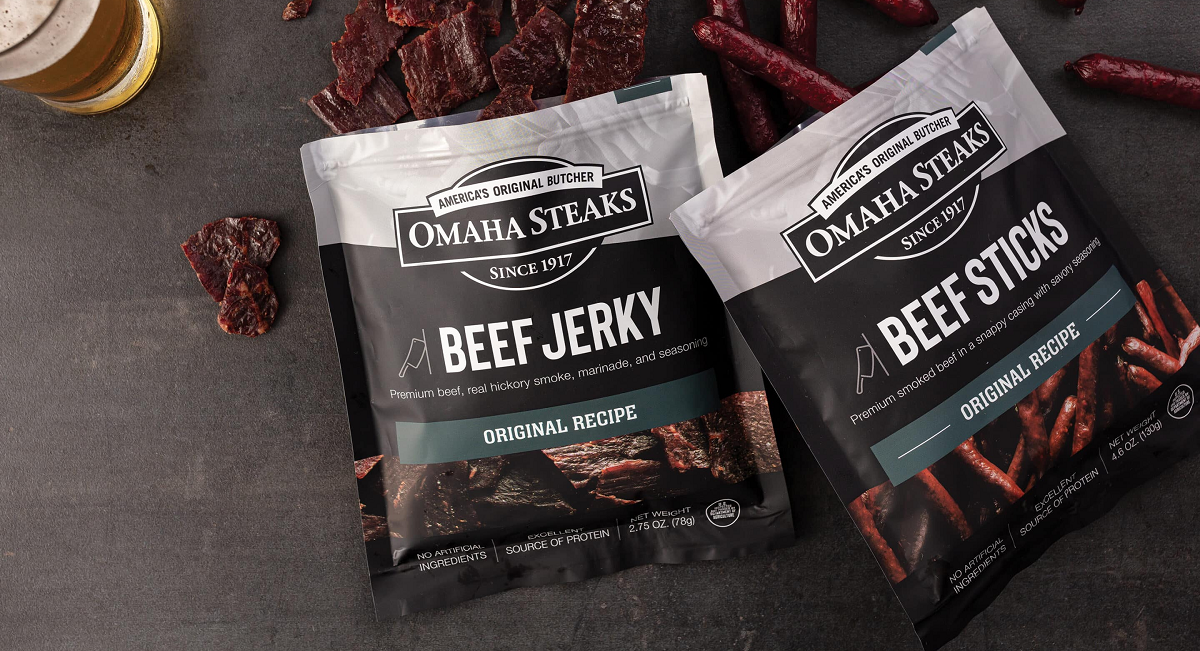
3. Which Packaging Materials Provide the Best Oxygen and Moisture Barrier Protection?
Material selection is essential for maintaining beef jerky quality over time.
PET (Polyethylene Terephthalate)
- Strong mechanical strength
- Excellent printability
- Common outer layer
PE (Polyethylene)
- Excellent sealing performance
- Suitable food-contact layer
Nylon (PA)
- Strong puncture resistance
- Suitable for vacuum packaging
Metallized Films (MPET)
- Enhanced oxygen and moisture barrier
- Cost-effective high-barrier solution
Aluminum Foil Laminates
- Superior barrier protection
- Ideal for premium and export products
Typical Laminated Structures
| Structure | Features | Applications |
|---|---|---|
| PET/PE | Cost-effective and durable | Standard beef jerky packaging |
| PET/PA/PE | High puncture resistance | Vacuum-packed jerky |
| PET/MPET/PE | Enhanced barrier protection | Premium retail jerky |
| PET/AL/PE | Maximum oxygen and moisture barrier | Long shelf life and export products |
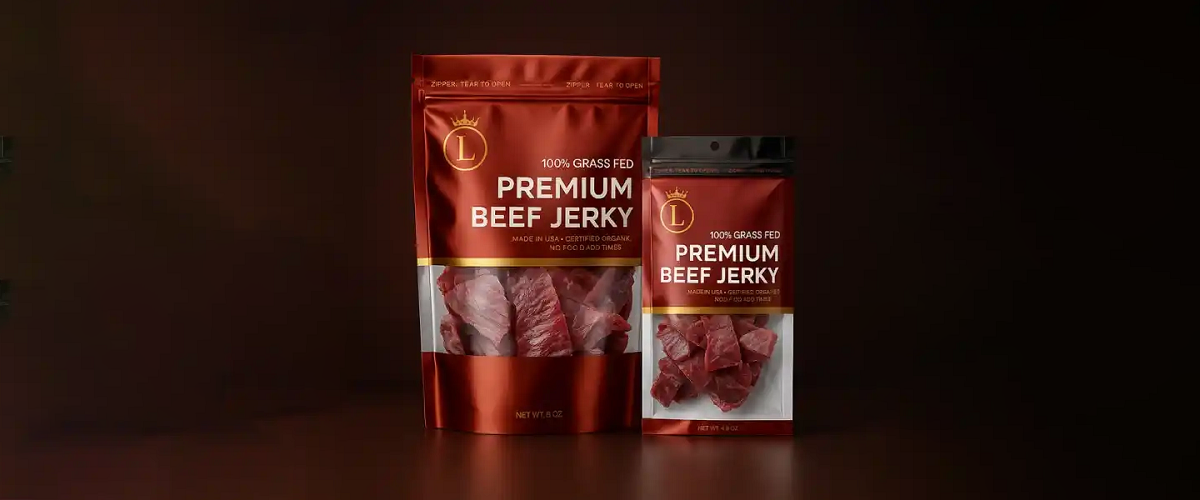
4. What Packaging Features Help Improve Product Safety and Consumer Convenience?
Modern packaging must provide both protection and user-friendly functionality.
Resealable Zippers
Allow consumers to maintain freshness after opening.
Tear Notches
Provide convenient and easy package opening.
Oxygen Absorber Compatibility
Many beef jerky products use oxygen absorbers to further extend shelf life.
Vacuum Packaging Capability
Reduces oxygen levels and improves product stability.
Transparent Windows
Allow consumers to view product quality before purchase.
High-Quality Printing
Enhances shelf visibility and supports brand recognition.
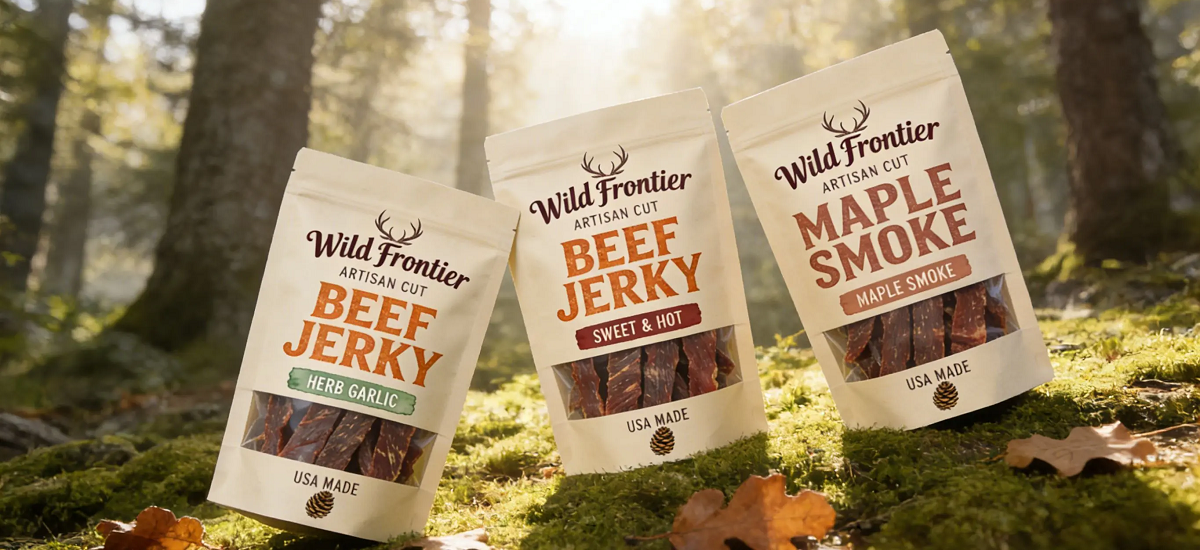
5. Beef Jerky Packaging: Key Factors for Branding, Storage, and Distribution
A successful packaging strategy supports product quality and business growth.
Shelf Life Optimization
High-barrier materials help maximize freshness and safety.
Transportation Efficiency
Flexible packaging reduces shipping weight and storage costs.
Retail Shelf Appeal
Premium graphics and packaging structures improve visibility.
Consumer Experience
Convenient features encourage repeat purchases and brand loyalty.
Export Readiness
Packaging should comply with food safety regulations and withstand international logistics conditions.
Sustainability Opportunities
Recyclable and mono-material packaging solutions are becoming increasingly attractive to consumers and retailers.
FAQ
Why is oxygen protection important for beef jerky packaging?
Oxygen can cause oxidation, flavor loss, color changes, and reduced shelf life.
Is vacuum packaging suitable for beef jerky?
Yes. Vacuum packaging is widely used to reduce oxygen exposure and extend freshness.
What materials are commonly used for beef jerky packaging?
PET, PE, nylon, metallized films, and aluminum foil laminates are frequently used.
Do beef jerky packages require oxygen absorbers?
Many manufacturers use oxygen absorbers to further enhance shelf life and product stability.
Conclusion
Choosing the right packaging for beef jerky is essential for preserving freshness, ensuring food safety, and enhancing brand competitiveness. Flexible packaging provides an ideal combination of high-barrier protection, lightweight efficiency, and customizable design options. By selecting appropriate packaging formats, durable laminate structures, and consumer-friendly features such as resealable closures and oxygen-control systems, manufacturers can effectively protect beef jerky products throughout storage and distribution. As consumer demand for convenient, high-quality protein snacks continues to grow, optimized flexible packaging will remain a key factor in successful beef jerky branding, shelf performance, and long-term market growth.