Why Are More and More Brands Choosing to Use Spout Pouches?
Anna_Yu
Why Are More and More Brands Choosing to Use Spout Pouches?
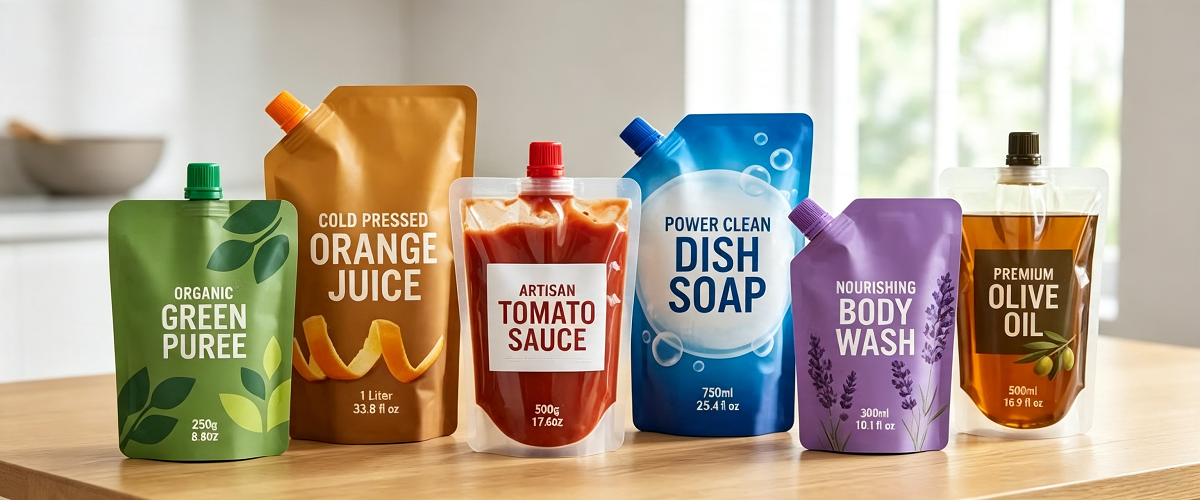
Spout pouches have become an increasingly important format in the flexible packaging industry. From beverages and sauces to detergents, personal care products, baby food, and household liquids, brands across multiple industries are adopting spout pouch packaging as an alternative to rigid bottles, jars, and conventional pouches. Their growing popularity is driven by a combination of convenience, lightweight construction, efficient transportation, strong branding potential, and flexible product compatibility.
Unlike conventional flexible pouches, spout pouches combine a lightweight pouch body with an integrated spout and closure. This structure allows consumers to pour, squeeze, dispense, or drink products directly from the package while reducing the need for additional containers. Depending on the product and application, spout pouches can be manufactured with different film structures, spout positions, cap designs, shapes, sizes, and printing finishes.
For brands, the appeal goes beyond consumer convenience. Flexible pouch structures can use less packaging material than some rigid formats and can occupy less space during transportation and storage. This can create opportunities to improve logistics efficiency and reduce packaging-related costs. At the same time, the large printable surface of a pouch provides considerable space for logos, product information, graphics, and other brand elements.
However, choosing a spout pouch is not simply a matter of replacing a bottle with a pouch. The packaging needs to match the product's viscosity, filling process, shelf-life requirements, barrier needs, dispensing behavior, and distribution environment. The film structure, seal design, spout material, cap, and pouch shape all influence the final performance.
Understanding why brands are increasingly choosing spout pouches can therefore help manufacturers and product developers determine when this format is appropriate and how it can contribute to a more efficient and consumer-friendly packaging strategy.
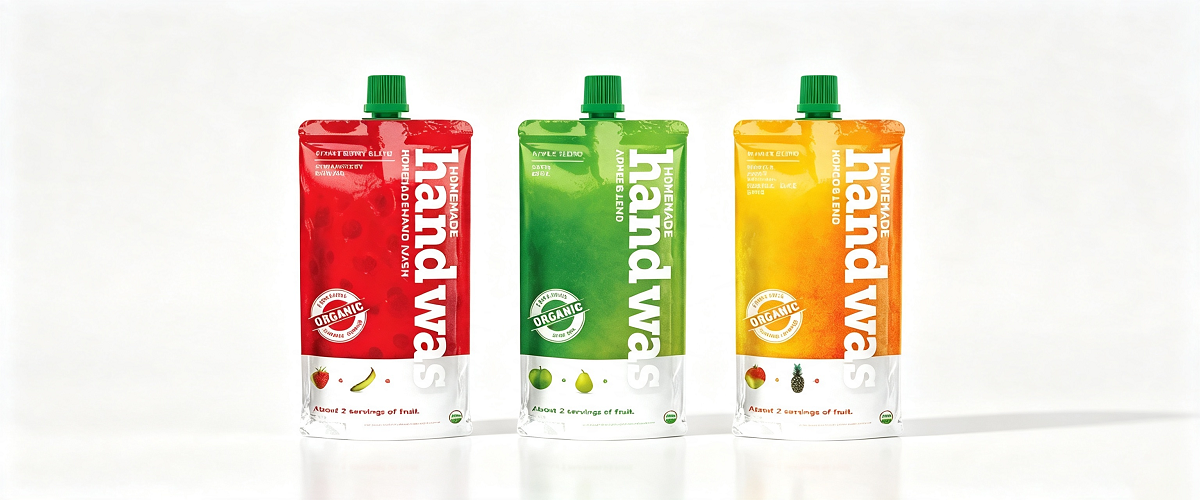
1. Why Are Spout Pouches Becoming Increasingly Popular Among Modern Brands?
The growth of spout pouches is closely connected to changes in consumer expectations and the broader development of flexible packaging.
Consumers increasingly value packaging that is easy to carry, easy to open, simple to store, and convenient to use. Brands, meanwhile, are looking for packaging formats that can combine these benefits with efficient logistics and attractive retail presentation.
Spout pouches address many of these requirements through a relatively simple structure.
Convenient Product Dispensing
The integrated spout provides a controlled way to dispense liquid or semi-liquid products.
Depending on the product, consumers can:
- Pour the contents
- Squeeze the pouch
- Drink directly
- Dispense a controlled amount
- Reseal the package after use
This flexibility makes spout pouches suitable for products used in different environments.
Lightweight Construction
One of the main advantages of flexible packaging is its low weight compared with many rigid packaging formats.
A spout pouch can combine:
- Flexible film
- A lightweight spout
- A closure cap
into a compact package.
Reducing packaging weight can contribute to more efficient transportation and easier handling, particularly for products that are distributed in large quantities.
Efficient Storage
Empty flexible packaging can be stored in a relatively compact form before filling.
Compared with rigid containers, flexible pouch components can often occupy less space in warehouses and during transportation to filling facilities.
This can be valuable for manufacturers handling high production volumes.
Strong Shelf Appeal
Spout pouches provide a large printable surface for branding.
Brands can use this space for:
- Logos
- Product names
- Product images
- Usage instructions
- Nutritional information
- Certifications
- Marketing messages
Different finishes and printing techniques can further differentiate the product on retail shelves.
Multiple Application Possibilities
Spout pouches are not limited to one product category.
They can be designed for:
- Beverages
- Sauces
- Baby food
- Juice
- Purees
- Dairy products
- Liquid detergents
- Personal care products
- Household cleaners
- Pet products
- Functional nutrition products
This versatility is one of the reasons the format continues to attract interest from different industries.
Comparison with Conventional Rigid Packaging
| Factor | Spout Pouch | Rigid Bottle |
|---|---|---|
| Packaging Weight | Generally lightweight | Often heavier |
| Empty Storage | Compact | Requires more space |
| Dispensing | Spout and cap | Bottle opening or dispenser |
| Branding Area | Large flexible surface | Limited by container shape |
| Transportation Efficiency | Potentially high | More rigid volume |
| Custom Shapes | Highly flexible | More tooling-dependent |
| Resealability | Available | Common |
| Product Visibility | Optional window | Often transparent |
The exact advantages depend on the product, package size, material structure, and supply chain.
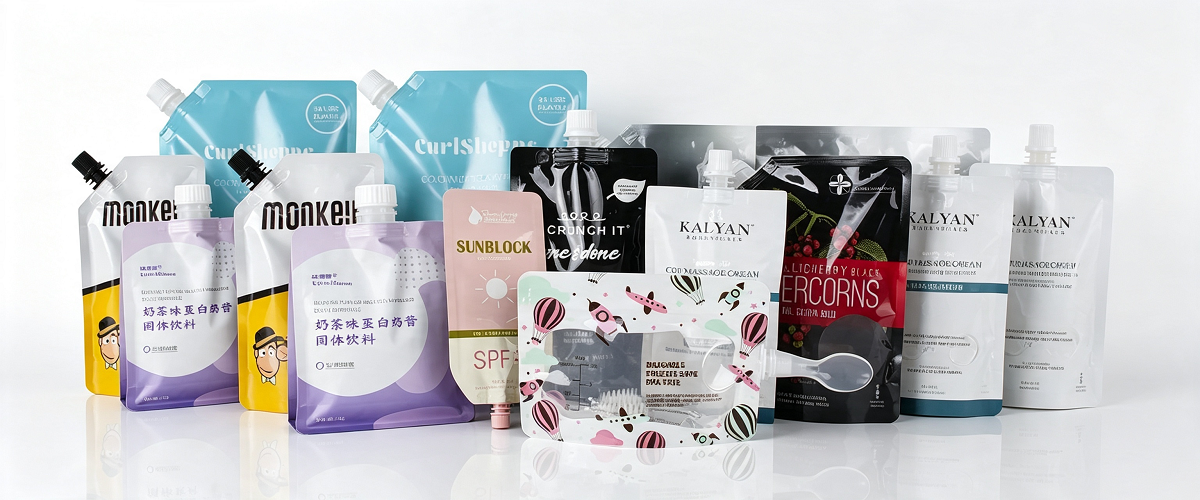
2. How Do Spout Pouches Improve Product Convenience, Portability, and Consumer Experience?
Consumer convenience is one of the strongest reasons brands consider spout pouch packaging.
A well-designed spout pouch can simplify several stages of product use, from carrying and opening to dispensing and storage.
Easy Opening
Most spout pouches use a screw cap or similar closure system.
The consumer can open the package without using additional tools.
This is particularly useful for products consumed outside the home or products that require frequent dispensing.
Controlled Dispensing
The spout provides a defined opening through which the product can be poured or squeezed.
This can help consumers control the amount they use.
For sauces and condiments, controlled dispensing can reduce unnecessary product waste. For beverages and nutrition products, the opening can make direct consumption more convenient.
Portability
Flexible pouches can be easier to carry because they are lightweight and can adapt to available space.
This can make them suitable for:
- Outdoor activities
- Travel
- Sports
- School lunches
- Foodservice
- On-the-go consumption
The package can also become lighter as the contents are consumed, making it easier to carry.
Resealable Design
A screw cap allows consumers to close the pouch after opening.
This can be particularly useful when the product is consumed over several occasions.
Resealing helps protect the remaining contents from unnecessary exposure to the external environment and improves storage convenience.
Easier Product Emptying
Flexible pouch bodies can often be squeezed, allowing consumers to remove a large proportion of the contents.
This can be useful for products such as:
- Sauces
- Purees
- Creams
- Detergents
- Liquid food products
The ability to squeeze the pouch can also make it easier to use the remaining product near the bottom of the package.
Consumer Experience Comparison
| Consumer Need | Spout Pouch Solution |
|---|---|
| Easy opening | Screw cap or tearable opening |
| Controlled dispensing | Integrated spout |
| Portability | Lightweight flexible body |
| Multiple uses | Resealable cap |
| Product evacuation | Squeezable structure |
| Storage | Flexible and compact |
| Brand interaction | Large printable surface |
The best consumer experience depends on matching the spout size, cap type, pouch dimensions, and product viscosity.
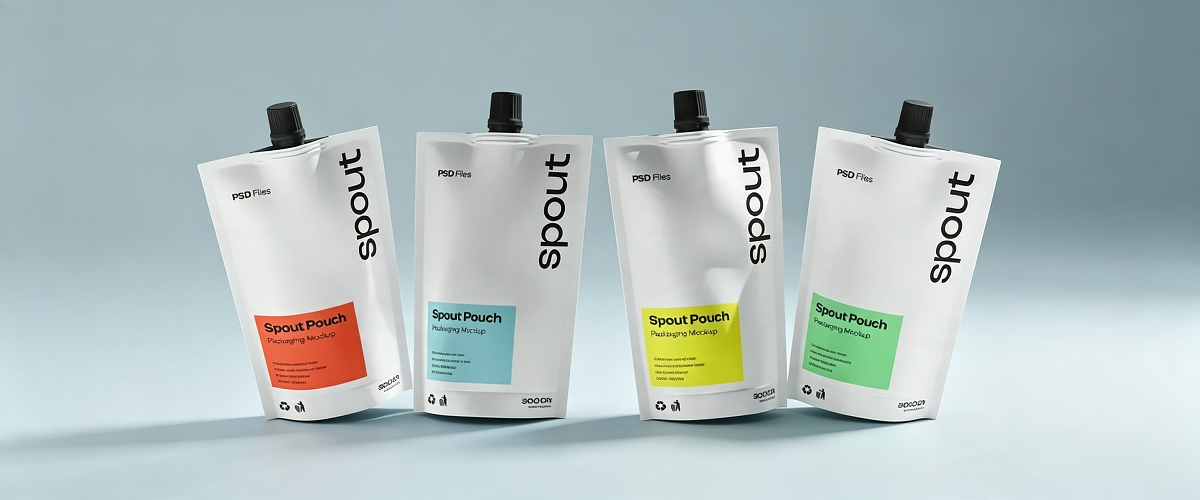
3. Which Products Are Best Suited to Spout Pouch Packaging?
Spout pouches are particularly suitable for products that need controlled dispensing or repeated use.
The packaging structure can be customized according to product characteristics.
Beverages and Juices
Spout pouches can be used for certain beverage applications, including:
- Juice
- Fruit drinks
- Sports beverages
- Functional beverages
- Smoothies
- Purees
For beverage products, the packaging structure must be designed according to oxygen, light, moisture, filling, and shelf-life requirements.
Sauces and Condiments
Many liquid and semi-liquid sauces can be packaged in spout pouches.
Examples include:
- Tomato sauce
- Chili sauce
- Fruit sauce
- Salad dressing
- Cooking sauce
- Syrups
The spout can provide controlled pouring and reduce the need for a spoon or other dispensing tool.
Baby Food
Purees and other semi-liquid baby food products can benefit from convenient squeeze-and-dispense packaging.
However, baby food packaging has specific safety, sterilization, filling, and regulatory requirements. The pouch structure must therefore be designed specifically for the product and processing method.
Personal Care Products
Spout pouches can also be considered for certain personal care applications, such as:
- Shampoo refills
- Body wash
- Liquid soap
- Hair conditioner
- Facial cleansers
- Bath products
Refill pouches can provide an alternative to repeatedly purchasing rigid bottles.
Household and Cleaning Products
Some liquid household products can also use spout pouch packaging.
Examples include:
- Liquid detergents
- Cleaning solutions
- Fabric care products
- Concentrated household liquids
The packaging structure should be selected according to chemical compatibility and leakage resistance.
Pet Products
Spout pouches can be suitable for certain pet food and pet care products, including:
- Wet pet food
- Pet food toppers
- Liquid supplements
- Pet treats in puree form
The packaging needs to match the product's barrier and food-contact requirements.
Product Compatibility
| Product Category | Suitability | Important Considerations |
|---|---|---|
| Juice | High | Barrier and filling requirements |
| Sauce | High | Viscosity and dispensing |
| Puree | High | Spout diameter and seal integrity |
| Baby Food | High for suitable applications | Processing and food safety |
| Shampoo | High | Chemical compatibility |
| Liquid Soap | High | Seal and closure performance |
| Detergent | Application dependent | Chemical resistance |
| Pet Food | High for suitable products | Food safety and barrier |
| Dry Powder | Usually less suitable | Alternative pouch formats may work better |
Not every product requires a spout. The format is most valuable when dispensing convenience provides a clear benefit.
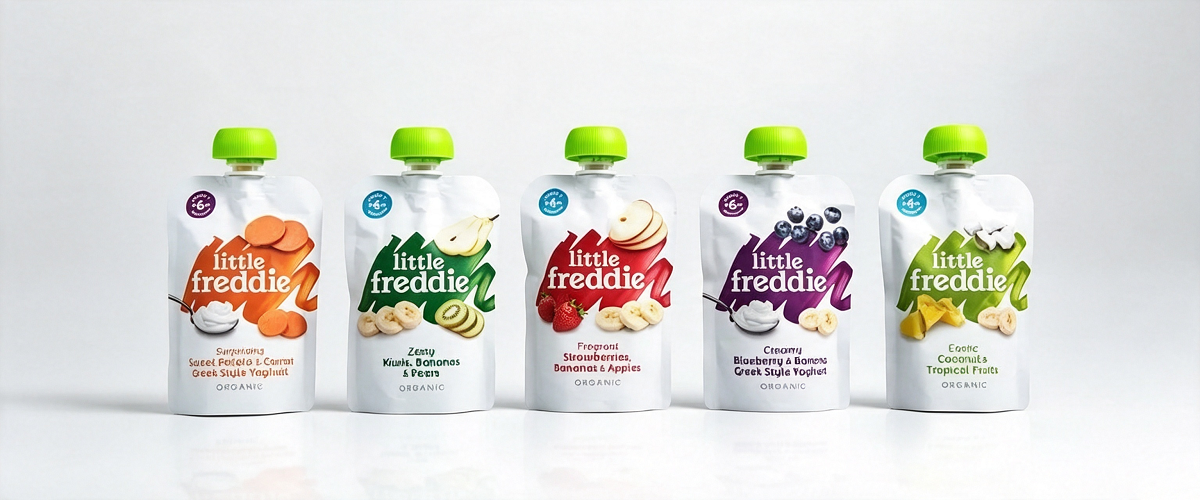
4. How Can Spout Pouches Reduce Packaging Costs and Improve Transportation Efficiency?
Cost efficiency is another important factor behind the growing interest in spout pouch packaging.
The potential savings do not come from one factor alone. They can result from the combined effects of lightweight materials, efficient transportation, compact storage, and reduced packaging volume.
Lower Packaging Weight
Flexible film generally weighs less than many rigid packaging structures.
For high-volume products, reducing the weight of the primary package can contribute to supply-chain efficiency.
However, the actual weight difference depends on:
- Package capacity
- Film thickness
- Material structure
- Spout size
- Cap design
- Product requirements
Efficient Transportation
Flexible pouches can make efficient use of transportation space.
A pouch can be designed to fit closely within secondary packaging, reducing unnecessary empty space.
This can potentially improve:
- Carton utilization
- Pallet efficiency
- Warehouse space
- Truck loading efficiency
Compact Empty Packaging
Before filling, flexible pouch components can generally be stored more compactly than rigid containers.
This can help manufacturers manage:
- Warehouse inventory
- Packaging transportation
- Production floor space
The benefit is particularly relevant for companies producing packaging at one location and filling products at another.
Material Optimization
Flexible packaging can be engineered using multiple layers and thicknesses according to the actual product requirements.
Instead of using a thick rigid container for every application, manufacturers can design a film structure around the required:
- Barrier performance
- Seal strength
- Puncture resistance
- Flexibility
- Shelf life
This can help optimize material usage.
Refill Applications
Spout pouches are especially interesting for refill products.
For example, a consumer may purchase a durable bottle initially and then use a flexible pouch to refill it.
This can reduce the amount of rigid packaging required over repeated purchases.
Cost Efficiency Considerations
| Cost Factor | Potential Spout Pouch Advantage |
|---|---|
| Packaging Weight | Lightweight construction |
| Storage | Compact empty packaging |
| Transportation | Efficient space utilization |
| Printing | Large printable surface |
| Material Use | Structure can be optimized |
| Refills | Potential reduction in rigid packaging |
| Handling | Lightweight and easy to transport |
The actual cost advantage should always be evaluated using the complete packaging system, including film, spout, cap, filling process, transportation, and secondary packaging.
5. Spout Pouch Packaging: Key Benefits for Product Protection, Branding, Sustainability, and Market Growth
Spout pouches offer a combination of technical and commercial advantages, but successful implementation requires careful packaging design.
Product Protection
The film structure should provide the appropriate barrier against:
- Oxygen
- Moisture
- Light
- External odors
- Contamination
The required barrier level depends on the product formulation and desired shelf life.
For products requiring particularly strong protection, multilayer high-barrier structures may be considered.
Leak Prevention
Leakage is one of the most important risks for liquid packaging.
The package should therefore be evaluated for:
- Spout-to-film connection
- Cap performance
- Heat-seal integrity
- Puncture resistance
- Drop resistance
- Pressure resistance
The finished package should be tested under realistic transportation and handling conditions.
Branding
Spout pouches provide considerable space for visual communication.
Brands can use:
- High-resolution graphics
- Matte finishes
- Gloss finishes
- Metallic effects
- Transparent windows
- Custom pouch shapes
- Printed spouts or caps where appropriate
A distinctive pouch can help a product stand out in a competitive category.
Sustainability
Flexible packaging can offer potential material and transportation advantages because of its lightweight construction.
Brands may also explore:
- Reduced material thickness
- Recyclable structures
- Mono-material designs
- Refill packaging
- Reduced packaging volume
However, sustainability claims should be evaluated based on the complete packaging structure and the recycling infrastructure available in the target market.
A multilayer pouch may provide excellent barrier performance but can be more difficult to recycle than a compatible mono-material structure.
Market Differentiation
A spout pouch can give emerging and established brands a different visual and functional identity.
Customization possibilities include:
- Different pouch sizes
- Different spout positions
- Various cap styles
- Special shapes
- Custom printing
- Premium finishes
- Convenient handles
This flexibility can support different market positioning strategies.
Export and Distribution
For international distribution, packaging should be designed to withstand:
- Long transportation periods
- Temperature fluctuations
- Humidity
- Compression
- Vibration
- Repeated handling
The pouch structure, spout connection, and closure system should all be tested as a complete package.
Spout Pouch Selection Checklist
| Factor | Key Question |
|---|---|
| Product Type | Is the product liquid, paste, puree, or semi-liquid? |
| Viscosity | What spout diameter is required? |
| Shelf Life | What barrier level is needed? |
| Oxygen | Is oxidation a major concern? |
| Light | Does the product require light protection? |
| Closure | Is a screw cap or another closure appropriate? |
| Leakage | Can the pouch withstand transportation stress? |
| Size | What volume should each pouch hold? |
| Convenience | Should consumers pour, squeeze, or drink directly? |
| Branding | What printing and finishing are required? |
| Sustainability | Is recyclable or mono-material packaging a priority? |
| Cost | Does the complete package meet the target cost? |
6. FAQ
Why Are Brands Choosing Spout Pouches?
Brands are increasingly considering spout pouches because they combine lightweight construction, convenient dispensing, portability, resealability, large printing areas, and potential transportation efficiency.
What Products Can Be Packaged in Spout Pouches?
Spout pouches can be suitable for many liquid and semi-liquid products, including beverages, juices, sauces, purees, baby food, personal care products, detergents, household liquids, and certain pet products.
Are Spout Pouches More Cost-Effective Than Bottles?
They can be cost-efficient because of their lightweight construction, compact storage, and potentially efficient transportation. However, the actual cost depends on the complete packaging structure, production process, package size, and distribution requirements.
Are Spout Pouches Suitable for Hot-Fill Products?
Some spout pouch structures can be designed for suitable hot-fill applications, but the film, spout, seal, and filling process must all be selected and validated according to the product and processing conditions.
Can Spout Pouches Be Resealed?
Yes. Many spout pouches use screw caps that allow consumers to reseal the package after opening.
Are Spout Pouches Suitable for Export?
Yes. Spout pouches can be used for international distribution when the material structure, seals, spout connection, closure, and overall package are properly designed and tested for the intended supply chain.
Can Spout Pouches Be Recyclable?
Some spout pouches can be designed using recyclable or mono-material structures. However, recyclability depends on the exact materials, components, local recycling infrastructure, and applicable regulations.
Can Spout Pouches Be Customized?
Yes. Brands can customize pouch size, film structure, printing, shape, spout position, spout diameter, cap style, finish, and other features according to the application.
7. Conclusion
The increasing adoption of spout pouches reflects a broader shift toward packaging that combines convenience, efficiency, flexibility, and strong product presentation. By integrating a flexible pouch body with a practical dispensing spout and resealable closure, this packaging format can provide consumers with an easy way to pour, squeeze, drink, or dispense a wide range of products.
For brands, the advantages extend beyond consumer convenience. Lightweight construction, compact storage, efficient transportation, large printable surfaces, and customizable structures can make spout pouches an attractive option for modern packaging strategies.
The format is particularly suitable for beverages, juices, sauces, purees, baby food, personal care products, household liquids, detergents, and selected pet products. However, the packaging must always be matched to the product's viscosity, shelf-life requirements, barrier needs, filling conditions, and distribution environment.
Spout pouch packaging also creates opportunities for brand differentiation. Through custom printing, pouch shapes, finishes, spout configurations, and functional features, brands can create packaging that communicates product value while improving the consumer experience.
From a sustainability perspective, lightweight construction and refill applications can provide potential advantages, while recyclable and mono-material structures may offer additional opportunities where technically and commercially appropriate.
Ultimately, the best spout pouch is not simply the lightest or most visually attractive option. It is the package that provides the right balance of product protection, dispensing performance, convenience, branding, transportation efficiency, sustainability, and cost. As brands continue to seek packaging solutions that meet both consumer expectations and supply-chain demands, spout pouches are likely to remain an important and adaptable format within the flexible packaging market.