Why Are Tea Filter Bags Becoming Increasingly Popular?
Anna_Yu
Why Are Tea Filter Bags Becoming Increasingly Popular?
Tea has evolved from a traditional beverage into a diverse global consumer product available in supermarkets, specialty tea stores, cafés, hotels, offices, and online marketplaces. As consumers increasingly look for convenient preparation methods without sacrificing flavor or quality, tea filter bags have become an attractive packaging and brewing format. They provide a practical way to portion tea, simplify preparation, and support consistent brewing while reducing the need for additional tools.
For tea brands, filter bags also create opportunities to combine functionality with attractive flexible packaging. Individual sachets, outer pouches, and customized packaging structures can help protect tea from moisture, oxygen, light, and external odors while creating a strong visual identity. This is especially important for premium tea products, where aroma retention and product presentation can directly influence consumer expectations.
The growing interest in tea filter bags reflects a broader market trend toward convenience, portability, portion control, and easy-to-use packaging. At the same time, brands are exploring new materials, package formats, and sustainable solutions to meet changing consumer expectations. Understanding why tea filter bags are gaining popularity can help tea manufacturers and packaging suppliers develop solutions that balance brewing performance, product protection, branding, and commercial efficiency.
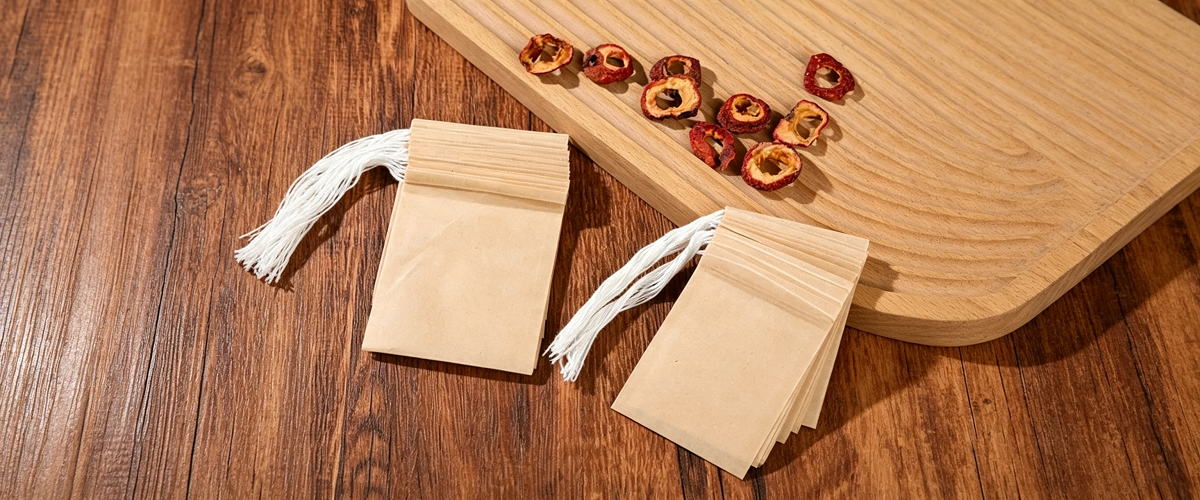
1. Why Are Tea Filter Bags Becoming More Popular Among Modern Consumers?
The popularity of tea filter bags is closely connected to changing consumer lifestyles. Modern consumers often want products that are quick to prepare, easy to carry, simple to store, and consistent in quality.
Traditional loose-leaf tea remains popular among tea enthusiasts, but it often requires a teapot, strainer, infuser, measuring spoon, or other brewing equipment. Tea filter bags simplify this process by combining a predetermined portion of tea with a convenient brewing format.
Convenience for Everyday Tea Drinking
One of the biggest advantages of tea filter bags is simplicity.
Consumers can typically place the filter bag into a cup or teapot, add hot water, allow the tea to steep, and remove the bag after brewing.
This makes filter bags particularly suitable for:
- Offices
- Hotels
- Restaurants
- Travel
- Workplaces
- Home kitchens
- Outdoor activities
- Hospitality services
The simplified brewing process can make tea more accessible to consumers who may not have experience preparing loose-leaf tea.
Consistent Tea Portions
Portion control is another important advantage.
Each filter bag can contain a predetermined quantity of tea, helping manufacturers create a more consistent brewing experience from one serving to another.
This can be particularly valuable for commercial environments such as hotels and restaurants, where standardized serving portions can simplify inventory and preparation.
Portable Tea Consumption
Individual tea filter bags are easy to carry because they do not require separate measuring or brewing accessories.
Consumers can keep several servings in:
- Bags
- Office drawers
- Travel kits
- Hotel rooms
- Lunch boxes
- Camping supplies
This portability supports the growing demand for convenient beverages that fit into mobile lifestyles.
Growing Interest in Specialty Tea
Tea filter bags are no longer limited to basic black tea.
Modern products can contain:
- Green tea
- Black tea
- White tea
- Oolong tea
- Herbal blends
- Fruit tea
- Flower tea
- Functional botanical blends
- Specialty tea combinations
This has allowed brands to use filter bags as a premium product format rather than simply a low-cost alternative to loose-leaf tea.
E-Commerce and Direct-to-Consumer Opportunities
The growth of online shopping has also created opportunities for individually packaged tea.
Brands can develop:
- Subscription tea boxes
- Gift sets
- Variety packs
- Trial packs
- Specialty tea collections
- Personalized tea assortments
Compact filter bags are relatively easy to organize into retail and shipping formats, making them suitable for both traditional retail and e-commerce channels.
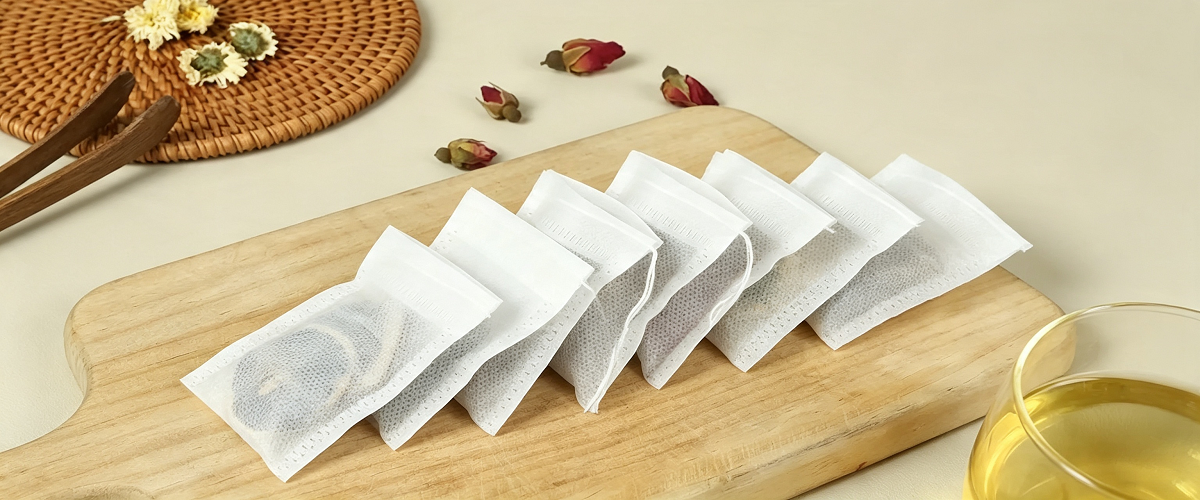
2. How Do Tea Filter Bags Improve Convenience, Portion Control, and Brewing Efficiency?
Tea filter bags offer practical benefits throughout the consumer experience, from preparation to disposal and storage.
Simple Brewing Process
A filter bag eliminates the need to measure loose tea for every serving.
This makes preparation faster and more convenient, especially for consumers who drink tea several times a day.
A typical brewing process involves:
- Selecting one filter bag.
- Placing it into a cup or teapot.
- Adding water at the appropriate temperature.
- Allowing the tea to steep.
- Removing the filter bag.
The simplicity of this process is one of the main reasons individually portioned tea products appeal to modern consumers.
Better Portion Control
Each filter bag can be filled according to a defined weight.
This allows tea manufacturers to establish consistent product specifications.
For example, different product categories can use different fill weights according to the desired serving size and tea blend.
| Product Format | Typical Purpose | Main Advantage |
|---|---|---|
| Single-Serve Filter Bag | Individual cup | Convenience |
| Larger Filter Bag | Teapot or multiple servings | Flexible brewing |
| Individually Wrapped Bag | Portable retail product | Aroma and moisture protection |
| Multi-Pack | Household use | Cost efficiency |
| Variety Pack | Product sampling | Brand discovery |
Actual fill weights should be determined according to tea type, leaf size, desired strength, and brewing method rather than using one standard weight for every tea product.
Consistent Brewing
Consistent portioning can help consumers achieve more predictable results.
Loose-leaf tea preparation can vary depending on how much tea the consumer uses. Filter bags reduce this variation by providing a predetermined quantity.
For brands, this can help establish a more consistent consumer experience.
Reduced Mess
Loose tea can leave particles in cups, teapots, and sinks.
Filter bags contain the tea material during brewing, making cleanup easier.
This is particularly convenient in workplaces, hotels, and other environments where consumers want to prepare tea quickly without creating additional mess.
Easy Removal After Brewing
A string, tag, or convenient filter structure can make it easier to remove the tea bag after steeping.
For premium products, these small details can contribute to the overall consumer experience.
Better Product Organization
Individually packaged tea filter bags can also make storage easier.
Consumers can organize multiple flavors or varieties without opening a large bulk package.
This supports product formats such as:
- Assorted tea collections
- Multi-flavor boxes
- Premium gift sets
- Office tea selections
- Hotel beverage kits
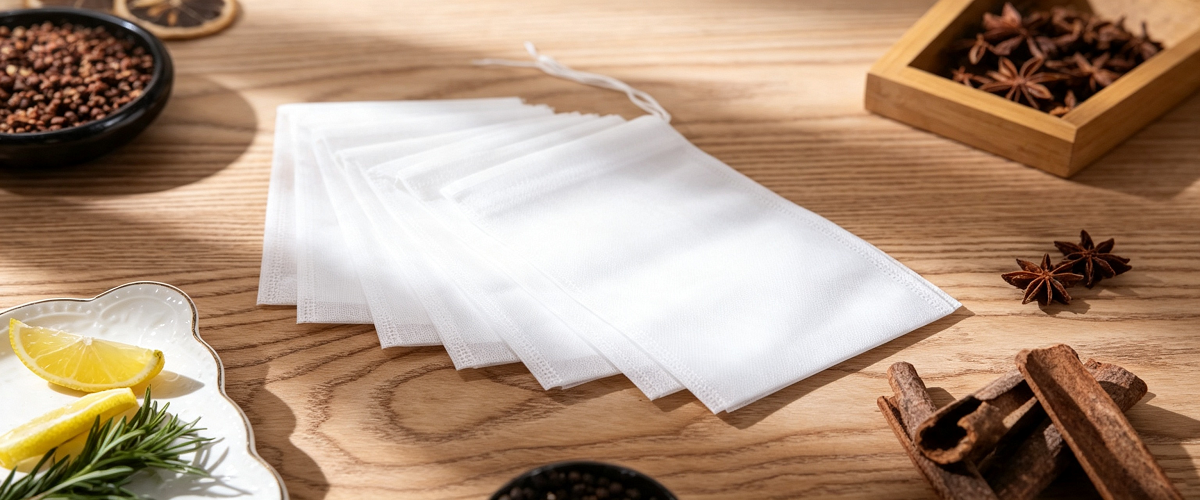
3. Which Packaging Materials Are Best for Protecting Tea Aroma and Freshness?
Tea is sensitive to moisture, oxygen, light, and external odors. Even when the filter bag itself provides good brewing performance, the outer packaging must protect the tea during storage and transportation.
The material structure should therefore be selected according to the tea type, expected shelf life, package format, and distribution environment.
Paper-Based Tea Filter Materials
Paper-based filter materials have traditionally been used for many tea bags.
They can provide:
- Good infusion performance
- Suitable liquid permeability
- Natural appearance
- Good consumer familiarity
However, filter paper itself is generally not intended to serve as the only long-term barrier against moisture and oxygen.
For products requiring stronger protection, the filter bag may be placed inside an individually wrapped outer package.
Nonwoven and Synthetic Filter Materials
Certain tea products use nonwoven or synthetic filter materials designed to provide good infusion performance and mechanical strength.
These materials may offer:
- Good wet strength
- Controlled filtration
- Good sealing characteristics
- Clear or translucent appearance
Material selection should consider the intended brewing conditions and applicable food-contact requirements.
PET-Based Outer Packaging
PET can be used as an outer layer in laminated tea packaging.
It provides:
- Good mechanical strength
- Excellent printability
- Dimensional stability
- Attractive appearance
When combined with barrier layers and a heat-sealable inner layer, PET can form part of a high-performance tea pouch structure.
Metallized Films
Metallized PET can provide stronger protection against:
- Moisture
- Oxygen
- Light
- External odors
This can be valuable for premium tea products where aroma preservation is especially important.
Aluminum Foil Laminates
Aluminum foil provides a very strong barrier against moisture, oxygen, and light.
A foil laminate can be considered for tea products that require high protection and extended shelf life.
A typical structure may combine an outer printable layer, aluminum foil barrier, and heat-sealable inner layer.
PE and Other Heat-Sealable Layers
PE is frequently used as an inner layer because it provides reliable heat sealing and moisture resistance.
A multilayer structure can therefore combine:
- PET for printability
- Aluminum or metallized film for barrier
- PE for sealing
This allows each material to perform a specific function.
Comparison of Common Tea Packaging Materials
| Material | Moisture Protection | Oxygen Protection | Light Protection | Typical Role |
|---|---|---|---|---|
| Paper Filter Material | Low to Moderate | Low | Low | Brewing/filter layer |
| PET | Good | Moderate | Limited unless treated | Outer layer |
| PE | Good | Moderate | Low | Sealing layer |
| Metallized PET | Excellent | Excellent | Excellent | Barrier layer |
| Aluminum Foil | Excellent | Excellent | Excellent | High-barrier layer |
| High-Barrier Polymer | Good to Excellent | Excellent | Depends on structure | Advanced barrier packaging |
The final packaging structure should be validated through actual shelf-life and barrier testing.
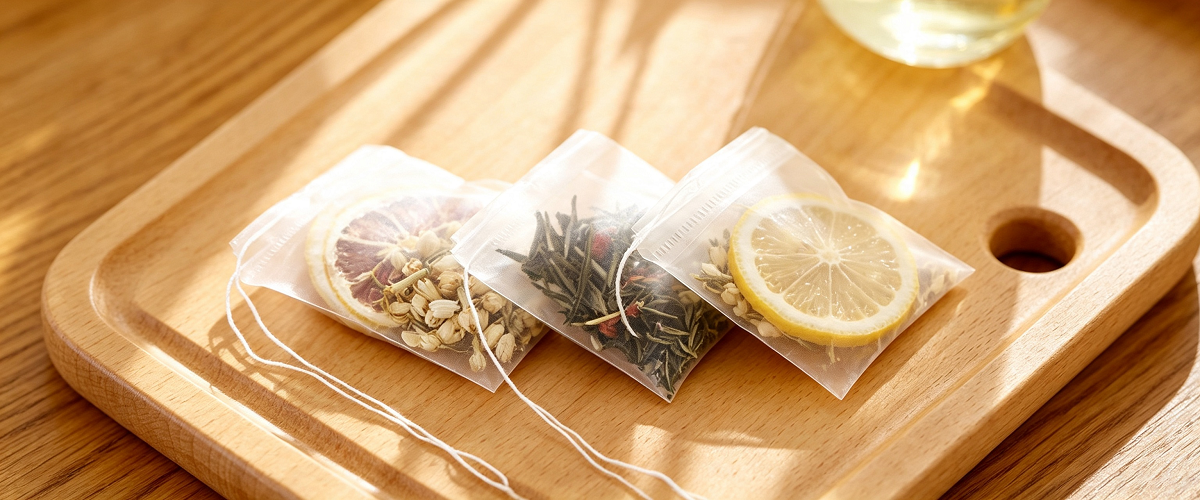
4. What Packaging Features Make Tea Filter Bags More Attractive to Consumers and Brands?
The success of tea filter bag packaging depends not only on product protection but also on convenience, presentation, and brand differentiation.
Individual Wrapping
Individually wrapped tea filter bags can provide additional protection from moisture, oxygen, light, and external odors.
They can also improve portability and hygiene.
Individual packaging is particularly useful for:
- Hotels
- Restaurants
- Airlines
- Premium retail tea
- Gift sets
- Travel products
Resealable Outer Pouches
For multi-pack products, resealable pouches can make storage more convenient.
Consumers can open the package, remove individual servings, and reseal the remaining tea.
This can reduce repeated exposure to the surrounding environment.
Easy-Open Features
Easy-tear notches can make individual sachets easier to open.
This is a small feature, but it can significantly improve consumer convenience.
Custom Printing
Tea packaging provides a large surface for brand storytelling.
Brands can communicate:
- Tea origin
- Flavor profile
- Brewing instructions
- Product benefits
- Brand history
- Ingredient information
- Sustainability messages
High-resolution printing can help premium tea products differentiate themselves on retail shelves.
Premium Finishes
Tea is often associated with sophistication and ritual, making premium packaging finishes particularly relevant.
Possible options include:
- Matte finish
- Gloss finish
- Metallic effects
- Spot effects
- Soft-touch finishes
- Textured effects
These features can help create a stronger premium visual identity.
Color and Typography
Color selection can communicate the tea's characteristics.
For example:
- Green can reinforce natural or botanical associations.
- Dark colors can suggest premium positioning.
- Earth tones can support an organic or traditional image.
- Bright colors can distinguish fruit or flavored blends.
Typography should remain easy to read while reflecting the brand's personality.
Sustainable Packaging Features
Sustainability is becoming increasingly important for many tea brands.
Potential packaging strategies include:
- Lightweight structures
- Recyclable mono-material formats
- Paper-based outer packaging
- Reduced material usage
- Efficient package dimensions
However, sustainability decisions must still preserve the tea's required moisture and oxygen protection.
Functional Tea Bag Design
The filter bag itself can also influence the brewing experience.
Important considerations may include:
- Filter material
- Filtration performance
- Wet strength
- Seal quality
- String attachment
- Tag design
- Bag size
- Tea particle retention
The design should allow sufficient water contact with the tea while preventing excessive tea particles from escaping into the beverage.
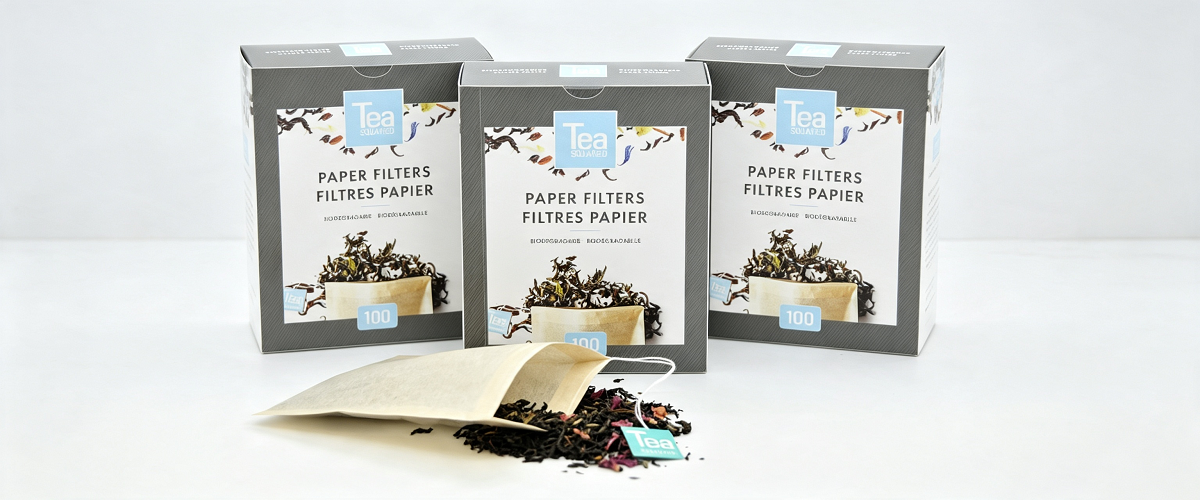
5. Tea Filter Bag Packaging: Key Benefits for Freshness, Convenience, Branding, and Market Growth
Tea filter bags provide an opportunity to combine brewing convenience with modern flexible packaging.
For brands, the value of this format extends beyond the individual tea bag itself.
Freshness Protection
Tea can gradually lose aroma and quality when exposed to moisture, oxygen, light, and external odors.
High-barrier outer packaging can help create a more controlled storage environment.
For premium aromatic teas, this protection can be particularly important because volatile aroma compounds contribute significantly to the consumer experience.
Consumer Convenience
Filter bags simplify brewing and reduce preparation time.
They are suitable for consumers who want:
- Fast preparation
- Consistent portions
- Easy cleanup
- Portable tea
- Simple storage
This convenience can make tea more accessible to consumers who do not regularly prepare loose-leaf tea.
Brand Differentiation
Packaging gives tea brands an opportunity to create a recognizable identity.
A well-designed tea filter bag package can communicate:
- Premium quality
- Authenticity
- Origin
- Flavor
- Lifestyle positioning
- Sustainability
- Product innovation
Custom flexible packaging can help new tea brands compete with established products.
Market Expansion
Individually packaged tea can support new sales channels and product concepts.
Examples include:
- Premium hotel tea
- Office tea
- Travel tea
- Gift collections
- Subscription boxes
- Functional tea
- Specialty tea
- Organic tea
- Ready-to-brew tea assortments
The compact format can also make product sampling easier.
Cost Efficiency
Flexible packaging can be lightweight and efficient to transport.
Compared with some rigid formats, flexible bags can reduce packaging volume and shipping weight.
However, the total cost should include:
- Film materials
- Printing
- Converting
- Filling
- Sealing
- Outer packaging
- Transportation
- Storage
Packaging Selection Framework
| Factor | What to Evaluate | Why It Matters |
|---|---|---|
| Tea Type | Green, black, oolong, herbal, flavored, etc. | Different aroma and barrier requirements |
| Aroma Sensitivity | How easily does the tea lose fragrance? | Determines barrier requirements |
| Shelf Life | Required storage period | Influences material selection |
| Portion | Single serving or multi-serving | Determines package format |
| Filter Material | Paper, nonwoven, or other structure | Affects brewing performance |
| Barrier | Moisture, oxygen, light | Protects product quality |
| Opening | Tear notch or other feature | Improves convenience |
| Branding | Printing and finishing | Supports market differentiation |
| Sustainability | Recyclability and material reduction | Supports environmental goals |
| Distribution | Retail, hotel, export, e-commerce | Influences package durability |
6. FAQ
Why Are Tea Filter Bags Becoming More Popular?
Tea filter bags offer a convenient combination of portion control, simple brewing, portability, and easy cleanup. They also allow tea brands to develop individually packaged and premium product formats.
Are Tea Filter Bags Better Than Loose-Leaf Tea?
They serve different consumer preferences. Loose-leaf tea can provide greater flexibility for traditional brewing, while filter bags offer greater convenience, consistency, and portability.
What Is the Best Packaging Material for Tea Filter Bags?
There is no single best material. Paper or other suitable filter materials can be used for the brewing bag, while PET laminates, metallized films, aluminum foil structures, and high-barrier polymer materials may be used for the outer package depending on the required protection.
Does Tea Need Oxygen-Barrier Packaging?
Many teas benefit from oxygen protection because oxygen can contribute to aroma and flavor degradation over time. The required barrier level depends on the tea type, formulation, packaging format, and desired shelf life.
Why Is Individual Tea Bag Packaging Important?
Individual wrapping can provide additional protection against moisture, oxygen, light, and external odors. It also improves portability, hygiene, and convenience for consumers.
Can Tea Filter Bags Use Sustainable Packaging?
Yes. Brands can explore recyclable, lightweight, paper-based, and other material-efficient solutions. However, sustainability should be balanced with the moisture and oxygen barrier requirements necessary to protect tea quality.
Can Tea Filter Bag Packaging Be Custom Printed?
Yes. Individual sachets and outer pouches can be customized with brand colors, logos, product information, illustrations, and premium finishing techniques.
What Packaging Features Are Useful for Premium Tea?
Premium tea packaging may benefit from high-barrier materials, individual wrapping, resealable pouches, easy-open sachets, matte finishes, metallic effects, refined typography, and carefully designed graphics.
7. Conclusion
The increasing popularity of tea filter bags reflects a broader consumer demand for convenience, portability, portion control, and consistent product experiences. By combining tea with a ready-to-brew filter format, brands can make tea preparation easier while creating new opportunities for retail, hospitality, travel, gifting, and direct-to-consumer markets.
However, the filter bag itself is only one part of the packaging system. Tea remains sensitive to moisture, oxygen, light, and external odors, making appropriate outer packaging essential for maintaining freshness and aroma. Materials such as PET, PE, metallized films, aluminum foil, and high-barrier polymer structures can be combined to create packaging solutions suited to different tea products and shelf-life requirements.
At the same time, packaging design can transform tea filter bags from a simple brewing tool into a powerful branding platform. Individual wrapping, resealable pouches, easy-open features, premium finishes, high-quality printing, and distinctive visual design can improve both consumer experience and brand recognition.
For tea manufacturers and brands, the most effective packaging solution is one that balances freshness protection, brewing performance, convenience, branding, sustainability, and cost efficiency. As consumer expectations continue to evolve, well-designed tea filter bag packaging can help brands protect product quality while creating new opportunities for differentiation and market growth.