Why Is Customized Sachet Packaging a Wise Choice for Modern Packaging?
Anna_Yu
Why Is Customized Sachet Packaging a Wise Choice for Modern Packaging?
In today’s fast-paced consumer markets, convenience, portion control, and cost efficiency have become defining factors in packaging decisions. From food and beverages to pharmaceuticals, cosmetics, and personal care products, brands are increasingly shifting toward single-serve and on-the-go packaging formats that align with modern lifestyles. Among these formats, customized sachet packaging has emerged as one of the most practical and scalable solutions.
Sachet packaging refers to small, sealed flexible packages designed for single-use or short-term consumption. While sachets may appear simple, their impact on brand accessibility, cost optimization, and sustainability strategies is significant. Customized sachet packaging allows brands to tailor size, material structure, barrier performance, and design to specific product requirements and consumer scenarios—making it far more than just a low-cost packaging option.
As markets become more competitive and consumers demand greater convenience at lower price points, customized sachet flexible packaging has proven to be a powerful tool for market expansion, sampling, and emerging-market penetration. This article explores what customized sachet packaging is, why it is ideal for modern consumption habits, how it helps brands reduce costs and waste, which industries benefit most, and the key advantages that make sachets a smart choice in modern flexible packaging solutions.
1. What Is Customized Sachet Packaging and How Does It Work?
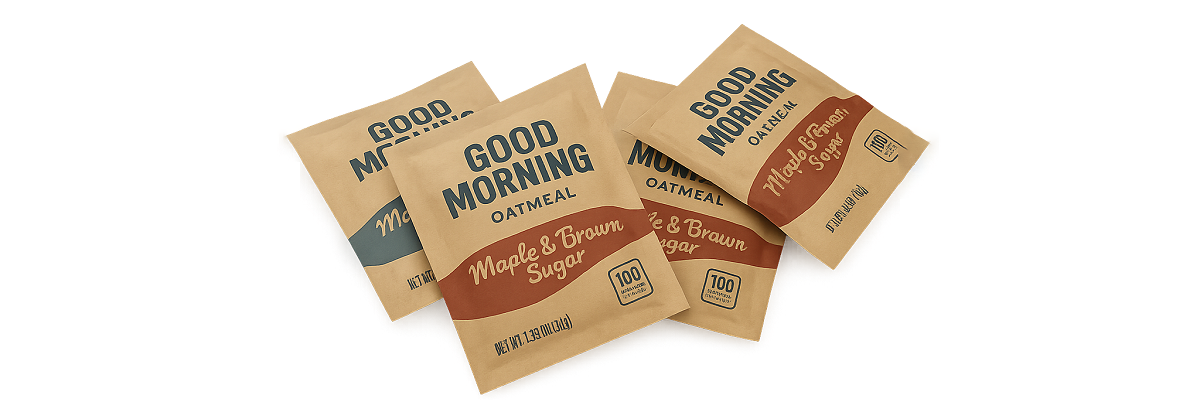
Customized sachet packaging is a form of small-format flexible packaging designed to hold a single serving or limited quantity of a product. These sachets are typically produced using rollstock films and formed, filled, and sealed on high-speed automated machines.
Structure of Sachet Packaging
A standard sachet structure usually consists of:
- Outer layer (PET or BOPP): Mechanical strength and print quality
- Barrier layer (VMPET or Aluminum Foil): Protection against oxygen, moisture, and light
- Inner sealing layer (PE or CPP): Food-safe sealing and product compatibility
Customization allows brands to adjust material structures based on product sensitivity and shelf-life requirements.
How Sachet Packaging Works in Production
Sachets are produced using vertical or horizontal form-fill-seal (FFS) machines, enabling:
- High-speed production
- Consistent portion control
- Low material usage per unit
This efficiency makes sachets ideal for large-scale distribution and cost-sensitive markets.
Common Sachet Formats
- 3-side seal sachets
- 4-side seal sachets
- Stick sachets (for powders and liquids)
Each format can be customized for size, thickness, barrier level, and opening method.
2. Why Is Customized Sachet Packaging Ideal for Single-Serve and On-the-Go Products?
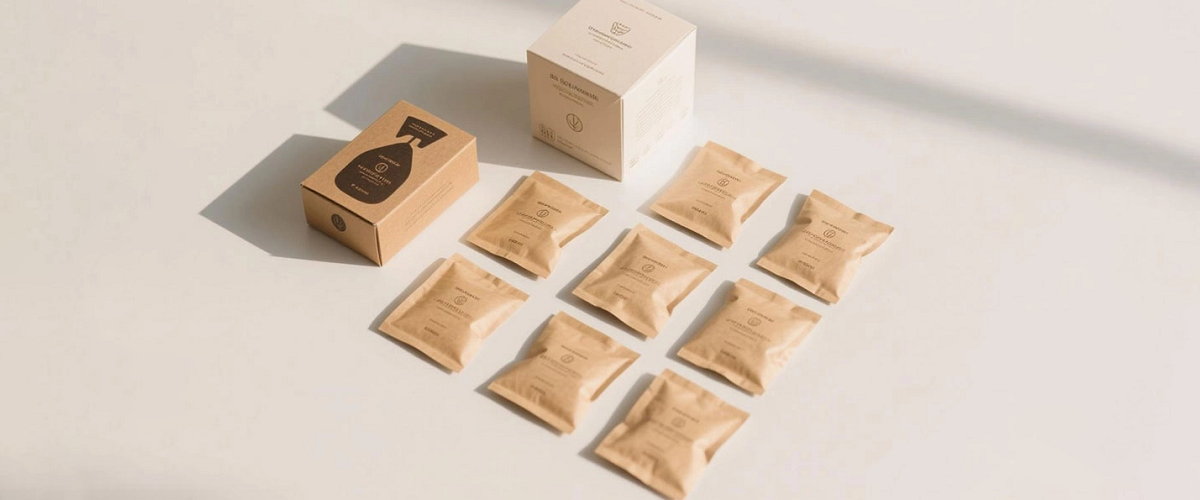
Modern consumers increasingly favor products that are portable, easy to use, and portion-controlled.
Convenience and Portability
Sachets are lightweight and compact, making them ideal for:
- On-the-go consumption
- Travel and outdoor use
- Daily-use products carried in bags or pockets
This convenience significantly enhances user experience.
Accurate Portion Control
Customized sachets allow brands to deliver:
- Exact dosage or serving size
- Consistent product experience
- Reduced risk of overuse or waste
This is especially important for pharmaceuticals, supplements, and functional foods.
Trial and Sampling Opportunities
Sachets are widely used for:
- Product sampling campaigns
- New product launches
- Market testing
They lower the entry barrier for first-time users and encourage trial purchases.
Affordability for End Consumers
Smaller pack sizes reduce upfront cost, making products more accessible in:
- Price-sensitive markets
- Emerging economies
- High-frequency daily-use categories
3. How Does Customized Sachet Packaging Help Brands Reduce Costs and Material Waste?
Cost efficiency is one of the strongest advantages of sachet packaging.
Lower Packaging Material Consumption
Compared with bottles, jars, or rigid containers, sachets:
- Use significantly less raw material
- Reduce overall packaging weight
- Improve material-to-product ratio
This leads to lower material costs per unit.
Reduced Transportation and Storage Costs
Sachets offer:
- Higher packing density
- Lower shipping volume and weight
- More efficient warehousing
These factors directly reduce logistics expenses.
Optimized Production Efficiency
High-speed sachet packaging lines enable:
- Large production volumes
- Lower labor costs
- Minimal product loss during filling
Customization ensures the packaging matches production and distribution needs precisely.
Controlled Product Usage
Single-use sachets prevent over-dispensing, helping reduce:
- Product waste
- Consumer misuse
- Returns and complaints
4. What Industries Benefit Most from Customized Sachet Flexible Packaging?
Customized sachet packaging is widely adopted across multiple industries due to its versatility.
Food and Beverage Industry
Common applications include:
- Sauces, condiments, and seasonings
- Instant coffee, sugar, and creamers
- Powdered beverages and supplements
Sachets ensure freshness and portion accuracy.
Pharmaceutical and Healthcare Industry
Sachets are ideal for:
- Oral powders and granules
- Single-dose medications
- Medical nutrition products
They support hygiene, compliance, and dosage control.
Cosmetics and Personal Care Industry
Widely used for:
- Shampoo, conditioner, and lotion samples
- Skincare and cosmetic trials
- Travel-size personal care products
Customization enhances brand presentation even in small formats.
Household and Industrial Products
Applications include:
- Detergents and cleaners
- Agricultural chemicals
- Industrial powders and additives
Sachets improve handling safety and dosing accuracy.
5. Key Advantages of Customized Sachet Packaging in Modern Flexible Packaging Solutions
Customized sachet packaging delivers a combination of commercial, functional, and strategic advantages.
High Flexibility and Customization
Brands can customize:
- Sachet size and shape
- Material and barrier performance
- Printing, branding, and finishes
This flexibility supports diverse product strategies.
Strong Barrier Protection
With the right laminate structure, sachets can offer:
- Excellent oxygen and moisture resistance
- Aroma and flavor retention
- Light protection for sensitive products
Ensuring product integrity throughout shelf life.
Scalability for Global Markets
Sachet packaging supports:
- High-volume production
- Market expansion into developing regions
- Localization of branding and language
Making it ideal for global distribution.
Brand Visibility at Low Cost
Even small sachets provide space for:
- Brand logos
- Product messaging
- Regulatory information
Turning low-cost packs into effective brand touchpoints.
FAQ
What is customized sachet packaging used for?
It is used for single-serve or limited-quantity products across food, pharma, cosmetics, and household industries.
Is sachet packaging cost-effective for brands?
Yes. Sachets reduce material usage, logistics costs, and enable high-speed production.
Can sachet packaging provide good barrier protection?
Absolutely. With metallized or aluminum foil layers, sachets can achieve high barrier performance.
Is customized sachet packaging suitable for emerging markets?
Yes. It is widely used to improve affordability and accessibility in price-sensitive markets.
Conclusion
Customized sachet packaging has become a strategic solution in modern flexible packaging due to its convenience, cost efficiency, and adaptability across industries. By enabling precise portion control, reducing material and logistics costs, and supporting high-speed production, sachets help brands meet evolving consumer demands while maintaining strong product protection. In a market driven by mobility, affordability, and efficiency, customized sachet packaging is not just a smart choice—it is a powerful tool for sustainable growth and market expansion.