A Guide to Choosing Flexible Individual Packaging for Gummy Candies
Anna_Yu
A Guide to Choosing Flexible Individual Packaging for Gummy Candies
Gummy candies are popular confectionery products because of their colorful appearance, chewy texture, fruity flavors, and convenient bite-sized portions. From traditional fruit gummies and vitamin gummies to sour gummies, functional gummies, and novelty-shaped candies, the category continues to expand across supermarkets, convenience stores, online retailers, and specialty confectionery markets. As product varieties increase, packaging has become an important part of maintaining candy quality, improving consumer convenience, and creating a recognizable brand identity.
Unlike many dry snacks, gummy candies have specific packaging requirements related to moisture balance, surface stickiness, texture stability, and flavor retention. If exposed to unsuitable environmental conditions, gummies may become excessively sticky, harden, lose their intended texture, or stick together. High temperatures can also cause deformation, while poor packaging seals may allow moisture, dust, and other contaminants to reach the product. For individually wrapped gummies, the packaging material must protect each piece while remaining easy to open, visually attractive, and suitable for high-speed production.
Flexible packaging is widely used for individual gummy candy wrapping because it offers lightweight construction, efficient material usage, and compatibility with automated flow-wrapping and confectionery packaging equipment. Options such as pillow packs, twist wraps, sachets, and individually sealed film wrappers allow manufacturers to package gummies in different shapes, sizes, and quantities. With suitable materials and printing, individual wrappers can also support product identification, portion control, and brand recognition.
However, choosing the right packaging is not simply a matter of selecting a film that can wrap around a gummy. Different gummy formulations have different moisture contents, surface characteristics, ingredients, and storage requirements. A soft fruit gummy may require a different packaging approach from a sugar-coated sour gummy, while vitamin gummies may have additional requirements related to ingredient stability and labeling.
This guide explores how to choose flexible individual packaging for gummy candies, covering packaging formats, protective properties, material selection, functional features, and important commercial considerations. Whether you are a confectionery manufacturer, private-label brand, or candy distributor, understanding these factors can help you develop packaging that protects product quality, improves production efficiency, and strengthens your position in the market.
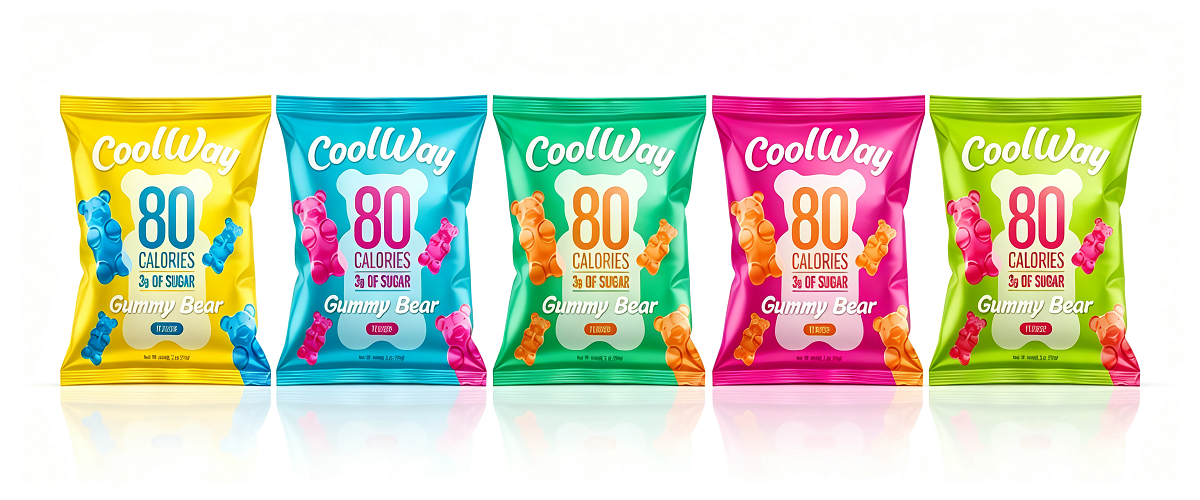
1. What Types of Flexible Packaging Are Best for Individually Wrapped Gummy Candies?
The best flexible packaging format for individual gummy candies depends on the candy's shape, size, surface coating, formulation, production speed, and target market.
Individual wrappers must provide enough space to enclose each candy securely without using excessive material. They should also be compatible with the manufacturer's packaging equipment and provide reliable seals that prevent gummies from being exposed to unfavorable storage conditions.
Individual Pillow Packs
Pillow packs are one of the most common formats for individually wrapped confectionery products.
They are typically formed from a continuous roll of flexible film. The film wraps around the gummy, and the packaging machine creates a longitudinal seal and two end seals to produce an individual pillow-shaped package.
Pillow packs are suitable for:
- Standard fruit-flavored gummies
- Sugar-coated gummy candies
- Small bear-shaped gummies
- Sour gummy pieces
- Individually portioned functional gummies
Their main advantages include:
- Compatibility with high-speed automated packaging lines
- Consistent package dimensions
- Efficient use of roll-fed packaging film
- Flexible adjustment for different candy sizes
- Good opportunities for custom printing
- Convenient integration into larger multipacks
Pillow packs are particularly useful for manufacturers producing large quantities of individually wrapped gummies. Multiple pieces can later be collected into a larger bag, carton, or display package.
The film must be compatible with the machine's forming, feeding, sealing, and cutting systems. Seal strength and seal consistency are especially important because gummy surfaces may contain sugar, oil, or moisture that can interfere with the sealing process if the product contaminates the seal area.
Twist-Wrap Packaging
Twist-wrap packaging uses flexible film that is wrapped around a candy and twisted at one or both ends.
It is traditionally associated with hard candies, but it can also be used for selected gummy products depending on their shape, firmness, and surface characteristics.
Potential applications include:
- Firm fruit gummies
- Small novelty-shaped candies
- Individually presented confectionery pieces
- Decorative candy assortments
The main advantages include:
- Distinctive traditional candy presentation
- Easy visual identification
- Convenient individual portioning
- Simple opening for consumers
- Opportunities for colorful and branded designs
However, twist wrapping is not suitable for every gummy formulation. Soft or highly sticky gummies may not maintain their shape during wrapping, and the twisted ends may not provide the same level of environmental protection as a fully sealed package.
For products that require stronger moisture protection or longer storage periods, sealed pillow packs are generally a more suitable starting point.
Three-Side Seal Sachets
Three-side seal sachets are flat flexible packages sealed along three edges, with the remaining edge used for filling and final sealing.
They are suitable for individual gummy portions, small candy assortments, and selected functional confectionery products.
Common applications include:
- Single-serving gummy packs
- Vitamin gummy portions
- Promotional samples
- Travel-size candy packs
- Small gummy assortments
Their advantages include:
- Compact package structure
- Good compatibility with printed designs
- Convenient storage and distribution
- Flexible dimensions
- Suitability for automated filling and sealing
Three-side seal sachets can be designed to contain one gummy or several small pieces, depending on the desired serving size.
For multiple gummies in one sachet, the package dimensions should allow sufficient space to prevent excessive compression and deformation. If the candies are particularly sticky, manufacturers should also consider whether an appropriate release coating, anti-sticking formulation, or other product-side solution is necessary.
Stick Packs
Stick packs are narrow, elongated packages commonly used for powders, granules, and small single-serving products.
Although they are not the standard choice for conventional gummy pieces, they may be suitable for specially designed gummy products, small gummy portions, or products that can be arranged in a narrow package format.
Potential applications include:
- Small-format functional gummy portions
- Novelty confectionery products
- Compact promotional products
- Specially shaped gummy assortments
Their advantages include:
- Convenient single-serving format
- Compact storage
- Easy distribution
- Strong compatibility with portion-control concepts
- Large-scale automated production potential
However, stick packs have limited internal width. They should only be considered when the gummy dimensions and shape are compatible with the package.
For ordinary bear-shaped or larger fruit gummies, pillow packs and three-side seal sachets are generally more practical.
Individually Wrapped Gummies in Multipack Bags
Many confectionery brands use individual wrappers as the primary packaging and a larger flexible bag as the secondary retail package.
This structure is particularly useful for products sold in family-size packs, sharing bags, and mixed-flavor assortments.
A typical packaging arrangement includes:
- Each gummy is wrapped in an individual flexible film.
- Multiple wrapped pieces are collected into a larger retail bag.
- The outer bag is sealed to protect the entire assortment.
- The finished product is labeled and packed into shipping cartons.
This approach offers several advantages:
- Individual portion control
- Reduced direct contact between candies
- Convenient sharing and distribution
- Easier counting and assortment management
- Strong branding opportunities on the outer bag
The outer bag can be a stand-up pouch, flat pouch, or pillow bag, depending on the product volume and sales channel.
For example, a brand selling 30 individually wrapped fruit gummies may use printed pillow packs for each piece and a resealable stand-up pouch as the outer package.
Rollstock Film for Automated Gummy Wrapping
Rollstock film is a key packaging format for manufacturers using automated flow-wrapping equipment.
Instead of purchasing pre-made individual bags, manufacturers use continuous flexible film that is fed into a packaging machine. The machine forms the film around each gummy, creates seals, and cuts the packages into individual units.
Rollstock film is suitable for:
- High-volume confectionery production
- Individually wrapped fruit gummies
- Sugar-coated gummy pieces
- Mixed-flavor candy lines
- Private-label gummy products
Its main benefits include:
- Efficient automated production
- Consistent package appearance
- Flexible printing and branding
- Reduced need for pre-made individual bags
- Compatibility with different wrapper dimensions
When selecting rollstock, manufacturers should confirm the film's coefficient of friction, stiffness, sealing window, thickness, and compatibility with the machine's forming and cutting systems.
The film must also maintain reliable seals at the required production speed.
Comparison of Individual Gummy Packaging Formats
| Packaging Type | Main Advantages | Suitable Applications | Key Consideration |
|---|---|---|---|
| Pillow pack | Efficient, sealed, suitable for automation | Standard individual gummies | Seal consistency and machine compatibility |
| Twist wrap | Traditional appearance and easy opening | Firm gummies and novelty candies | Limited protection compared with sealed wrappers |
| Three-side seal sachet | Compact and flexible | Single servings and small assortments | Correct sizing and reliable sealing |
| Stick pack | Portable and portion-controlled | Specially designed small-format gummies | Limited package width |
| Individual wrappers with outer bag | Individual protection and convenient multipacks | Family-size and sharing packs | Primary and secondary packaging must work together |
| Rollstock film | Efficient high-speed production | Large-scale gummy manufacturing | Film performance on the packaging line |
For most conventional individually wrapped gummy candies, pillow packs made from suitable flexible rollstock are a practical solution. Three-side seal sachets are useful for small portions and samples, while twist wraps are more appropriate for selected firm candy formats. The final choice should be based on candy characteristics, equipment compatibility, storage conditions, and target production volume.
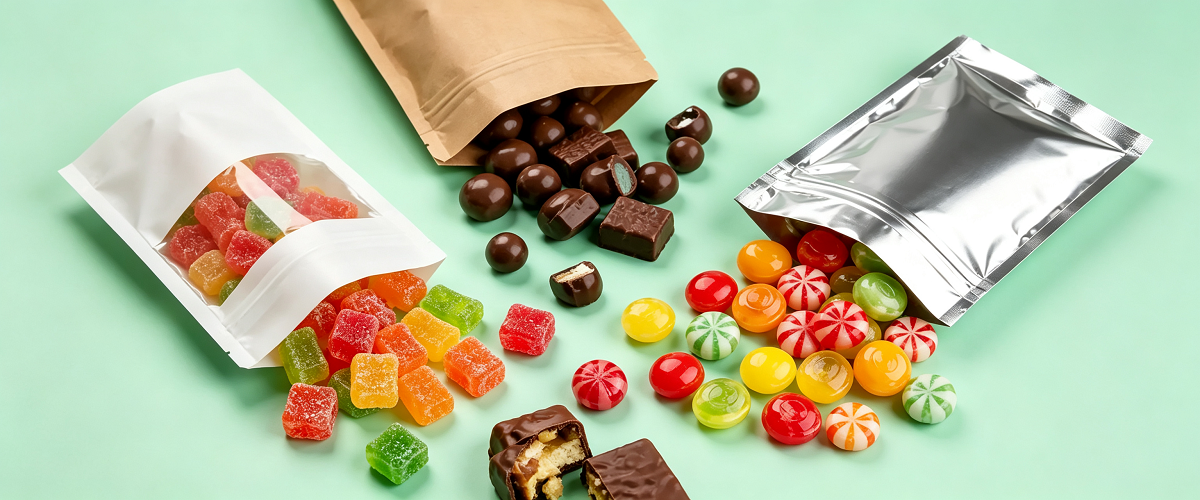
2. How Does Individual Packaging Protect Gummy Candies from Moisture, Sticking, and Contamination?
Gummy candies have a distinctive texture created by their formulation and moisture balance. Depending on the recipe, they may contain gelatin, pectin, starch, sugars, syrups, acids, flavors, and colorants.
Because of this composition, gummies can respond noticeably to changes in their surrounding environment. Packaging must help maintain the intended texture and prevent unwanted contact between individual candies.
Moisture Control: Maintaining the Right Gummy Texture
Moisture management is one of the most important considerations in gummy candy packaging.
Gummies contain water, and their texture depends partly on the relationship between moisture content, water activity, sugar concentration, and the gelling system used in the formulation.
If gummies lose too much moisture, they may become harder, tougher, or less pleasant to chew.
If they absorb excessive moisture, they may become softer, stickier, or more likely to deform.
Potential moisture-related problems include:
- Hardening during storage
- Excessive surface stickiness
- Loss of the intended chewy texture
- Changes in product weight
- Increased tendency for candies to stick together
- Reduced visual and sensory quality
A suitable flexible packaging film helps control moisture exchange between the gummy and the surrounding environment.
For example, polyethylene-based films can provide useful moisture resistance in many confectionery applications. Laminated films may offer additional protection when longer storage periods or more demanding distribution conditions are involved.
However, the required moisture barrier depends on the formulation. A gummy with a relatively stable moisture profile may have different packaging requirements from a soft, high-moisture gummy.
Manufacturers should evaluate the finished product's moisture sensitivity and target shelf life before selecting the packaging structure.
Preventing Gummies from Sticking Together
Gummy candies are naturally tacky because of their formulation and surface characteristics.
Depending on the product, the surface may also contain sugar, sour seasoning, oil, or other coatings. These can influence how easily gummies stick to packaging films or to one another.
Individual packaging helps separate each piece from external surfaces and prevents direct contact between candies.
This is particularly useful for:
- Soft fruit gummies
- Large gummy bears
- Sour gummies
- Filled gummies
- Functional vitamin gummies
- Novelty-shaped confectionery
The packaging film should have suitable surface characteristics so that it does not create unnecessary adhesion or friction during wrapping and storage.
Manufacturers may evaluate:
- Inner film smoothness
- Coefficient of friction
- Surface treatment
- Film additives
- Product temperature during wrapping
- Compatibility with the gummy's coating
It is important to recognize that packaging alone cannot eliminate stickiness caused by the formulation. Product-side solutions such as suitable sugar coatings, oil coatings, starch treatments, or formulation adjustments may also be required.
The best results come from matching the product formulation with the correct packaging material and wrapping conditions.
Protection from Dust and External Contamination
Individual wrappers provide a physical barrier between gummy candies and the external environment.
This helps reduce exposure to:
- Dust
- Foreign particles
- Handling contamination
- External odors
- Unwanted contact with other products
For confectionery manufacturers, individual wrapping can also improve hygiene during distribution and consumer handling.
Instead of exposing an entire group of candies whenever a package is opened, consumers can handle one wrapped piece at a time.
However, packaging does not replace good manufacturing hygiene. Gummies should be produced and wrapped under appropriate food safety and quality-control procedures.
The packaging material must also be suitable for its intended food-contact application, with appropriate controls over inks, adhesives, and other components.
Flavor and Aroma Retention
Gummy candies often rely on fruit flavors, sour notes, and other aromatic ingredients to create their characteristic taste.
If volatile flavor compounds migrate through the packaging material or escape through poorly sealed areas, the product may gradually lose its intended aroma.
Flexible packaging can help reduce this loss when the material structure and seals provide suitable barrier performance.
This is particularly important for:
- Fruit-flavored gummies
- Citrus gummies
- Sour gummies
- Tropical fruit assortments
- Premium confectionery products
A good packaging structure should also limit unwanted external odor migration.
For example, gummies stored near strongly scented materials may absorb undesirable odors if the packaging offers insufficient protection.
Material selection should therefore consider both aroma retention and the potential for odor transmission.
Light Protection for Sensitive Ingredients and Colors
Many gummy candies are brightly colored and rely on carefully selected colorants and flavors.
Light exposure may affect certain colorants, vitamins, and sensitive ingredients over time.
This is especially relevant for vitamin gummies and functional confectionery products that contain added nutrients.
Transparent films provide excellent product visibility but offer limited light protection unless additional materials or coatings are used.
Metallized films, opaque printed structures, and selected barrier laminates can provide stronger light protection.
The appropriate solution depends on the product's ingredient stability and the intended display environment.
For products where appearance is a major selling point, brands may also consider using a printed outer bag with individually wrapped gummies inside. This provides space for branding while reducing direct light exposure to the candies.
Temperature and Physical Protection
Gummy candies can soften or deform when exposed to unsuitable temperatures.
Flexible individual packaging cannot prevent heat damage on its own, but it can help keep pieces separated and reduce direct contact with external surfaces.
During distribution, manufacturers should consider:
- Temperature fluctuations
- Long-distance transportation
- Carton compression
- Vibration
- Repeated handling
- Storage near heat sources
For soft gummies, the packaging process should also be coordinated with the product's cooling and setting conditions.
Wrapping gummies before they have reached a suitable temperature or surface condition may increase the risk of deformation, sticking, or seal contamination.
Seal Integrity: Preventing Moisture and Contamination Entry
The performance of individual gummy packaging depends heavily on its seals.
A wrapper with weak or incomplete seals may allow moisture, air, dust, and external odors to enter.
Potential sealing problems include:
- Incomplete end seals
- Weak longitudinal seals
- Product contamination in the sealing area
- Wrinkles or folds across the seal
- Film misalignment
- Inconsistent sealing temperature or pressure
For automated pillow wrapping, the sealing process must be compatible with the selected film and production speed.
Manufacturers should test seal strength, inspect finished wrappers, and verify that the package remains intact during transportation.
Primary Packaging and Outer Packaging Work Together
Individual wrappers provide direct protection for each gummy, but the outer package also plays an important role.
A complete packaging system may include:
- Individual flexible wrappers
- A printed multipack bag or pouch
- An outer carton for shipping
- Suitable secondary packaging to limit compression and movement
The individual wrapper protects each candy from direct environmental exposure. The outer bag provides additional containment, branding, and convenience, while the carton supports transportation and storage.
This layered approach is particularly useful for export-oriented gummy candy products.
Protection Requirements by Gummy Type
| Gummy Type | Main Packaging Concerns | Suggested Packaging Strategy |
|---|---|---|
| Standard fruit gummies | Moisture balance, sticking, flavor retention | Sealed pillow packs with suitable moisture barrier |
| Sugar-coated gummies | Coating damage and sticking | Smooth inner film and suitable package dimensions |
| Sour gummies | Surface coating, moisture, flavor stability | Compatible film with reliable seals |
| Soft gummies | Deformation and surface adhesion | Carefully controlled wrapping conditions and suitable film |
| Filled gummies | Leakage, deformation, and contamination | Strong seals and sufficient package space |
| Vitamin gummies | Moisture, light, and ingredient stability | Barrier structure selected for the formulation |
The most effective packaging strategy considers the candy's formulation, surface condition, and storage environment together. A strong barrier film is important, but it must be combined with suitable wrapping conditions, reliable seals, and appropriate secondary packaging.
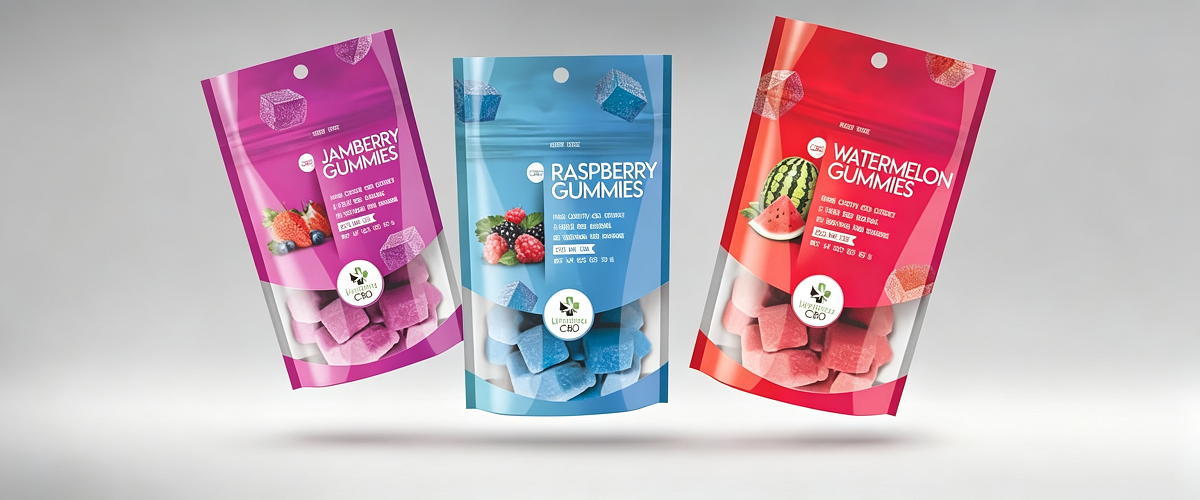
3. Which Packaging Materials Provide the Best Barrier Protection for Gummy Candy Packaging?
Flexible packaging materials determine how well individual gummy wrappers resist moisture, oxygen, light, and physical damage.
The best material is not necessarily the one with the highest barrier performance. It should provide the protection required by the gummy formulation while remaining compatible with the wrapping equipment and production budget.
Common flexible packaging materials include polyethylene (PE), polypropylene (PP), biaxially oriented polypropylene (BOPP), polyester (PET), metallized PET (VMPET), and aluminum foil.
Different materials can be used individually or combined into multilayer structures.
Polyethylene (PE)
Polyethylene is a flexible material commonly used in food packaging.
Its main characteristics include:
- Good flexibility
- Useful moisture resistance
- Good heat-sealing properties
- Lightweight construction
- Compatibility with different bag and film formats
PE is often used as a sealing layer in laminated structures. Selected PE films can also be used for simple confectionery packaging applications.
For gummy candies, PE may be suitable when the product's moisture and storage requirements can be met by the selected film thickness and construction.
However, PE does not automatically provide strong oxygen or aroma barriers. If the product requires higher barrier performance, a multilayer structure may be more appropriate.
Polypropylene (PP)
Polypropylene is widely used in confectionery packaging because it can provide good stiffness, clarity, and printability.
Depending on the grade and orientation, PP films can offer an attractive surface for individually wrapped candies.
Its advantages include:
- Good transparency
- Relatively high stiffness
- Good printing characteristics
- Lightweight construction
- Compatibility with selected automated wrapping systems
PP is used in different forms, including cast polypropylene (CPP) and biaxially oriented polypropylene (BOPP).
The choice between them depends on the intended application and sealing requirements.
BOPP (Biaxially Oriented Polypropylene)
BOPP is widely used for individual confectionery wrappers because it provides a good combination of clarity, stiffness, and printing performance.
Its key advantages include:
- Attractive product presentation
- Good surface appearance
- Useful mechanical strength
- Suitable printing performance
- Compatibility with rollstock packaging applications
BOPP can be used for transparent or printed gummy wrappers.
For example, a brand may choose clear BOPP to show the candy's color and shape, or printed BOPP to communicate its flavor and brand identity.
However, BOPP film grades differ in their sealing properties. Heat-sealable BOPP or suitable multilayer constructions may be required for automated pillow wrapping.
Manufacturers should confirm the film's sealing window and compatibility with their equipment before ordering large quantities.
Cast Polypropylene (CPP)
CPP is often used as a sealing layer or as part of flexible packaging structures.
It offers useful flexibility and heat-sealing properties, making it relevant to confectionery packaging applications.
Its advantages include:
- Good heat-sealing performance
- Flexibility
- Useful mechanical properties
- Compatibility with laminated structures
CPP may be selected for structures where reliable sealing and suitable flexibility are important.
The final film should be evaluated under actual wrapping conditions because sealing performance can vary with film grade, thickness, temperature, pressure, and machine speed.
Polyester (PET)
PET is widely used in flexible packaging because of its strength, dimensional stability, and printing quality.
Its main advantages include:
- Good mechanical strength
- High-quality printing surface
- Dimensional stability
- Resistance to handling damage
- Compatibility with different laminate structures
PET can be useful in printed outer layers for gummy candy packaging, especially when brands want more sophisticated graphics or improved mechanical durability.
However, PET alone may not provide the required moisture barrier for every gummy formulation. It is often combined with other materials to create a structure with balanced performance.
Metallized PET (VMPET)
VMPET is a metallized polyester film that can provide improved moisture, oxygen, and light barrier properties compared with standard uncoated PET.
It is commonly used in flexible packaging for products that require stronger environmental protection.
Its advantages include:
- Improved moisture barrier
- Improved oxygen barrier
- Light-blocking properties
- Attractive metallic appearance
- Compatibility with multilayer laminates
For gummy candy packaging, VMPET may be considered when a product needs stronger protection than a basic transparent film can provide.
A representative laminate could be PET/VMPET/PE, with the layers providing printing, barrier, and sealing functions.
However, metallized film performance can vary according to the metallization quality, film thickness, lamination process, and handling conditions.
Brands should evaluate the complete structure rather than relying only on the material name.
Aluminum Foil (AL)
Aluminum foil is used in high-barrier flexible packaging when strong protection against moisture, oxygen, and light is required.
Its main advantages include:
- Very high moisture barrier
- Very high oxygen barrier
- Excellent light protection
- Strong aroma retention when properly laminated
Aluminum foil laminates may be suitable for selected gummy products that contain sensitive ingredients or require demanding storage conditions.
For example, certain vitamin gummies or functional confectionery products may require stronger protection than standard fruit gummies.
However, aluminum foil structures are generally more expensive than basic BOPP or PE-based films. They may also be unnecessary for products that can meet their shelf-life targets with a simpler structure.
The choice should be based on product stability requirements and validated testing.
High-Barrier Coated Films
Coated films are designed to improve specific barrier properties while retaining selected characteristics of the base film.
Depending on the coating technology, they may offer improved oxygen or moisture resistance.
Potential benefits include:
- Tailored barrier performance
- Compatibility with selected flexible packaging formats
- Opportunities for material optimization
- Support for specialized packaging designs
However, coated films should be evaluated as complete packaging structures.
Coating integrity, lamination quality, converting conditions, and package seals all influence the final performance.
Common Material Structures for Gummy Candy Packaging
| Material Structure | Main Characteristics | Potential Applications |
|---|---|---|
| BOPP | Clarity, stiffness, and printability | Standard individually wrapped gummies |
| Heat-sealable BOPP | Presentation and sealing compatibility | Automated pillow packs |
| PET/PE | Printability, flexibility, and sealing | Selected multipack and pouch applications |
| PET/VMPET/PE | Improved moisture, oxygen, and light protection | Gummies with higher barrier requirements |
| PET/AL/PE | Very high barrier protection | Selected sensitive or premium gummy products |
| BOPP-based laminate | Flexible presentation and tailored sealing properties | High-volume confectionery wrapping |
These structures are representative options, not universal specifications. Actual performance depends on film grade, thickness, sealing properties, adhesive system, and packaging conditions.
Understanding WVTR and OTR
Two important measurements for evaluating flexible packaging barrier performance are water vapor transmission rate (WVTR) and oxygen transmission rate (OTR).
Water Vapor Transmission Rate (WVTR) measures how much water vapor passes through a packaging material over a specified area and period under defined test conditions.
For gummy candies, WVTR is particularly important because moisture exchange can affect texture, surface stickiness, and product stability.
A lower WVTR generally indicates better resistance to water vapor transmission under the stated testing conditions.
Oxygen Transmission Rate (OTR) measures how much oxygen passes through a packaging material under specified conditions.
OTR may be relevant for gummies containing oxidation-sensitive flavors, oils, vitamins, or other functional ingredients.
A lower OTR generally indicates stronger oxygen barrier performance.
However, material test results do not automatically predict the shelf life of a finished gummy candy. The final package must also be evaluated for seal integrity, storage conditions, and product-specific stability.
How to Choose the Right Material for Different Gummy Products
| Product Requirement | Material Consideration |
|---|---|
| Standard fruit gummies | Heat-sealable BOPP or another suitable confectionery film |
| Sugar-coated gummies | Smooth film surface and suitable sealing properties |
| Soft, sticky gummies | Film compatibility with the candy surface and wrapping conditions |
| Sour gummies | Suitable barrier and reliable sealing |
| Vitamin gummies | Evaluate moisture, oxygen, and light protection |
| Premium functional gummies | Consider high-barrier laminated structures |
| Long-distance export | Evaluate complete-package barrier and seal performance |
The most suitable material should be selected through product testing and packaging trials. A standard gummy candy may not need an aluminum foil laminate, while a specialized formula with sensitive ingredients may require stronger protection.
Food-Contact Compliance and Material Safety
Individual gummy wrappers come into direct contact with confectionery products, so material suitability is essential.
Brands selling internationally should consider the applicable food-contact requirements in their destination markets, including relevant U.S. FDA requirements, European Union food-contact legislation, and local regulations.
Important considerations include:
- Food-contact suitability of the inner film
- Compliance of printing inks and adhesives
- Migration testing where required
- Material traceability
- Manufacturing quality controls
- Suitability for the intended storage conditions
Packaging suppliers should provide relevant material specifications and compliance documentation for the intended application.
Brands should also confirm that the film is suitable for the actual candy formulation, including any oils, acids, coatings, or flavoring ingredients that may come into contact with the packaging.
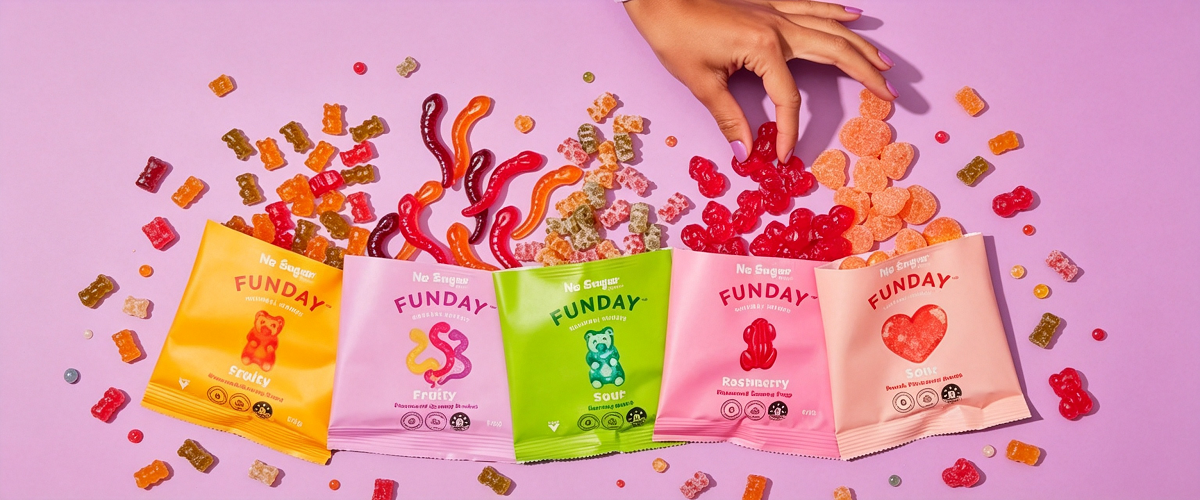
4. What Packaging Features Improve Freshness, Portion Control, and Consumer Convenience?
Individual gummy packaging is not only about protecting each candy. It also influences how consumers carry, share, store, and enjoy the product.
Functional features can improve the opening experience, make portion sizes easier to manage, and support more attractive retail presentation.
Easy-Open Seals
Consumers should be able to open individual gummy wrappers without excessive force or the need for scissors.
Suitable opening designs may include:
- Tear notches
- Easy-tear film structures
- Perforated opening lines
- Optimized end-seal designs
For individual pillow packs, the opening experience depends partly on film properties and seal configuration.
The wrapper should open cleanly without tearing into the candy or leaving excessive film fragments.
Manufacturers should test the opening performance with representative consumers, particularly when packaging is intended for children or older users.
Individual Portion Control
Individual wrappers make it easier to control the number of gummies consumed at one time.
This is useful for:
- School snacks
- Office snacks
- Travel packs
- Sharing bags
- Promotional confectionery
- Selected functional gummy products
For brands offering different serving sizes, individual wrapping can simplify product portioning.
However, for vitamin gummies or products marketed as dietary supplements, serving instructions and any required warning statements should be clear on the outer package. Individual wrappers should not create confusion about the recommended serving size.
Multipack and Assortment Packaging
Individual wrappers can be combined into larger multipacks to create convenient retail formats.
For example, a brand may package 20 or 30 individually wrapped gummies inside a printed stand-up pouch.
This approach offers:
- Easy sharing
- Better organization
- Convenient storage
- Flexible assortment combinations
- Additional branding space
Multipacks can also combine different flavors or shapes in one package.
For mixed assortments, the individual wrappers may use different colors or printed identifiers to help consumers distinguish flavors.
The outer bag should clearly communicate the number of pieces, flavor assortment, net weight, and other required product information.
Resealable Outer Bags
Although individual gummy wrappers are sealed separately, the outer multipack bag may also benefit from a resealable zipper.
A zipper is useful when consumers do not finish the entire multipack at once.
Its advantages include:
- Convenient repeated opening and closing
- Easier storage after opening
- Better organization of remaining pieces
- Improved consumer convenience
For products with individual wrappers, the outer zipper mainly provides convenience and secondary containment. It does not replace the protective function of the individual wrappers.
The zipper should be designed to remain functional even when the outer bag contains many small packages.
Transparent Windows
Transparent windows allow consumers to see the product before purchasing.
This can be particularly useful for gummy candies because color, shape, and variety are important purchase factors.
A window may allow customers to view:
- Gummy shapes
- Candy colors
- Individual wrappers
- Mixed-flavor assortments
- Product quantity and arrangement
For individual gummy products, a clear window can also show the wrapper design and create a more attractive retail presentation.
However, transparent areas may reduce light protection. If the product contains light-sensitive ingredients, brands should consider a smaller window or a more protective outer structure.
Custom Printing and Flavor Identification
Individual wrappers provide a small but valuable branding surface.
Even when the outer multipack carries the main product information, printed individual wrappers can help reinforce brand recognition.
Common printing elements include:
- Brand logo
- Flavor name
- Product series
- Color coding
- Decorative graphics
- Promotional messages
For example, a mixed fruit gummy assortment may use different wrapper colors to distinguish strawberry, orange, grape, and apple flavors.
This makes the product easier to identify and can improve the overall consumer experience.
For small wrappers, the design should remain simple. Excessive text and overly complex graphics can become difficult to read at small print sizes.
Custom Shapes and Sizes
Gummy candies are available in many shapes, including bears, rings, worms, fruits, bottles, and novelty characters.
The wrapper dimensions should accommodate the candy's largest dimensions without excessive material waste.
Important considerations include:
- Candy length and width
- Product thickness
- Surface coating
- Shape irregularities
- Required seal margins
- Machine forming requirements
A wrapper that is too small may compress or deform the gummy. A wrapper that is too large may create unnecessary material consumption and reduce packaging efficiency.
Manufacturers should test the actual gummy shape and size on the intended packaging machine before finalizing the film width and cutting length.
High-Speed Packaging Compatibility
For large-scale gummy production, individual wrappers are often produced using automated flow-wrapping machines.
The packaging film must perform consistently during:
- Film unwinding
- Product feeding
- Film forming
- Longitudinal sealing
- End sealing
- Cutting
Important film properties include:
- Coefficient of friction
- Stiffness
- Tensile strength
- Thickness consistency
- Heat-sealing window
- Print registration
- Roll winding quality
Poor film performance can cause feeding problems, wrinkles, misaligned seals, or production interruptions.
Packaging suppliers should understand the manufacturer's equipment type and operating conditions before recommending a rollstock structure.
Packaging Feature Comparison
| Feature | Main Benefit | Suitable Applications |
|---|---|---|
| Tear notch | Easier opening | Individually wrapped gummies |
| Printed wrapper | Brand and flavor identification | Retail and promotional candy |
| Color-coded film | Quick flavor recognition | Mixed-flavor assortments |
| Resealable outer zipper | Convenient storage after opening | Multipack gummy bags |
| Transparent window | Product visibility | Retail assortments |
| Custom dimensions | Better fit and less material waste | Different gummy shapes and sizes |
| High-speed rollstock compatibility | Efficient production | Large-scale confectionery manufacturing |
The most effective features depend on how the gummies are sold and consumed. For standard individual wrappers, reliable sealing, easy opening, and attractive printing are often the priorities. For multipacks, resealable outer bags and transparent windows may add further value.
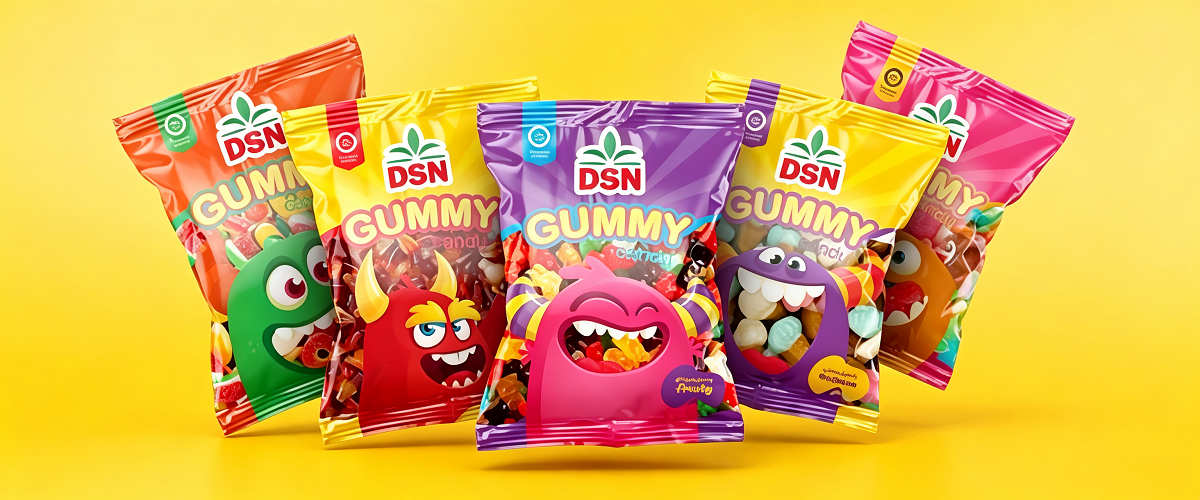
5. Individual Gummy Candy Packaging: Key Factors for Product Protection, Shelf Life, Branding, and Cost Efficiency
Choosing flexible individual packaging for gummy candies requires balancing product quality, production efficiency, brand presentation, and total packaging cost.
A film that provides strong barrier protection may not be suitable if it cannot run reliably on the wrapping machine. An attractive printed wrapper may create unnecessary costs if the product is sold mainly through wholesale channels. Similarly, a low-cost material may become more expensive overall if it causes frequent seal failures or product damage.
The following factors can help gummy manufacturers and confectionery brands make better packaging decisions.
Gummy Formulation and Surface Characteristics
The first step is to understand the candy itself.
Different gummy products have different moisture levels, surface coatings, textures, and shapes.
For example:
- Soft fruit gummies may have greater surface adhesion.
- Sugar-coated gummies may create more friction during wrapping.
- Sour gummies may contain acidic surface coatings.
- Filled gummies may require additional space and more careful handling.
- Vitamin gummies may contain ingredients that require additional stability protection.
Manufacturers should provide packaging suppliers with relevant product information, including:
- Gummy dimensions
- Product weight
- Formulation type
- Moisture content
- Water activity where available
- Surface coating
- Target shelf life
- Storage temperature
- Packaging machine type
These details help determine the appropriate film structure, wrapper size, and sealing method.
Shelf-Life Requirements
Gummy candy shelf life depends on formulation, processing, packaging, storage, and distribution conditions.
Some products may have relatively straightforward storage requirements, while soft gummies, functional gummies, and products with sensitive ingredients may require more carefully engineered packaging.
Brands should establish the intended shelf-life target before selecting the final film.
Important considerations include:
- Moisture barrier performance
- Oxygen barrier requirements
- Light sensitivity
- Aroma retention
- Seal integrity
- Storage temperature and humidity
- Product stability after wrapping
Shelf-life claims should be supported by suitable stability testing. A high-barrier film alone cannot guarantee a particular storage period.
Storage and Distribution Conditions
Individually wrapped gummies may travel through several stages before reaching consumers:
- Candy production and cooling
- Individual wrapping
- Collection into multipacks
- Carton packing
- Factory warehousing
- Domestic or international transportation
- Distributor and retail storage
- Consumer purchase and use
Each stage may expose the product to different temperatures, humidity levels, pressure, and handling conditions.
For export-oriented gummy products, brands should consider:
- Long transportation times
- Hot and humid climates
- Temperature fluctuations
- Container storage conditions
- Carton compression
- Vibration during shipping
Flexible wrappers should be tested as part of the complete packaging system.
For example, individual pillow packs may protect each candy, but the outer multipack bag and shipping carton must also be designed to prevent excessive compression and deformation.
Packaging Machine Compatibility
Packaging performance on the production line is one of the most important commercial considerations.
Gummy candy manufacturers may use different wrapping systems, including horizontal flow wrappers and other automated confectionery packaging machines.
The film must be compatible with the machine's feeding, forming, sealing, and cutting processes.
Important factors include:
- Film width and thickness
- Coefficient of friction
- Stiffness
- Heat-sealing properties
- Roll diameter and winding quality
- Print registration
- Machine operating speed
The sealing temperature and pressure must also be suitable for the selected film.
For gummies, the product's surface condition and temperature at the time of wrapping can affect packaging performance. If candies are too warm or have excessive surface moisture, they may stick to the film or contaminate the sealing area.
A packaging trial using actual production equipment is strongly recommended before mass production.
Branding and Retail Presentation
Individual wrappers can create repeated brand exposure, particularly when consumers purchase multipacks or share candies with others.
A consistent visual identity helps make the product recognizable across different retail environments.
Branding options include:
- Custom printed film
- Brand logos
- Flavor-specific colors
- Product series names
- Decorative patterns
- Promotional messages
For premium gummy products, individual wrapper design can be coordinated with the outer pouch or carton.
For example, a brand may use a consistent color palette across the entire product line while assigning a distinct accent color to each flavor.
This helps maintain brand recognition and makes flavor identification easier.
The design should also account for the limited printable area of individual wrappers. Essential information should remain readable, while detailed product information can be placed on the outer retail package where appropriate.
Cost Efficiency and Material Optimization
Packaging cost is influenced by several factors:
- Film material
- Film thickness
- Wrapper dimensions
- Printing method
- Number of printing colors
- Barrier structure
- Roll width and length
- Order quantity
- Production setup
- Machine efficiency
- Secondary packaging requirements
A basic BOPP wrapper may be suitable for a standard gummy product, while a premium or sensitive formulation may require a more complex laminated film.
The goal should be to select the least complex material structure that consistently meets the product's protection and shelf-life requirements.
Material reduction can also improve cost efficiency.
For example, optimizing wrapper dimensions may reduce film consumption without affecting sealing performance or product protection.
However, reducing film thickness too aggressively may increase the risk of tearing, pinholes, or inconsistent machine performance.
Brands should evaluate packaging cost per sellable candy rather than focusing only on the price per kilogram of film.
Minimum Order Quantity and Printing Flexibility
Gummy manufacturers often sell multiple flavors, shapes, and product sizes.
Each product variation may require a different wrapper design, which can increase packaging inventory and purchasing complexity.
Before placing an order, brands should clarify:
- MOQ per film design
- MOQ per rollstock specification
- Printing setup costs
- Available printing methods
- Sample and prototype availability
- Production lead time
- Reorder consistency
- Options for digital printing
For new product launches, smaller initial orders may help brands test market demand before committing to large quantities of printed film.
For established products with stable sales, larger production runs may reduce the cost per wrapper.
The most suitable purchasing strategy depends on the product lifecycle, sales forecast, and number of flavor variations.
Sustainability and Material Reduction
Sustainability is becoming an increasingly important consideration in confectionery packaging.
Individually wrapped gummies create multiple small packaging units, so brands may explore ways to reduce material consumption without compromising food protection.
Potential approaches include:
- Optimizing wrapper dimensions
- Reducing unnecessary film thickness
- Using suitable recyclable mono-material structures where technically feasible
- Reducing excessive secondary packaging
- Improving rollstock utilization
- Selecting materials that align with local recycling systems
However, small individual wrappers can be difficult to collect and recycle in some waste-management systems.
Multilayer films may also provide necessary barrier performance but can be more challenging to recycle through conventional infrastructure.
Brands should evaluate the complete packaging structure and local recycling conditions before making environmental claims.
A recyclable material claim should be supported by the actual structure and relevant collection and processing systems.
Quality Control and Packaging Testing
Before large-scale production, individual gummy wrappers should be tested under realistic conditions.
Useful quality checks include:
Film appearance inspection
Check for scratches, wrinkles, pinholes, contamination, uneven thickness, and printing defects.
Film thickness testing
Confirm that the film meets the agreed specification and remains consistent across production.
Seal strength testing
Evaluate whether the end seals and longitudinal seals remain secure during handling and storage.
Leak testing
Identify weak seals or defects that may allow moisture and external contaminants to enter.
Opening performance testing
Confirm that consumers can open the wrapper without excessive force or uncontrolled tearing.
Machine compatibility testing
Run the film on the actual packaging equipment to evaluate feeding, forming, sealing, and cutting performance.
Product compatibility testing
Observe whether the film sticks to the gummy, damages surface coatings, or affects the product's appearance.
Shelf-life testing
Evaluate the finished product under appropriate storage conditions to confirm that its texture, flavor, and appearance remain acceptable throughout the intended shelf life.
These checks help identify potential problems before they affect large production orders.
Practical Checklist Before Ordering Individual Gummy Packaging
| Selection Factor | Key Question | Why It Matters |
|---|---|---|
| Gummy formulation | Is the product soft, firm, coated, or filled? | Determines film and wrapping requirements |
| Product dimensions | What are the candy's actual dimensions? | Establishes wrapper size |
| Moisture sensitivity | How does the gummy respond to humidity? | Helps determine moisture barrier needs |
| Surface condition | Is the candy sticky, oily, or sugar-coated? | Influences film compatibility |
| Shelf life | What is the target storage period? | Establishes barrier requirements |
| Packaging format | Pillow pack, sachet, or twist wrap? | Determines wrapper construction |
| Packaging equipment | What machine will be used? | Ensures production compatibility |
| Printing | How many designs and flavors are required? | Influences setup costs and MOQ |
| Distribution | Will the product be shipped internationally? | Determines transportation protection |
| Sustainability | Are there local recycling requirements? | Guides material selection |
| Budget | What is the target cost per wrapper? | Balances performance and economics |
A clear packaging specification helps manufacturers and suppliers select the right film more efficiently and reduces the likelihood of costly changes during production.
FAQ
What is the best flexible packaging for individually wrapped gummy candies?
Pillow packs made from suitable heat-sealable flexible film are a practical choice for many individually wrapped gummies. They are compatible with automated packaging equipment and offer convenient sealing, printing, and portion control. Three-side seal sachets may be suitable for smaller portions, while twist wraps are more appropriate for selected firm candy products.
Does gummy candy packaging need moisture protection?
Yes. Gummy candies contain moisture, and changes in moisture balance can affect their texture and surface condition. A suitable packaging film helps control moisture exchange and maintain product quality during storage. The required barrier depends on the formulation and shelf-life target.
Which material is commonly used for individual gummy wrappers?
BOPP and suitable heat-sealable polypropylene films are commonly considered for individual confectionery wrapping because they can provide good clarity, stiffness, and printing performance. Other PE-, PET-, or metallized structures may be selected when different sealing or barrier requirements apply.
How can individual packaging prevent gummy candies from sticking together?
Individual wrappers separate candies from one another and reduce direct contact with external surfaces. Smooth inner film surfaces and suitable packaging dimensions can also help. However, product formulation, surface coatings, and wrapping conditions must be controlled because packaging alone cannot eliminate stickiness.
Are transparent wrappers suitable for gummy candies?
Yes. Transparent wrappers allow consumers to see the candy's color and shape, which can improve product presentation. However, transparent films provide limited light protection, so opaque or metallized materials may be more appropriate for products containing light-sensitive ingredients.
Can individually wrapped gummies be packed into a resealable stand-up pouch?
Yes. Individual wrappers can be collected into a larger stand-up pouch with a zipper closure. This format is useful for multipacks, mixed-flavor assortments, and family-size candy products. The individual wrapper provides direct product protection, while the outer pouch improves storage convenience and branding.
What packaging is best for sour gummy candies?
Sour gummies may have surface coatings that influence friction, sticking, and packaging compatibility. Suitable heat-sealable films should be tested with the actual candy formulation. The wrapper should provide reliable seals and avoid unwanted adhesion or damage to the sour coating.
Can individual gummy wrappers be customized with a brand logo?
Yes. Flexible rollstock films can be printed with brand logos, flavor names, colors, patterns, and promotional graphics. The printing method and minimum order quantity depend on the film structure, number of designs, and supplier's production capabilities.
What should manufacturers consider when selecting gummy candy packaging film?
Important factors include candy dimensions, moisture sensitivity, surface coating, film sealing properties, barrier performance, machine compatibility, printing requirements, target shelf life, and cost. Testing the film with actual gummies and production equipment is strongly recommended.
Is high-barrier aluminum foil packaging necessary for gummy candies?
Not always. Standard gummy candies may achieve their required shelf life with suitable heat-sealable films or laminated structures. Aluminum foil is more relevant when a specific formulation requires stronger protection against moisture, oxygen, or light. The decision should be based on product stability testing rather than assuming that the highest barrier is always necessary.
Conclusion
Choosing flexible individual packaging for gummy candies requires a balance between moisture management, product protection, reliable sealing, production efficiency, and attractive presentation. Different gummy formulations have different surface characteristics and storage requirements, so the packaging structure should be selected according to the actual product rather than using one material for every candy.
Pillow packs are a practical option for most conventional individually wrapped gummies because they support automated production and provide efficient individual sealing. Three-side seal sachets are useful for small portions and promotional products, while twist wraps may suit selected firm candy formats. For multipacks, individual wrappers can be combined with printed outer bags or resealable stand-up pouches to improve storage convenience and brand presentation.
Material selection is equally important. BOPP and suitable heat-sealable polypropylene films can provide clarity and printing performance for many confectionery applications. PE-based, PET-based, metallized, or aluminum foil laminates may be considered when specific sealing, mechanical, or barrier requirements justify them. The final structure should be validated through packaging trials and shelf-life testing.
Beyond material performance, brands should consider wrapper dimensions, film compatibility with automated equipment, opening convenience, printing design, order quantities, and sustainability goals. A well-designed packaging system protects the candy while supporting efficient manufacturing and a consistent consumer experience.
Ultimately, the best individual gummy candy packaging is not necessarily the most expensive or complicated option. It is the solution that maintains the intended texture and flavor, provides reliable protection, runs efficiently on the production line, and communicates the brand effectively. By working with an experienced flexible packaging supplier, gummy candy manufacturers can develop customized wrappers that meet product requirements while supporting long-term commercial success.