How to Choose the Right Flexible Packaging for Chocolate
Anna_Yu
How to Choose the Right Flexible Packaging for Chocolate
Chocolate is one of the most temperature-sensitive, moisture-sensitive, and quality-dependent confectionery products in the global food market. Whether it is dark chocolate, milk chocolate, white chocolate, filled chocolate, chocolate bars, pralines, or chocolate-coated snacks, product quality depends on maintaining the right balance of temperature, humidity, aroma, and physical protection throughout storage and distribution. Even minor changes in environmental conditions can affect chocolate's appearance, texture, flavor, and consumer appeal.
Unlike many dry food products, chocolate presents several unique packaging challenges. Temperature fluctuations can cause fat bloom or sugar bloom, moisture exposure can lead to surface defects and texture changes, and oxygen or external odors may gradually affect flavor quality. Chocolate is also vulnerable to physical damage during transportation, particularly when products have delicate shapes, decorative coatings, or fragile fillings. Choosing the wrong packaging can therefore lead to product complaints, reduced shelf life, and unnecessary commercial losses.
Flexible packaging has become an important solution for chocolate manufacturers, confectionery brands, and private-label businesses. Compared with many rigid packaging formats, flexible packaging offers lightweight protection, adaptable barrier performance, efficient storage, attractive printing options, and flexible pack sizes. From individually wrapped chocolate bars and flow-wrapped pralines to stand-up pouches for chocolate bites and resealable bags for chocolate-coated snacks, different packaging structures can be tailored to specific product requirements.
However, there is no universal packaging solution for every chocolate product. A chocolate bar intended for supermarket shelves has different requirements from premium pralines, seasonal chocolate gifts, or chocolate chips supplied to food manufacturers. Product composition, cocoa butter content, filling ingredients, distribution temperature, shelf-life targets, and sales channels all influence the packaging decision.
Choosing the right flexible packaging requires more than selecting an attractive bag design. Manufacturers must evaluate material structures, moisture and oxygen barriers, heat-sealing performance, temperature exposure, packaging formats, and consumer convenience together. They should also consider whether the packaging is compatible with existing production equipment and the food-contact regulations of their target markets.
This guide explores the most important considerations for choosing flexible packaging for chocolate. It covers suitable bag types, protective barrier properties, material selection, functional features, and practical factors affecting product protection, shelf life, branding, and cost efficiency. By understanding these factors, chocolate brands can select packaging that protects product quality while creating a more competitive presentation in retail, e-commerce, and international markets.

1. What Types of Flexible Packaging Are Best for Different Chocolate Products?
The most suitable flexible packaging format for chocolate depends on product shape, size, formulation, portion requirements, distribution conditions, and brand positioning. A chocolate bar, for example, needs reliable wrapping and protection against handling damage, while small chocolate pieces may require a resealable pouch that supports repeated consumption.
Selecting the right format is the first step toward balancing product protection, manufacturing efficiency, and consumer experience.
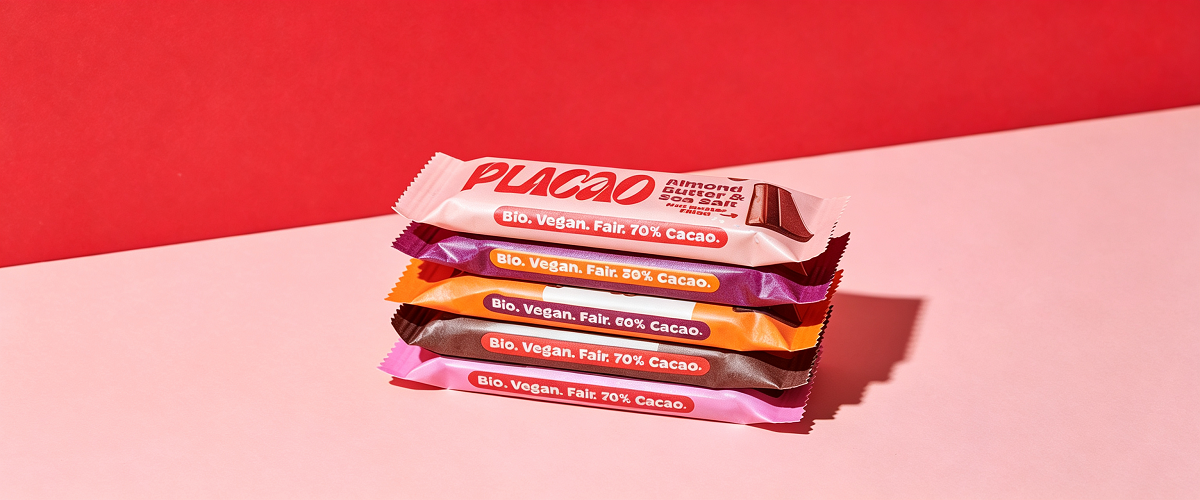
Flow Wrap Packaging for Chocolate Bars
The packaging material is formed around the chocolate product and sealed along the back and ends. This structure provides a compact package that protects individual portions from direct handling and environmental exposure.
Key advantages include:
- **Individual product protection:** Each bar receives its own sealed package, reducing direct contact with the surrounding environment.
- **Efficient high-speed production:** Flow wrapping is suitable for automated chocolate manufacturing lines.
- **Flexible pack dimensions:** Film width and length can be adjusted for different bar sizes and product weights.
- **Strong branding opportunities:** Printed films provide space for logos, flavor information, product images, and regulatory details.
- **Material efficiency:** The format can use relatively lightweight packaging compared with many rigid alternatives.
Flow wrap packaging is particularly suitable for standard chocolate bars, snack-size chocolate products, and individually wrapped confectionery.
For products containing nuts, caramel, wafer, or cream fillings, manufacturers should pay particular attention to seal integrity and barrier performance. A high-quality outer design cannot compensate for inadequate protection against moisture or oxygen.
### Stand-Up Pouches for Chocolate Bites and Small Confectionery
Common applications include:
- Chocolate buttons and drops
- Chocolate-covered nuts
- Chocolate-coated raisins
- Mini chocolate pieces
- Chocolate clusters
- Assorted confectionery
- Seasonal chocolate treats
Stand-up pouches offer several advantages for chocolate brands.
First, they provide a relatively large printable surface. Brands can use this space to communicate product flavors, ingredients, cocoa percentage, origin information, and product positioning.
Second, stand-up pouches can incorporate resealable zippers. This is useful for products consumed over multiple occasions because consumers can close the package after opening.
Third, the pouch structure can be customized with different sizes, finishes, and barrier laminates according to the product's storage requirements.
For chocolate-coated nuts or other products containing both chocolate and oil-rich ingredients, manufacturers should select a structure that provides suitable protection against moisture, oxygen, and external odors. The packaging should also be tested for seal performance under actual filling and distribution conditions.
### Flat Bottom Bags for Premium Chocolate Products
Flat bottom bags, also known as box pouches, are frequently used for premium confectionery and specialty chocolate products.
Their rectangular base helps the package stand upright, while the front, back, side gussets, and bottom provide multiple printable surfaces.
They are suitable for:
- Premium chocolate-covered almonds
- Chocolate truffles
- Assorted chocolate pieces
- Artisan confectionery
- Chocolate-coated dried fruits
- Specialty chocolate snacks
The main advantage of flat bottom bags is their combination of **shelf stability, packaging capacity, and premium visual presentation**.
For brands selling high-value chocolate products, packaging appearance can strongly influence perceived quality. Matte finishes, metallic effects, carefully designed typography, and high-resolution product photography can help communicate a more premium identity.
Flat bottom pouches can also include resealable closures, tear notches, and customized dimensions. However, the inner material structure must still be selected according to the chocolate's sensitivity and the intended shelf life.
### Pillow Bags and Three-Side Seal Bags for Small Chocolate Portions
Pillow bags and three-side seal bags are practical formats for small chocolate products and single-serving portions.
Typical applications include:
- Individually wrapped chocolate candies
- Mini chocolate bars
- Chocolate samples
- Small confectionery portions
- Promotional chocolate packs
- Chocolate pieces supplied for foodservice
These formats are generally cost-effective and can be adapted to automated packaging processes.
Pillow bags are commonly produced using vertical or horizontal form-fill-seal equipment. Three-side seal bags are often used for flat products or preformed small packs.
Their advantages include:
- Flexible portion sizes
- Efficient material usage
- Good suitability for high-volume production
- Easy integration into promotional and multipack packaging
- Opportunities for customized printing
For products that require protection from humidity and external odors, manufacturers should ensure that the selected film has appropriate barrier properties and that the seals remain reliable throughout transportation and storage.
### Sachets and Stick Packs for Chocolate Powder and Instant Chocolate Drinks
Not all chocolate products are solid confectionery. Chocolate powder, cocoa-based drink mixes, instant hot chocolate, and portion-controlled chocolate beverages also require suitable flexible packaging.
Sachets and stick packs are widely used for single-serving products because they provide convenient portion control.
They are suitable for:
- Instant hot chocolate powder
- Chocolate drink mixes
- Cocoa-based beverage powders
- Chocolate-flavored nutritional drinks
- Single-serving dessert mixes
These products have different packaging requirements from solid chocolate. Moisture protection is particularly important because powdered products can absorb humidity, form lumps, and lose their free-flowing properties.
For cocoa-based powders, packaging should also provide adequate aroma protection and reliable heat seals. The material structure must be compatible with the filling process and the expected storage environment.
### Choosing the Right Format for Different Chocolate Products
The following table summarizes common flexible packaging choices for different chocolate applications.
| Chocolate Product | Suitable Packaging Format | Main Packaging Considerations |
|---|---|---|
| Standard chocolate bars | Flow wrap | Seal integrity, moisture barrier, attractive printing |
| Premium chocolate bars | Flow wrap or custom pouch | Appearance, product protection, branding |
| Chocolate-covered nuts | Stand-up pouch or flat bottom bag | Oxygen barrier, moisture control, resealability |
| Chocolate buttons and drops | Stand-up pouch | Barrier performance, portion convenience |
| Chocolate truffles | Individual wraps or protective pouches | Physical protection, odor control, presentation |
| Chocolate-coated raisins | Stand-up pouch or pillow bag | Moisture protection, oxidation control |
| Mini chocolate candies | Pillow bag or three-side seal bag | Cost efficiency, automated filling |
| Instant hot chocolate powder | Sachet or stick pack | Moisture barrier, powder protection, seal integrity |
| Premium assorted chocolates | Custom pouch or individual flexible wraps | Product separation, appearance, brand positioning |
There is no single best format for every chocolate product. Manufacturers should evaluate the product's physical characteristics, packaging equipment, expected shelf life, and sales channel before making a final decision.
---
[](https://sfpouch.com/wp-content/uploads/2026/11/修改图片比例生成-2-2.png)
## 2. How Does Flexible Packaging Protect Chocolate from Moisture, Oxygen, Light, and Odor?
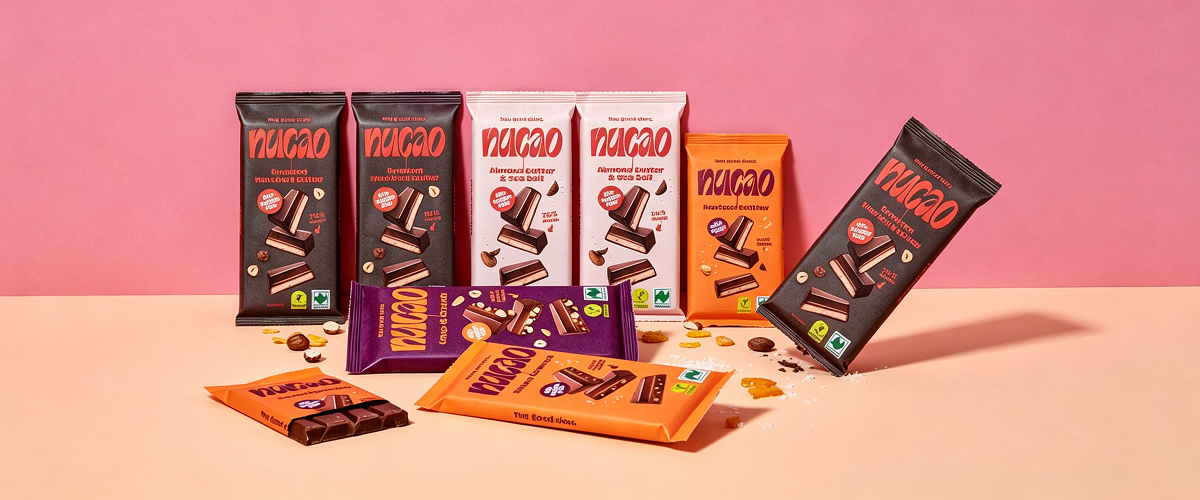
Chocolate is sensitive to several environmental factors that can gradually reduce product quality. Although its exact sensitivity depends on formulation and processing, **moisture, oxygen, light, and external odors** are important considerations when designing chocolate packaging.
Flexible packaging can be engineered with different material combinations to reduce exposure to these factors. However, protection depends on the complete packaging system, including the laminate structure, seal quality, package design, and storage conditions.
### Moisture Barrier: Preventing Sugar Bloom and Surface Defects
Moisture is one of the most important factors to control in chocolate packaging.
Chocolate contains sugar, cocoa solids, cocoa butter, and sometimes milk ingredients or other fillings. When moisture reaches the chocolate surface, it can dissolve some of the sugar. As the moisture evaporates, sugar may recrystallize on the surface, creating a rough, whitish appearance known as **sugar bloom**.
Sugar bloom can negatively affect:
- Surface appearance
- Smoothness and mouthfeel
- Consumer perception
- Product presentation
- Overall retail quality
Moisture exposure can also contribute to texture changes, especially in chocolate products containing wafers, biscuits, cereal pieces, or other moisture-sensitive inclusions.
A suitable moisture barrier helps reduce water vapor transmission through the packaging material.
Common barrier options include:
- Metallized PET films
- Aluminum foil laminates
- High-barrier coated films
- Appropriate PE-based sealing layers
The correct solution depends on the product, required shelf life, and storage environment.
For example, chocolate-coated biscuits may require a stronger moisture barrier than some solid chocolate products because moisture can quickly affect the crispness of the biscuit center.
Manufacturers should also remember that packaging alone cannot prevent every moisture-related defect. Chocolate should be cooled, handled, and stored under appropriate conditions before and after packaging.
### Oxygen Barrier: Reducing Oxidation and Flavor Deterioration
Oxygen can contribute to quality deterioration in chocolate, particularly in products containing milk fats, nuts, seeds, or other oxidation-sensitive ingredients.
Oxidation may cause:
- Rancid or stale flavors
- Changes in aroma
- Deterioration of nut-containing fillings
- Reduced sensory quality
- Shorter acceptable storage periods
The risk is not identical for every chocolate product. Plain dark chocolate, milk chocolate, nut-filled chocolate, and chocolate-coated snacks have different compositions and oxidation sensitivities.
For example, chocolate-covered almonds contain both chocolate and nut oils. Even when the chocolate coating remains visually attractive, oxidation of the nut component can affect flavor and consumer acceptance.
High oxygen barrier packaging can help slow oxygen transmission into the package. Common solutions include:
- PET/VMPET/PE
- PET/AL/PE
- Other validated high-barrier multilayer laminates
For products with higher oxidation sensitivity or demanding shelf-life targets, manufacturers may also consider nitrogen flushing or other modified-atmosphere approaches.
However, nitrogen flushing should not be treated as a replacement for suitable packaging materials. The complete system must be validated, including residual oxygen levels, package integrity, filling conditions, and storage performance.
### Light Barrier: Protecting Chocolate from Light-Induced Quality Changes
Light exposure can contribute to the deterioration of chocolate, especially when products contain milk fats, nuts, or sensitive flavor ingredients.
Light may accelerate oxidation reactions and contribute to undesirable changes in flavor and appearance. Products displayed under strong retail lighting may therefore benefit from packaging with reduced light transmission.
Flexible packaging offers several options for light protection.
**Metallized films**
Metallized PET and similar structures provide reflective properties that reduce light transmission while maintaining a relatively lightweight package.
**Aluminum foil laminates**
Aluminum foil provides an excellent barrier against light when the laminate is properly manufactured and converted into a finished package.
**Opaque printed films**
Opaque inks and printed designs can reduce direct light exposure in selected areas. However, the actual protection depends on ink coverage, film properties, and the complete structure.
For premium chocolate products, brands sometimes prefer a package with a small transparent window. This can help consumers see the product, but the window creates an area with different barrier performance.
If visibility is important, manufacturers should carefully evaluate the window's size and position rather than assuming that a transparent film offers the same protection as an opaque high-barrier laminate.
### Odor Barrier: Preventing Aroma Loss and External Odor Migration
Chocolate has a distinctive aroma that contributes significantly to its sensory appeal. It can also absorb unwanted odors from its surrounding environment.
External odors may come from:
- Strongly scented products stored nearby
- Printing inks or adhesives that are not suitable for the intended application
- Warehousing environments
- Transportation conditions
- Other packaged products
In addition, inadequate packaging may allow desirable chocolate aromas to escape gradually.
This is particularly important for premium chocolate, flavored chocolate, and products containing vanilla, coffee, fruit, or other aromatic ingredients.
A suitable flexible packaging structure should provide adequate aroma retention and minimize unwanted odor migration.
Manufacturers should consider:
- Material odor characteristics
- Adhesive suitability and curing
- Ink and coating selection
- Laminate construction
- Storage conditions before packaging
- Compatibility with the actual chocolate formulation
Food-contact compliance is important, but it should not be the only consideration. Sensory testing of the finished package can help identify unwanted odor or flavor transfer that may not be obvious from material specifications alone.
### Why Seal Integrity Is Just as Important as Barrier Performance
Even a high-barrier laminate cannot protect chocolate effectively if the package has weak seals, pinholes, or mechanical damage.
Seal failure can allow moisture, oxygen, and external odors to enter the package. It may also expose the chocolate to contamination during distribution.
Important seal-related considerations include:
- Correct sealing temperature
- Suitable sealing pressure
- Appropriate dwell time
- Compatibility between sealing layers
- Clean sealing areas
- Resistance to handling and transportation stress
Chocolate products may leave oils, crumbs, or fine particles around the sealing area during filling. These contaminants can interfere with seal formation.
For this reason, manufacturers should test finished packaging under realistic production conditions rather than relying only on laboratory material data.
### Environmental Factors and Their Packaging Implications
| Environmental Factor | Potential Effect on Chocolate | Packaging Consideration |
|---|---|---|
| Moisture | Sugar bloom, texture changes, reduced crispness of inclusions | Low water vapor transmission rate |
| Oxygen | Oxidation and flavor deterioration | High oxygen barrier |
| Light | Accelerated oxidation and quality changes | Metallized, foil, or suitable opaque structures |
| External odors | Unwanted aroma absorption | Appropriate odor barrier and low-odor materials |
| Weak seals | Moisture and oxygen ingress | Reliable heat-seal performance |
| Physical impact | Cracked or damaged chocolate | Suitable package strength and secondary protection |
The most effective chocolate packaging strategy combines material barrier performance with good sealing, appropriate storage, and careful transportation.
---
[](https://sfpouch.com/wp-content/uploads/2026/11/修改图片比例生成-3-2.png)
## 3. Which Packaging Materials Provide the Best Barrier Protection for Chocolate?
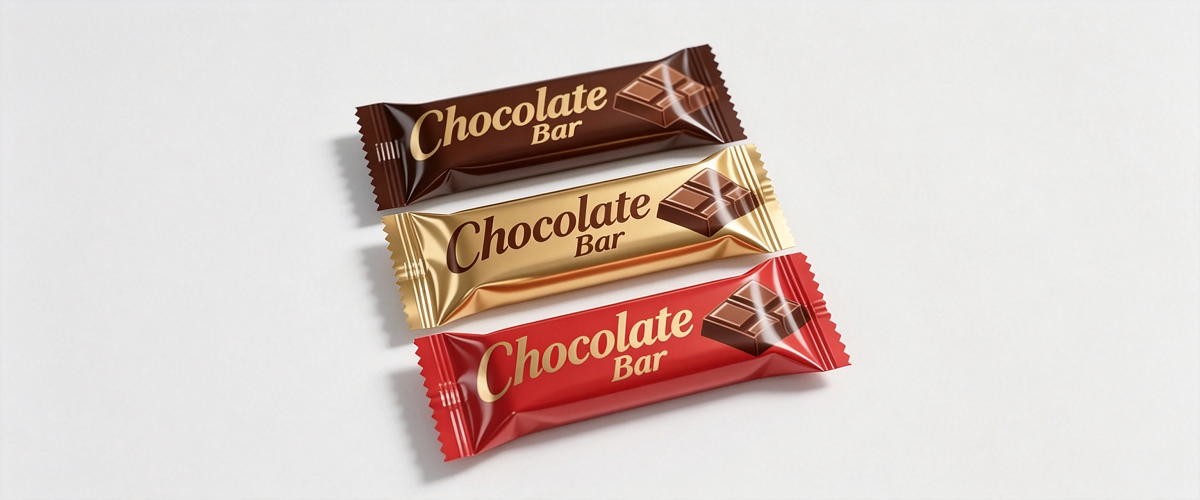
Material selection directly influences chocolate packaging performance. Different films offer different levels of mechanical strength, moisture resistance, oxygen barrier, light protection, sealability, and printing quality.
A suitable structure should be selected according to the chocolate product's formulation, expected storage period, filling process, and market requirements.
### PET: Strength, Printing Quality, and Structural Support
PET, or polyester film, is commonly used as an outer layer in flexible packaging laminates.
Its main advantages include:
- Good mechanical strength
- Excellent dimensional stability
- High-quality printing performance
- Good resistance to handling damage
- Compatibility with a wide range of laminating structures
PET is particularly useful for printed chocolate pouches and laminated packaging where the outer layer needs to protect the design and provide structural support.
However, standard PET film alone may not provide sufficient barrier performance for chocolate products with demanding shelf-life requirements. It is often combined with metallized films, aluminum foil, or other functional layers.
### BOPP: Lightweight and Cost-Effective Packaging
BOPP, or biaxially oriented polypropylene, is widely used in confectionery packaging because of its stiffness, clarity, printability, and cost efficiency.
It is suitable for:
- Chocolate candies
- Mini chocolate bars
- Individually wrapped confectionery
- Some flow-wrap applications
- Promotional chocolate products
BOPP can be a practical choice for products with moderate barrier requirements or where the packaging structure is designed around high-speed wrapping equipment.
For chocolate products requiring stronger oxygen, moisture, or light protection, BOPP may need to be combined with other materials or replaced by a more suitable barrier structure.
Its suitability should be assessed based on actual film specifications and packaging conditions rather than material name alone.
### PE and CPP: Heat-Sealing Layers
Polyethylene (PE) and cast polypropylene (CPP) are frequently used as inner sealing layers in flexible packaging.
Their main function is to create a reliable seal that protects the packaged product from external exposure.
**PE is commonly used for:**
- Stand-up pouches
- Resealable bags
- Flexible food packaging
- Structures requiring flexible sealing performance
**CPP is commonly used for:**
- Flow-wrap applications
- Confectionery packaging
- Heat-sealable laminate structures
- Packaging requiring suitable stiffness and sealing characteristics
The choice between PE and CPP depends on the packaging format, filling equipment, sealing conditions, and required mechanical properties.
For chocolate products, the sealing layer should also be compatible with the product and should not introduce undesirable odors or substances under the intended conditions of use.
### VMPET: Enhanced Barrier Performance with a Lightweight Structure
VMPET, or vacuum-metallized PET, is a PET film coated with a thin metal layer, usually aluminum.
It is commonly used when manufacturers need stronger barrier performance than standard plastic films can provide while keeping the package relatively lightweight.
Its advantages include:
- Improved moisture barrier
- Improved oxygen barrier compared with many uncoated films
- Reduced light transmission
- Attractive metallic appearance
- Compatibility with many laminated packaging structures
VMPET is widely used in flexible packaging for chocolate-coated nuts, chocolate snacks, confectionery mixes, and other products requiring improved protection.
A typical structure is:
**PET/VMPET/PE**
In this structure:
- PET provides mechanical strength and printing support.
- VMPET contributes to barrier performance.
- PE provides the inner heat-sealing layer.
Actual barrier performance depends on the film grade, metallization quality, lamination process, and package conversion.
VMPET can be a cost-effective option for many chocolate applications, but it is not identical to aluminum foil. It may be less suitable where extremely demanding barrier performance or severe mechanical conditions are involved.
### Aluminum Foil: High-Level Protection for Sensitive Chocolate Products
Aluminum foil is one of the strongest barrier materials used in flexible packaging.
It provides excellent protection against:
- Oxygen
- Moisture vapor
- Light
- Many external odors
It is often considered for chocolate products with demanding shelf-life requirements, premium positioning, or long distribution routes.
Common applications include:
- Premium chocolate products
- Chocolate-covered nuts
- Specialty confectionery
- Products containing oxidation-sensitive fillings
- Chocolate products intended for extended storage
A typical laminate structure is:
**PET/AL/PE**
The layers serve different functions:
- PET provides strength and printability.
- Aluminum foil provides the main barrier.
- PE provides heat-sealing performance.
Despite its strong barrier properties, aluminum foil is not automatically the best choice for every chocolate product.
It can increase material costs and may require careful handling to avoid pinholes or damage during converting and distribution. The complete laminate should be tested for flex cracking, seal integrity, and performance under actual handling conditions.
### High-Barrier Coatings and Alternative Structures
In addition to metallized films and aluminum foil, some flexible packaging applications use coated barrier films.
Depending on the technology, these may include:
- AlOx-coated films
- SiOx-coated films
- Specialized polymer barrier coatings
- Other functional multilayer structures
These materials may offer a balance between barrier performance, transparency, and packaging design flexibility.
They can be useful when brands want to reduce reliance on conventional metallized or foil-based structures, or when a transparent high-barrier appearance is desirable.
However, coating performance can be affected by flexing, converting, sealing, and package handling. Manufacturers should request technical data and evaluate the finished package rather than selecting a material based only on its coating type.
### Recommended Material Structures for Different Chocolate Products
The following structures are starting points for technical evaluation, not universal specifications. Final selection should be based on measured barrier performance, product testing, and the intended storage conditions.
| Chocolate Product | Potential Material Structure | Main Purpose |
|---|---|---|
| Standard chocolate bars | BOPP-based or PET-based flow-wrap laminate | Printing, wrapping efficiency, basic protection |
| Milk chocolate bars | PET/VMPET/PE or suitable flow-wrap laminate | Improved moisture, oxygen, and light protection |
| Dark chocolate bars | PET/VMPET/PE | Balanced barrier and presentation |
| Chocolate-covered nuts | PET/VMPET/PE or PET/AL/PE | Protection against oxidation and moisture |
| Premium pralines | PET/AL/PE or validated high-barrier laminate | Strong barrier and premium presentation |
| Chocolate-coated dried fruits | PET/VMPET/PE | Moisture and oxygen control |
| Chocolate chips | PET/VMPET/PE or other validated barrier structure | Product protection during storage |
| Instant chocolate powder | PET/VMPET/PE or PET/AL/PE | Moisture protection and aroma retention |
### How to Compare Packaging Material Performance
When comparing different materials, manufacturers should request technical specifications rather than relying on broad descriptions such as "high barrier" or "premium film."
Important indicators include:
**Oxygen Transmission Rate (OTR)**
OTR measures how much oxygen passes through a material under specified test conditions. A lower value generally indicates better oxygen barrier performance.
**Water Vapor Transmission Rate (WVTR)**
WVTR measures the amount of water vapor transmitted through a material under specified conditions. A lower value generally indicates better moisture barrier performance.
**Light Transmission**
For chocolate products sensitive to light, the amount of light transmitted through the packaging should be evaluated.
**Seal Strength**
Seal strength indicates the mechanical strength of the sealed area. Reliable seals are necessary to maintain the intended barrier performance.
**Puncture and Tear Resistance**
These properties help determine whether the packaging can withstand filling, handling, transportation, and retail distribution.
It is important to compare test results measured under comparable temperature, humidity, and testing standards. A material's barrier performance can change under different environmental conditions.
### Material Selection: Balancing Protection and Cost
Choosing the highest-barrier material is not always the most economical decision.
A product with a relatively short shelf-life requirement and controlled distribution conditions may not need an aluminum foil laminate. A metallized structure could provide sufficient performance at a lower material cost.
On the other hand, chocolate products containing nuts, dairy-based fillings, or other sensitive ingredients may require stronger protection.
A practical selection process should consider:
1. The product's composition and sensitivity.
2. The required shelf life.
3. The expected temperature and humidity conditions.
4. The distribution distance and storage environment.
5. The packaging format and sealing process.
6. The acceptable material cost per package.
The final structure should be selected through technical evaluation and product shelf-life testing.
---
[](https://sfpouch.com/wp-content/uploads/2026/11/修改图片比例生成-4-2.png)
## 4. What Packaging Features Help Prevent Chocolate Melting, Preserve Freshness, and Maintain Product Quality?
Material selection is only one part of chocolate packaging performance. Functional features can also improve consumer convenience, protect the product during distribution, and support brand differentiation.
However, an important distinction must be made: **flexible packaging can help reduce environmental exposure, but it cannot independently prevent chocolate from melting when the surrounding temperature becomes too high**.
Chocolate melting is primarily related to its formulation, cocoa butter behavior, product geometry, and temperature exposure. Packaging decisions should therefore work together with appropriate cooling, warehousing, transportation, and retail handling.
### Heat-Sealing Performance for Reliable Product Protection
Heat sealing is one of the most important functional requirements in chocolate flexible packaging.
A properly sealed package helps prevent moisture, oxygen, and external odors from entering the package during storage and distribution.
For chocolate products, seal performance should be evaluated according to:
- Film compatibility
- Sealing temperature
- Sealing pressure
- Dwell time
- Filling speed
- Product contamination around the seal
- Seal strength after cooling and storage
Chocolate can soften during filling or packaging if production temperatures are not properly controlled. If melted chocolate or oily residues reach the sealing area, they may interfere with seal formation.
Manufacturers should therefore optimize the packaging line to keep the sealing area clean and ensure consistent sealing conditions.
### Resealable Zippers for Multi-Serve Chocolate Products
Resealable zippers are especially useful for chocolate products packaged in stand-up pouches or flat bottom bags.
They are commonly used for:
- Chocolate-covered nuts
- Chocolate buttons
- Chocolate-coated raisins
- Mini chocolate candies
- Chocolate clusters
- Assorted confectionery
Zippers provide convenience by allowing consumers to reopen and close the package after the initial seal has been broken.
Their main benefits include:
- Easier repeated access
- Reduced exposure after opening
- Better portion management
- Improved consumer convenience
- Greater suitability for sharing packs
However, a zipper does not provide the same hermetic protection as the original heat seal. The initial package seal remains essential for product protection before first use.
For products that are particularly sensitive to humidity or oxidation, brands should select a zipper design that closes reliably and provide clear instructions for storage after opening.
### Easy-Open Features and Tear Notches
Easy-open features improve the consumer experience, particularly for individually wrapped chocolate bars and small confectionery pouches.
Tear notches allow consumers to open a package without scissors or additional tools.
They can be incorporated into:
- Flow-wrap chocolate bars
- Stand-up pouches
- Three-side seal bags
- Small chocolate sachets
- Multipack confectionery packages
The notch position should be carefully designed so that consumers can open the package without damaging the product or causing excessive spillage.
For premium chocolate, controlled opening is particularly important because delicate pieces, decorative coatings, and filled products can be damaged by rough handling.
### Nitrogen Flushing for Oxidation-Sensitive Chocolate Products
Nitrogen flushing is a modified-atmosphere packaging technique used to reduce the amount of oxygen inside a package.
It can be useful for chocolate products containing:
- Nuts and seeds
- Nut-based fillings
- Milk ingredients
- Other oxidation-sensitive components
Reducing residual oxygen may help slow oxidative deterioration and preserve flavor.
Nitrogen flushing can also be considered for certain chocolate snack products where maintaining product quality over an extended storage period is important.
However, its effectiveness depends on several factors:
- Initial oxygen concentration
- Gas flushing efficiency
- Package headspace
- Film oxygen barrier
- Seal integrity
- Product characteristics
Nitrogen flushing should be validated for the actual product and packaging line. It does not replace temperature control or appropriate material selection.
### Protective Packaging for Preventing Physical Damage
Chocolate is relatively fragile, especially when products are thin, molded into decorative shapes, or contain delicate inclusions.
Transportation and handling can cause:
- Cracked chocolate bars
- Broken pralines
- Damaged decorative coatings
- Crushed chocolate pieces
- Surface scratches
Flexible packaging can provide a protective outer layer, but the required level of protection depends on the product's shape and distribution conditions.
Useful design considerations include:
- Appropriate film thickness
- Suitable puncture resistance
- Sufficient package dimensions
- Reduced empty space where practical
- Product separation for delicate pieces
- Protective secondary cartons for fragile products
For premium chocolates, individual wrapping or compartmentalized secondary packaging may be more appropriate than placing multiple delicate pieces loosely in one pouch.
### Temperature Management: What Packaging Can and Cannot Do
Chocolate melting is a major concern in warm climates, summer distribution, and international shipping.
Different chocolate formulations have different melting and softening characteristics. Products containing cocoa butter, milk fats, fillings, or compound coatings may respond differently to temperature changes.
Flexible packaging can help by:
- Reducing direct contact with the external environment
- Providing an additional protective layer
- Supporting opaque or reflective packaging designs
- Protecting products from handling and contamination
- Working as part of an insulated or temperature-controlled shipping system
However, ordinary flexible packaging is not thermal insulation. A standard PET/VMPET/PE pouch cannot keep chocolate solid if the product is exposed to excessive heat for a prolonged period.
For temperature-sensitive products, manufacturers should consider a broader distribution strategy:
**Controlled production and cooling**
Chocolate should be properly tempered, cooled, and stabilized before packaging. Packaging warm or insufficiently set chocolate may cause deformation, condensation, or surface defects.
**Temperature-controlled storage**
Warehouses should maintain conditions appropriate for the specific chocolate formulation and product specification.
**Insulated secondary packaging**
For e-commerce and long-distance shipping, insulated boxes or thermal liners may be required.
**Seasonal shipping arrangements**
During hot seasons, brands may need to adjust shipping schedules, select faster delivery services, or use validated temperature-protection solutions.
**Real-world distribution testing**
Temperature monitoring during transit can help identify the conditions that cause softening, bloom, or other quality issues.
### Matte, Glossy, and Metallic Finishes for Chocolate Packaging
Packaging appearance plays an important role in the chocolate category because consumers often associate visual presentation with product quality.
Flexible packaging supports a wide range of surface finishes.
**Matte finish**
Matte packaging creates a subtle, refined appearance and is often used for premium dark chocolate, artisan products, and specialty confectionery.
**Glossy finish**
Glossy packaging creates strong color contrast and can make chocolate imagery appear more vibrant.
**Metallic effects**
Metallic inks, metallized films, and foil-like visual effects can communicate premium positioning and attract attention on retail shelves.
**Spot UV**
Spot UV applies a glossy effect to selected areas of the design, creating contrast between different surface finishes.
**Soft-touch coatings**
Soft-touch finishes create a distinctive tactile experience and can reinforce a premium brand identity.
When selecting finishes, manufacturers should confirm compatibility with the laminate structure, printing process, and food-packaging requirements.
### Transparent Windows: Product Visibility Versus Protection
Transparent windows can help consumers see the chocolate product before purchasing.
They are sometimes used for:
- Chocolate-covered nuts
- Chocolate clusters
- Assorted chocolate pieces
- Decorative confectionery
- Specialty snack mixes
However, transparent windows introduce a trade-off between product visibility and light protection.
A large transparent area may expose chocolate to more light than an opaque or metallized structure. This can be undesirable for products with demanding shelf-life requirements.
Brands should consider:
- The size of the window
- The position of the window
- The light sensitivity of the product
- The barrier properties of the transparent film
- The expected retail lighting conditions
A small, carefully positioned window may provide sufficient visibility without sacrificing too much protective performance.
### Functional Feature Recommendations by Chocolate Product
| Packaging Feature | Best-Suited Chocolate Applications | Main Benefit |
|---|---|---|
| Resealable zipper | Chocolate bites, coated nuts, chocolate candies | Convenience after opening |
| Tear notch | Chocolate bars, small pouches, sachets | Easy opening |
| Nitrogen flushing | Chocolate-covered nuts and oxidation-sensitive snacks | Reduced residual oxygen |
| High-barrier laminate | Premium chocolate, filled chocolate, coated snacks | Improved environmental protection |
| Matte or metallic finish | Premium bars and specialty confectionery | Stronger brand presentation |
| Transparent window | Chocolate clusters and selected snack mixes | Product visibility |
| Individual wrapping | Pralines, truffles, delicate chocolate pieces | Portion protection and presentation |
| Insulated secondary packaging | Temperature-sensitive e-commerce shipments | Reduced exposure to external temperature changes |
The best functional features are those that solve a real product or consumer problem. Adding unnecessary features can increase packaging costs without delivering meaningful improvements in product quality.
---
[](https://sfpouch.com/wp-content/uploads/2026/11/修改图片比例生成-12.png)
## 5. Flexible Packaging for Chocolate: Key Factors for Product Protection, Shelf Life, Branding, and Consumer Appeal
Selecting flexible packaging for chocolate requires a complete evaluation of product requirements, material performance, production capabilities, distribution conditions, and brand positioning.
A packaging structure that works well for one chocolate product may not be suitable for another. Manufacturers should therefore develop packaging specifications around the actual product rather than choosing a standard pouch or film structure based only on appearance or price.
### Product Composition and Sensitivity
The first consideration is the chocolate formulation.
Different products have different sensitivities depending on their ingredients and physical structure.
**Dark chocolate**
Dark chocolate generally contains a higher proportion of cocoa solids and cocoa butter, with less or no milk solids depending on the formulation. Packaging decisions should focus on moisture control, aroma retention, light protection, and prevention of physical damage.
**Milk chocolate**
Milk chocolate contains milk ingredients and may be more sensitive to certain storage and oxidation conditions. A suitable barrier structure and controlled storage environment help maintain its flavor and quality.
**White chocolate**
White chocolate contains cocoa butter and milk ingredients but no cocoa solids in the conventional sense. It can be sensitive to heat, odor absorption, and quality changes during storage. Appropriate material selection and distribution conditions are important.
**Nut-filled and nut-coated chocolate**
Products containing almonds, hazelnuts, peanuts, pistachios, or other nuts may have greater oxidation concerns because of their fat content. These products may benefit from stronger oxygen barriers and, where appropriate, modified-atmosphere packaging.
**Chocolate with wafers or biscuits**
These products often require careful moisture control because the crispness of the wafer or biscuit can deteriorate if moisture enters the package.
**Filled chocolate and pralines**
Cream, caramel, fruit, and nut fillings can change the product's moisture and fat characteristics. Packaging requirements should be determined by the complete formulation and validated shelf-life conditions.
Understanding these differences helps manufacturers avoid unnecessary over-specification while ensuring adequate product protection.
### Shelf-Life Requirements and Storage Conditions
Shelf-life expectations are a major factor in material selection.
Chocolate products may be sold through local retail stores, supermarkets, online platforms, specialty shops, or international distribution channels. Each channel can expose the product to different storage and transportation conditions.
Before selecting a package, manufacturers should establish:
- Target shelf life
- Expected storage temperature
- Relative humidity conditions
- Retail display environment
- Transportation duration
- Distribution distance
- Product sensitivity to light and oxygen
- Whether the package will be opened and resealed
A product intended for short-distance distribution with controlled storage may require a different packaging specification from a product shipped internationally through multiple warehouses.
Shelf life should not be determined by packaging material alone. It should be validated through appropriate product testing under representative storage conditions.
### Packaging Compatibility with Production Equipment
A flexible packaging structure must perform well on the manufacturer's actual production line.
Even when a material offers excellent barrier properties, it may create production problems if it is not compatible with the packaging equipment.
Important considerations include:
**Forming and feeding performance**
The film should run smoothly through the packaging machine without excessive slipping, wrinkling, or misalignment.
**Heat-sealing window**
The material should provide a suitable sealing range for the machine's operating speed and temperature settings.
**Filling accuracy**
Pouch dimensions and opening design should support accurate filling without product spillage.
**Production speed**
The packaging structure should be capable of meeting the manufacturer's required output.
**Cutting and registration**
Printed designs should align properly with the cutting and sealing positions.
For chocolate bars, flow-wrap films must be compatible with the wrapping machine. For stand-up pouches, pouch dimensions, zipper placement, and opening design should match the filling and sealing process.
Manufacturers should request samples and conduct machine trials before placing large-scale orders.
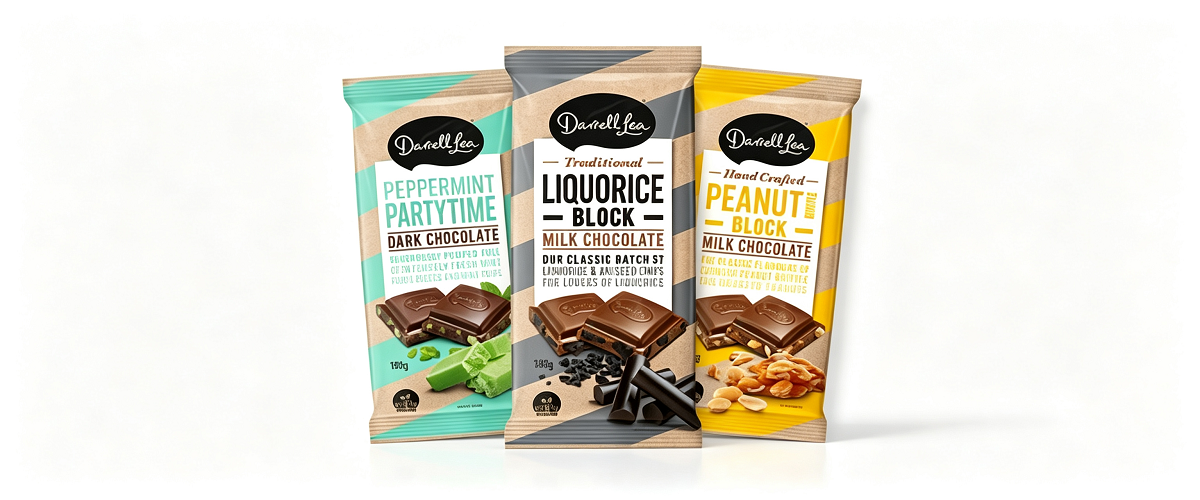
### Branding and Visual Differentiation
Chocolate is a highly competitive category where packaging design can strongly influence purchasing decisions.
Consumers often evaluate chocolate products based on appearance, perceived quality, flavor expectations, and brand identity.
Flexible packaging provides several opportunities for differentiation.
**Color strategy**
Dark brown, gold, cream, black, and other carefully selected colors are frequently used to communicate different chocolate styles and brand positions. The right color palette should reflect the product's identity rather than follow a generic premium look.
**Product photography**
High-quality chocolate imagery can help communicate texture, ingredients, and flavor. Images of cocoa beans, chocolate pieces, nuts, caramel, or fruit can reinforce the product's main selling points.
**Typography and information hierarchy**
The brand name, chocolate type, cocoa percentage, flavor, and product weight should be easy to identify. Clear information hierarchy improves readability and supports consumer decision-making.
**Finishing effects**
Matte coatings, metallic effects, spot UV, and other finishing techniques can help create a more distinctive appearance.
**Consistent packaging across product lines**
Brands with multiple chocolate flavors or product sizes can use consistent design elements to strengthen recognition while using different colors or graphics to distinguish individual products.
### Consumer Convenience and Packaging Usability
A well-designed chocolate package should be easy to store, open, use, and dispose of.
Consumers may purchase chocolate for personal consumption, sharing, gifting, or portion-controlled snacking. Each use case can influence packaging design.
Useful features include:
- Easy-open tear notches
- Resealable zippers for multi-serve products
- Appropriate pack sizes
- Clear product information
- Convenient storage after opening
- Durable packaging that resists accidental tearing
For single-serving products, easy opening and portion control may be more important than resealability.
For larger sharing packs, resealable closures can improve convenience and reduce repeated exposure after opening.
For premium chocolate, individual wrapping can also enhance presentation and help consumers manage portions.
### Food-Contact Compliance and Packaging Safety
Chocolate packaging must comply with applicable food-contact requirements in the destination market.
Depending on where the product is sold, relevant requirements may include:
- U.S. FDA food-contact requirements
- European Union food-contact legislation
- Applicable national or regional food packaging rules
- Requirements for inks, adhesives, coatings, and other packaging components
Compliance should be assessed for the complete packaging structure and the intended conditions of use.
Manufacturers should request relevant documentation from their packaging suppliers, including:
- Food-contact declarations or compliance statements
- Material specifications
- Relevant migration test reports
- Information about inks and adhesives
- Technical data sheets
- Supporting documentation required by the target market
A material described as food-grade should not automatically be assumed suitable for every chocolate application. The specific material structure, food type, contact conditions, and regulatory requirements all matter.
### Sustainability and Material Efficiency
Sustainability is becoming increasingly important in confectionery packaging.
Chocolate brands may want to reduce packaging material usage, improve recyclability, or communicate more clearly about their environmental commitments.
Potential approaches include:
**Material reduction**
Optimizing film thickness and pouch dimensions can reduce material consumption while maintaining necessary performance.
**Mono-material structures**
Some recyclable packaging solutions use compatible PE-based or PP-based structures. These may be suitable for selected applications, but their barrier performance and compatibility with existing equipment must be evaluated.
**Recyclable packaging design**
Recyclability depends on the complete structure, local collection and sorting systems, and available recycling infrastructure. A package should not be described as recyclable without considering the destination market.
**Responsible material selection**
Brands can evaluate packaging materials based on performance, sourcing, production efficiency, and end-of-life options.
For chocolate, sustainability decisions should not compromise essential moisture, oxygen, or aroma protection. Reducing packaging performance can lead to product spoilage and food waste, which may undermine the overall sustainability objective.
### Cost Efficiency and Total Packaging Value
Packaging cost should be evaluated in relation to product protection, production efficiency, transportation, and brand value.
A lower-cost material may appear attractive initially, but it can become more expensive if it causes higher rejection rates, seal failures, product damage, or shorter shelf life.
Manufacturers should evaluate:
- Material cost per unit
- Printing and cylinder costs
- Lamination and converting costs
- Minimum order quantities
- Production efficiency
- Packaging waste
- Storage and transportation costs
- Product damage and rejection rates
For example, a premium chocolate brand may justify a higher-barrier laminate if it significantly reduces quality risks during long-distance distribution.
A mainstream chocolate bar manufacturer may prioritize a cost-efficient flow-wrap structure that runs reliably at high speed.
The best packaging solution is therefore not necessarily the cheapest material or the most complex laminate. It is the structure that delivers the required protection and performance at an appropriate total cost.
### How to Work with a Flexible Packaging Supplier
A reliable packaging supplier should help evaluate the complete packaging requirement rather than simply recommend a standard material structure.
Before requesting a quotation, chocolate manufacturers should prepare the following information:
| Information to Provide | Why It Matters |
|---|---|
| Chocolate product type | Determines product sensitivity and packaging format |
| Product dimensions and weight | Helps establish pouch or film specifications |
| Target shelf life | Guides barrier requirements |
| Storage and distribution conditions | Helps determine the required protection level |
| Packaging format | Determines converting and production requirements |
| Required material structure, if known | Provides a starting point for technical evaluation |
| Printing design and number of colors | Supports printing and cost estimation |
| Required functional features | Determines zipper, tear notch, valve, or other specifications |
| Order quantity | Influences production planning and unit cost |
| Target sales market | Helps identify applicable compliance requirements |
It is also useful to request samples, technical data sheets, barrier test results, and food-contact documentation.
Before mass production, manufacturers should confirm the material structure, dimensions, printing quality, sealing performance, and machine compatibility.
A structured sampling and approval process can reduce the risk of costly packaging problems after production begins.
### Final Packaging Selection Checklist
Before finalizing flexible packaging for chocolate, manufacturers can use this checklist:
- [ ] Confirm the chocolate type, ingredients, and product sensitivity.
- [ ] Select a suitable packaging format.
- [ ] Define the required shelf life and distribution conditions.
- [ ] Evaluate oxygen and moisture barrier requirements.
- [ ] Consider light and odor protection.
- [ ] Confirm the inner sealing layer and heat-sealing performance.
- [ ] Evaluate the need for nitrogen flushing.
- [ ] Determine whether a zipper or easy-open feature is necessary.
- [ ] Check compatibility with the packaging machine.
- [ ] Confirm food-contact compliance for the destination market.
- [ ] Evaluate printing, finish, and brand presentation.
- [ ] Test the finished package under realistic storage and transportation conditions.
- [ ] Compare total packaging costs rather than material price alone.
A careful evaluation of these factors helps chocolate manufacturers select packaging that supports both product quality and commercial performance.
---
## FAQ
**What is the best flexible packaging for chocolate bars?**
Flow-wrap packaging made from a suitable BOPP-based or PET-based laminate is commonly used for chocolate bars. The final material should provide the required moisture, oxygen, and light protection while remaining compatible with the wrapping machine and sealing conditions.
**Does chocolate need high-barrier flexible packaging?**
The required barrier level depends on the chocolate formulation, shelf-life target, and distribution environment. Products containing nuts, dairy ingredients, or sensitive fillings may need stronger oxygen and moisture protection than some standard chocolate products.
**Can flexible packaging prevent chocolate from melting?**
Standard flexible packaging cannot independently prevent chocolate from melting under high temperatures. It can provide an additional protective layer, but temperature-controlled storage, transportation, and suitable secondary insulation may be necessary for heat-sensitive products.
**Is aluminum foil packaging better than metallized packaging for chocolate?**
Aluminum foil generally provides a stronger barrier against oxygen, moisture, and light than many metallized films. However, metallized PET can offer a cost-effective balance for applications that do not require the highest possible barrier. The best choice depends on the product and shelf-life requirements.
**Are stand-up pouches suitable for chocolate products?**
Yes. Stand-up pouches are suitable for chocolate buttons, chocolate-covered nuts, chocolate clusters, and other multi-piece products. They can include high-barrier laminates and resealable zippers for improved product protection and convenience.
**Should chocolate packaging include a resealable zipper?**
A zipper is useful for multi-serve products that consumers may open and close several times. It is generally unnecessary for individually wrapped chocolate bars or single-serving products. The initial heat seal remains important for maintaining product protection before opening.
**Is nitrogen flushing necessary for chocolate packaging?**
Nitrogen flushing is not necessary for every chocolate product. It may be beneficial for chocolate-coated nuts and products containing oxidation-sensitive ingredients. Its effectiveness depends on residual oxygen, barrier performance, seal integrity, and product formulation.
**What material structure is suitable for chocolate-covered nuts?**
PET/VMPET/PE is a potential starting structure for chocolate-covered nuts because it combines printing support, improved barrier performance, and heat-sealing capability. PET/AL/PE may be considered when stronger protection is required. Final selection should be validated through product testing.
**Can flexible chocolate packaging be customized with windows and premium finishes?**
Yes. Flexible packaging can include transparent windows, matte finishes, glossy coatings, metallic effects, and spot UV. However, transparent areas should be carefully evaluated because they may reduce light protection.
**What should chocolate manufacturers test before approving a packaging structure?**
Important tests include oxygen and water vapor transmission, seal strength, leak integrity, puncture resistance, odor and sensory compatibility, and machine performance. Finished packages should also be evaluated under representative storage and distribution conditions.
---
## Conclusion
Choosing the right flexible packaging for chocolate requires a balance between **product protection, barrier performance, packaging functionality, brand presentation, and cost efficiency**. Different chocolate products have different requirements, so manufacturers should avoid selecting packaging based only on appearance or material price.
Flow-wrap films are practical for chocolate bars and individually wrapped confectionery, while stand-up pouches and flat bottom bags are suitable for chocolate bites, coated nuts, and multi-piece products. Metallized PET laminates can provide a balanced combination of barrier performance and cost, while aluminum foil structures may be appropriate for products with more demanding protection requirements.
Beyond material selection, manufacturers should pay close attention to moisture control, oxygen exposure, light protection, odor migration, seal integrity, and physical damage. Functional features such as resealable zippers, tear notches, nitrogen flushing, and premium surface finishes can further improve packaging performance and consumer experience.
It is equally important to recognize the limits of flexible packaging. Ordinary pouches and films cannot independently prevent chocolate from melting in high temperatures. Proper tempering, cooling, warehousing, and transportation remain essential parts of an effective chocolate protection strategy.
Ultimately, the best flexible packaging solution is the one that matches the actual characteristics of the chocolate product, meets the required shelf-life and distribution conditions, runs reliably on the production line, and communicates the brand's value to consumers. With the right combination of materials, packaging formats, and customized features, chocolate manufacturers can protect product quality, strengthen market competitiveness, and create a more consistent consumer experience.